Jaguar sold six distinct model families between 1960 and 1969, and most of the confusion comes from the saloons. The company had only carried the Jaguar name since 1945, according to Britannica, yet by 1960 it was building the fastest four-door cars in Britain and, from 1961, the sports car everyone else was measured against. This guide walks through the 1960s Jaguar car models in the order they arrived, with the specs, production figures and visual tells that separate one from the next.
Table of contents
- TLDR: the 1960s Jaguar lineup
- Mark 2 (2.4, 3.4 and 3.8)
- E-Type Series 1
- Mark X and 420G
- S-Type and 420
- Jaguar 240 and 340
- XJ6
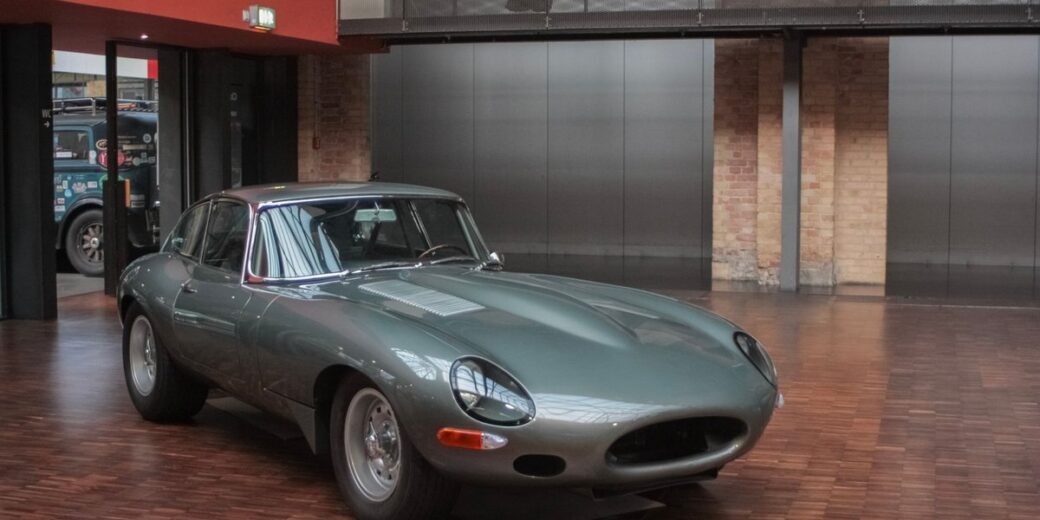
- The footnotes: XJ13 and the Lightweight E-Type
- Jaguar Mark 2 vs S-Type vs 420 vs Mark X: how to tell the saloons apart
- Buying a 1960s Jaguar today
TLDR: the 1960s Jaguar lineup
One sports car (the E-Type), a small-to-medium saloon family (Mark 2, then S-Type, 420, 240 and 340), a big luxury saloon (Mark X, then 420G), and a late-decade replacement for most of it (the XJ6). Two one-off or near-one-off cars, the XJ13 and the Lightweight E-Type, sit outside the catalogue.
| Model | Years | Engine | Power | Top speed | Units built |
|---|---|---|---|---|---|
| Mark 2 (2.4 / 3.4 / 3.8) | 1959-1967 | 2.4, 3.4 or 3.8L straight-six | 120 / 210 / 220 bhp | ~101 / ~120 / 125 mph | 83,701 (whole Mark 2 family, including 240 and 340) |
| E-Type Series 1 (3.8 and 4.2) | 1961-1968 | 3.8 or 4.2L straight-six | 265 bhp | ~150 mph (claimed) | roughly 38,000 |
| Mark X | 1961-1966 | 3.8 then 4.2L straight-six | 265 bhp | ~120 mph | 13,382 |
| S-Type | 1963-1968 | 3.4 or 3.8L straight-six | 210 / 220 bhp | ~115-120 mph | about 25,000 |
| 420G | 1966-1970 | 4.2L straight-six | 245 bhp | ~120 mph | 5,763 |
| 420 | 1966-1968 | 4.2L straight-six | 245 bhp | ~123 mph | 9,801 |
| 240 / 340 | 1967-1969 | 2.4 or 3.4L straight-six | 133 / 210 bhp | ~106 / ~120 mph | about 4,400 / 2,800 |
| XJ6 | 1968-1973 (Series 1) | 2.8 or 4.2L straight-six | 140 / 245 bhp | ~120 mph (4.2) | about 82,000 |
Power figures are the gross bhp ratings Jaguar quoted at the time. Top speeds vary between road tests; treat them as the era’s published numbers rather than lab data. The Mark X and 420G are counted separately.
Mark 2 (2.4, 3.4 and 3.8)
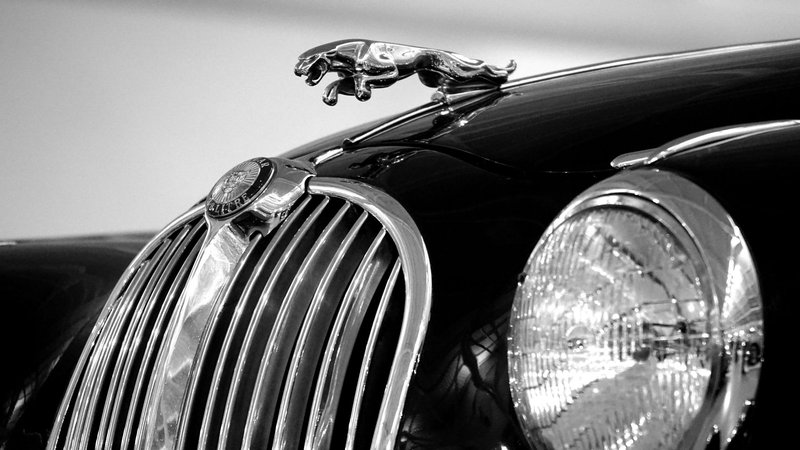
The Mark 2 arrived in October 1959, so it is technically a 1950s launch, but it carried Jaguar through the 1960s. It is the car most people mean when they say “classic Jaguar saloon”: compact, wood-and-leather inside, quick enough to embarrass sports cars. It became the favourite of two groups that rarely agreed on anything, bank robbers and the police who chased them.
There were three engines. The 2.4 made 120 bhp and topped out around 101 mph. The 3.4 made 210 bhp and about 120 mph. The 3.8 made 220 bhp and 125 mph, which in 1960 was faster than most things on a British road. For how that compared with the decade’s quickest cars, see the fastest cars of the 1960s, ranked by 0-60. All of them had disc brakes on four wheels, and the 3.4 and 3.8 could be ordered with a Moss four-speed gearbox with overdrive or a Borg-Warner automatic.
Why it’s called “Mark 2.” Jaguar never called the earlier car a Mark 1. The 1955 saloon was just the 2.4 Litre, and the name came retroactively once the improved model needed distinguishing from it. The visual difference is the glass: the Mark 2 has slimmer pillars, a much bigger rear window and a wider rear track. If the car looks airy, it’s a Mark 2. If the rear window looks like a postage stamp, it’s the older car.
Across all five versions (2.4, 3.4, 3.8, 240 and 340), Jaguar built 83,701 Mark 2-family cars.
E-Type Series 1
The E-Type launched at the Geneva Motor Show in March 1961 with a 3.8-litre straight-six, 265 bhp and a claimed top speed of 150 mph. Press cars did verify around 149 to 150 mph, though customer cars were slower. Price was roughly £2,100 in the UK, which undercut Aston Martin and Ferrari by a wide margin. It was so well received that the Museum of Modern Art in New York added a 1963 E-Type roadster to its permanent design collection in 1996.
Aerodynamicist Malcolm Sayer drew the body. Underneath was a monocoque centre section with a tubular front subframe, independent rear suspension and disc brakes at all four corners, hardware that most sports cars of 1961 couldn’t offer. For other coupes of the decade, see 15 best 1960s coupes worth knowing (and owning). “Series 1” is the name collectors give to the cars built before the 1968 redesign, and it covers three distinct things.
3.8-litre (1961-1964)
The original. Available as an open two-seater (roadster, or OTS) and a fixed-head coupe (FHC) with a side-hinged rear hatch. Roughly 15,500 were built. Early cars have flat floors and external bonnet latches, and the Moss gearbox has no synchromesh on first gear, a detail that catches out new owners.
4.2-litre (1964-1968)
Introduced in October 1964. Still 265 bhp, but torque rose to about 283 lb ft from 260, and the gearbox finally got synchromesh on all four gears. The seats and brakes were improved too. Same roadster and coupe bodies.
2+2 (1966-1968)
Added in 1966, with a wheelbase about nine inches longer, a taller roofline and two small rear seats, and an automatic gearbox as an option. It only came as a 4.2 coupe, and it’s the E-Type that sells for the least.
A late-1967 transitional model (usually called Series 1.5) and the 1968 Series 2 followed, with uncovered headlights and larger bumpers, but those lean into the 1970s and fall outside this list.
Mark X and 420G
Launched in October 1961, the Mark X (that’s the Roman numeral ten, not “ex”) was Jaguar’s flagship: a huge monocoque saloon with independent rear suspension, four-wheel disc brakes and, at first, the triple-carburettor 3.8 from the E-Type. A 4.2 engine arrived in 1964. At roughly 6 ft 4 in wide it was too big for many British garages and a good chunk of British roads, but it was designed with American buyers in mind. 13,382 were built.
The 420G replaced it in October 1966. Same body, 4.2 litres, and the easiest identifier is a chrome strip running down the flanks. It stayed in production until 1970, and 5,763 were built. If someone tells you it’s a Mark X and it has the side strip, they’re mistaken.
S-Type and 420
The S-Type (1963-1968) is the car that confuses people most, because it sits between two others. Jaguar took a Mark 2 front end, bolted on a longer tail from the Mark X, and fitted independent rear suspension. The result looks like a Mark 2 that has grown a bigger boot, with a more luxurious interior. Engines were the 3.4 (210 bhp) and the 3.8 (220 bhp). About 25,000 were built.
The 420 (1966-1968) takes the S-Type body and gives it the Mark X’s quad headlights and a 4.2-litre engine, rated at 245 bhp with triple carburettors. Top speed was around 123 mph. 9,801 were built. Daimler sold a badge-engineered version as the Sovereign.
Jaguar 240 and 340
In 1967, Jaguar tidied up the Mark 2 range. The 2.4 became the 240, and the 3.4 became the 340. The 3.8 was dropped. Both got slimmer bumpers and lost the fog lamps in the grille, which is the quick visual tell.
The 240 gained a straight-port cylinder head that lifted power from 120 to 133 bhp, a modest bump. The 340 kept the 3.4’s 210 bhp. Production was small: about 4,400 of the 240 and 2,800 of the 340. They were the last Mark 2s, and when the XJ6 arrived in 1968, they became obsolete almost immediately.
XJ6
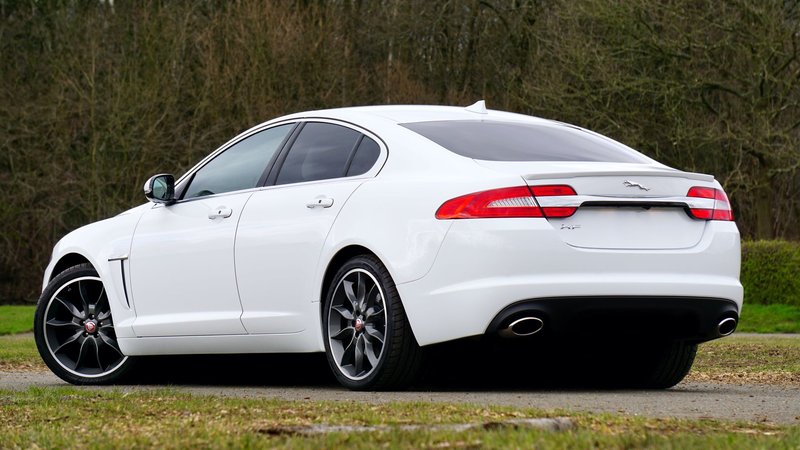
The XJ6, unveiled in September 1968, replaced the 240 and 340, S-Type and 420 in one move. Jaguar was rationalising after the merger with BMC and wanted a single saloon to cover the range. The 2.8-litre made 140 bhp. The 4.2 made 245 bhp and reached roughly 120 mph.
Its reputation rests on ride and handling. Sir William Lyons shaped the body, and chassis engineer Bob Knight’s work gave it the ride quality of the big Mark X in a far smaller package. About 82,000 Series 1 cars were built through 1973. For the lineup as it stood at the end of the decade, see 1969 Jaguar car models: the complete lineup and values.
The footnotes: XJ13 and the Lightweight E-Type
Two cars never reached ordinary showrooms.
Lightweight E-Type (1963-1964). Jaguar built 12 aluminium-bodied E-Types for racing, with an aluminium-block 3.8 and fuel injection that made roughly 340 bhp. Eighteen had been planned. Jaguar finished the last six in 2014-2015, which are sometimes called “continuation” cars.
XJ13 (1966). A mid-engined prototype with a 5.0-litre quad-cam V12, built to win Le Mans. It never raced: rule changes ended the project before it could. The only one built was wrecked at MIRA in January 1971 during a filming session, with Norman Dewis unhurt. It was rebuilt and now sits in the British Motor Museum at Gaydon.
Two carryovers from the 1950s also remained on sale briefly: the XK150, which ended in 1961 when the E-Type replaced it, and the Mark IX saloon, which ended the same year.
Jaguar Mark 2 vs S-Type vs 420 vs Mark X: how to tell the saloons apart
Most “which Jaguar is this?” questions come down to four cars. These are the checks that work from a parked distance.
| Car | Front end | Rear end | Rear suspension |
|---|---|---|---|
| Mark 2 | Two headlamps, grille with fog lamps below | Short tail, wide rear window | Live axle on leaf springs |
| S-Type | Mark 2 front end | Longer, squared tail | Independent |
| 420 | Four headlamps (two each side) | Same long tail as S-Type | Independent |
| Mark X / 420G | Four headlamps, very wide | Wide, heavy tail | Independent |
The Mark X and 420G are about a foot wider than the others, and the 420G adds the side chrome strip. Everything else is a count of headlamps and a look at the tail.
Buying a 1960s Jaguar today
Prices swing widely by condition, specification and provenance, so check recent auction results before you commit. A few rules hold regardless.
The E-Type Series 1 roadster and coupe command the highest prices, with early 3.8 flat-floor cars sitting at the top. The 2+2 is the cheaper way in. The Mark 2 3.8 costs more than the 2.4 and 3.4 because it’s faster and more collectible. The Mark X, 420 and 420G are often the least expensive large Jaguars of the decade, though they cost real money to restore because there’s so much car.
On rust: all of these cars rot. Check sills, wheel arches, floor pans and the boot floor. The monocoque E-Type needs special attention at the bonnet frame and floor. Maintenance on the XK engine is well documented and parts are available, but bodywork is where the money goes.

Daniela Voss
More from Daniela VossHow we reviewed this article
This article was researched against manufacturer records and editorially reviewed before publishing. We accept no payment for coverage. Some guides contain affiliate links; see our affiliate disclosure.