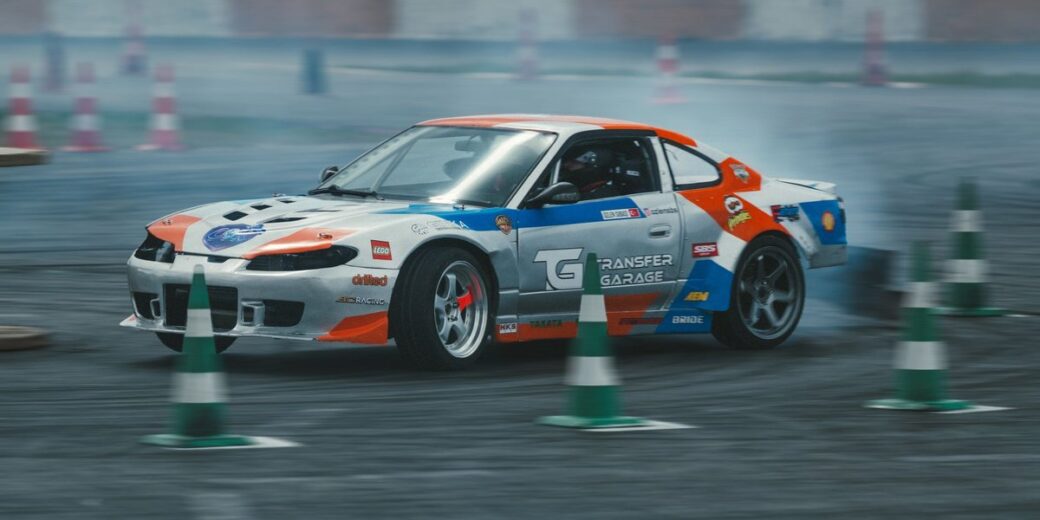
The best Japanese drift cars are the ones that check four boxes: rear-wheel drive, low weight, a huge aftermarket, and a documented history of sliding sideways in anger. Plenty of fast Japanese cars fail at least one. This list ranks ten that don’t, and tells you what each one costs you today.
Table of Contents
- TLDR
- How We Ranked Them
- The 10 Best Japanese Drift Cars
- 1. Toyota AE86 Trueno and Levin
- 2. Nissan Silvia S13 and 180SX
- 3. Nissan Silvia S15
- 4. Nissan Silvia S14
- 5. Toyota Chaser JZX100
- 6. Toyota Supra MK4
- 7. Mazda RX-7 FD
- 8. Nissan Skyline R32 GTS-t
- 9. Nissan 350Z
- 10. Toyota GT86 and Subaru BRZ
- Quick Comparison Table
- Buying Note: Prices and the Clean-Car Problem
TLDR
- Best overall: Toyota AE86. Every other drift car is, in some way, a response to it.
- Best first drift car: Nissan S13 or 180SX. Light, balanced, cheap to fix, and every part you’ll ever need exists.
- Best for pro-level power: Toyota Supra MK4 or Mazda RX-7 FD, if you can afford the entry fee.
- Best sedan: Toyota Chaser JZX100.
- Best new-ish car with a warranty-era feel: Toyota GT86 / Subaru BRZ.
- Most overpriced right now: AE86, S15 and Supra. Buy them for love, not for value.
How We Ranked Them
Raw horsepower didn’t decide anything here. A 600 hp all-wheel-drive monster can win a drag race and still be a bad drift car. We scored each car on five things:
- Layout. Front engine, rear-wheel drive. No exceptions, which is why the Skyline GT-R isn’t on this list.
- Weight and balance. A car around 1,000 to 1,300 kg changes direction when you ask. A 1,500 kg car makes you plan ahead.
- Power and power-to-weight. Enough to break the rear tires loose in second or third gear without a swap, or a swap that bolts in easily.
- Aftermarket support. Angle kits, coilovers, seats, subframes, differentials. If you can’t buy the part, you can’t fix the car.
- Drift pedigree. Did it win in D1 Grand Prix or Formula Drift? Did Keiichi Tsuchiya, the “Drift King,” or Initial D put it on the map? A car doesn’t earn “of all time” on specs alone.
Each entry below carries a “best for” tag, a spec block (stock figures, approximate), and the swaps people actually use.
The 10 Best Japanese Drift Cars
1. Toyota AE86 Trueno and Levin
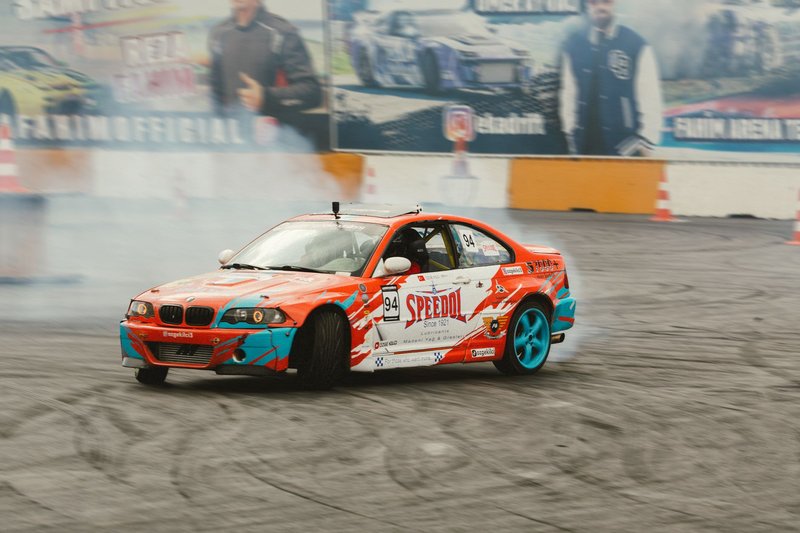
Best for: Purists and anyone who wants the history. Specs: 4A-GE 1.6L four-cylinder, about 128 hp, roughly 950 kg, FR layout, 5-speed manual. Typical swaps: 4A-GE 20-valve “silver top” or “black top,” SR20DET, 1JZ or 2JZ.
The AE86 is where it started. Tsuchiya built his reputation sliding Trueno and Levin coupes down Japanese mountain passes in the 1980s, and Initial D‘s tofu-delivery Trueno turned that into a global religion.
On paper it’s a slow car. About 128 hp, a live rear axle, skinny tires. That’s the point: the AE86 teaches you throttle control because it never has enough power to bail you out. Keep the engine spinning past 6,000 rpm, kick the clutch, and it rotates.
The catch is price and condition. Clean examples now sell well into five figures, and the good ones aren’t being drifted. A tired Corolla Levin with a rusty rear arch and a worn-out 4A-GE is still not cheap. Buy one because you want one.
Drift moment: Tsuchiya’s mountain runs and the Hot Version videos that followed made it the first drift car anyone recognized.
2. Nissan Silvia S13 and 180SX
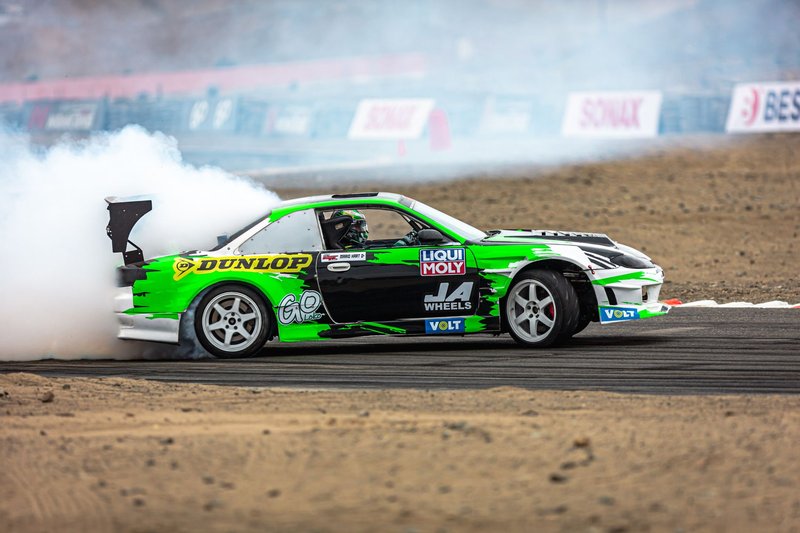
Best for: Beginners and budget builds. Specs: SR20DET 2.0L turbo (JDM), about 200 hp; roughly 1,150 to 1,250 kg; FR; 5-speed manual. Typical swaps: SR20DET into the US 240SX’s KA24, or into a naturally aspirated Silvia; RB25, 2JZ and LS V8 for bigger builds.
If an expert tells you to start drifting, they’ll say S13. It’s light, it’s balanced, the steering feels direct, and the parts catalog is enormous. A good chunk of it is also cheap, because so many were built.
The 180SX is the hatchback version, and people mix and match the front end with the Silvia’s, producing the “Sileighty.” The US 240SX is the same chassis with a heavier, torquier KA24 engine; swap in the SR20DET and you’ve got the JDM car without the import paperwork.
Prices have risen sharply, and finding an unmolested, rust-free chassis is a hunt. A decent running example is still far cheaper than anything else on this list that has the same capability.
Drift moment: American drifting grew up on 240SXs. Formula Drift’s early seasons were thick with them.
3. Nissan Silvia S15
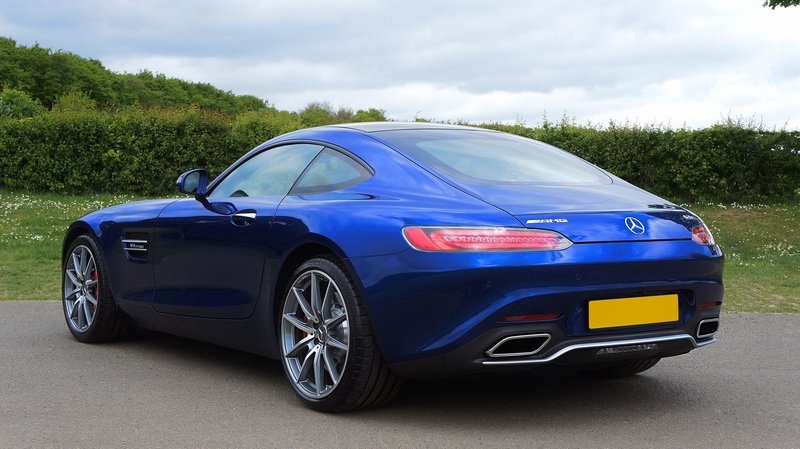
Best for: A modern-feeling chassis with factory power. Specs: SR20DET 2.0L turbo, about 247 hp (Spec-S and Spec-R), roughly 1,240 kg, FR, 6-speed manual on the Spec-R. Typical swaps: Most stay SR20DET; RB26, 2JZ and LS appear in pro builds.
The S15 is the last Silvia, and the prettiest of the 1990s Japanese sports cars. It has a stiffer chassis than the S13 and S14, a 6-speed on the Spec-R, and ships with enough turbo power to slide on factory suspension. It was already showing up on D1 Grand Prix grids in the series’ early years and became a default pro-level chassis.
Here’s the trouble: the S15 became legal for US import only recently. Nissan built it from 1999 to 2002, so the 25-year rule has opened up a trickle of cars, and prices have followed. Expect Spec-Rs to cost more than most new cars’ down payments.
Shop carefully for chassis damage. Many of these have already been drifted hard for two decades.
Drift moment: The D1 Grand Prix era, when the S15’s balance and SR20 punch made it the car pros built around.
4. Nissan Silvia S14
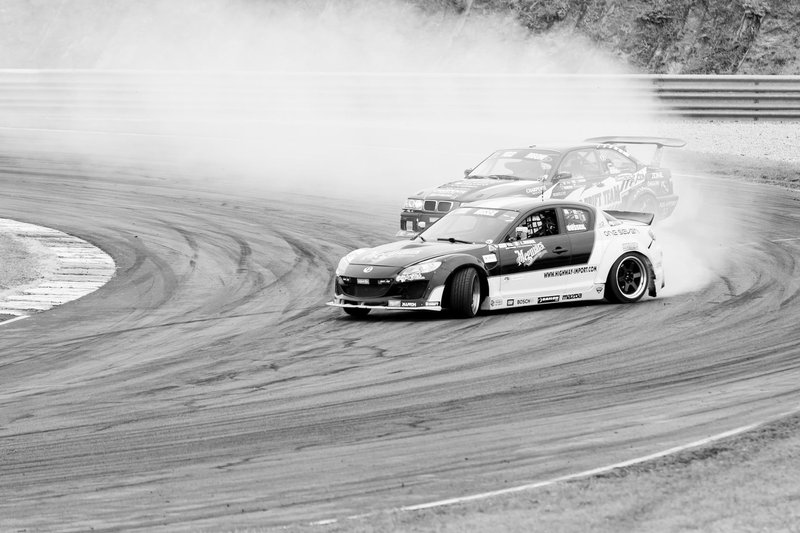
Best for: Value-minded drivers who want an SR20DET and are willing to look past the styling. Specs: SR20DET 2.0L turbo, about 217 hp (JDM turbo), roughly 1,260 kg, FR, 5-speed manual. Typical swaps: Same as the S13; the S14 shares most of its drivetrain.
Nobody puts the S14 on a poster. The Zenki (1993 to 1996) front end looks like a startled frog, and the Kouki (1996 to 1998) is only a slight improvement. But the car underneath is a heavier, stiffer S13 with more power, and many of the same parts fit.
That makes it the sensible middle child. It costs less than an S15, grips harder than an S13 out of the box, and takes the same upgrades. In the US it was sold as the 240SX from 1995 to 1998 with the KA24DE.
If you care more about sliding than looking, the S14 is the smart buy. You’ll hear people say it’s a worse S13. In practice, it’s a more planted one.
Drift moment: It’s the other half of the American 240SX scene, running the same grids as the S13.
5. Toyota Chaser JZX100
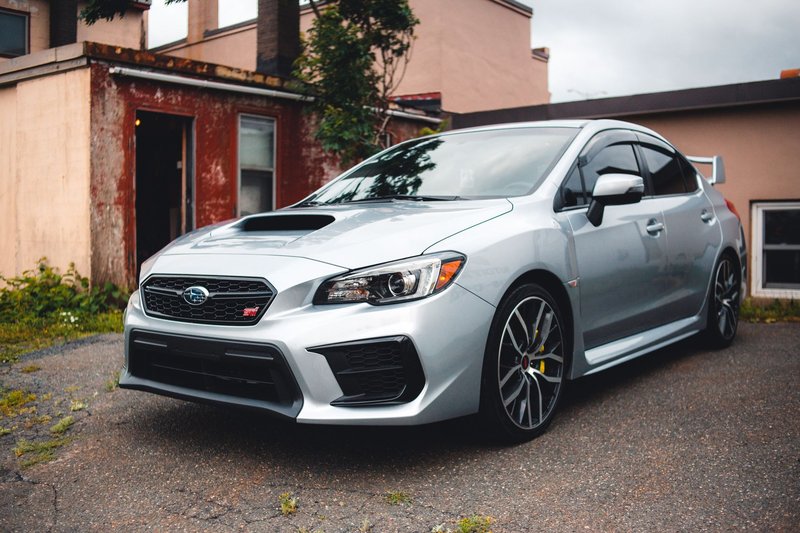
Best for: Sedan fans and anyone who wants 1JZ torque. Specs: 1JZ-GTE 2.5L twin-turbo (early) or single-turbo (late) inline-six, about 276 hp, roughly 1,500 kg, FR, 5-speed manual or 4-speed auto. Typical swaps: Mostly stock 1JZ, or 2JZ-GTE for more power.
The Chaser is a four-door family sedan that drifts like a coupe. It shares the JZX100 platform with the Mark II and Cresta, which means a wealth of parts and a long history of Japanese street and competition use.
It’s heavier than anything above, and you feel it. The upside: all that 1JZ torque makes it easy to hold angle. The Tourer V with the factory manual is the one to find, because the automatic Chasers sap the fun out of it.
There’s also a practical bonus. It seats four, so the car you drift on weekends can drive to work on Monday.
Drift moment: Chasers, Mark IIs and Crestas are a regular sight in D1 Grand Prix and Japanese drift events.
6. Toyota Supra MK4
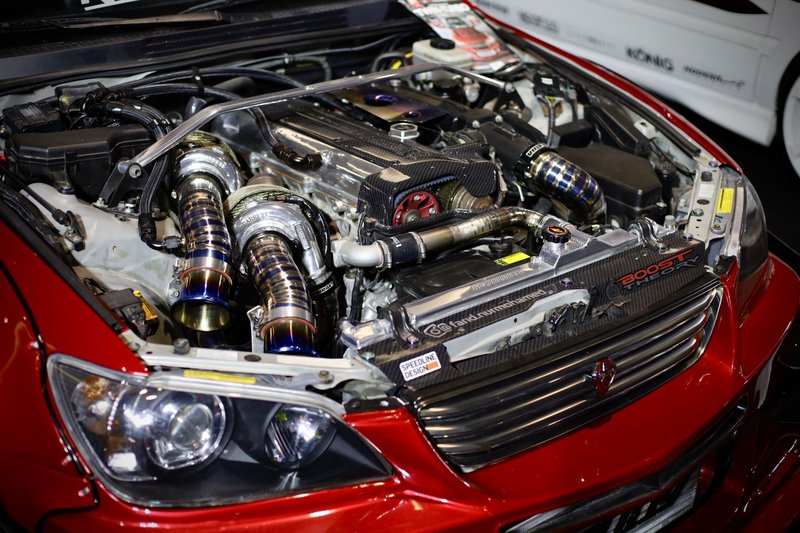
Best for: Pro-level power builds and big budgets. Specs: 2JZ-GTE 3.0L twin-turbo inline-six, about 276 hp stock (JDM), roughly 1,500 kg, FR, 6-speed manual. Typical swaps: The 2JZ-GTE is the swap. Most people just tune it.
The MK4 Supra makes the list because of its engine more than its chassis. The 2JZ-GTE’s iron block takes huge boost without complaint, and that’s why Supras (and the engine, in other cars) show up on pro grids with four-digit power.
On the other hand, it’s a heavy, long-wheelbase GT car. It drifts, but it asks more of you than an S-chassis does, and the pedigree isn’t as deep as the Silvia’s. Think of it as a big-power platform, not a learner car.
Prices are the other problem. Clean, manual turbos routinely sell for six figures. A drift-ready one still costs a lot; so does the damage when you put it in a wall.
Drift moment: The 2JZ swap became the default answer for “how do I make 800 hp in a Japanese car?”
7. Mazda RX-7 FD
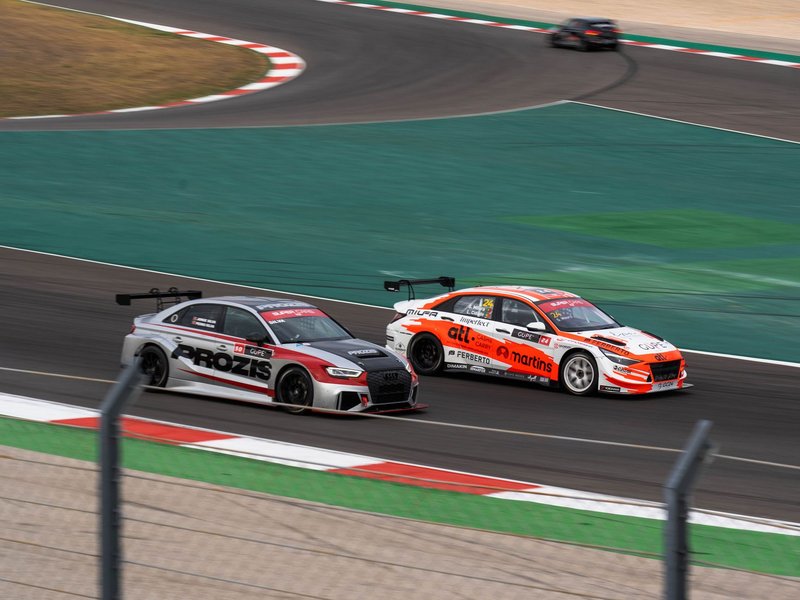
Best for: Drivers who want a rotary and a light, low chassis. Specs: 13B-REW 1.3L twin-rotor sequential twin-turbo, about 255 hp, roughly 1,250 kg, FR, 5-speed manual. Typical swaps: Rebuilt 13B, or a switch to 2JZ, LS or a Toyota engine for reliability.
The FD is a beautiful car with an excellent chassis. The weight distribution is near 50/50, the center of gravity is low, and it handles like a proper sports car.
It’s also hard to own. The sequential turbo system is a maze of vacuum hoses, apex seals wear, and a worn rotary is expensive. That’s why many drift FDs end up with a different engine swapped in.
Pop culture helped. In The Fast and the Furious: Tokyo Drift, Han’s VeilSide Fortune RX-7 gave the FD a second life as a drift icon. Ryosuke Takahashi’s white FC3S in Initial D did the same for its older sibling.
Drift moment: Han’s orange-and-black FD in Tokyo Drift.
8. Nissan Skyline R32 GTS-t
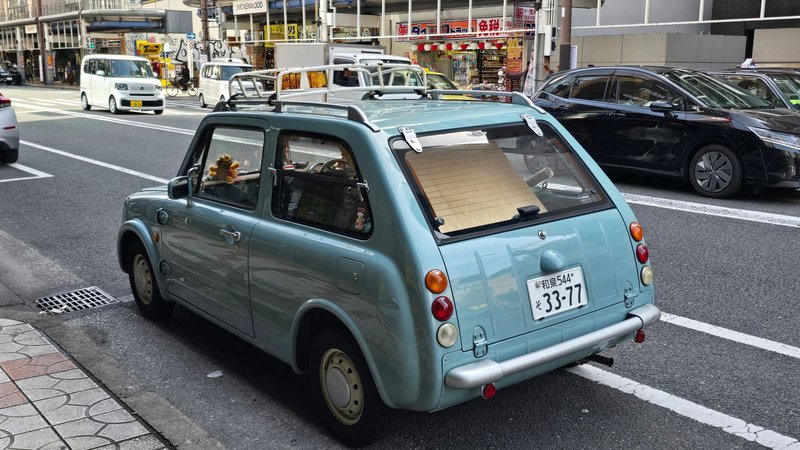
Best for: Budget builders who want an inline-six and are happy to read a manual. Specs: RB20DET 2.0L turbo inline-six, about 212 hp, roughly 1,250 kg, FR, 5-speed manual. Typical swaps: RB25DET or RB26DETT, or a 2JZ.
The GT-R gets the headlines, but the GTS-t is the one that makes sense for drifting. It’s rear-wheel drive, it has a smooth RB20DET, and it’s cheaper than the GT-R by a wide margin.
One quirk to know about: the GTS-t’s HICAS rear-steering system. Most drifters lock it out or delete it, because it makes the car harder to predict at the limit.
Pedigree is the thinnest on this list. Skylines are better known for circuit racing than sideways driving. But as a budget six-cylinder platform, it’s still sound.
Drift moment: There isn’t a defining one. Think of it as an enthusiast-favorite platform.
9. Nissan 350Z
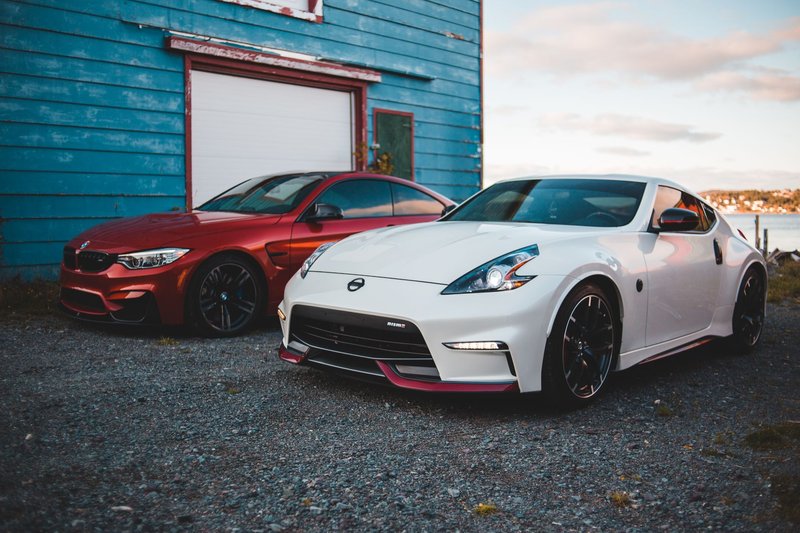
Best for: US drivers who want a drift car without importing one. Specs: VQ35DE 3.5L V6, about 287 to 300 hp, roughly 1,450 kg, FR, 6-speed manual. Typical swaps: VQ35 turbo kits, or a VK56 or LS V8 for pros.
The 350Z is a wide, heavy car, and it’s not a natural drifter. But it has plenty of power and torque, it’s available new-ish on every used lot in the US, and it’s cheap to buy.
The aftermarket is huge. Formula Drift grids have run 350Zs and 370Zs for years, so the engine tuning, differentials and suspension work are well-developed.
You’ll need to add a limited-slip differential and stronger cooling. Once you do, it’s a competent, forgiving platform, if not an exciting one.
Drift moment: Formula Drift’s long run of Z-car competitors.
10. Toyota GT86 and Subaru BRZ
Best for: Modern, reliable, newer-car beginners. Specs: FA20 2.0L flat-four, about 200 hp, roughly 1,240 kg, FR, 6-speed manual. Typical swaps: Turbo or supercharger kits, or an LS or 2JZ for pro-level.
Toyota and Subaru made the GT86 and BRZ as spiritual successors to the AE86, and they did the job. It’s light, balanced and has a short wheelbase. A Torsen limited-slip diff came as standard, and the factory tires were low-grip, which made sliding easy from day one.
It doesn’t have the power. The FA20 makes about 200 hp, with a well-known torque dip around 4,000 rpm. Most builds add forced induction or an engine swap.
Still, it’s the only car on this list you can buy with a clean title, modern safety, and a warranty-era feel. It’s also the best answer if you’ve read the price on an AE86.
Drift moment: Ryan Tuerck and other pros campaigned FR-S and GT86s in Formula Drift.
Quick Comparison Table
| Car | Approx. stock power | Approx. weight | Best for | Price today (ballpark) |
|---|---|---|---|---|
| Toyota AE86 | 128 hp | 950 kg | Purists | $30,000+ for clean ones |
| Nissan S13 / 180SX | ~200 hp (JDM) | 1,150-1,250 kg | Beginners, budget | $10,000-$25,000+ |
| Nissan S15 | 247 hp | 1,240 kg | Modern chassis | $40,000+ |
| Nissan S14 | 217 hp | 1,260 kg | Value | $12,000-$25,000 |
| Toyota Chaser JZX100 | 276 hp | 1,500 kg | Sedan fans | $20,000-$35,000 |
| Toyota Supra MK4 | 276 hp | 1,500 kg | Pro-level builds | $80,000+ |
| Mazda RX-7 FD | 255 hp | 1,250 kg | Rotary fans | $35,000-$60,000+ |
| Nissan Skyline R32 GTS-t | 212 hp | 1,250 kg | Budget six-cylinder | $15,000-$30,000 |
| Nissan 350Z | 287-300 hp | 1,450 kg | US buyers | $10,000-$20,000 |
| Toyota GT86 / Subaru BRZ | 200 hp | 1,240 kg | Modern beginners | $18,000-$30,000 |
Prices are ballpark ranges that move month to month and vary by country and condition. Check current listings before you commit.
Buying Note: Prices and the Clean-Car Problem
The AE86, S15 and Supra have all gotten expensive because they’re famous, and the S15 got more so when it became eligible for US import. Under US law, a vehicle at least 25 years old can be imported without meeting current federal safety standards, and NHTSA counts that period from the car’s date of manufacture. Each new model year that crosses that line brings a wave of imports and a bump in demand.
Then there’s the condition problem. Drift cars are the ones that get driven hard. Nearly every S-chassis and AE86 has been crashed, repaired, drifted, or modified, and finding an original, unmodified one is rare and expensive.
A few rules that help:
- Buy the built car if it’s well-built. A shell with good paint and no rust is worth more than a pile of parts. A previous owner’s coilovers and angle kit can save you thousands.
- Check the rear subframe and rails. Look for bends, cracks and poor welds near the strut towers and frame rails.
- Don’t pay clean-car money for a clean-looking car with a crashed past. Get a pre-purchase inspection.
- Budget for the swap. A cheap car plus an engine swap often costs more than a car with the engine you want already in it.
- Don’t ignore alternatives. If the AE86 or S15 prices make you sweat, a S14, R32 or GT86 gets you drifting for a fraction of the cost.

Marco Delantero
More from Marco DelanteroHow we reviewed this article
This article was researched against manufacturer records and editorially reviewed before publishing. We accept no payment for coverage. Some guides contain affiliate links; see our affiliate disclosure.