TLDR: The Quick Picks
- Best for tuning: Toyota Supra A80 Turbo. The 2JZ-GTE’s iron block takes far more boost than Toyota ever asked of it.
- Best daily driver: Mazda MX-5 Miata (NA). It’s cheap, it starts every morning, and parts are everywhere.
- Best investment: Honda NSX. It was the benchmark in 1990, and the clean ones haven’t stopped climbing.
- Best driving experience per dollar: Honda Integra Type R. Nothing else here revs to 8,400 rpm and steers like it’s wired to your hands.
- Best “rare thing you can actually import”: Nissan Skyline GT-R R32 or Mitsubishi Lancer Evolution IV to VI. Neither was sold new in the US, and both are now legal.
Table of Contents
- Why the 1990s Were a Golden Age
- The 12 Cars
- Spec Comparison Table
- JDM vs US-Market: What Was Never Sold Here
- The 25-Year Rule and Importing One
- Buying Tips Before You Spend Anything
Why the 1990s Were a Golden Age
Japan’s best sports cars share a narrow window, roughly 1989 to 2002, and it wasn’t an accident. Three things lined up.
The first was money. After the 1985 Plaza Accord pushed the yen sharply higher, Japanese cash piled into a bubble economy. Carmakers had budgets for halo cars that no accountant would approve today: an all-aluminum supercar at Honda, a twin-turbo, four-wheel-steering grand tourer at Mitsubishi.
The second was ambition. Nissan’s internal “901 Activity” set a goal of building the best-handling cars in the world by 1990, and Nippon.com’s history of the era traces how that spread through the industry. Engineers were chasing Porsche and Ferrari, not each other. The 1990 model year shows where that led: the NSX, the 300ZX Twin Turbo and the Lexus LS all arrived together.
The third was a gentleman’s agreement. Japanese makers informally capped advertised output at 276 PS (about 272 hp) from 1989 until 2004. That’s why a Skyline GT-R, a Supra and an Evo all claim nearly identical numbers, and why dyno sheets tell a different story.
Then came the culture. Gran Turismo launched in 1997 and put every car on this list into the bedroom of a generation of teenagers. The Fast and Furious films did the rest. Those teenagers now have mortgages, and they’re the reason prices look the way they do.
The 12 Cars
Each entry covers years, engine, drivetrain and what the car is actually like to own today. Prices are rough US ranges for decent, running examples, and they move fast, so treat them as a starting point.
1. Honda NSX (1990–2005)
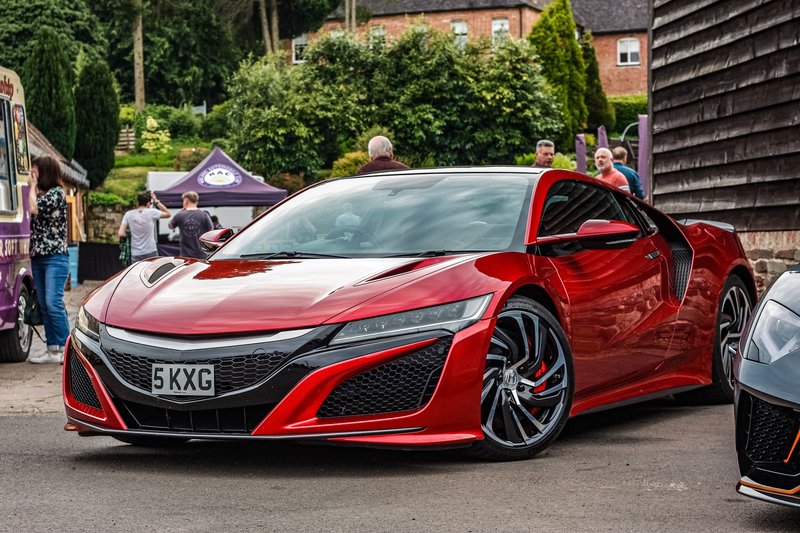
Engine and power: 3.0L V6 (C30A), 270 hp; 290 hp 3.2L with a six-speed from 1997. Drivetrain: mid-engine, rear-wheel drive.
The NSX was the first mass-production car with an all-aluminum body, and Ayrton Senna’s feedback on chassis stiffness is part of the car’s origin story. It weighs around 3,000 lb, sits low, and has the visibility of a fighter jet. The VTEC V6 isn’t the fastest thing on this list, but it’s the most usable. Ferrari-level exotic in a car that starts in a Walmart parking lot in July.
Ownership reality: Clean cars run roughly $90,000 to $150,000 and up. Maintenance costs more than a Honda should, because aluminum bodywork and specialist labor aren’t cheap. Check for accident repair, since a crashed NSX body is a nightmare to fix properly. Sold in the US as the Acura NSX, so no import needed.
2. Toyota Supra A80 Turbo (1993–2002)
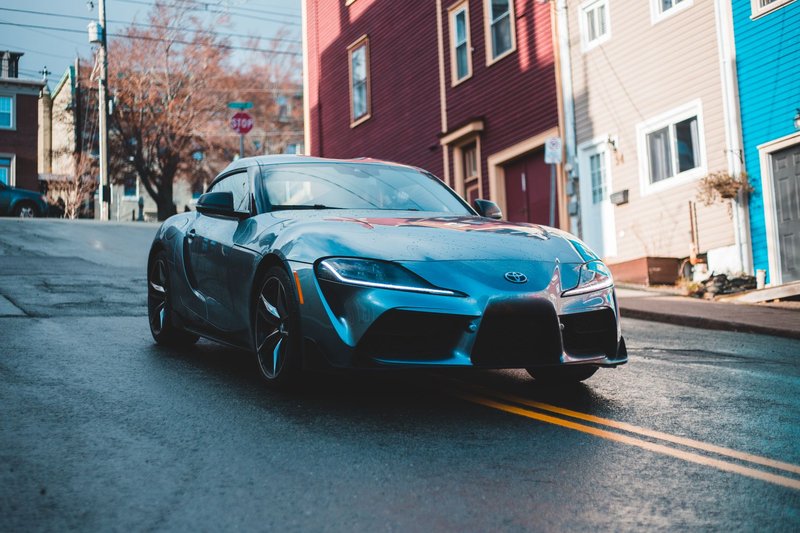
Engine and power: 3.0L twin-turbo inline-six (2JZ-GTE), 320 hp in the US; 280 PS in Japan. Drivetrain: front engine, rear-wheel drive, six-speed Getrag manual.
The 2JZ is the reason this car costs what it does. The cast-iron block and forged internals mean 600 hp on a stock bottom end isn’t unusual, and tuners have pushed them past 1,000. The Supra is also big and heavy for a sports car, at about 3,400 lb. It’s a grand tourer that happens to be fast.
Ownership reality: US sales ended after 1998. Clean turbo manuals commonly clear $100,000, and the best ones go well above that. The danger isn’t the engine, it’s the car: heavily modified examples, fake “turbo” clones built from non-turbo cars, and rust-free titles that aren’t what they claim. The six-speed manual is the one to buy.
3. Mazda RX-7 FD (1992–2002)
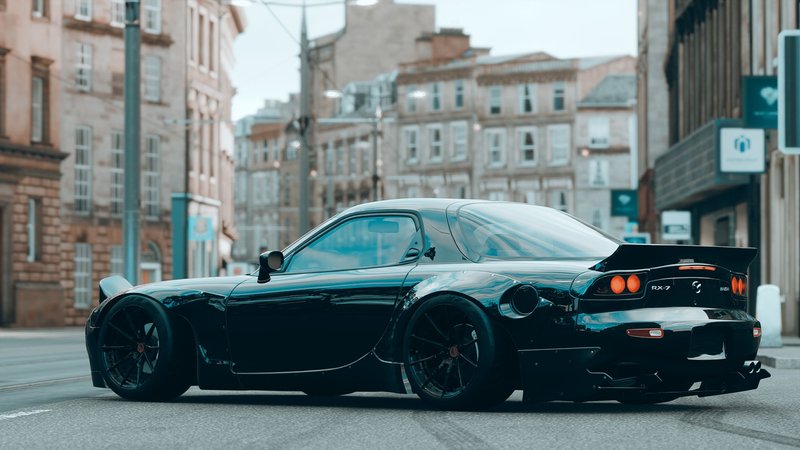
Engine and power: 1.3L twin-rotor, sequential twin-turbo (13B-REW), 255 hp in the US; up to 280 PS in Japan. Drivetrain: front-mid engine, rear-wheel drive.
At about 2,800 lb with near-perfect weight balance, the FD is the best-handling car here. The rotary revs eagerly and the body looks like nothing else on the road. It’s also the most demanding car to own.
Ownership reality: The US only got it from 1993 to 1995, so the supply of legal US cars is small, and prices run roughly $40,000 to $80,000 and up. Rotary engines don’t forgive neglect: failed apex seals, heat damage in a crowded engine bay and a maze of vacuum hoses are the standard problems. Buy one with a documented rebuild by a rotary specialist, or budget for it. Later Japanese cars (1996–2002) are now import-eligible.
4. Nissan Skyline GT-R (R32, R33, R34; 1989–2002)
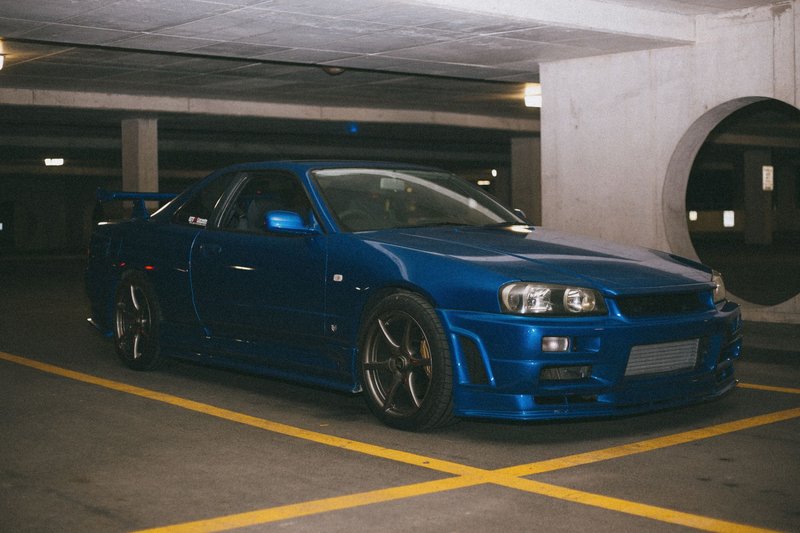
Engine and power: 2.6L twin-turbo inline-six (RB26DETT), advertised at 276 PS. Drivetrain: ATTESA E-TS all-wheel drive.
Nissan counts three generations as one car, so we will too. The R32 brought the GT-R name back in 1989 and won so many races that Australian press nicknamed it “Godzilla.” The R33 is the grand-tourer-ish middle child. The R34 has the Gran Turismo fame and the price tag to match.
Ownership reality: None were sold new in the US, so every one you see here is a Japan-market import. Roughly: R32 from about $50,000, R33 from about $60,000, R34 from $150,000 and rising steeply for V-Spec and Nür editions. The RB26 is stout, but check for rust at the strut towers and sills, and for engines modified beyond what the seller admits. The R34 was built until August 2002, so late cars become legal in 2027.
5. Nissan 300ZX Twin Turbo (Z32; 1990–1996 US, to 2000 Japan)
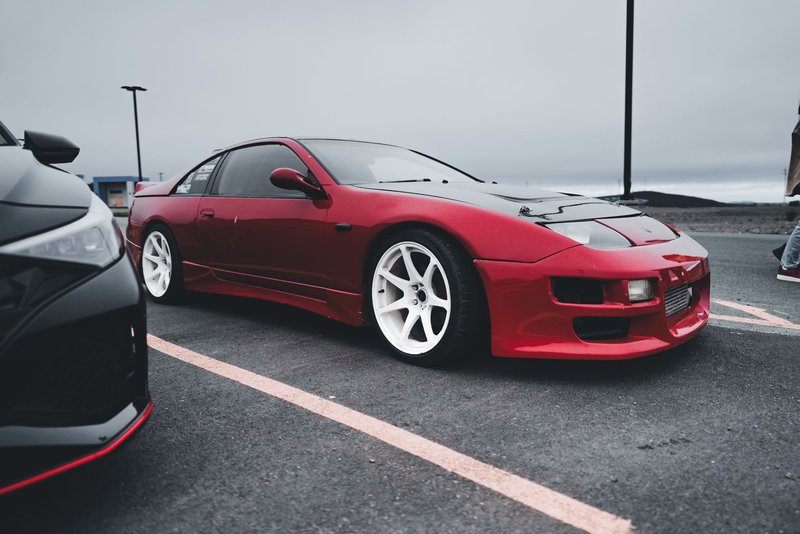
Engine and power: 3.0L twin-turbo V6 (VG30DETT), 300 hp. Drivetrain: front engine, rear-wheel drive, with optional four-wheel steering (HICAS).
Low, wide and ahead of its time, the Z32 looks younger than almost anything here. It’s also a heavy 3,500 lb with a tight engine bay: anything behind the turbos means pulling a lot of parts.
Ownership reality: Good twin turbos sell for roughly $20,000 to $45,000, which is cheap for the specs. Expect T-top leaks, perished vacuum lines and the kind of labor bills that come with a crowded V6. The non-turbo (222 hp) is cheaper and has none of the thrill. Pay extra for the manual.
6. Mitsubishi 3000GT VR-4 / Dodge Stealth R/T Turbo (1991–1999)
Engine and power: 3.0L twin-turbo V6 (6G72), 300 hp. Drivetrain: all-wheel drive, four-wheel steering.
This is the technology showcase: AWD, four-wheel steering, a six-speed manual and, on early cars, active aerodynamics. It’s also the heaviest car here at roughly 3,700 lb, and it drives like it. Nobody mistakes it for an RX-7. But on a wet road it’s absurdly capable, and the best-of-the-bubble complexity is the point.
Ownership reality: One of the cheapest ways into this list, at roughly $15,000 to $35,000. The Dodge Stealth is the same car (built in Nagoya, Japan) with different badges, and usually cheaper. The catch is the transverse V6 packaging: a timing-belt job is a long, expensive afternoon. Buy on service history alone.
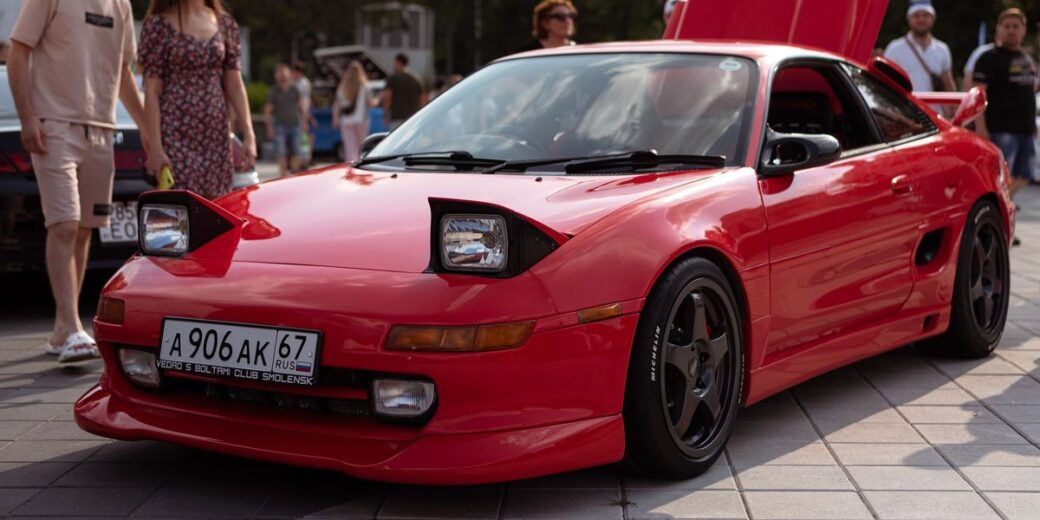
7. Toyota MR2 Turbo (SW20; 1990–1999)
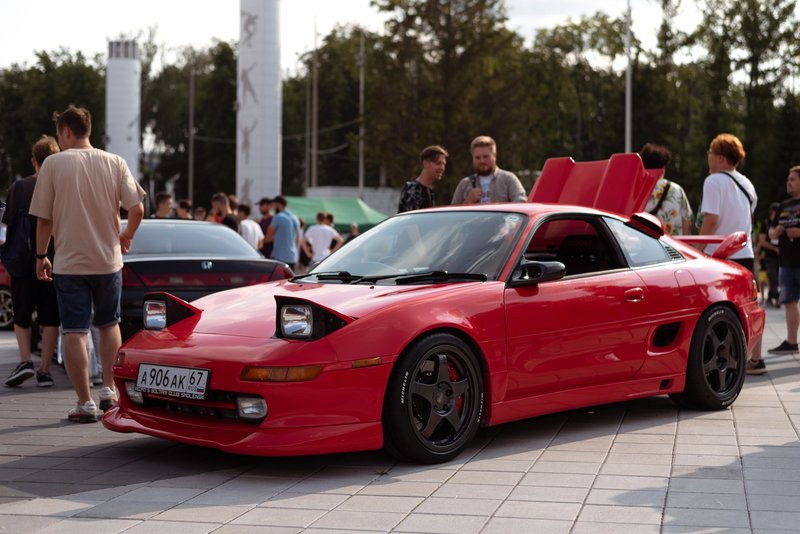
Engine and power: 2.0L turbo four (3S-GTE), 200 hp in the US; 245 PS in later Japanese cars. Drivetrain: mid-engine, rear-wheel drive.
A mid-engine car for roughly the price of a loaded Camry in 1991. It earned a reputation for snap oversteer in early cars, and Toyota revised the suspension and wheels by 1993. Learn the car, and it’s a small, fast, rewarding thing that looks like a Ferrari 348 from across the street.
Ownership reality: Roughly $15,000 to $35,000 for clean examples. Look for a later-revision car (1993 on), check for oil leaks around the turbo and rust near the T-top roof, and be suspicious of any car that’s lived on a track. US sales ended after 1995, and Japanese-market cars are import-eligible.
8. Mazda MX-5 Miata (NA; 1989–1997)
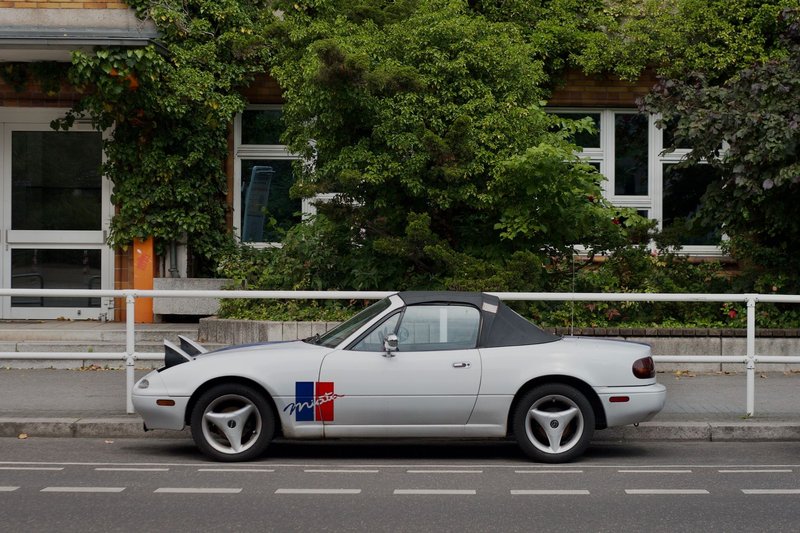
Engine and power: 1.6L four, about 116 hp; 1.8L from 1994, about 128 hp. Drivetrain: front engine, rear-wheel drive.
It’s the slowest car on this list and arguably the best. At around 2,100 lb, a Miata teaches you more about driving in a month than a 300-hp turbo does in a year. It’s also the daily driver of the group: parts are cheap, the community is huge and nobody has ever been scared of one.
Ownership reality: Roughly $6,000 to $18,000, with low-mile cars higher. Rust at the rocker panels and rails is the main killer. On the 1990–1991 1.6L cars, look for the known crankshaft weakness. Any soft top that’s torn or leaking is a quick negotiation point. The original Miata was sold new in the US, so there’s no import angle.
9. Nissan 240SX (S13/S14; 1989–1998)
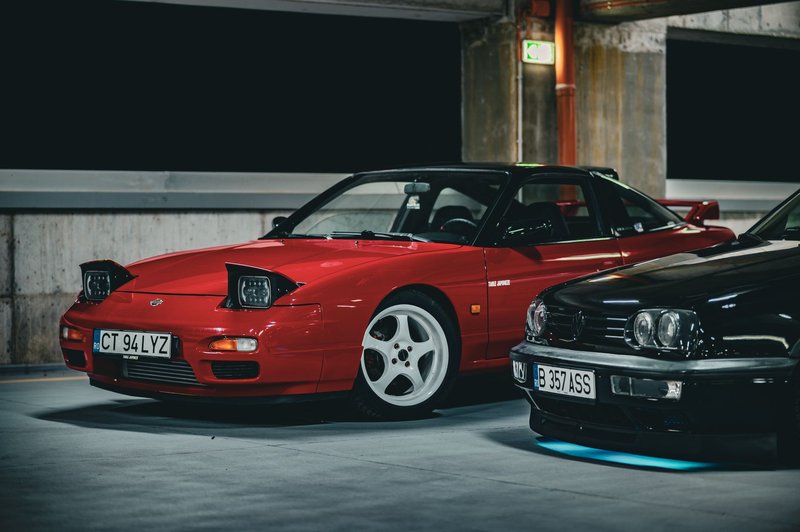
Engine and power: 2.4L four (KA24DE), 155 hp in the US. Drivetrain: front engine, rear-wheel drive.
The drift scene made this car famous and then nearly killed it. In Japan, the same chassis (Silvia and 180SX) came with the turbocharged SR20DET at 205 PS, which is why the US car is considered underpowered and why so many US cars have an engine swap. It’s light, balanced and easy to throw sideways. In 1994 it was one of eight Nissan nameplates sold in the US.
Ownership reality: Roughly $12,000 to $35,000. Untouched cars are rare, since most were drifted, stanced or crashed. Buy the one with the fewest modifications you can find. The Japanese-market Silvia and 180SX are fully import-eligible.
10. Honda Integra Type R (DC2; 1995–2001)
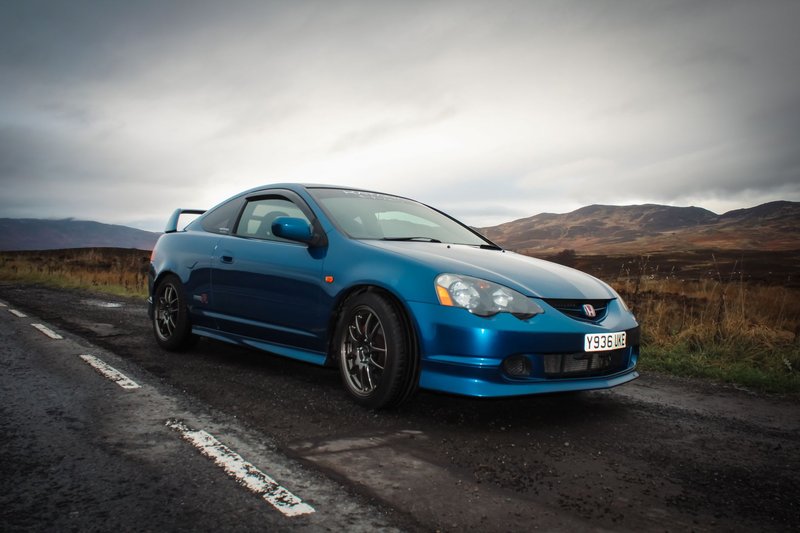
Engine and power: 1.8L four (B18C), about 195 hp in the US, revving to 8,400 rpm. Drivetrain: front-wheel drive, helical limited-slip differential.
The Type R wasn’t about power. Honda stripped sound deadening, hand-finished the engine’s ports and fitted a limited-slip that makes the front end bite in a way few FWD cars have since matched. It’s tiny (2,600 lb) and, to many, still the best-driving front-driver ever built.
Ownership reality: Roughly $35,000 to $70,000 for clean cars, which shocks people who remember it as a $24,000 Acura. Theft was a plague, and the surviving cars have often been stolen, wrecked or cloned. Verify the VIN and chassis plate. JDM-spec right-hand-drive cars (sold from 1995) are import-eligible. The US car arrived for 1997 to 2001.
11. Mitsubishi Lancer Evolution IV to VI (1996–2001)
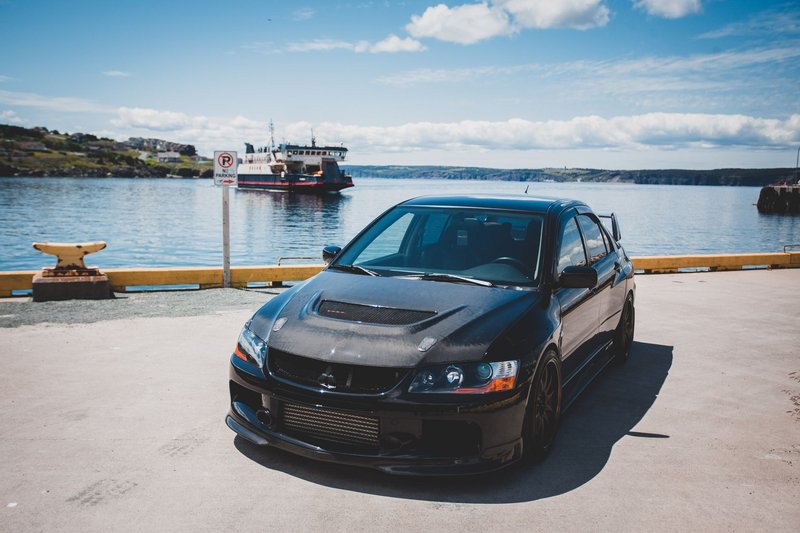
Engine and power: 2.0L turbo four (4G63T), 276 PS. Drivetrain: all-wheel drive, with Active Yaw Control from the Evo IV.
A rally car with license plates. Tommi Mäkinen won four straight WRC drivers’ titles from 1996 to 1999 in Evos, and the road cars carried that DNA: a stiff, boxy sedan with a turbo four that pulls hard and a drivetrain that never lets go. It’s loud, harsh and a lot of fun.
Ownership reality: Not sold in the US until the 2003 Evo VIII, so any 1990s Evo here is an import. Roughly $35,000 to $80,000 depending on spec, with the Tommi Mäkinen Edition at the top. Watch for rust, tired turbos and cars that have been abused on gravel. Evo IV through VI are all 25-year eligible now.
12. Subaru Impreza WRX STI (GC8; 1994–2000)
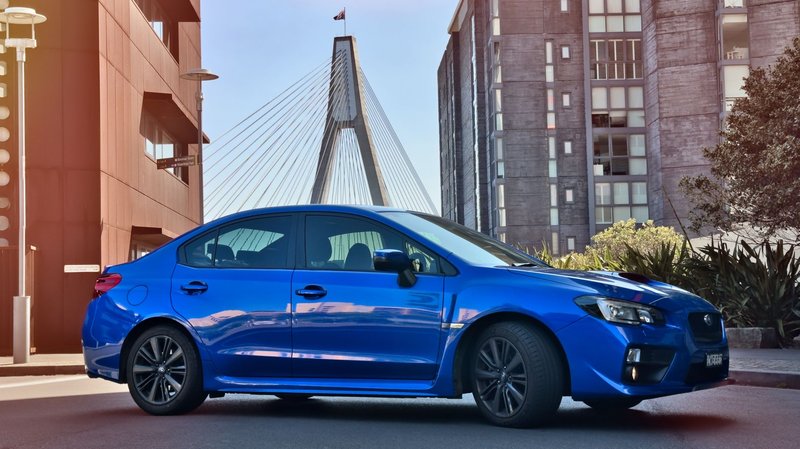
Engine and power: 2.0L turbo flat-four (EJ20), 250 to 280 PS depending on version. Drivetrain: all-wheel drive.
The Evo’s rival. Colin McRae won the 1995 WRC title in an Impreza, and Subaru sold the rally-bred road car as a WRX STI in Japan. The US didn’t get a WRX until the 2002 model year, so this one belongs to the import crowd. Light, tossable and fast on dirt, snow or tarmac.
Ownership reality: A standard GC8 STI runs roughly $25,000 to $50,000. The limited 22B STI (about 400 built in 1998) is a different world, at $200,000 and up. Check for rust in the rear arches, head gasket trouble and engines that have been tuned harder than the seller admits.
Spec Comparison Table
| Car | Years | Engine | Power | Drivetrain | Sold new in US? |
|---|---|---|---|---|---|
| Honda NSX | 1990–2005 | 3.0L / 3.2L V6 | 270–290 hp | Mid-engine RWD | Yes (Acura) |
| Toyota Supra A80 Turbo | 1993–2002 | 3.0L twin-turbo I6 | 320 hp (US) | RWD | Yes (1993–98) |
| Mazda RX-7 FD | 1992–2002 | 1.3L twin-turbo rotary | 255 hp (US) | RWD | Yes (1993–95) |
| Nissan Skyline GT-R | 1989–2002 | 2.6L twin-turbo I6 | 276 PS (claimed) | AWD | No |
| Nissan 300ZX Twin Turbo | 1990–1996 US | 3.0L twin-turbo V6 | 300 hp | RWD | Yes |
| Mitsubishi 3000GT VR-4 | 1991–1999 | 3.0L twin-turbo V6 | 300 hp | AWD | Yes |
| Toyota MR2 Turbo | 1990–1999 | 2.0L turbo I4 | 200 hp (US) | Mid-engine RWD | Yes (1991–95) |
| Mazda MX-5 Miata (NA) | 1989–1997 | 1.6L / 1.8L I4 | 116–128 hp | RWD | Yes |
| Nissan 240SX | 1989–1998 | 2.4L I4 | 155 hp | RWD | Yes |
| Honda Integra Type R | 1995–2001 | 1.8L I4 | about 195 hp | FWD | Yes (1997–2001) |
| Mitsubishi Lancer Evolution IV–VI | 1996–2001 | 2.0L turbo I4 | 276 PS | AWD | No |
| Subaru Impreza WRX STI (GC8) | 1994–2000 | 2.0L turbo flat-4 | 250–280 PS | AWD | No |
JDM vs US-Market: What Was Never Sold Here
Most lists blur this, and it matters when you’re shopping.
Never sold new in the US: the Skyline GT-R (all three generations), the Lancer Evolution I through VI, the Impreza WRX STI (GC8) and the 22B. Every example here is a Japan-market import, usually right-hand drive.
Sold in the US, but a different car: the Supra and RX-7 had higher advertised power than their Japanese counterparts. The 240SX had a weaker engine than the Silvia and 180SX it was based on. The Integra Type R wore an Acura badge in the US, and the Japanese Honda version differs in detail.
Sold in the US under a different name: the NSX was an Acura, the 3000GT had a Dodge Stealth twin, and the Miata had Mazda’s MX-5 name in Japan and Europe.
The 25-Year Rule and Importing One
The federal rule is simple: a vehicle that doesn’t meet US safety standards can be imported once it’s 25 years old, per NHTSA’s import guidelines. The clock runs from the month of manufacture, not the model year, so a car built in March 2001 turns eligible in March 2026.
What that means now:
- Already eligible: R32 and R33 GT-Rs, Evo IV to VI, the GC8 WRX STI and 22B, JDM MR2 Turbos, and the Silvia and 180SX.
- Partly eligible: R34 GT-Rs built before late 2001 are legal now. Cars built through August 2002 follow through 2027.
- No import needed: NSX, Supra, RX-7 (1993–95), 300ZX, 3000GT, Miata, 240SX and Integra Type R were all sold here.
The federal rule isn’t the only one. State emissions rules still apply, and California is the strictest. Check your state’s rules before you buy a car overseas, and use a licensed importer rather than a forum friend.
Buying Tips Before You Spend Anything
- Pay for a specialist inspection. A rotary, a twin-turbo V6 and an aluminum NSX all need someone who’s seen the failure modes before.
- Rust is the 90s killer. Check strut towers, sills, rear arches and floors on every car here. It’s the main thing separating the $20,000 car from the $50,000 one.
- Documented stock beats modified. An unmodified car with receipts will keep its value. A heavily tuned one is a gamble on someone else’s judgment.
- Check titles, VINs and import paperwork. Cloned Type Rs, fake Supra turbos and grey-market imports with missing documents are all common.
- Budget for deferred maintenance. On an older Japanese turbo car, assume a timing belt, hoses, rubber and fluids are due.

Marco Delantero
More from Marco DelanteroHow we reviewed this article
This article was researched against manufacturer records and editorially reviewed before publishing. We accept no payment for coverage. Some guides contain affiliate links; see our affiliate disclosure.