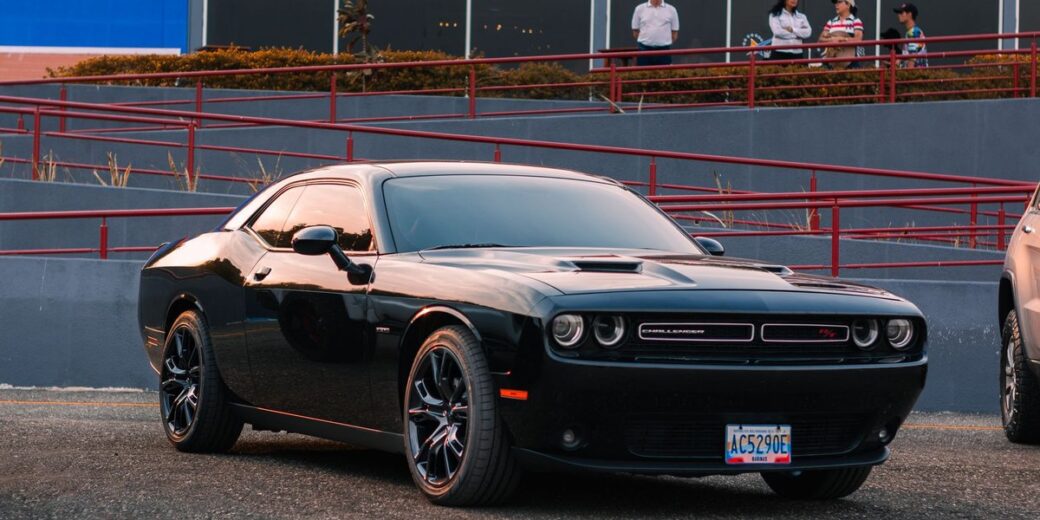
Ask three reliability sources for the most reliable Dodge cars and you’ll get three different answers. One ranks the Grand Caravan first. Another puts the Charger on top. A third, a 2019 Consumer Reports result, called the Challenger the best Dodge and the Durango the worst. They’re all working from real data. They’re just measuring different things.
This post sorts that out. It ranks the models, names the model years worth buying, and flags the ones to skip.
Table of Contents
- TLDR
- Why the rankings disagree
- The ranking: most reliable Dodge models
- Comparison table
- Charger vs. Challenger
- Dodge Durango reliability
- Grand Caravan
- Dodge years to avoid
- Pentastar V6 vs. Hemi V8
- What old platforms mean for your purchase
- Used Dodge buyer checklist
TLDR
- Best overall: Dodge Charger, 2017 to 2023, with the 3.6L Pentastar V6 or the 5.7L Hemi.
- Runner-up: Dodge Challenger, same years and same engines. It’s the Charger’s two-door twin.
- Best for families: Grand Caravan, 2017 to 2020. It’s cheap to own, and production ended in 2020, so those are the last and most sorted-out versions.
- Solid but more complicated: Durango, 2018 onward. Skip 2011 to 2013.
- Fifth place: Journey. Nothing in its record makes it a pick over the other four.
- Biggest single lever: engine choice and model year matter more than the badge. A 2012 and a 2019 Charger are very different risks.
Why the rankings disagree
The main sources split into three kinds of data, and each favors different cars.
Owner surveys ask people how many problems they had. Consumer Reports’ 2019 result, covered by The Drive, favored the Challenger. A simple coupe with few electronics has little to go wrong.
Complaint counts come from government filings. CarWhere draws on NHTSA complaint data and declines to rank models against each other, which is the honest move. A model that sold a million units will rack up more complaints than one that sold a hundred thousand.
Algorithmic scores blend recalls, repair costs and age. Auto Reliability Index scores the 2020 Grand Caravan first at 83 out of 100, with the 2026 Durango and Charger next. iSeeCars puts the Charger, Durango and Challenger at the top. Its page also has visible errors (the Charger labeled a hatchback, duplicated text), so weigh its details accordingly.
A minivan that gets driven gently and fixed cheaply will score well on cost. A V8 coupe will score worse on cost and better on survey data because it has fewer parts to fail. Neither is wrong. They answer different questions.
Our ranking weighs all three and then adjusts for the biggest factor the sources underplay: which engine and which year.
The ranking: most reliable Dodge models
1. Charger (2017 to 2023). It shows up at or near the top of the data-driven lists, and the 2015 refresh sorted out the interior and the 8-speed automatic. The V6 is the low-risk choice. The 5.7L Hemi is fine with maintenance. The Scat Pack’s 6.4L is a solid performer too.
2. Challenger (2017 to 2023). It shares its drivetrains with the Charger and has a smaller trunk and fewer doors, which means fewer door parts to wear. Consumer Reports liked it. It loses the top spot only because it has been around longer in its basic form and early cars from 2008 to 2010 drag down its average.
3. Grand Caravan (2017 to 2020). Its sheer simplicity is the point. The 3.6L Pentastar and 6-speed automatic are well-understood, parts are cheap, and every independent shop has worked on one. The 83/100 score for the 2020 model is the highest single Dodge number in the sources.
4. Durango (2018 onward). Strong in the iSeeCars and Auto Reliability Index lists, weakest in Consumer Reports’ 2019 survey. Both can be true: the early 2011 to 2013 cars were rough, and the later ones are much better. It’s more complex than the Charger, with more electronics, air suspension on some trims and heavier tow-duty use.
5. Journey (2012 to 2020). It lasted a decade on an aging platform and can be had very cheap. Its four-cylinder is slow and the ride isn’t impressive. It’s a budget pick, not a reliability pick.
One thing the ranking can’t cover: the 2024 and newer Charger. It’s a new car, built on a new platform, with new engines and a new electric version. Nothing about the 2011 to 2023 Charger predicts how it will hold up, and there isn’t enough history yet to score it.
Comparison table
Annual repair cost depends on age, mileage and region, so the table shows relative tiers instead of invented dollar figures. The only hard score here is the one Auto Reliability Index published.
| Model | Reliability signal | Best years | Years to avoid | Common faults | Repair cost |
|---|---|---|---|---|---|
| Charger | Top of iSeeCars; near the top at Auto Reliability Index | 2017 to 2023 | 2011 to 2014 | Hemi lifter tick (5.7L), early Pentastar issues, infotainment glitches | Low to moderate |
| Challenger | Named best Dodge in Consumer Reports’ 2019 survey | 2017 to 2023 | 2008 to 2010, 2011 to 2013 | Hemi lifter tick, worn brakes and tires on performance trims | Low to moderate |
| Grand Caravan | 83/100 for the 2020 model (Auto Reliability Index) | 2017 to 2020 | 2011 to 2013 | Early Pentastar problems, electrical module faults, transmission wear | Low |
| Durango | Strong at iSeeCars; weakest in Consumer Reports’ 2019 survey | 2018 onward | 2011 to 2013 | Electrical module faults, early-year transmission trouble, Hemi lifter tick | Moderate |
| Journey | Mid-pack | 2016 to 2020 | 2009 to 2011 | Aging 2.4L four-cylinder, suspension wear, electronics | Low to moderate |
Charger vs. Challenger
They share an engine lineup, a transmission lineup and most of their mechanical weak points. The Dodge Charger vs. Challenger reliability question is mostly a question about body style.
Pick the Charger if you need rear seats that adults can use. Pick the Challenger if you want a two-door and you’re fine with a smaller back seat.
On the data, the Charger gets slightly more love from the algorithmic lists because it sold in higher numbers and more of its history is documented. The Challenger’s edge comes from the survey side. If you’re comparing two cars of the same year and engine with similar mileage, buy the cleaner maintenance history and ignore the body style.
Both models stopped being made in their gas-only form after 2023. The last Challengers carry a collector premium, and limited-run trims cost more to buy than their reliability justifies. For plain reliability, the V6 or 5.7L models in 2017 to 2022 are the value.
Dodge Durango reliability
The Durango is the most contested Dodge in the data. Consumer Reports’ 2019 survey ranked it last of the Dodge lineup. Auto Reliability Index scores the 2026 Durango near the top. That swing reflects how much the model changed over the years.
The 2011 redesign brought a new platform and a first-year set of problems. For the trims and engines from that launch year, see the 2011 Dodge lineup, trim by trim. By 2014, the Durango had a refreshed interior and an 8-speed automatic. By 2018, the Pentastar V6 had had years to work out its early faults.
The practical advice: buy a 2018 or newer Durango with the V6 if you tow lightly, or the 5.7L Hemi if you tow heavily and stay on top of oil changes. Keep a cash reserve for the electrical side, since the Durango is a bigger and more complicated vehicle than a Charger.
The 2026 Durango’s high score comes from new-car data, which means few miles and little repair history. Treat it as a good start, not a proven record.
Grand Caravan
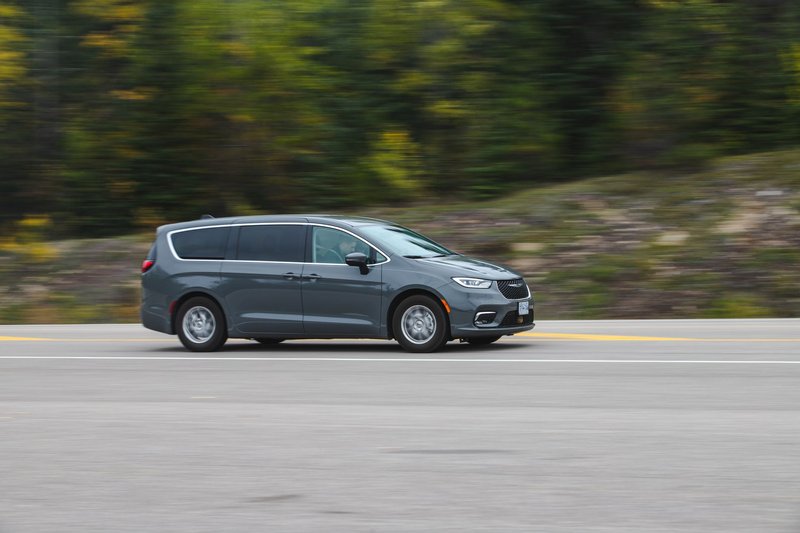
Dodge stopped building the Grand Caravan after 2020. That’s good for used buyers, because the final years used a mature design, and nothing about its reliability depends on whether a new one exists.
It ranks first on Auto Reliability Index’s list, at 83/100 for the 2020 model. The reason is mostly cost and simplicity: parts are everywhere, repairs are cheap, and it doesn’t have a complex powertrain.
It’s not exciting. It does the job of hauling people, and that’s the job a reliability list should reward. If you want the most dependable Dodge for the least money, a 2017 to 2020 Grand Caravan with service records is the answer.
Dodge years to avoid
Across models, the same years keep coming up.
- 2011 to 2013, nearly every model. The 3.6L Pentastar V6 launched in 2011, and early engines had reports of rocker arm and oil leak problems. The redesigned Durango and Grand Caravan also had first-year electrical problems.
- 2008 to 2010 Challenger and 2006 to 2010 Charger. These are the first-generation cars on the old platform. Cheap, but they carry the highest maintenance risk and the oldest electronics.
- 2013 to 2016 Dart. Not in our top five for a reason. Its dual-clutch automatic had a poor reputation, and it’s a car to avoid unless a mechanic has checked the transmission.
- First-year anything. The 2024 and newer Charger, with new engines and a new platform, is a new product. Wait for a few model years of data.
Years that are fine after a proper inspection: 2014 to 2016, when the 8-speed automatic had arrived and the Pentastar had been revised. Cars from these years can be good buys when the price is right and the history is clean.
Pentastar V6 vs. Hemi V8
If you’re picking the most reliable Dodge engine, it’s the 3.6L Pentastar V6 from about 2014 on. It’s used across Chrysler, Dodge and Jeep products, so shops know it well. The early 2011 to 2013 versions are the exception.
The 5.7L Hemi is reliable but has one known quirk: a ticking noise that can mean a worn lifter. It’s tied to the multi-displacement system that shuts down cylinders to save fuel. A Hemi that ticks, hasn’t had regular oil changes and has no records is a risk. A Hemi with receipts is a good buy.
The 6.4L (392) is a lower-risk V8 than the supercharged Hellcat. The Hellcat’s engine is strong, but the car is heavy on tires, brakes and fuel, and owners who drive it hard end up with higher bills. Buy a Hellcat for the experience, not for the reliability score.
What old platforms mean for your purchase
Several of these models stayed on old platforms for a long time. The Challenger debuted in 2008, and so did the fifth-generation Grand Caravan. The Durango’s current platform dates to 2011.
An old platform can cut both ways. After a decade of production, most of the early bugs are fixed, and parts and knowledge are widely available. That’s why the late-run Challenger and Grand Caravan score well. But the same age means older safety tech, older infotainment and fewer driver aids than a recent Honda or Toyota.
It also affects scoring. A model with a long production run gets a lot of mileage data, and the late model years benefit from every revision. The year-by-year advice in this post matters more than the model name.
Used Dodge buyer checklist
- Check recalls by VIN. Enter the VIN at NHTSA’s recall lookup. Open recalls are free to fix at a dealer, and they tell you where a model has had trouble.
- Search complaints for the exact model year. NHTSA lets you report and review safety problems by vehicle. Look for repeated patterns, not single stories.
- Run a VIN history report. You want service records, accident history and mileage consistency.
- Pick the engine on purpose. V6 for lowest risk. 5.7L Hemi if you want a V8 and the records are there. Hellcat only if you accept the running costs.
- Listen for the Hemi tick. Start the engine cold and listen for a rhythmic tick from the top of the engine.
- Ask for oil change records. Regular oil changes are the best predictor of a healthy Hemi.
- Test the electronics. Run the infotainment, power windows, locks and every warning light. Electrical module faults show up here.
- Get a pre-purchase inspection. An independent shop that knows Chrysler products will find what the listing doesn’t mention.
- Avoid the years above unless the price reflects the risk and a mechanic has signed off.
The most reliable Dodge cars aren’t a mystery once you separate the model from the year. Buy a 2017 or newer Charger, Challenger or Grand Caravan, or a 2018 or newer Durango, with the V6 where you can, and a service history you can read. That combination beats the brand’s reputation in either direction.

Marco Delantero
More from Marco DelanteroHow we reviewed this article
This article was researched against manufacturer records and editorially reviewed before publishing. We accept no payment for coverage. Some guides contain affiliate links; see our affiliate disclosure.