TLDR
- Toyota’s 1941 passenger-car story is the AE “Shin Nippon Go”, plus leftover stock from the AA and AB line.
- The company’s real product that year was the GB truck, not a car.
- Only 76 AEs were built between 1941 and 1943.
- Government controls, not engineering, set the lineup.
Contents
- The short answer
- 1941 Toyota car models at a glance
- Toyota AE: the one new car
- Toyota AA and AB: the 1936 holdovers
- The GB truck: what Toyota was really building
- Why so few cars exist
- The SA compact and the date problem
The short answer
The list of 1941 Toyota car models is short. One new passenger car, the AE, entered the picture. The older AA sedan and AB phaeton were no longer a production line in any meaningful sense. Everything else Toyota made was a truck.
Toyota’s own 1941 chronological table names a single car for the year, the AE. That tells you how thin the year was.
1941 Toyota car models at a glance
| Model | Type | Status in 1941 |
|---|---|---|
| AA | Sedan | Leftover stock from the 1936 line |
| AB | Phaeton (open tourer) | Leftover stock from the 1936 line |
| AE | Compact sedan, 4-cylinder | New, built 1941 to 1943 |
| AC | Sedan | Later development of the AA line, not a 1941 product |
| GB | Truck | Main product |
The AC is in the table so you don’t mistake it for a 1941 model. It belongs to the wartime years that followed. The AE is the only car that was actually new in 1941.
Toyota AE: the one new car
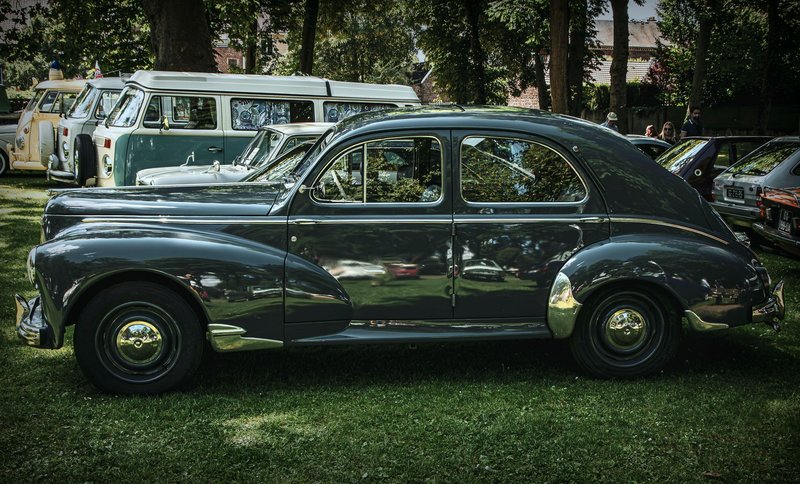
The AE is the car that justifies this article. It carried the name “Shin Nippon Go”, roughly “New Japan”, which fits a period when every product was expected to serve the nation.
The numbers:
- Engine: 2.3 L Type C four-cylinder
- Transmission: 3-speed manual
- Wheelbase: 2,500 mm
- Weight: about 1,220 kg
- Production: 76 cars, 1941 to 1943
A four-cylinder was a deliberate step down from the six-cylinder AA. Smaller engine, less fuel, less material. That fit the rationing mood of the time, and it’s why the AE reads as a compact car next to the big 1936 sedan.
Seventy-six cars across roughly three years is about two a month. You can’t call that a production run, and almost none of them survive.
Toyota AA and AB: the 1936 holdovers
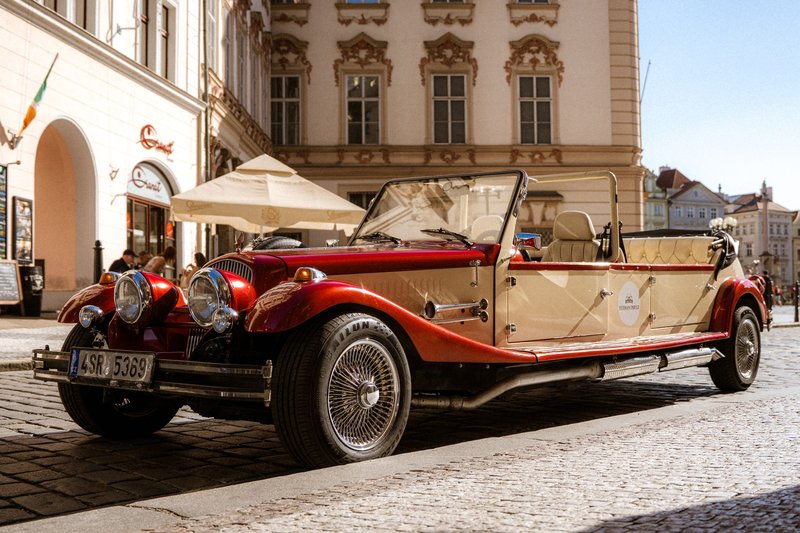
The AA was Toyota’s first production passenger car, launched in 1936. The AB was the phaeton version of the same car, with a folding top and an open body. Both were big six-cylinder cars with a look borrowed heavily from American designs of the mid-1930s.
By 1941 neither was being built in volume. Any AA or AB you could find that year was an earlier car or leftover stock. If a source lists them as “1941 models,” that’s a stretch. They’re 1941 cars only in the sense that they were still on the road. The 1940 lineup, when the AA and AB were still on sale, is covered in 1940 Toyota car models: What Toyota Actually Built.
The GB truck: what Toyota was really building
Few articles on this topic mention the GB, and that’s a mistake. It was Toyota’s main product in 1941. Trucks were what Japan’s wartime economy allowed, so trucks were what came off the line.
By 1941 Toyota was a truck company that happened to still own the tooling for a car. The company’s own account of its early history shows how the automotive business grew out of the Toyoda loom works, and how little room wartime policy left for passenger cars.
Why so few cars exist
Three rules did the damage.
- January 1939: Private passenger-car production ended. Cars were no longer something a manufacturer could simply decide to build for customers.
- 1941: Prices came under government control, which removed the incentive to build anything but what the state wanted.
- December 1941: The Automobile Control Association formed, putting distribution and output under centralized supervision.
Put those together and the 76-car AE run makes sense. Toyota wasn’t failing to sell cars. It was largely not allowed to build them.
The SA compact and the date problem
The SA is the compact that became Toyota’s first postwar passenger car. Its development is where sources disagree. Depending on the account, work on it began in 1940, 1941, or 1942.
The disagreement isn’t surprising. Wartime records were thin, and a start date for a project that was shelved and picked up again depends on what you count: the first sketches, the first prototype, or the first approved budget. So the SA doesn’t belong in a list of 1941 production cars. Treat it as a prototype whose timeline is still unsettled.
Ask what Toyota built in 1941 and the accurate answer is one new car, 76 examples over three years, and a lot of trucks. The AE is the model to remember.

Marco Delantero
More from Marco DelanteroHow we reviewed this article
This article was researched against manufacturer records and editorially reviewed before publishing. We accept no payment for coverage. Some guides contain affiliate links; see our affiliate disclosure.