Type “JDM” into a search bar and you’ll land on a marketplace before you land on an answer. Rows of Skylines, a filter panel, a “contact dealer” button. Useful if you’re already buying. Less useful if you just want to know what the letters mean and why an R34 costs more than a house.
This is the answer part. What JDM actually means, why Japan’s own regulations quietly shaped forty years of car design, which models earned the hype, how a JDM car differs from the version sold in the US, and what it actually takes to import one legally.
Table of Contents
- What Does JDM Actually Mean?
- Why Japan’s Rules Built a Different Kind of Car
- The JDM Cars Everyone Should Know
- JDM vs. USDM: What Actually Changes When a Car Crosses the Pacific
- Can You Legally Import a JDM Car? The 25-Year Rule
- FAQ
TLDR
JDM stands for Japanese Domestic Market — cars, parts, and specs built and sold for Japan itself, not for export. Japan’s own size and engine-displacement rules (the kei car regulations) pushed its automakers toward small-displacement turbos, forced induction tricks, and chassis engineering that never had a reason to exist in a market with cheap gas and wide lanes. That’s why the Skyline GT-R, Supra, RX-7, and NSX became what they became. In the US, none of it is legal to import until the car turns 25 years old, full stop — no exceptions for how rare or desirable it is.
What Does JDM Actually Mean?
JDM means Japanese Domestic Market. Strictly, it refers to vehicles, trim levels, and parts engineered and sold specifically inside Japan — not the export versions that carried the same nameplate overseas.
That distinction matters more than it sounds. A Toyota Supra sold in Japan in 1993 and a Toyota Supra sold in the US the same year share a body and not much else underneath. Different engine tune, different equipment, sometimes a different name entirely — the car Americans knew as the 240SX was sold in Japan as the Silvia, with a different face and a different badge. “JDM” isn’t a marketing term. It’s a spec sheet.
Enthusiast culture stretched the word further, and now “JDM” gets used loosely to mean anything with a Japanese-performance aesthetic — a wing, a set of Advan wheels, a decal in Japanese script — regardless of where the car was actually built or sold. That’s the informal usage. The strict one is the useful one, especially once you get into importing.
Why Japan’s Rules Built a Different Kind of Car
The cars that made JDM a cult didn’t happen by accident. Japan wrote a set of vehicle regulations for its own domestic conditions — narrow streets, dense cities, high fuel and registration taxes — and its automakers engineered around those rules with an intensity that export markets never saw.

The clearest example is the kei car (軽自動車, “light vehicle”) category. Since 1998, a kei car has had to stay under 3.4 meters long, 1.48 meters wide, and 2.0 meters tall, with an engine no bigger than 660cc. Stay inside those limits and an owner gets a lighter tax bill, cheaper insurance, and — in much of the country — an exemption from having to prove they own a private parking space before registering the car. Automakers responded by cramming turbochargers, four-wheel drive, and genuinely clever packaging into a box the size of a large refrigerator. The Honda Beat and Autozam AZ-1 are kei cars in that literal sense; they’re also two of the more fun-to-drive small cars ever built, purely because the rules left no room to win any other way.
The regulation that shaped the performance icons was different: a self-imposed cap, not a legal one. In the mid-1980s, Japan’s major automakers agreed among themselves to advertise no production car at more than 276 PS (about 272 hp), regardless of what the engine could actually produce. It’s why the Skyline GT-R’s RB26DETT, the Supra’s 2JZ-GTE, and a dozen other legendary engines all show up on period spec sheets claiming the identical, suspiciously round 276 PS — while tuners have spent thirty years proving those engines had a lot more left in them. That agreement quietly dissolved by the early 2000s, but it’s baked into why so many JDM engines from that era are famous for being underrated on paper and overbuilt in metal.
Chassis codes are the other piece of the puzzle worth understanding, because JDM sellers and forums use them like a second language. A chassis code — R32, FD3S, AE86, EK9 — identifies a specific generation and configuration of a model far more precisely than a model year ever could. Two Skyline GT-Rs from the same era can be a BNR32 or an HCR32 depending on drivetrain and trim, and that difference is the whole reason one is worth double the other. Learn the codes for the models you care about; the badge on the trunk won’t tell you nearly as much.
The JDM Cars Everyone Should Know
These are the cars that turned “JDM” into shorthand for an entire era of Japanese performance engineering — the ones worth knowing before you wade into a marketplace listing.
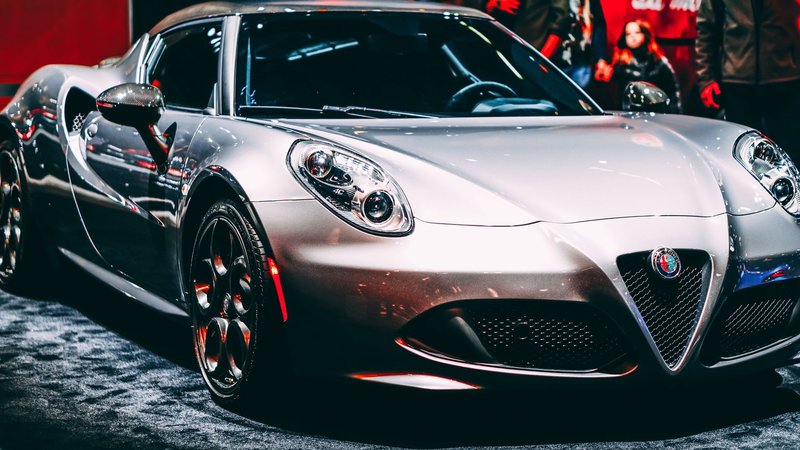
Nissan Skyline GT-R (R32/R33/R34) — Built from 1989 to 2002 under chassis codes BNR32, BCNR33, and BNR34. The GT-R’s ATTESA E-TS all-wheel-drive system and RB26DETT twin-turbo inline-six made it the only one of Japan’s 1990s halo cars with factory AWD, which is exactly why it dominated Group A touring car racing in Australia so thoroughly that officials eventually rewrote the rules to keep it out.
Toyota Supra (A80) — 1993 to 2002, powered by the 2JZ-GTE twin-turbo inline-six. The 2JZ’s reputation for surviving triple-digit horsepower increases on stock internals is the reason it’s one of the most swapped engines in tuning history, showing up in everything from drift cars to boats.
Mazda RX-7 (FD3S) — 1991 to 2002, running Mazda’s 13B-REW twin-rotor rotary with sequential twin turbos. No pistons, no conventional displacement to compare against a V6 or V8 — the RX-7 is the closest thing JDM culture has to an outlier engineering bet that actually paid off in a production car.
Honda NSX (NA1/NA2) — 1990 to 2005. Honda hired input from Ayrton Senna during development, targeted the Ferrari 328’s performance, and then undercut it on reliability by a wide enough margin that NSX owners genuinely used theirs as daily drivers — something nobody was doing with a contemporary Ferrari.
Subaru Impreza WRX STI (GC8) — Built from Subaru’s World Rally Championship program, the GC8-generation STI paired a turbocharged boxer engine with symmetrical all-wheel drive and a rally pedigree the road car visibly inherited.
Mitsubishi Lancer Evolution (Evo IV–IX) — Mitsubishi’s answer to the WRX STI, built on the same rally-homologation logic with its own 4G63 turbo four and active center differential. The Evo/STI rivalry defined a decade of Japanese performance-sedan arguments that still haven’t fully settled.
Toyota AE86 (Corolla Levin / Sprinter Trueno) — 1983 to 1987, no turbo, no all-wheel drive, and arguably more cultural weight than any car on this list because of Initial D. The AE86 proved a light, well-balanced rear-wheel-drive chassis with a 4A-GE engine could out-drive cars with twice its output on a mountain pass.
Nissan Silvia (S13/S14/S15) — Sold in the US as the 240SX with a different nose and no turbo option. The JDM Silvia kept the SR20DET turbo four and became, alongside the AE86, the backbone of modern drift culture.
JDM vs. USDM: What Actually Changes When a Car Crosses the Pacific
“JDM vs. USDM” gets framed as a power difference, and sometimes it is one, but the more consistent differences are regulatory, not performance-driven.
Lighting. JDM cars use amber rear turn signals as standard; USDM regulations have historically required red. It’s a small visual tell that JDM enthusiasts in the US chase deliberately — amber-corner conversions are one of the most common cosmetic swaps on an otherwise stock USDM car.
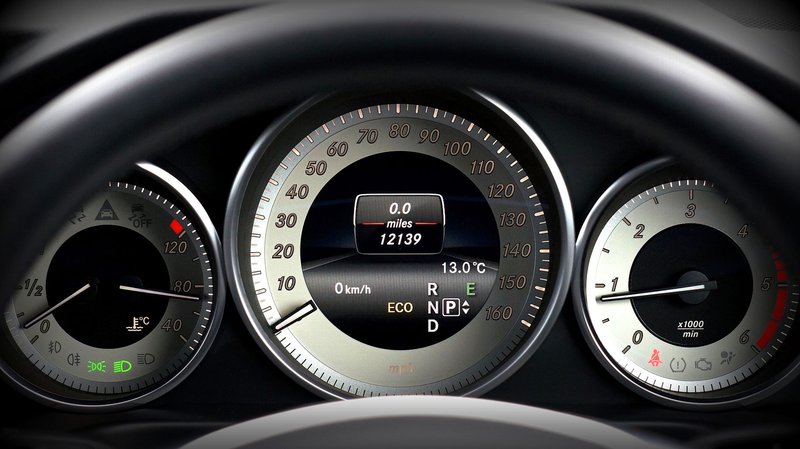
Speedometer units. JDM speedometers read in km/h. A grey-market import needs a US-legal speedometer or a documented conversion to pass state inspection in most places.
Steering position. Japan drives on the left side of the road, so JDM cars are right-hand drive by default. This is the single biggest reason RHD Skylines and Silvias felt so exotic to American enthusiasts for decades — the version sold domestically in the US simply didn’t exist in that configuration.
Model names and equipment. The same platform frequently carried different badges and different standard equipment depending on market — the Silvia/240SX split above is the clearest example, but it runs through dozens of models where the export trim was detuned, restyled, or simply never offered.
Power figures. Less absolute than people assume. The 276 PS gentleman’s agreement capped domestic ratings, but export versions of the same engine weren’t necessarily stronger — sometimes they were weaker, detuned to meet a destination market’s emissions rules.
Can You Legally Import a JDM Car? The 25-Year Rule
Here’s the part every “iconic JDM cars” list skips past: in the US, none of this matters legally until the car is old enough.
Under the Imported Vehicle Safety Compliance Act of 1988, a car that’s at least 25 years old — counted from its month and year of manufacture, not the calendar year — is fully exempt from Federal Motor Vehicle Safety Standards. NHTSA, the federal agency that enforces those standards, treats a 25-year-old vehicle as one of “historical or technological interest,” which is the legal hook that makes private importation possible without a Registered Importer converting the car to US spec first.
The exemption isn’t only about safety standards. The EPA separately requires imported vehicles to meet US emissions standards under the Clean Air Act — and that requirement lifts at the same 25-year mark, so a qualifying car clears both agencies at once. Below 25 years, a JDM car generally has to go through EPA-approved modification and NHTSA certification via a Registered Importer, which is expensive enough that most people just wait out the clock instead.
As of late 2026, that puts the cutoff around late 1999 and earlier — meaning early R34 Skyline GT-Rs, which started production in 1999, are only now crossing into legal territory, while later R34s built into 2002 still have a few years left before they’re eligible. This is also why the R32 and R33 generations flooded the US market years before the R34 did: they simply hit the 25-year line first, and pricing followed availability. The lesson holds for almost every model on this list — desirability doesn’t move the date, production month does.
There’s one more state-level wrinkle worth knowing before you buy: passing federal import rules doesn’t automatically mean a car can be registered and driven everywhere. A handful of states, California most notably, layer their own emissions and equipment requirements on top of the federal exemption, so it’s worth confirming your specific state’s stance before you wire money for a car on the other side of the Pacific.
FAQ
What does JDM stand for? Japanese Domestic Market — vehicles and parts built and sold specifically for use within Japan, as opposed to export versions of the same model.
Is it legal to own a JDM car in the US? Yes, once the car is at least 25 years old from its month and year of manufacture. Younger JDM vehicles require EPA and NHTSA-approved modification through a Registered Importer, which is costly enough that most buyers simply wait for the 25-year threshold.
Are all JDM cars right-hand drive? The ones built for Japan’s domestic market are, since Japan drives on the left. Some Japanese automakers also built left-hand-drive versions for export markets, but those export cars generally aren’t considered strict JDM spec.
What’s the difference between JDM and “Japanese car”? Every JDM car is Japanese, but not every Japanese car is JDM. A Toyota Camry built in Kentucky for the US market is a Japanese-brand car with zero JDM spec. JDM refers to the domestic-market configuration specifically, regardless of where the badge is from.
Which JDM car should a first-time importer look at? Anything with strong parts support and a forgiving ownership community tends to beat pure rarity for a first import. The AE86 and S-chassis Silvia are both mechanically simpler than the turbocharged AWD icons, and their parts and knowledge base in the US is deep after decades of drift-scene demand.

Marco Delantero
More from Marco DelanteroHow we reviewed this article
This article was researched against manufacturer records and editorially reviewed before publishing. We accept no payment for coverage. Some guides contain affiliate links; see our affiliate disclosure.