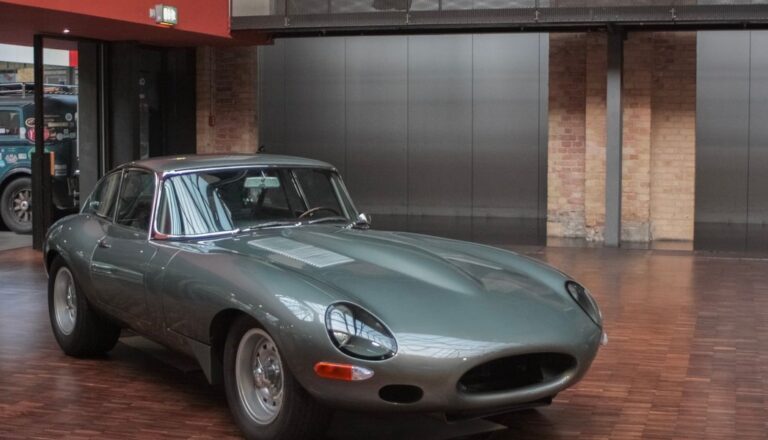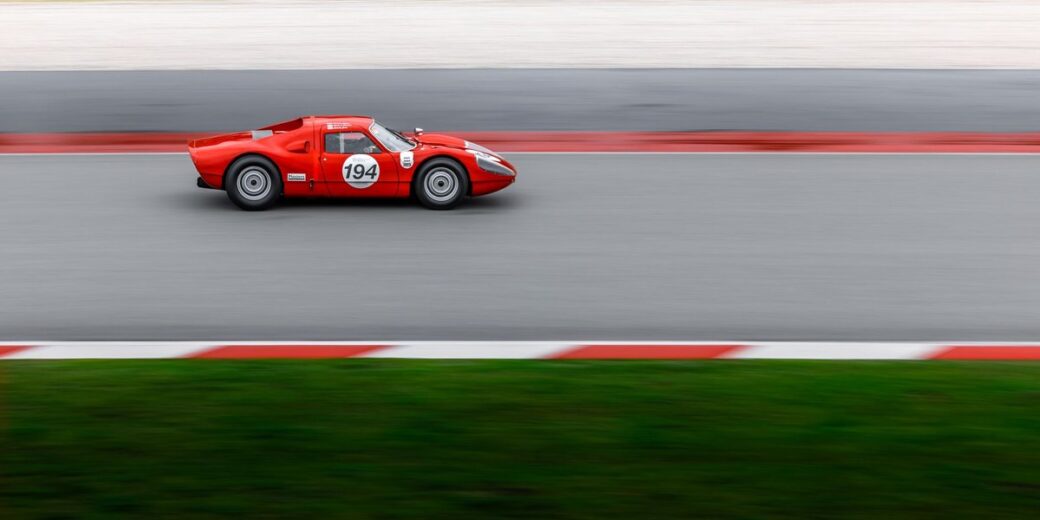
Europe came out of the war with bombed factories, rationed steel and almost no money. The sports cars it built anyway, between 1945 and 1949, set the template for everything that followed: the Ferrari road car, the Porsche, the Jaguar that made 120 mph affordable. The best 1940s European sports cars were often prewar designs warmed over, built by companies that had to export or close.
This list covers 14 of them, grouped by country. It skips American and Soviet cars, skips saloons, and includes a few names the usual roundups ignore.
TLDR
- Most important: Ferrari 166 MM, Cisitalia 202, Jaguar XK120.
- Most influential in America: MG TC, which started the US sports car craze.
- Most underrated: Talbot-Lago T26 Grand Sport and Delahaye 135, the French cars nobody lists.
- Easiest to own today: MG TC. Everything else on this list ranges from expensive to unobtainable.
Table of contents
- Why 1940s European sports cars look the way they do
- Britain
- Italy
- Germany
- France
- Side-by-side comparison
- Which 1940s European sports cars you can still buy
Why 1940s European Sports Cars Look the Way They Do
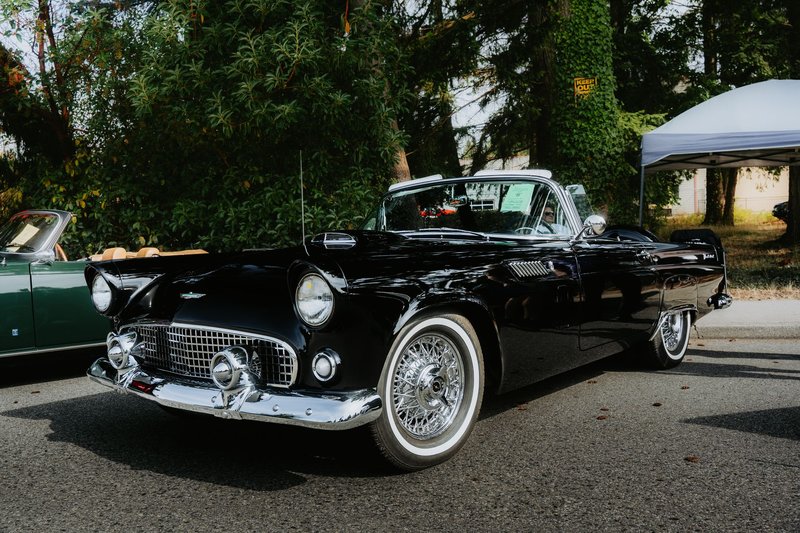
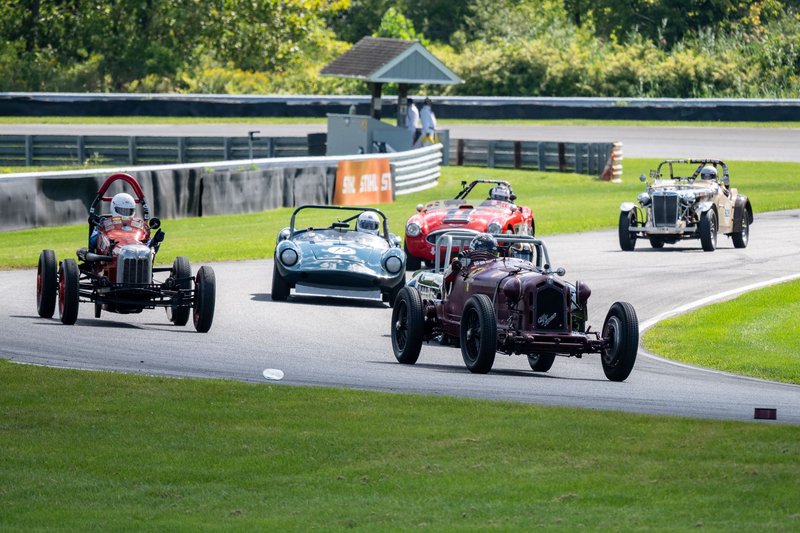
Nobody designed a new sports car in 1945. Factories had spent six years making aircraft engines, trucks and munitions, and the engineers who survived went back to the drawings they’d left in 1939. That’s why so many cars here have separate fenders, running boards or pre-war engines under a fresh body.
Three things changed the picture.
Exports paid for steel. The British government tied raw material allocations to export performance, so a factory that shipped cars abroad got steel and one that didn’t got nothing. Sports cars were small, cheap to ship and easy to sell for dollars.
American servicemen went home with souvenirs. Thousands of GIs stationed in Britain drove an MG and then shipped one back to the States. A market that barely existed before the war suddenly wanted open two-seaters.
Racing came back in stages. The Mille Miglia restarted in 1947. The 24 Hours of Le Mans, dark since 1939, returned in 1949. Each race gave small makers a stage, and several of the cars below exist because someone wanted to win one.
Britain
British makers had the fastest route to market. They had the export incentive, a home-built engine supply and a US buyer waiting.
1. MG TC (1945–1949)
- Engine: 1,250 cc four-cylinder (XPAG)
- Power: 54 hp
- Top speed: about 78 mph
- Built: 10,001
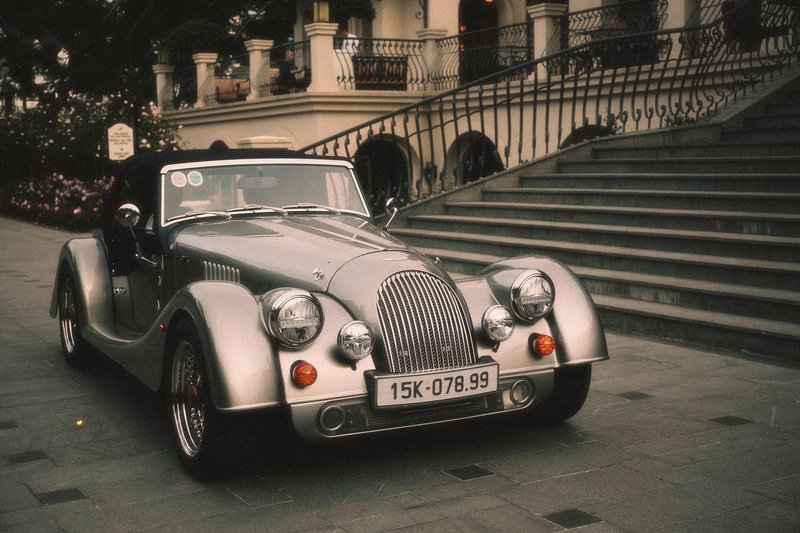
The TC was a 1930s car with a new name: a body-on-frame roadster with cutaway doors, a flat windscreen and a tachometer bigger than the speedometer. It was slow even by 1946 standards. It didn’t matter.
The TC was the first sports car most Americans ever drove. Ex-servicemen brought them home, and the MG’s tiny size, direct steering and total lack of insulation made every other car feel numb. Around 2,000 went to the US, and the sports car market there grew out of that trickle. Almost every entry on this list that sold in America owes it a debt.
2. Jaguar XK120 (1948–1954)
- Engine: 3.4-litre DOHC straight-six
- Power: 160 hp
- Top speed: 120 mph (the name was a claim)
- Built: 12,055 over the full run
Jaguar built the XK120 as a show car for its new twin-cam engine, expecting to make a couple hundred of them. The 1948 London Motor Show crowd wanted all of them, so Jaguar kept going. The first cars had aluminium bodies hammered by hand over wooden bucks. Steel followed once demand became obvious.
The claim got tested on the closed Ostend-Jabbeke road in Belgium on 30 May 1949. With the windscreen swapped for a small aero-screen and a tonneau over the passenger seat, a works car averaged 132.6 mph. Nothing else you could order for the price came close. It undercut its Italian and French rivals by a wide margin.
3. Aston Martin 2-Litre Sports, later DB1 (1948–1950)
- Engine: 2.0-litre pushrod four-cylinder
- Power: about 90 hp
- Top speed: around 90 mph
- Built: fewer than 20
David Brown, a gearbox manufacturer, bought Aston Martin in 1947 and Lagonda soon after. His first Aston was an open two-seater with a tubular chassis and a Claude Hill engine. It wasn’t called the DB1 at the time; the label was added after the DB2 arrived.
A team version won the 1948 Spa 24 Hours, which gave the new owner exactly the publicity he wanted. Very few were built. This is where the road to the Aston Martin DB5 starts.
4. Healey Silverstone (1949–1950)
- Engine: 2.4-litre Riley four-cylinder
- Power: 104 hp
- Top speed: about 105 mph
- Built: about 105
Donald Healey built the Silverstone to win races and sell to people who wanted to win races. It’s brutally simple: cycle-style front fenders, a windscreen that folds flat, a spare tire fixed across the tail that doubles as a rear bumper. The Riley engine isn’t exotic, but in a car that light it didn’t have to be.
It’s the least-known of the British entries and arguably the most fun.
5. Frazer Nash Le Mans Replica (1948–1953)
- Engine: 2.0-litre Bristol straight-six (a BMW 328 derivative)
- Power: roughly 125 hp
- Top speed: over 110 mph
- Built: a few dozen
The name comes from one result. In 1949, Norman Culpan and H.J. Aldington finished third overall at Le Mans in a Frazer Nash High Speed model, and the company used that finish to rename the car.
The engine tells its own story. After the war, the Bristol Aeroplane Company acquired the BMW 328 engine design and built it into its own cars, and Frazer Nash, which had imported BMWs before the war, used it too. A German design from 1936 powered a British car on a French circuit in 1949.
Italy
Italy had the bodies. Coachbuilders like Pinin Farina and Touring survived the war with their craftsmen intact, and the new makers had engine designs that had been sketched during the conflict.
6. Cisitalia 202 (1947–1952)
- Engine: 1.1-litre Fiat-based four-cylinder
- Power: roughly 50–60 hp
- Top speed: about 100 mph
- Built: about 170
Piero Dusio was a textile businessman and football club owner with a lot of money and no experience in car building. He hired Giovanni Savonuzzi and Pinin Farina, borrowed engines from Fiat’s 1100, and ended up with a coupe that the museum world still treats as a landmark. Its fenders flowed into the body instead of sitting on top of it, and the whole car read as one shape.
Its reputation doesn’t come from speed. At the 1947 Mille Miglia, a 54-year-old Tazio Nuvolari drove a Cisitalia spider to second place, after losing a mudguard. In 1951, a Cisitalia 202 was one of eight cars in the Museum of Modern Art’s 8 Automobiles exhibition, and MoMA’s own 202 GT became the first vehicle in its permanent collection in 1972.
Dusio overspent on a Grand Prix car, ran out of money, and the company folded. The coupe outlived it.
7. Ferrari 166 MM (1948–1953)
- Engine: 2.0-litre Colombo V12
- Power: roughly 140 hp
- Top speed: about 125 mph
- Built: a few dozen
Enzo Ferrari began building cars under his own name in 1947 with the 125 S, Ferrari’s first model. The 166 MM was the one that put the name on the map. By 1951 Ferrari was running five distinct models, from a two-car Grand Prix single-seater to 27-off competition barchettas. The MM stands for Mille Miglia, which the car won outright in 1949 with Clemente Biondetti and Ettore Salani driving.
That same year, Luigi Chinetti and Lord Selsdon drove a 166 MM to victory at the first postwar Le Mans, then Chinetti won the Spa 24 Hours a few weeks later. Touring’s lightweight barchetta body (it means “little boat”) weighed almost nothing. Few cars have won so much in a single season with so little car.
8. Alfa Romeo 6C 2500 (1946–1952)
- Engine: 2.5-litre DOHC straight-six
- Power: up to about 110 hp (Super Sport)
- Top speed: roughly 105 mph
- Built: about 3,700 across all body styles
Alfa Romeo restarted production in 1946 on the 6C, a car designed before the war. The Super Sport and Competizione versions turned it into a legitimate sports car, and the coachbuilders turned it into something much more. Touring, Pinin Farina, Ghia and Zagato all built bodies, no two quite the same.
It’s the most common Italian car on this list, which is relative: any 6C 2500 that survives is an object people photograph.
9. Maserati A6 1500 (1947–1950)
- Engine: 1.5-litre single-cam straight-six
- Power: 65 hp
- Top speed: about 100 mph
- Built: about 60
The A6 1500 was the first road car to carry the Maserati name. The Maserati brothers had sold the business to the Orsi family, and A6 stands for Alfieri, the brother who founded it, with six cylinders. Pinin Farina styled most of them.
The engine’s 65 hp is tiny, but the car was light and the six sounded like a racing engine because it was built by people who made racing engines. Maserati sold about 60. It’s a rare car with a famous badge and almost no public profile.
10. Fiat 1100 S (1947–1948)
- Engine: 1.1-litre four-cylinder
- Power: about 51 hp
- Top speed: about 93 mph
- Built: about 400
The 1100 S is the closest thing to a mainstream sports car on this list. Fiat took the ordinary 1100 saloon engine, wrapped it in a streamlined body with headlights set into the grille, and entered it in the Mille Miglia. It won its class in 1947.
It’s the car that proves a sports car doesn’t need to be exotic.
Germany
Germany had little industry left to work with. Two of the three companies here were new, and one of them, Porsche, would outlast almost every name in this list.
11. Porsche 356 “Gmünd” (1948–1950)
- Engine: 1.1-litre air-cooled flat-four (Volkswagen-derived)
- Power: 35 hp
- Top speed: about 85 mph
- Built: about 50 in Austria
The first Porsche was built in a converted sawmill in Gmünd, Austria, because Ferdinand Porsche was in French custody and the family’s Stuttgart works was occupied. The prototype, “No. 1,” was registered in June 1948 with the engine mounted ahead of the rear axle. Production cars moved it to the back.
Ferry Porsche built it from Volkswagen parts, because those were the parts he had. The Gmünd cars have aluminium bodies hammered out by hand, which makes them quite different from the steel 356s that followed after the move to Stuttgart in 1950. With 35 hp it wasn’t fast. It was efficient, well-made and light, and a Gmünd-style aluminium coupe won its class at Le Mans in 1951.
12. Veritas RS (1948–1950)
- Engine: 2.0-litre BMW 328-derived straight-six
- Power: about 125 hp
- Top speed: over 120 mph
- Built: small series
Veritas is the car most roundups leave out. It was founded in 1947 by former BMW engineers Ernst Loof, Lorenz Dietrich and Georg Meier, who couldn’t use the BMW name and so called the company “Truth.” They built sports cars and single-seaters around the BMW 328’s engine and chassis ideas.
Karl Kling, who later drove for Mercedes-Benz, raced Veritas cars in the early postwar German championships. The company never found the money to scale up and shut down in the early 1950s, but the RS is the clearest picture of what German sports car engineering looked like before Porsche took over the story.
France
France is the missing chapter in most 1940s lists. The cars were large, expensive and built almost entirely by hand, and a punishing tax on engine size made them hard to sell at home.
13. Talbot-Lago T26 Grand Sport (1948–1955)
- Engine: 4.5-litre straight-six
- Power: about 190 hp
- Top speed: about 120 mph
- Built: a few dozen in the Grand Sport form
Antonio Lago, an Italian who took over Talbot in the 1930s, built the T26 as a car you could drive to the circuit and race there. It was the only serious French answer to Ferrari and Alfa Romeo in the late 1940s. A near-stock T26 GS won the 1950 24 Hours of Le Mans, driven by Louis Rosier and his son Jean-Louis, with Louis at the wheel for nearly the whole race. It was the first French win since Bugatti’s in 1939.
The road-going Grand Sport was less about numbers than about presence: long hood, enormous six, and bodies from Saoutchik and Figoni that look like sculpture.
14. Delahaye 135 (postwar M and MS, 1946–1954)
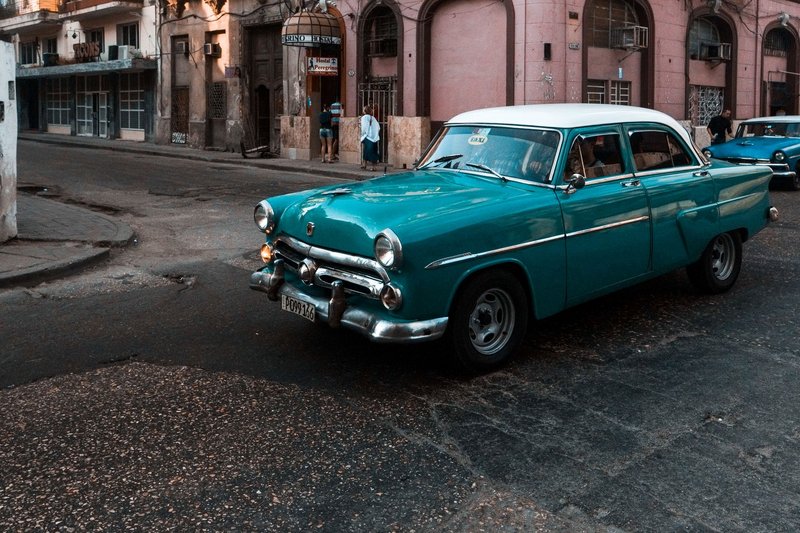
- Engine: 3.6-litre straight-six
- Power: about 120 hp (M), up to 160 hp (MS)
- Top speed: about 105 mph
- Built: small postwar series
Delahaye won Le Mans in 1938 with the 135. After 1945, the company kept building it. Steel was scarce, French fiscal horsepower rules favored small engines, and the cars were very expensive, so Delahaye sold to a thin slice of buyers who wanted a rolling piece of coachwork.
That’s where its reputation sits now. The chassis was old by 1946 and the best bodies, by Figoni et Falaschi and Chapron, were extravagant. Delahaye merged with Hotchkiss in 1954 and the 135 ended with it.
Side-by-Side Comparison
| Car | Country | Years | Engine | Power | Top speed | Built |
|---|---|---|---|---|---|---|
| MG TC | Britain | 1945–1949 | 1.25L four | 54 hp | ~78 mph | 10,001 |
| Jaguar XK120 | Britain | 1948–1954 | 3.4L six | 160 hp | 120+ mph | 12,055 |
| Aston Martin 2-Litre (DB1) | Britain | 1948–1950 | 2.0L four | ~90 hp | ~90 mph | <20 |
| Healey Silverstone | Britain | 1949–1950 | 2.4L four | 104 hp | ~105 mph | ~105 |
| Frazer Nash Le Mans Replica | Britain | 1948–1953 | 2.0L six | ~125 hp | 110+ mph | few dozen |
| Cisitalia 202 | Italy | 1947–1952 | 1.1L four | ~50–60 hp | ~100 mph | ~170 |
| Ferrari 166 MM | Italy | 1948–1953 | 2.0L V12 | ~140 hp | ~125 mph | few dozen |
| Alfa Romeo 6C 2500 | Italy | 1946–1952 | 2.5L six | up to ~110 hp | ~105 mph | ~3,700 |
| Maserati A6 1500 | Italy | 1947–1950 | 1.5L six | 65 hp | ~100 mph | ~60 |
| Fiat 1100 S | Italy | 1947–1948 | 1.1L four | ~51 hp | ~93 mph | ~400 |
| Porsche 356 Gmünd | Germany | 1948–1950 | 1.1L flat-four | 35 hp | ~85 mph | ~50 |
| Veritas RS | Germany | 1948–1950 | 2.0L six | ~125 hp | 120+ mph | small series |
| Talbot-Lago T26 GS | France | 1948–1955 | 4.5L six | ~190 hp | ~120 mph | few dozen |
| Delahaye 135 M/MS | France | 1946–1954 | 3.6L six | 120–160 hp | ~105 mph | small series |
Figures are approximate. Sources disagree, especially on production counts for low-volume cars.
Which 1940s European Sports Cars You Can Still Buy
The realistic ranges below shift with condition, originality and provenance. Treat them as tiers, not quotes.
- Under $60,000: MG TC. It’s the one car here you can buy, fix and drive without a second mortgage. Parts are easy to find and clubs are everywhere.
- $100,000–$300,000: Jaguar XK120 in steel, Healey Silverstone, Fiat 1100 S. The XK120 is the best value for the money on this list. Aluminium-bodied early cars cost far more.
- $300,000–$1 million: Aston Martin DB1, Frazer Nash Le Mans Replica, Alfa Romeo 6C 2500, Cisitalia 202, Maserati A6 1500, Talbot-Lago T26 Grand Sport. Provenance and body style swing the price heavily.
- Seven figures and above: Ferrari 166 MM, Porsche 356 Gmünd, most coachbuilt Delahayes. These rarely change hands in public, and sellers don’t discount.
- Hard to price: Veritas RS. So few exist that each sale sets its own number.
If you want one of these 1940s European sports cars to drive rather than polish, the TC and the XK120 are the honest answers. The rest mostly live in museums and private collections.

Marco Delantero
More from Marco DelanteroHow we reviewed this article
This article was researched against manufacturer records and editorially reviewed before publishing. We accept no payment for coverage. Some guides contain affiliate links; see our affiliate disclosure.