Most “cars of 1981” pages are really “fastest cars of 1981” pages wearing a bigger title. Pick five performance models, slap on 0-60 times, done. That leaves out the year’s actual story: Chrysler betting its survival on a boxy little sedan, Mercedes quietly building the safest car in the world, and Detroit’s muscle cars getting so strangled by emissions gear that the fastest Mustang you could buy ran a 10.8-second 0-60.
1981 was a hinge year. The horsepower wars were over. The fuel-economy wars were just getting started, and the winners of that fight — Honda, the K-car, the turbocharged four-cylinder — would define the next decade more than anything with a big-block under the hood. Here’s the full lineup, organized the way it actually broke down at the time.
Table of Contents
- Muscle and Performance
- Luxury and American Prestige
- Economy and Compacts
- Imports and Sports Coupes
- Which 1981s Are Actually Worth Money Now
Muscle and Performance
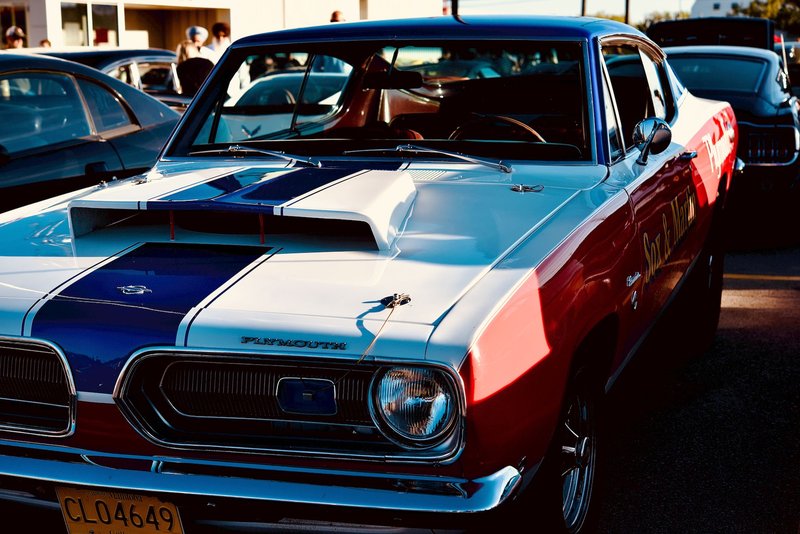
The EPA’s own account of the era notes that fuel economy climbed fast through this stretch while horsepower fell — and 1981 sat right at the bottom of that trough for domestic performance cars. What’s left is a strange, transitional lineup: the last gasp of one era, the nervous first draft of the next.
Chevrolet Corvette — The base 350ci V8 made a modest 190 hp, good for a 0-60 run around 8.1 seconds with the manual. That doesn’t sound like much until you remember this was 1981; most of Detroit couldn’t touch it. MSRP started at $16,258, and Chevy built 40,606 coupes that year — only 5,757 of them with the 4-speed manual, because by 1981 almost nobody was buying a Corvette to row their own gears anymore. Mid-year, production quietly shifted from the aging St. Louis plant to a brand-new facility in Bowling Green, Kentucky, where every Corvette has been built since.
Pontiac Firebird Trans Am Turbo — Pontiac’s answer to shrinking displacement was forced induction: a turbocharged 301ci V8 rated at 200 hp and 340 lb-ft of torque, wearing hood decals that announced the boost in case the whine didn’t. Period tests clocked 0-60 around 8 seconds, unremarkable by today’s standards but genuinely quick for a Malaise-era V8. It was also the final year of the second-generation F-body before Pontiac redesigned the Firebird from scratch for 1982.
Chevrolet Camaro Z28 — Camaro’s own last stand for the same body style, running since 1970 with only cosmetic updates. The Z28 carried a 350 (305 in California and high-altitude states) making around 175 hp — respectable, not thrilling, and a reminder of how much the Camaro’s silhouette had outlasted its underlying hardware by 1981.
Buick Regal Turbo — Buick fitted an optional turbocharged 3.8L V6 to the Regal Sport Coupe this year, the quiet setup for something bigger. Buick had just won NASCAR’s Grand National manufacturer championship, and the following year that name would land on a specific Regal trim package — the car that eventually became the all-black Grand National everyone remembers. In 1981, it was still just a turbo option on a mid-size coupe, and most buyers had no idea what it was building toward.
Ford Mustang — The low point of the lineup. The top engine was a 4.2L V8 making roughly 117 hp — the least horsepower ever offered in a Mustang before or since. 0-60 landed at 10.8 seconds. Ford wouldn’t bring real power back to the Mustang until the 302 returned for 1982.
Luxury and American Prestige
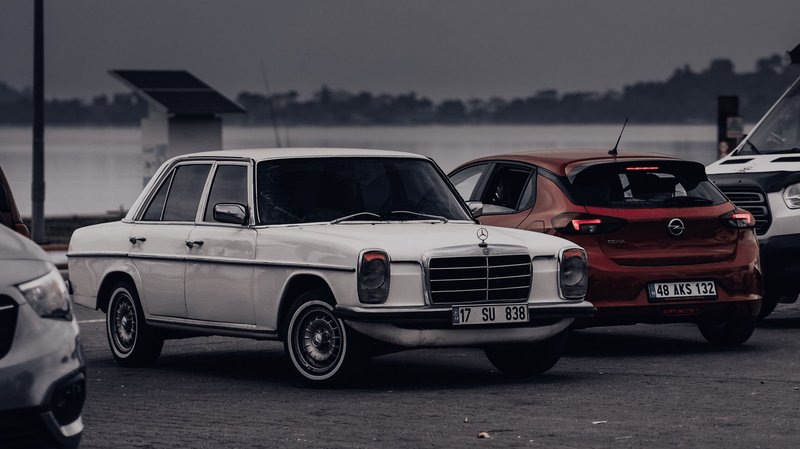
Mercedes-Benz S-Class (W126) — New for the US market this year, and the car that reset expectations for what “luxury sedan” meant on this side of the Atlantic. It wasn’t the fastest or the flashiest thing on this list, but its build quality and structural engineering embarrassed cars twice its horsepower. Volvo, BMW, and Peugeot all posted record US sales in 1981 chasing the same buyer Mercedes had already locked down.
Cadillac Seville — The second-generation “bustleback” Seville, with its polarizing sloped trunk styling meant to echo pre-war coachbuilt sedans, carried into 1981 mostly unchanged. The optional Oldsmobile-sourced 5.7L diesel V8 was still on the order sheet — a fuel-economy hedge that damaged GM’s reputation for a decade and pushed buyers straight back toward the gas V8.
Lincoln Continental Mark VI — Downsized from the barge-like Mark V, the Mark VI was the only car in the Mark series ever offered as a four-door, alongside the traditional two-door personal luxury coupe. A digital instrument cluster was optional, genuinely futuristic for a Ford product in 1981.
Chrysler Imperial — Chrysler revived the Imperial nameplate for 1981 after a five-year hiatus, complete with a Cartier-designed crystal hood ornament and a Frank Sinatra signature edition that came with a cassette of his music. The electronic fuel injection system was ambitious and unreliable, and the car never found the buyers Chrysler needed — an odd flex of prestige from a company that had just taken a federal loan guarantee to stay solvent.
BMW 528i — BMW moved the 528i onto a sleeker new body this year, trading the boxier previous-generation styling for the rounder look that would carry BMW’s mid-size sedan through most of the decade.
Economy and Compacts
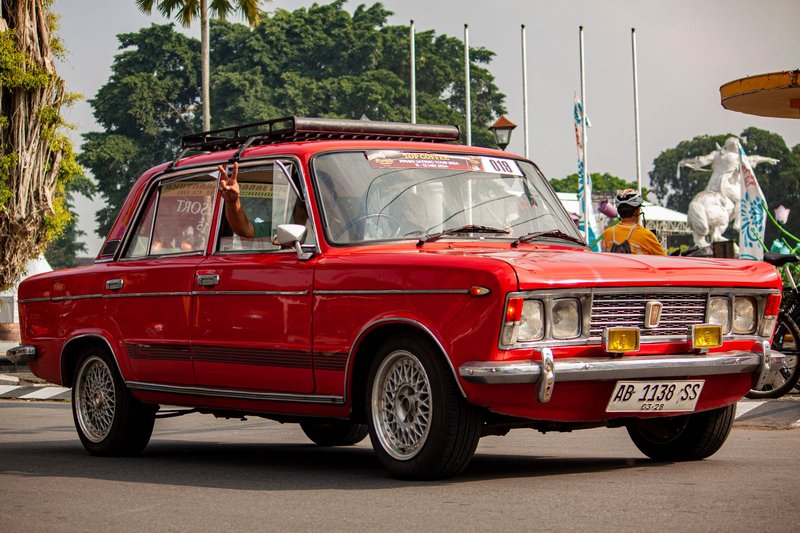
Dodge Aries & Plymouth Reliant — The K-cars, representing Dodge’s dramatic pivot from its 1970s performance heritage. All-new front-wheel-drive platform, a 2.2L four making 84 hp standard, an optional Mitsubishi-built 2.6L four with 96 hp. Nothing about the spec sheet explains why these mattered. What matters is that Chrysler had just taken $1.5 billion in government-backed loans to avoid bankruptcy, and the K-car was the bet that paid it back. The EPA classified it as mid-size despite the compact footprint, because the interior packaging was genuinely that good.
Ford Escort & Mercury Lynx — Ford’s “world car,” an all-new front-wheel-drive subcompact replacing the Pinto, engineered to be sold with minor variations across multiple continents. It would go on to become one of America’s best-selling cars through the mid-1980s.
Chevrolet Chevette — Rear-wheel drive in a decade that was rapidly abandoning that layout for economy cars, the Chevette stuck around on cheapness and simplicity alone. It was never good. It was everywhere.
AMC Eagle — American Motors bolted four-wheel drive to a passenger-car body and accidentally invented the modern crossover a decade before anyone had a name for it. The Eagle wagon rode higher than a normal sedan, drove like a car, and went through snow like nothing else on a dealer lot.
Volkswagen Rabbit — Built at VW’s Westmoreland, Pennsylvania plant, the diesel-equipped Rabbit was the mileage champion of the era, routinely topping 40 mpg at a time when that number belonged almost exclusively to diesels and motorcycles.
Imports and Sports Coupes
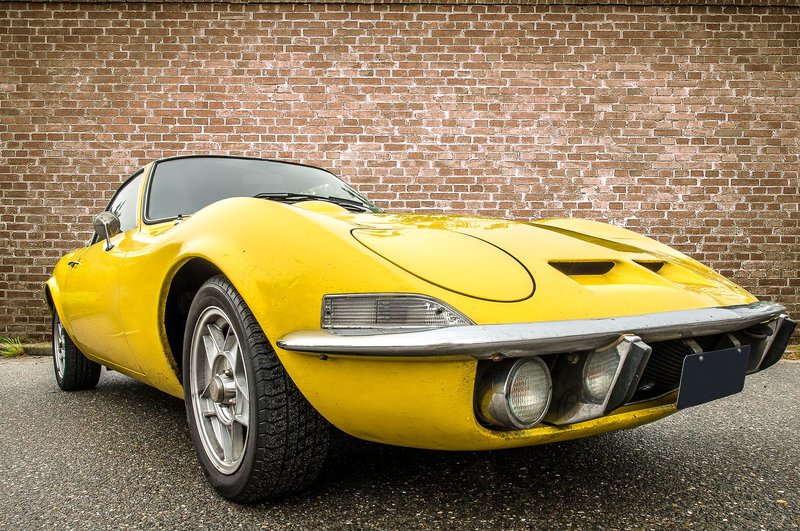
Datsun 280ZX Turbo — Datsun’s first turbocharged model for the US market, and a genuine sports car by 1981 standards: a turbocharged 2.8L inline-six making 180 hp and 202 lb-ft, a 5-speed manual, four-wheel disc brakes, 0-60 in 7.1 seconds, and a 135-mph top speed. That 0-60 figure beat the Corvette by a full second.
Mazda RX-7 — The 280ZX’s direct rival ran a rotary engine instead of a turbo six — a design philosophy that defined Japanese sports cars for generations. Lighter, smoother-revving, and mounted low enough behind the front axle to give the RX-7 handling balance nothing else in this price range could match.
Toyota Celica Supra — Positioned above the standard Celica with an inline-six under the hood, the Supra was Toyota’s opening argument that a Japanese coupe could be a genuine GT car, not just cheap transportation with a sportier roofline.
Toyota Cressida — A rear-wheel-drive near-luxury sedan aimed straight at buyers who’d normally cross-shop a Buick or an Oldsmobile, minus the diesel gamble and the reliability questions.
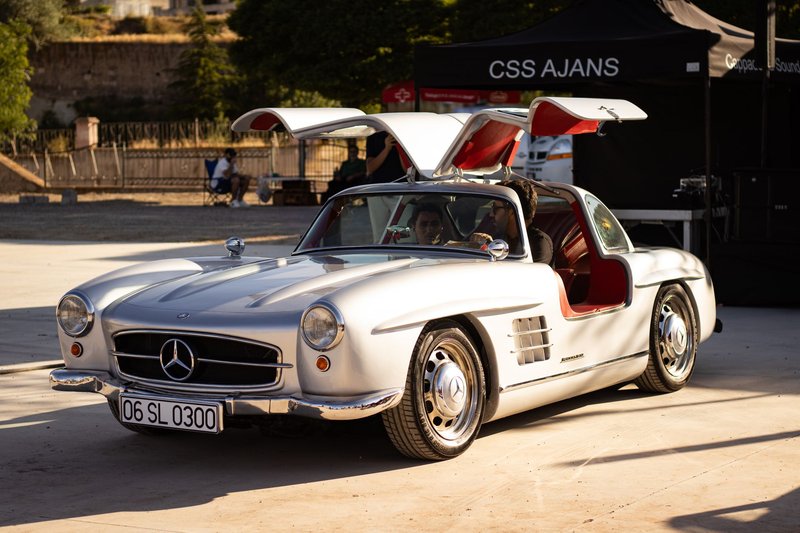
DeLorean DMC-12 — Built in Dunmurry, Northern Ireland, with unpainted brushed-stainless body panels and gull-wing doors, the DMC-12 ran a PRV V6 making 130 hp and 153 lb-ft — enough for a 130-mph top speed but nothing close to sports-car quick. John DeLorean’s company built roughly 7,500 cars by the end of 1981 but sold barely 3,000, and the whole venture would collapse into receivership within the year — one of the defunct car brands that defined the era. Its actual fame came a few years later, from a movie nobody involved with the car had anything to do with.
Honda Accord — Redesigned for 1980 and carried into 1981 in hatchback and sedan form, the Accord was selling so fast that Honda broke ground on a Marysville, Ohio assembly plant to keep up — the first Japanese automaker to build cars on US soil. The Accord wasn’t flashy. It just worked, every day, for longer than its Detroit competitors, and that alone was reshaping the market.
Which 1981s Are Actually Worth Money Now
Skip the spec-sheet stars and look at what people actually pay for. A clean 1981 Corvette is still the cheapest real entry point into vintage ‘Vette ownership — good driver-quality cars trade for a fraction of what a comparable C2 costs, and parts support is excellent because so many were built. The Turbo Trans Am and Turbo Regal command premiums specifically because they’re rare survivors of GM’s first serious turbo experiments; most got driven hard and scrapped.
The DeLorean is the outlier. Mechanically it’s an underachiever with a mediocre engine and a body that dents if you look at it wrong — but clean examples now trade well into five figures, a market built entirely on a film franchise that had nothing to do with the car when it was new. The 280ZX Turbo, by contrast, is quietly underpriced next to the RX-7 it competed with, despite outrunning it in a straight line.
The K-cars and Chevettes aren’t worth anything, and that’s fine. Their job was never to become collectible — it was to keep a company alive and a lot of people driving. In 1981, that mattered more than 0-60 times.

Marco Delantero
More from Marco DelanteroHow we reviewed this article
This article was researched against manufacturer records and editorially reviewed before publishing. We accept no payment for coverage. Some guides contain affiliate links; see our affiliate disclosure.