Chevrolet sold a lot of cars in the 1940s and changed surprisingly little about them. A 1941 Special Deluxe and a 1947 Fleetmaster share a chassis, an engine, and most of their silhouette. A 1949 Styleline shares almost nothing with either except the engine. Knowing where the real breaks fall is the whole trick to understanding this decade.
Here’s the short version. Chevy built one basic car from 1940 to early 1942, stopped for the war, restarted in late 1945 with a lightly refreshed version of the 1942 car, and then replaced it completely for 1949. Everything else is trim levels, names, and details.
- Quick reference table
- 1940: Master 85 and Special Deluxe
- 1941: Special Deluxe and Master Deluxe
- 1942: Fleetline arrives, then production stops
- 1946-1948: Stylemaster, Fleetmaster, and Fleetline
- 1949: Styleline and Fleetline
- The 216 “Stovebolt” six
- Buying a 1940s Chevrolet
- Which 1940s Chevy to pick
Quick reference
Factory horsepower figures for the 216.5 cubic inch six sit between 85 and 90 across the decade, and period sources disagree about which year got which number. The table gives the commonly cited figure for each era. Treat any single-year horsepower claim you read online with some suspicion.
| Years | Series | Wheelbase | Engine | Notable features |
|---|---|---|---|---|
| 1940 | Master 85, Special Deluxe | 113 in | 216.5 cu in inline six, 85 hp | Last of the older 1930s-style fenders and body proportions |
| 1941 | Master Deluxe, Special Deluxe | 116 in | 216.5 cu in inline six, 85-90 hp | New wider body, headlights moved into the fenders |
| 1942 | Master Deluxe, Special Deluxe, Fleetline | 116 in | 216.5 cu in inline six, 90 hp | Fastback Fleetline debuts, painted “blackout” trim late in the run |
| 1946-1948 | Stylemaster, Fleetmaster, Fleetline | 116 in | 216.5 cu in inline six, 90 hp | Essentially the 1942 car with new grille and trim |
| 1949 | Styleline, Fleetline (each in Special or DeLuxe trim) | 114 in | 216.5 cu in inline six, 90 hp | All-new slab-sided body, no separate fenders |
1940: Master 85 and Special Deluxe
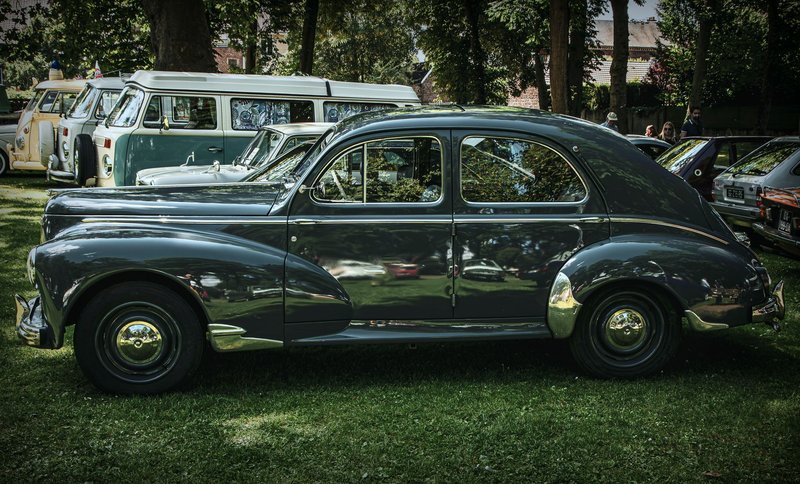
The 1940 lineup is the oldest-looking Chevrolet of the decade. It has the tall, upright stance and the separate bulbous fenders of the late 1930s, and it rides on a 113-inch wheelbase, shorter than anything that followed.
The entry car was the Master 85, named for its advertised 85 horsepower. Above it sat the Special Deluxe, with more chrome, better interior fittings, and a wider choice of body styles, including a convertible and a station wagon. Business coupes and two-door sedans made up the bulk of the sales for people who just needed a car that started.
The Master 85 is the one to know if you want an honest prewar-style Chevy. The Special Deluxe is the one you’ll actually find at shows.
1941: Special Deluxe and Master Deluxe
The 1941 Chevrolet was a ground-up redesign, and it’s where the shape of the decade gets set. The body is longer and wider, the wheelbase grew to 116 inches, and the headlights moved from the sides of the grille into the fenders. The hood got longer too, with the grille now reading as a lower, wider horizontal feature instead of a tall narrow one.
The names changed as well: the Master 85 gave way to the Master Deluxe, and the 1941 Chevrolet Special Deluxe stayed on top. Both ran the same six-cylinder engine. The Special Deluxe added a nicer interior and extra bright trim, and it came in more body styles, including the Sport Sedan and a convertible.
This was a banner year. Chevrolet built roughly a million cars for 1941, which is a big part of why so many survive today.
1942: Fleetline arrives, then production stops
The 1942 model year was short and strange. The big news was the Fleetline, a fastback body with a sloping rear deck that looked more like a late-1940s car than anything else in the showroom. Chevrolet would reuse the name in 1949.
Then the war intervened. In January 1942, the government ordered an end to civilian car production, and the War Production Board’s ban took effect in early February, after dealers lobbied to push the start date back from the original January 15. Late 1942 Chevrolets are the “blackout” cars: with chrome and bright metal restricted for war needs, the trim was painted instead. They’re collectible for exactly that reason.
Detroit’s plants went to bombers, tanks, and engines. No new cars rolled off the line for the next few years, and the 1943 model year never really existed. Smithsonian Magazine notes that production stopped entirely between 1942 and 1945 while the factories turned out war goods.
1946-1948: Stylemaster, Fleetmaster, and Fleetline
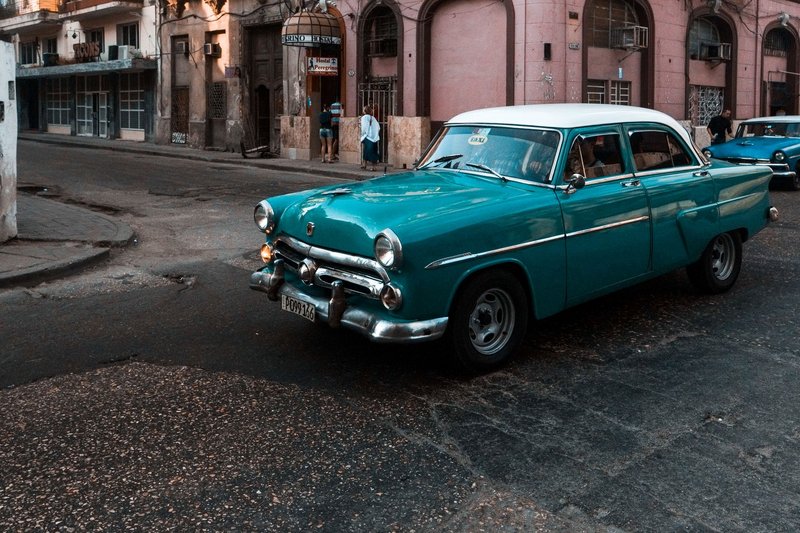
When civilian production restarted in late 1945, Chevrolet had no time or tooling for anything new. The 1946 car is the 1942 car with revised front-end styling, and the 1947 and 1948 models carry that forward with small trim changes. That’s why a 1946 Chevy looks so close to a 1941 or 1942 one from across a parking lot.
The names changed to reflect a simple three-tier ladder:
- Stylemaster: the base series, replacing the Master Deluxe. Plain interiors, minimal chrome, and the usual fleet and business-coupe buyers.
- Fleetmaster: the mid-level series, replacing the Special Deluxe. More trim, nicer upholstery, and the cars most people think of as a “typical” postwar Chevy.
- Fleetline: the fastback, available as a two-door Aerosedan and a four-door sedan. It looks dramatic, and it’s the car many collectors want most from this period.
Buyers took everything Chevrolet could build. Demand after four years without new cars was huge.
How to tell a 1946 from a 1948
The three model years share a body, so identification comes down to grille bars, hood trim, and other small details, and those are easy to get wrong because owners swap parts freely and restorers mix and match. The reliable way to date one is the serial number on the car’s identification plate, and the Fisher Body data plate on the firewall for the body details. Check both before you trust a seller’s year.
1949: Styleline and Fleetline
The 1949 Chevrolet is the real break. It was the first all-new Chevy of the postwar era, and it dropped the separate fenders in favor of a smooth slab-sided body that took its themes from the 1948 Cadillac, as GM’s Harley Earl design team applied the same ideas across the corporation.
The lineup was simplified from three series to two: the notchback Styleline and the fastback Fleetline. Each came in Special or DeLuxe trim. Convertibles and station wagons were Styleline DeLuxe only. The engine was the carried-over 216.5 cubic inch six at 90 horsepower, but the chassis was modernized, with tubular shock absorbers at all four corners and improved steering geometry. The vacuum-shift mechanism for the three-speed transmission was gone, and the engine moved forward in the frame, which gave the cabin more room.
Chevy again built more than a million cars, nearly matching Ford. The Fleetline, though, sold at less than a third of the prior volume, and the style faded from the lineup over the next few years. The 1949 Styleline DeLuxe sets up the car most people picture when they think of an early-fifties Chevy, including the Bel Air that arrived in 1950.
The 216 “Stovebolt” six
Every 1940s Chevrolet car used the same basic engine: a 216.5 cubic inch overhead-valve inline six, nicknamed the Stovebolt for its simple construction and the fasteners holding it together. It makes modest power, but it was built to run for a long time and to be fixed by people with ordinary tools.
For owners, the practical points are these:
- It’s a low-revving, torquey engine. It won’t impress anyone at a stoplight, but it pulls steadily and doesn’t mind being worked.
- Parts support is excellent. Gaskets, ignition parts, water pumps, and rebuild kits are widely reproduced.
- It’s easy to work on. Everything is accessible, and the design has no secrets.
- The weak links are usually the things around the engine: the 6-volt electrical system, cooling, and old wiring.
Mechanically, nothing here is exotic, which is the point.
Buying a 1940s Chevrolet
Values vary widely by body style and condition, so check a current price guide such as the Hagerty Price Guide before you negotiate. As a rough orientation, sedans and 1940s coupes in solid driver condition typically trade in the mid-teens to mid-twenties of thousands of dollars. Project cars cost far less, and convertibles, woodie-style wagons, and the Fleetline fastbacks command a clear premium.
What to check, in order:
- Rust. Look at the floor pans, trunk floor, rocker panels, lower doors, cowl, and the bottoms of the fenders. These are the usual rust zones on cars of this era.
- Wood. Fisher bodies of this period used wood framing in places, and water damage can rot it out of sight. Press on the roof and door posts and check for sagging doors.
- Originality of the body. Because 1946 to 1948 cars are so similar, make sure the parts match the year claimed.
- Mechanical basics. Cooling, brakes, and the electrical system matter more than the engine. A solid Stovebolt is usually cheap to put right.
- Interior. Upholstery kits exist, but a complete, unmolested interior is worth paying for.
Also decide early between a 1946-48 car and a 1949. The earlier cars have the rounded fat-fendered look and a more vintage feel. The 1949 has a more modern shape and is easier to live with on today’s roads, but it was built for a different era of styling.
Which 1940s Chevy to pick
If you want the purest prewar look, find a 1940. If you want the best-proportioned shape of the decade, pick a 1941 Special Deluxe. If you want something unusual, the 1942 blackout cars are the oddity, and the Fleetline is the pick if you want a fastback that stands out at every show.
The 1946 to 1948 Stylemaster and Fleetmaster cars are the best value: they look like 1941 and 1942 Chevrolets, use the same dependable six, and turn up for less than the rarer body styles. And the 1949 Styleline is the choice if you want something you can drive daily without feeling as though you’re piloting a museum piece.
Every one of these 1940s Chevy cars shares an engine and a philosophy: simple, cheap to run, and easy to fix. The decision comes down to which version of the shape you like looking at.

Marco Delantero
More from Marco DelanteroHow we reviewed this article
This article was researched against manufacturer records and editorially reviewed before publishing. We accept no payment for coverage. Some guides contain affiliate links; see our affiliate disclosure.