If you’re asking which Volkswagens you could buy new in 1980, the 1980 Volkswagen car models in the US were the Rabbit (with a new convertible), the all-new Jetta, the Dasher, the Scirocco, the Vanagon, the Rabbit-based Pickup, and the last Beetle, a Karmann convertible. Outside the US, the same cars wore different names, and one of them, the Golf GTI, never reached American showrooms until 1983.
Most of the cars on this list were the first of their kind for VW: front-engine, water-cooled, front-wheel drive. The Beetle was the holdout. By 1980 it was almost gone from the US, and the new Vanagon had just arrived to replace the old rear-engined bus. That makes 1980 an odd, interesting year to look at.
TLDR
- Rabbit: the volume hatchback. The convertible went on sale in the US for 1980.
- Jetta: new for 1980. A Rabbit with a trunk, in two-door and four-door form.
- Dasher: the bigger, older front-drive family car (the European Passat). Sedans and wagons.
- Scirocco: the Giugiaro-styled sport coupe, in its last full years before the second generation.
- Vanagon: brand new, boxier, and still air-cooled and rear-engined.
- Pickup: a Rabbit with a bed, available with a diesel.
- Beetle: only the Karmann Cabriolet was left, in its final US year.
Contents
- Quick-reference table
- The 1980 VW Rabbit (and the Rabbit Convertible)
- The 1980 Volkswagen Jetta
- The 1980 Volkswagen Dasher
- The 1980 VW Scirocco
- The 1980 Volkswagen Vanagon
- The 1980 VW Pickup
- The Beetle Cabriolet
- US versus Europe: same cars, different names
- Which 1980 VW is worth owning now
Quick-reference table
| Model | Body style | Engine layout | Drivetrain | What it replaced or followed |
|---|---|---|---|---|
| Rabbit | 2- and 4-door hatchback, convertible | Water-cooled inline-four, gas or diesel | Front engine, front-wheel drive | Beetle as the mass-market VW (since 1975) |
| Jetta | 2- and 4-door sedan | Rabbit’s four-cylinders, gas or diesel | Front engine, front-wheel drive | Nothing directly; a notchback Rabbit |
| Dasher | 4-door sedan, wagon | Water-cooled inline-four, gas or diesel | Front engine, front-wheel drive | Type 3 and Type 4 line (since 1974) |
| Scirocco | 2-door hatchback coupe | Fuel-injected inline-four | Front engine, front-wheel drive | Karmann Ghia |
| Vanagon | Van, passenger van, camper | 2.0-liter air-cooled flat-four | Rear engine, rear-wheel drive | Type 2 Bay Window bus |
| Pickup | 2-door pickup | Rabbit’s four-cylinders, gas or diesel | Front engine, front-wheel drive | Nothing; VW’s first US car-based pickup |
| Beetle Cabriolet | 2-door convertible | Air-cooled flat-four | Rear engine, rear-wheel drive | Nothing; the last of the line in the US |
The 1980 VW Rabbit (and the Rabbit Convertible)
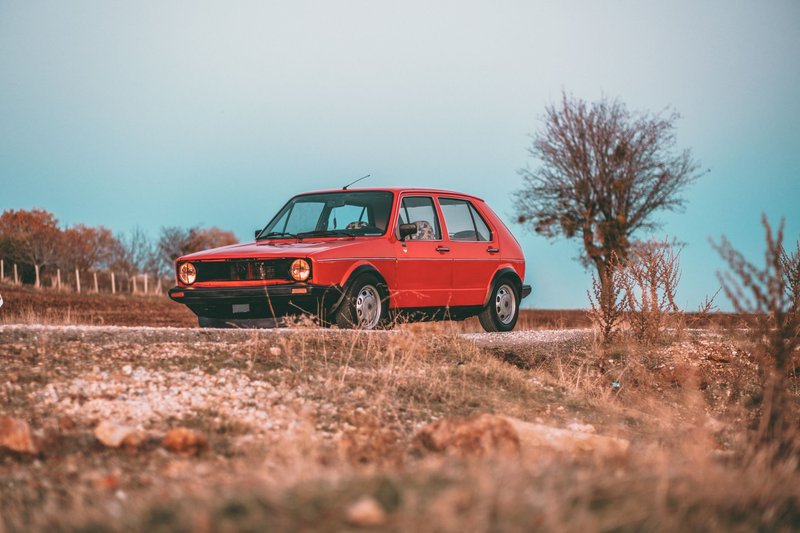
The Rabbit was the car VW had bet the company on. It was the US-market Golf, launched in 1975 after the Beetle had run out of road, and by 1980 it was the best-selling VW in America by a wide margin.
The 1980 changes that matter are two: the Rabbit Convertible and the diesel’s established place in the range. The convertible was a Karmann-built car with a fixed roll hoop behind the front seats, and it was the first open VW many buyers could buy new after the Beetle Cabriolet went away. Under the hood, the gasoline Rabbit used a small water-cooled four of around 1.5 to 1.6 liters. The Rabbit Diesel made roughly 50 hp, which is almost nothing, but it returned mileage in the high 40s and early 50s on the EPA cycle, and that’s why people bought it in the wake of the 1979 fuel crisis.
What it was like: light, quick to turn, loud above 60 mph, and faintly utilitarian inside in a way that has aged well. Nothing about it feels padded.
One correction to a common assumption: there was no 1980 Rabbit GTI in the US. The GTI debuted in Europe as the Golf GTI in 1976 and arrived here as a 1983 model. The original Golf GTI is still one of the best hatchbacks of all time. A 1980 Rabbit with GTI badging is a later conversion.
The 1980 Volkswagen Jetta
The 1980 Volkswagen Jetta was the new car on the lot. VW took the Rabbit’s platform and engines, added a proper trunk, and aimed it at buyers who wouldn’t consider a hatchback. It came as a two-door and a four-door sedan, with the Rabbit’s gasoline and diesel fours.
It sold well enough that the name outlived the Rabbit itself. In 1980 it was the formal-looking Rabbit, priced above the hatch. Today it’s the least discussed of the 1980 range, which tells you something: most were driven to death as commuter cars, and survivors are scarce. If you find a clean two-door, take it seriously.
The 1980 Volkswagen Dasher
The Dasher was the US name for the Passat, VW’s larger front-drive car, and it had been on sale since 1974. For 1980 it was in the middle of its run, with a fuel-injected gasoline four of around 76 hp and a diesel option. Body styles were the sedan and the wagon, in two- and four-door versions. The Dasher was replaced by the Quantum for 1982. For how the wider range looked two years later, see the 1984 Volkswagen lineup.
It was the roomy VW, and it had the Audi 80’s bones underneath, which meant a stiffer, more European feel than the Rabbit. It also had a reputation for rust and electrical problems that has not improved with age. That scarcity is why a good Dasher wagon draws interest from people who like their classics obscure.
The 1980 VW Scirocco
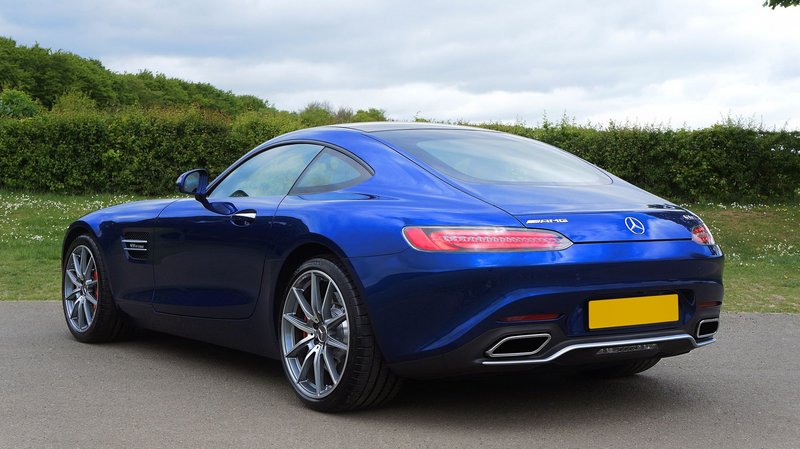
The Scirocco was the sports car in the lineup, if you grade on a curve. Giugiaro drew the body, Karmann in Osnabruck built it, and the mechanical parts came from the Rabbit. It replaced the Karmann Ghia, and unlike the Ghia, it handled.
For 1980 the first-generation Scirocco was in its final full years in the US. It used a 1.6-liter fuel-injected four of about 76 hp, with a four-speed or five-speed manual. The 1.6-liter was no firebreather, but the car weighed under 2,000 pounds, and the steering and the balance are what people remember. Hagerty’s records show a 1980 Scirocco with 141,000 miles selling for $13,077, a figure that would have surprised anyone who bought one for $7,000 new.
The 1980 Volkswagen Vanagon
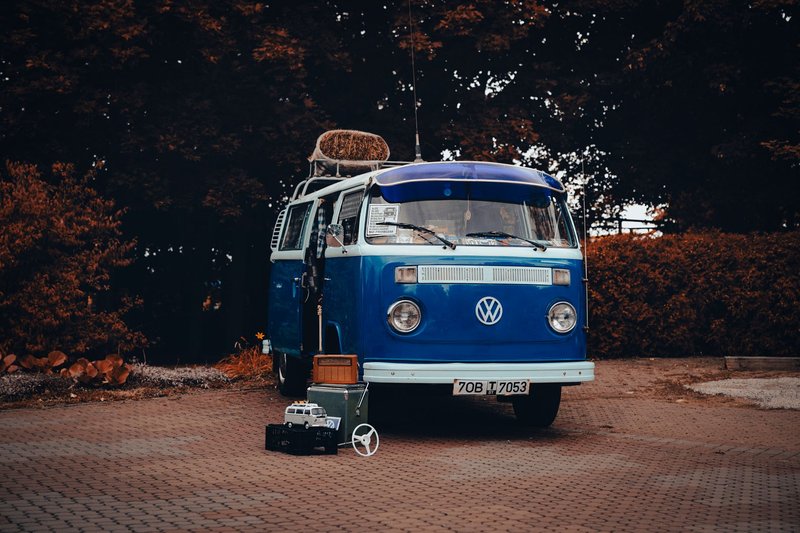
The 1980 Volkswagen Vanagon, or T3 in the enthusiast shorthand, replaced the Type 2 Bay Window bus. Everything about it was bigger: the body was boxier, the windshield was taller, and the interior was more spacious. The one thing that didn’t change was the engine in the back. US Vanagons started with a 2.0-liter air-cooled flat-four making about 67 hp, paired with a four-speed manual or a three-speed automatic.
That air-cooled engine stayed in US Vanagons until mid-1983, when VW switched to a water-cooled boxer. The air-cooled years are the ones people tend to talk down, since 67 hp moves a loaded van with great reluctance and the engines are prone to overheating if neglected. They’re also the ones with the cleaner, simpler engine bay.
Vanagon is also the one 1980 VW whose values have shot up. A Westfalia camper in good condition is a serious purchase now, and non-camper passenger vans are sold at a fraction of that. If you want a 1980 VW to actually use, the Vanagon is the one where the people who love them have the biggest community and parts support.
The 1980 VW Pickup
The Pickup was a Rabbit with its roof cut off behind the seats and a bed bolted on, and it was new to US buyers for 1980. VW sold it with the Rabbit’s gasoline four or the diesel. It carried a bed that was small by American standards and rode like a car, because it essentially was one.
It sold in small numbers in the US, and most of the survivors got used hard. The enthusiast scene for them is small but loyal. A 1980 Rabbit pickup recorded a $16,330 sale on Hagerty’s records, although that was a modified truck, and stock examples typically bring less.
The Beetle Cabriolet
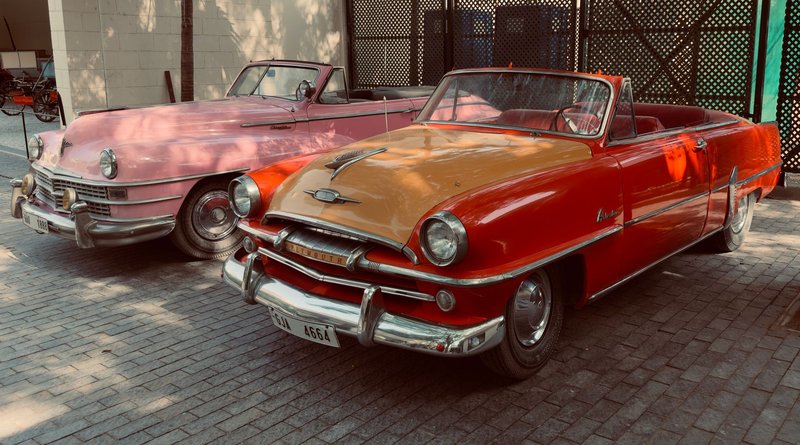
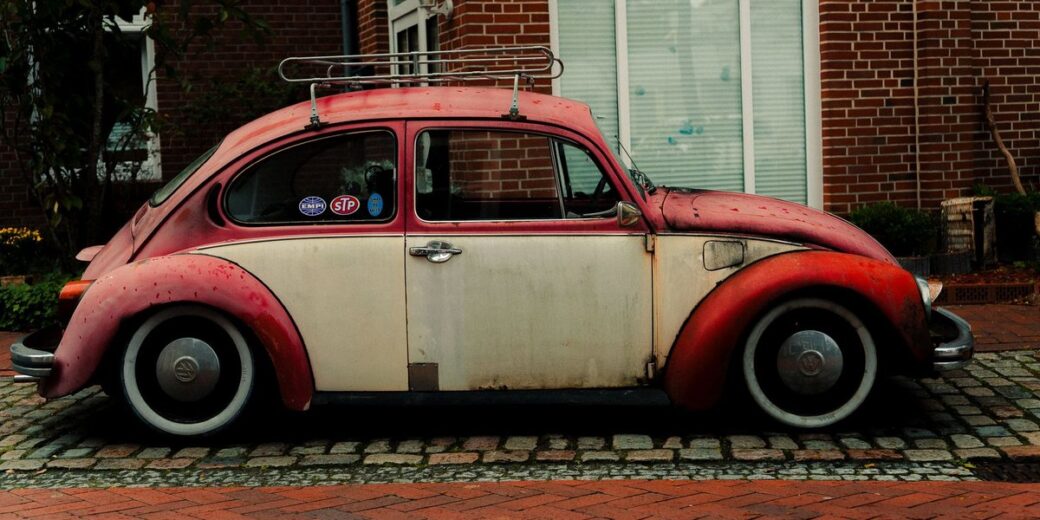
The Beetle sedan had left the US after 1977, but the Karmann-built convertible lived on. By 1980 it was the last Beetle sold new in America, and the final US cars are among the best-known “last of” VWs. Hagerty notes that 1979 was the last full year for the Beetle in the US, with only a small number of 1980 model-year convertibles trickling out afterward.
It kept the air-cooled flat-four and the rear-engine, rear-drive layout, which makes it the odd one out among the 1980 models, and the car with the most collector pull. The Beetle itself did not die in 1980: production continued in Mexico until 2003.
US versus Europe: same cars, different names
If you’re reading a European brochure or a spec sheet from outside North America, the names won’t match.
- Rabbit = Golf. Same car, same Giugiaro lines. The Golf GTI existed in Europe from 1976 and was sold there in 1980.
- Dasher = Passat. VW used the Passat name in Europe and kept it at home for decades.
- Pickup = Caddy outside North America.
- Vanagon = Transporter (T3), called the Caravelle for passenger versions in some markets, and T25 in the UK.
- Jetta kept its name nearly everywhere, though its European debut came a little earlier.
- Scirocco kept its name everywhere.
- Iltis was a military-derived 4×4 sold to armies and in some markets to civilians. It wasn’t offered in the US lineup in 1980.
Europe also had smaller cars the US never saw, such as the Polo and the Derby. For the brands behind them, see every European car marque, its owner and its country.
Which 1980 VW is worth owning now
If you want a project that appreciates: the Vanagon, especially a Westfalia. Parts and knowledge are abundant.
If you want driving fun for the money: the Scirocco. It’s light, it’s tidy, and nothing else from 1980 at that price handles like it.
If you want something no one else at the car meet has: the Pickup or a clean Dasher wagon.
If you want sun and a name: the Rabbit Convertible or, for much more money, the Beetle Cabriolet.
If you want the cheapest way into a 1980 Volkswagen: the Jetta or a plain Rabbit, where the cars are inexpensive and the market has not caught up. Prices vary widely by condition and region, so check recent sales before you commit.
Whatever you choose from the 1980 Volkswagen car models, rust is the thing to inspect first. Check the floors, the rocker panels, and the area around the windshield, and walk away from anything with a bad answer.

Marco Delantero
More from Marco DelanteroHow we reviewed this article
This article was researched against manufacturer records and editorially reviewed before publishing. We accept no payment for coverage. Some guides contain affiliate links; see our affiliate disclosure.