1969 was the year Jaguar finally cleaned house. For most of the decade the lineup had been a tangle — overlapping saloons with similar engines, badge-engineered Daimlers, and a sports car that defined an era sitting next to sedans that felt a generation older. Then the XJ6 arrived in September 1968 and started swallowing everything around it. So the 1969 Jaguar car models you’ll find today are a transition snapshot: a brand-new flagship saloon, the still-glorious E-Type in its Series 2 form, and a couple of older saloons living out their final months.
Here’s the full roster, organized the way it actually makes sense — by body style — with the specs, production figures, and what these cars are worth now if you’re hunting for one.
Table of Contents
- The 1969 Jaguar Lineup at a Glance
- The Sports Car: E-Type Series 2 (4.2L)
- The New Flagship: XJ6 Series 1
- The Fading Saloons: 240 and Daimler Sovereign
- Why 1969 Was a Pivot Year
- Buying a 1969 Jaguar: What to Watch For
- Which One Should You Chase?
The 1969 Jaguar Lineup at a Glance {#glance}
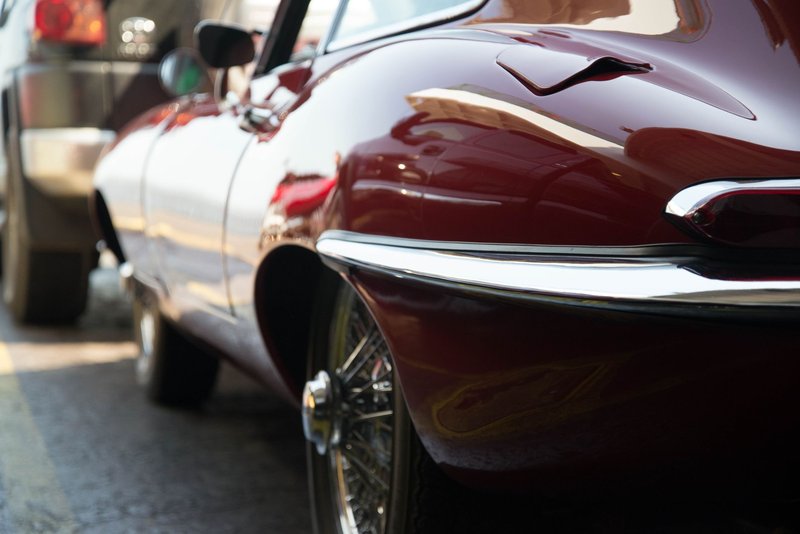
If you walked into a Jaguar showroom in early 1969, this is roughly what you could order or what was winding down on the floor:
| Model | Body Style | Engine | Power (gross) | Approx. Total Production |
|---|---|---|---|---|
| E-Type Series 2 4.2 Roadster | 2-seat convertible | 4.2L XK inline-6 | ~265 hp | ~8,600 (S2 OTS, all years) |
| E-Type Series 2 4.2 FHC | 2-seat coupe | 4.2L XK inline-6 | ~265 hp | ~4,800 (S2 FHC, all years) |
| E-Type Series 2 2+2 | 2+2 coupe | 4.2L XK inline-6 | ~265 hp | ~5,300 (S2 2+2, all years) |
| XJ6 2.8 | 4-door saloon | 2.8L XK inline-6 | ~180 hp | part of 98,000+ Series 1 |
| XJ6 4.2 | 4-door saloon | 4.2L XK inline-6 | ~245 hp | part of 98,000+ Series 1 |
| 240 | 4-door saloon | 2.4L XK inline-6 | ~133 hp | ~4,400 (240, all years) |
| Daimler Sovereign 420 | 4-door saloon | 4.2L XK inline-6 | ~245 hp | ~5,800 (420/Sovereign) |
A note on those power figures: Jaguar quoted gross SAE horsepower in this era, which runs flattering compared to the net numbers a modern car would advertise. The “265 hp” E-Type was genuinely quick, but don’t read it the way you’d read a spec sheet today.
The throughline is that 4.2-liter XK straight-six. It shows up in the E-Type, the senior XJ6, and the Daimler Sovereign — the same fundamental engine Jaguar had been refining since 1949, now near the end of a long, productive life.
The Sports Car: E-Type Series 2 (4.2L) {#etype}
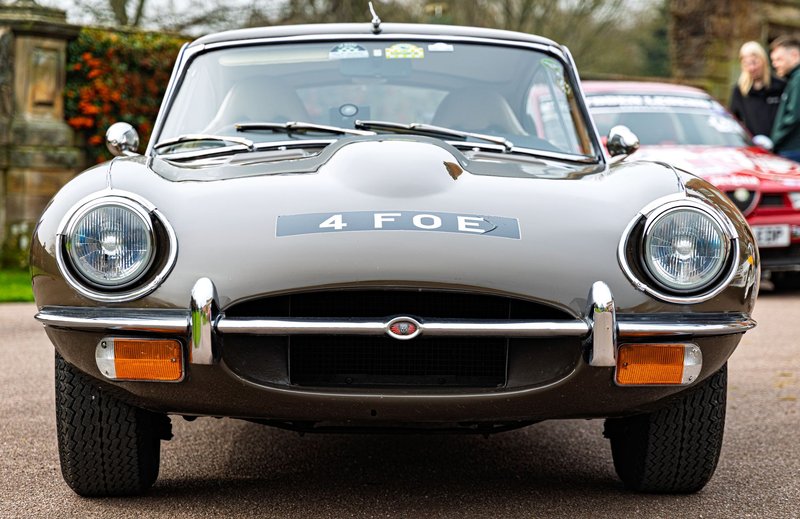
The E-Type is the reason most people end up reading about 1969 Jaguars in the first place. By 1969 it was in Series 2 form, and that designation carries some baggage among purists.
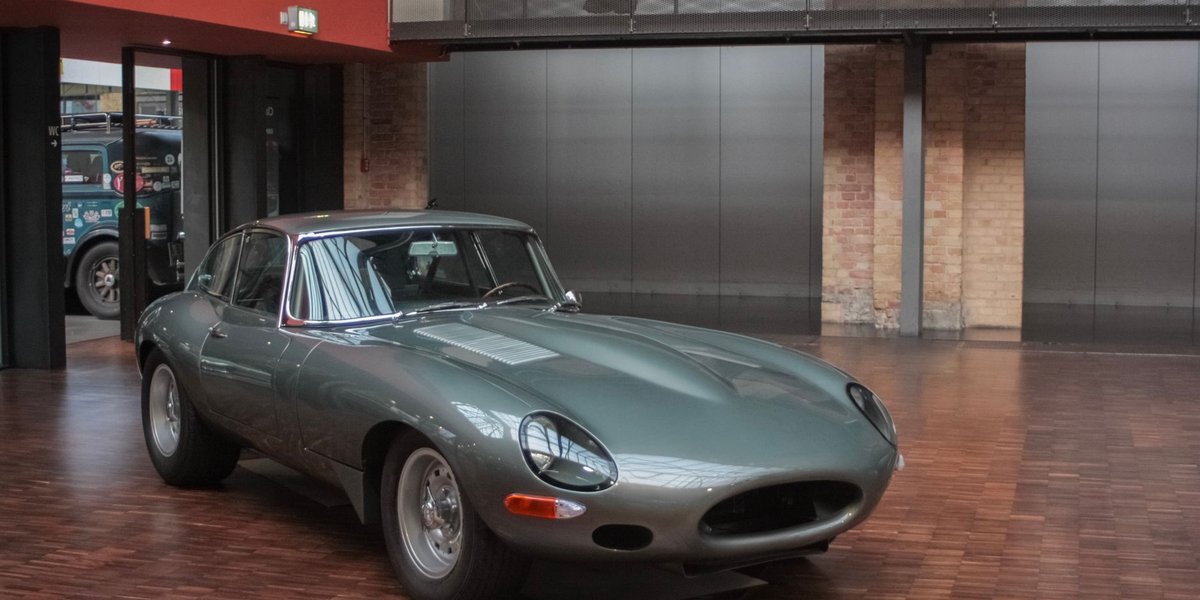
The Series 2 happened because of US federal safety and emissions rules. Out went the gorgeous covered headlights of the Series 1 — the glass faired-in units that gave the early cars their seamless nose. In came exposed headlamps moved forward and up, a larger “mouth” air intake for cooling, wraparound bumpers, and bigger tail lights relocated below the bumper. Enthusiasts argue about it endlessly. The Series 1 is prettier; the Series 2 is more usable, with better brakes, improved cooling, and a far more comfortable seating position.
Three body styles carried over: the two-seat Roadster (Open Two Seater, or OTS), the two-seat Fixed Head Coupe, and the longer-wheelbase 2+2 coupe with its taller roofline and back seats fit for luggage or small children.
Under the bonnet sat the 4.2-liter XK six with triple SU carburetors — though US-spec cars from this period got strangled by emissions equipment, including a switch to twin Stromberg carbs that cost real power. A European-market triple-carb car and a federalized US car of the same year can feel like noticeably different machines. If you’re buying, that distinction matters more than the brochure ever let on.
This is also the last gasp of the inline-six E-Type. The Series 3 arrived in 1971 with the V12, so a 1969 car represents the six-cylinder E-Type in its final, most sorted-out configuration. It’s a car that comfortably earns its place among the best sports cars of the 1960s, even in its later, federalized form.
What they’re worth: Series 2 4.2 cars sit below Series 1 money but above the V12 cars in many cases. Good roadsters routinely trade in the high five figures to low six figures depending on restoration quality and matching numbers; coupes run a meaningful step cheaper, which makes the Fixed Head Coupe one of the smarter ways into E-Type ownership.
The New Flagship: XJ6 Series 1 {#xj6}
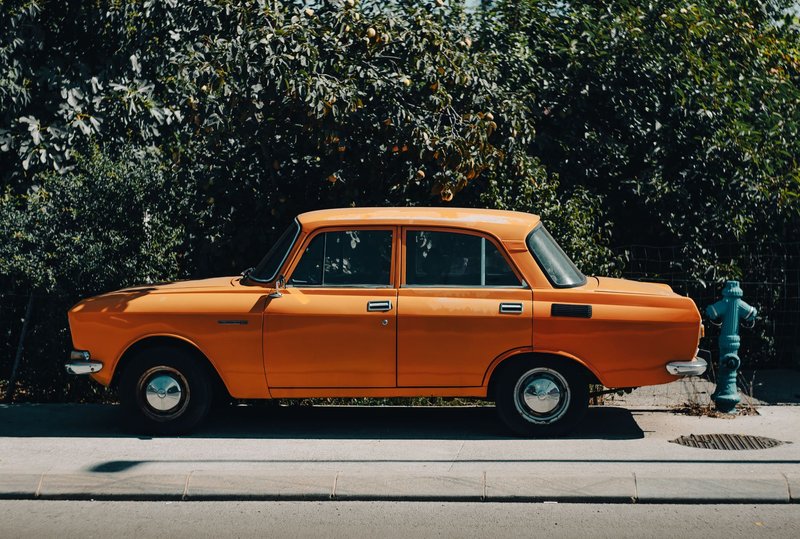
Here’s the car that actually defined 1969 for Jaguar, even if the E-Type gets the posters. The XJ6 launched in September 1968 and was the first full model year you could buy one. Sir William Lyons reportedly considered it his finest achievement, and it set the template for every Jaguar saloon that followed for the next three decades.
The pitch was simple and, for the time, slightly outrageous: a luxury sedan that rode like a limousine and handled like a sports car, at a price that undercut nearly everything comparable from Mercedes or Rolls-Royce. The long, low body, the four-headlight face, the deep ride quality from a sophisticated independent suspension — it made the rest of the 1960s Jaguar saloon range look instantly obsolete. Set against the broader field of 1960s luxury cars, the XJ6 didn’t just compete on price; it quietly rewrote what a luxury saloon was supposed to feel like.
Two engines at launch, both versions of the XK six: a 2.8-liter aimed at European tax brackets, and the familiar 4.2-liter for buyers who wanted real performance. The 2.8 had a reputation for holed pistons under hard, sustained use; the 4.2 is the one collectors want. A four-speed manual was available, often with overdrive, though many cars left the factory with the Borg-Warner automatic.
For an enthusiast, the Series 1 XJ6 is the connoisseur’s choice within the long XJ bloodline — the purest expression before later facelifts raised the bumpers and fiddled with the grille for US regulations. The chrome is delicate, the cabin is all wood and leather, and the proportions are exactly right.
What they’re worth: This is the bargain of the 1969 Jaguar range. Series 1 XJ6 saloons remain attainable — clean drivers can be found for the price of a well-used modern hatchback, with concours 4.2 examples climbing higher. Values have been creeping up as people realize how undervalued they’ve been, so the math is shifting.
The Fading Saloons: 240 and Daimler Sovereign {#saloons}
By 1969 the older saloons were on borrowed time, which is exactly what makes them interesting. These are short-production, end-of-line cars.
Jaguar 240. The 240 was the final, budget-trimmed evolution of the legendary Mark 2 — the compact sports saloon that earned its reputation as both a gentleman’s express and, less officially, a getaway car. By the time it became the 240, Jaguar had decontented it to keep the price down: thinner bumpers, Ambla vinyl instead of leather as standard, and the smaller 2.4-liter version of the XK six. With a reworked cylinder head it actually went better than the old 2.4 Mark 2, nudging past 100 mph. Production of the 240 wound down through early 1969, making it one of the last of the original compact Jaguar line before the XJ6 made the whole segment redundant.
Daimler Sovereign (420-based). Jaguar bought Daimler in 1960 and spent the decade badge-engineering its own cars with the fluted Daimler grille and extra equipment. The Sovereign was a Jaguar 420 wearing a Daimler face — same 4.2-liter twin-carb engine, same body, but trimmed as the more upmarket, more comfortable option. It carried on into roughly mid-1969 before being replaced by a Daimler-badged version of the new XJ6, the Daimler Sovereign of the next generation. A 1969 Daimler Sovereign of the older type is genuinely a sunset car.
What they’re worth: The 240 trades below a comparable Mark 2 3.8 — the smaller engine and decontenting see to that — but it’s a cheaper route into that iconic shape, and the better head makes it more drivable than the numbers suggest. The older Daimler Sovereign is a niche pick, valued by people who specifically want the Daimler character and the equipment, and it can offer more car for the money than the Jaguar it’s based on.
Why 1969 Was a Pivot Year {#pivot}
Step back and the picture is clear. In a single model year Jaguar was selling the old world and the new world side by side.
The old world: a 240 that traced its DNA to the late-1950s Mark 2, and a Daimler Sovereign built on the 420 — both products of Jaguar’s habit of spinning multiple overlapping saloons out of one platform and a couple of engines. The new world: the XJ6, a clean-sheet flagship designed to replace all of them at once. Within a few years the entire confusing range of S-Types, 420s, and Mark 2 derivatives would be gone, consolidated into the XJ.
The E-Type sat across both eras. Still the same basic 1961 design, but federalized into Series 2 form to survive in its most important export market, the United States. The covered-headlight purity was gone; the regulatory future had arrived. It’s worth remembering that Jaguar was navigating all this in a year crowded with landmark machinery — line the lineup up against the best cars of 1969 and you can see just how much was changing across the industry at once.
That’s what makes 1969 worth understanding as a year rather than a list of disconnected models. You’re looking at a company mid-transformation, with one foot in its baroque 1960s catalog and the other planted firmly in the car that would carry it through the 1980s.
Buying a 1969 Jaguar: What to Watch For {#buying}
Whatever model tempts you, the same handful of realities apply to a half-century-old British saloon or sports car.
- Rust is the real enemy. These cars rot from the bottom up and the inside out. On the E-Type, check the sills, floors, and the bulkhead — bulkhead corrosion is expensive and easy to hide. On the saloons, inspect the floors, jacking points, and rear wheel arches. A shiny respray means nothing if the structure underneath is lace.
- Numbers matter on the E-Type. Matching-numbers cars — engine, body, and gearbox correct to the build record — command a serious premium. Jaguar Daimler Heritage Trust can supply a build certificate confirming original spec, and for a sought-after E-Type it’s worth the cost before you buy.
- US vs European spec. A federalized 1969 E-Type with emissions carbs makes less power than a triple-SU European car. Neither is “wrong,” but know which you’re buying and price accordingly.
- The 2.8 XJ6 caveat. If you’re looking at an XJ6, the 4.2 is the engine to have. The 2.8 can suffer piston problems under hard use, and the bigger engine is simply more relaxed and more valuable.
- Parts and specialists. The XK engine is exceptionally well supported — almost everything is reproduced. That’s a genuine advantage over rarer classics where a single missing trim piece can stall a restoration for years.
For values and recent sale data on any specific model, the auction record at Hagerty’s valuation tools is a reliable starting point before you commit to a number.
Which One Should You Chase? {#verdict}
If you want the icon and have the budget, the E-Type Series 2 4.2 Fixed Head Coupe is the sweet spot — the cheapest way into a genuine six-cylinder E-Type, with the Series 2’s better brakes and cooling making it the one you can actually drive.
If you want the most car for the least money, it’s the XJ6 Series 1 4.2, no contest. It’s a properly sorted luxury saloon that’s still undervalued, and a clean one delivers a driving experience that punches absurdly above its price.
And if you want something nobody else at the show will have, the end-of-line 240 or the older Daimler Sovereign give you a piece of Jaguar’s tangled 1960s catalog right at the moment the XJ6 swept it all away. Among the 1969 Jaguar car models, those two are the quiet sleepers — the cars built in the shadow of a flagship that was about to make them history.

Marco Delantero
More from Marco DelanteroHow we reviewed this article
This article was researched against manufacturer records and editorially reviewed before publishing. We accept no payment for coverage.