Chevrolet spent the 1960s figuring out how many ways it could put a big engine in a mid-size body and sell it to a twenty-five-year-old with a factory job and a car payment. The answer turned out to be: a lot of ways. By 1969, the brand had a rear-engine compact, a fiberglass sports car with a fuel-injected V8, a mid-size sedan that could out-run cars twice its price, and a pickup truck that quietly outsold most of them combined.
This isn’t another “top 10” that shuffles the same five nameplates. It’s the actual shape of Chevy’s 1960s lineup — what made each car matter, what to know if you’re chasing one today, and where the real bargains and real traps still are.
Table of Contents
- The Short Version
- Corvette Sting Ray (C2), 1963-1967
- Corvette C3, 1968-1969
- Impala SS 409, 1961-1965
- Camaro, First Generation, 1967-1969
- Chevelle SS 396 and SS 454, 1964-1969
- Nova SS, 1963-1969
- Corvair Monza, 1960-1969
- C10 Pickup, 1960-1969
- Quick Reference: Specs at a Glance
- What to Check Before You Buy One
The Short Version
If you only remember three things: the 1963 Corvette split-window coupe is the one everyone wants and the one year Chevy never repeated. The first-generation Camaro (1967-1969) is the most flexible entry point, with trims running from a mild inline-six to the 427-powered COPO cars. And the C10 pickup is the sleeper of the decade — genuinely useful, genuinely cheap by comparison, and still easy to get parts for.
Everything below covers the full lineup: the icons, the ones enthusiast lists skip, and what actually costs money to own each one.
Corvette Sting Ray (C2), 1963-1967

Bill Mitchell and Larry Shinoda drew the second-generation Corvette around a single hard line running from the nose to the tail, and they refused to break it — even where the rear window sat. That stubbornness produced the 1963 split-window coupe, the first-ever Corvette hard top and the only year Chevy built it with the divided glass. Engineer Zora Arkus-Duntov argued it created a blind spot large enough to lose a motorcycle in. Mitchell won the argument for exactly one model year; by 1964 the window was back to a single pane.
Under the fiberglass — a material choice Chevrolet had committed to a decade earlier when it built the original 1953 Corvette, according to the Smithsonian’s automobile collection records — the C2 introduced independent rear suspension for the first time in a production Corvette. The top engine option, a fuel-injected 327, made 360 horsepower and cost an extra $480, real money in 1963. By 1967, the range-topping L88 turned the Sting Ray into something closer to a race car with plates, and low-mileage originals now sell for seven figures.
Corvette C3, 1968-1969
Chevrolet replaced the Sting Ray’s sharp lines with the Mako Shark-inspired C3 for 1968, and the shape stuck around, with updates, until 1982 — the longest run any Corvette generation has had. The first two model years matter most to collectors because they came before the emissions and safety rules of the 1970s started softening horsepower ratings across the industry.
The 1969 L88 and the rarer ZL1, with its aluminum-block 427, are the ones that show up at the top of auction results. Everything below that trim level is a genuinely usable classic: a 350-horsepower 427 in a car you can drive to a cars-and-coffee meet without babying it the whole way there.
Impala SS 409, 1961-1965
The Impala SS 409 earned its own Beach Boys song in 1962, which tells you everything about how fast the 409-cubic-inch V8 became shorthand for straight-line speed. Chevy offered it as an option on the full-size Impala starting in 1961, and by 1963 the top dual-quad version was rated at 425 horsepower — a number that outpaced what most contemporary muscle cars, built on smaller mid-size platforms, could touch.
The catch is size. The Impala carried nearly two tons of full-size sheet metal, so the 409 was hauling more car than the Chevelle or Camaro engines that came later. It’s less nimble, more expensive to restore given the sheer amount of body panel and trim involved, and increasingly hard to find with the original engine still under the hood — a lot of 409 cars got swapped or raced hard in period.
Camaro, First Generation, 1967-1969
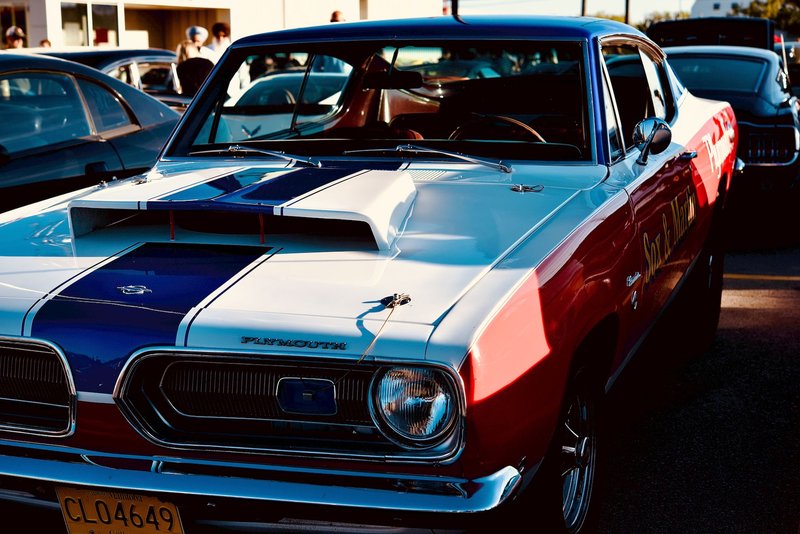
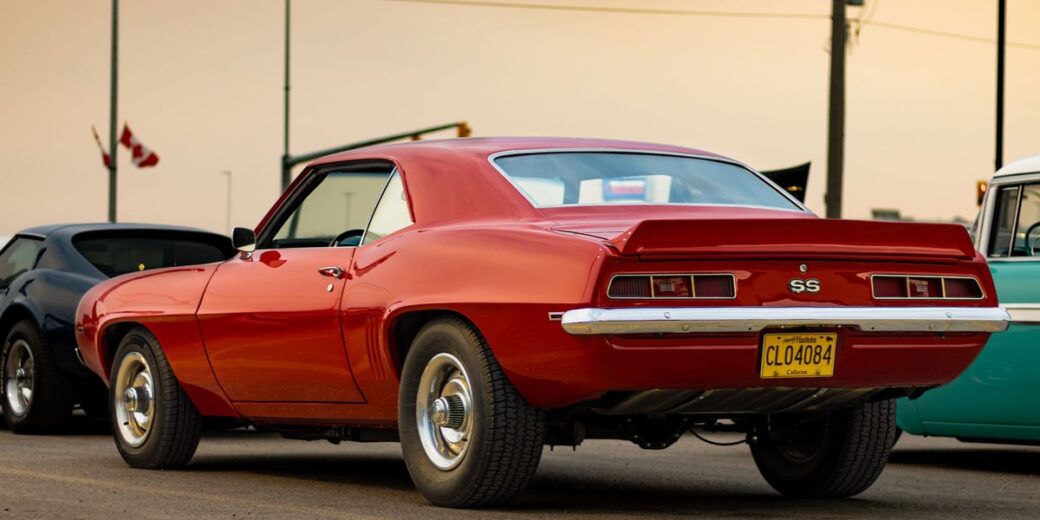
Chevrolet built the Camaro to answer the Ford Mustang, and it showed up two and a half years late but with a wider spread of options than Ford offered. The base inline-six got you into the body style for the price of a family sedan. The Z/28 — built specifically to qualify for SCCA Trans-Am racing — paired a high-revving 302 small-block with stiffer suspension and none of the creature comforts. At the far end, the COPO 9561 and 9560 Camaros carried factory-installed 427 big-blocks that Chevrolet never officially listed in the brochure, ordered through a special-order loophole meant for fleet vehicles.
That range is why the first-gen Camaro is the easiest 1960s Chevy to actually live with today. A six-cylinder or small-block V8 car is a manageable restoration and a genuinely fun weekend driver. A documented COPO car is a different animal entirely — one sold for over a million dollars at a Barrett-Jackson auction, and there were only 69 built with the aluminum-block ZL1 engine.
Chevelle SS 396 and SS 454, 1964-1969
The Chevelle started life in 1964 as an unremarkable mid-size sedan, then became one in name only once Chevrolet started stuffing big-block engines under the hood. The SS 396 arrived in 1966, and by 1968 the L78 version of that engine was rated at 375 horsepower in a body that weighed a few hundred pounds less than the Impala carrying the 409.
The Chevelle mattered because it proved the muscle-car formula didn’t need a full-size platform to work — a mid-size body with a big engine was lighter, cheaper, and faster in a straight line, and every competitor from Pontiac to Plymouth followed the same math. Late-decade cars are the ones to chase: emissions rules that began tightening in the early 1970s, the same rules the newly formed EPA started enforcing under the Clean Air Act of 1970, pushed automakers toward lower compression ratios almost immediately afterward, so a 1969 Chevelle typically makes more real-world power than its early-1970s successor with a similar engine on paper.
Nova SS, 1963-1969
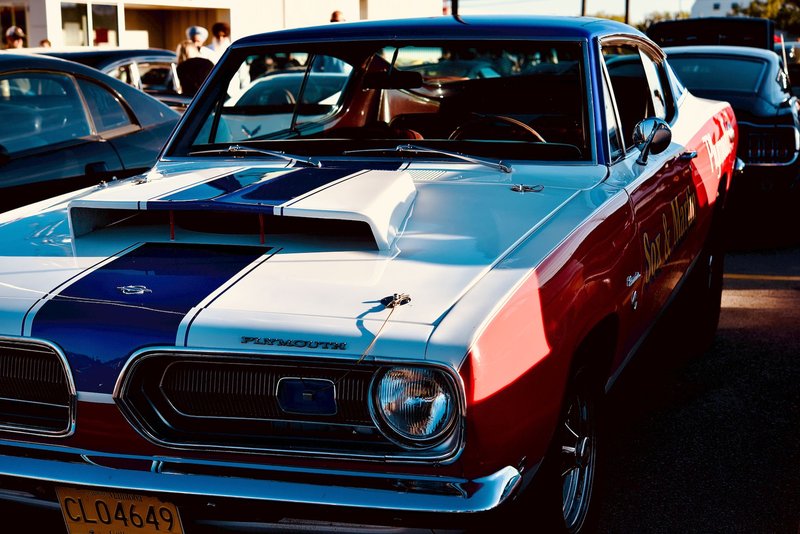
The Nova SS is the car enthusiast lists mention last and buyers should look at first. Chevrolet’s compact got the SS treatment in 1963, but the version that matters started in 1968, when the 396 big-block became a factory option in a body smaller and lighter than the Chevelle’s. The result is a genuine muscle car that weighs less than almost anything else on this list carrying comparable horsepower.
It never got the marketing budget of the Camaro or the Chevelle, which is exactly why parts are cheaper and unmolested originals are easier to find. A 1968-1969 Nova SS 396 delivers most of the performance of its bigger siblings for a noticeably smaller check.
Corvair Monza, 1960-1969
Chevrolet built the Corvair backward from every other American car of the era: air-cooled engine, rear-mounted, independent swing-axle suspension borrowed more from European practice than Detroit habit. The Monza trim, added in 1960, turned what started as an economy car into something enthusiasts actually wanted, with bucket seats and eventually a turbocharged Corsa version making 180 horsepower from a six-cylinder engine that displaced barely over 2.6 liters.
The Corvair’s other legacy is less flattering. Ralph Nader’s 1965 book “Unsafe at Any Speed” singled out the early Corvair’s swing-axle rear suspension as prone to sudden oversteer, and the resulting controversy fed directly into the push for the National Traffic and Motor Vehicle Safety Act of 1966 — the law that created the federal safety-standard system still in place today, as the Federal Highway Administration’s own history of the period documents. Chevrolet redesigned the rear suspension for 1965, but the reputation stuck, and the Corvair never fully recovered before Chevy discontinued it in 1969. That history is also why late Corvairs, with the corrected suspension, are the better buy today — same character, less drama.
C10 Pickup, 1960-1969
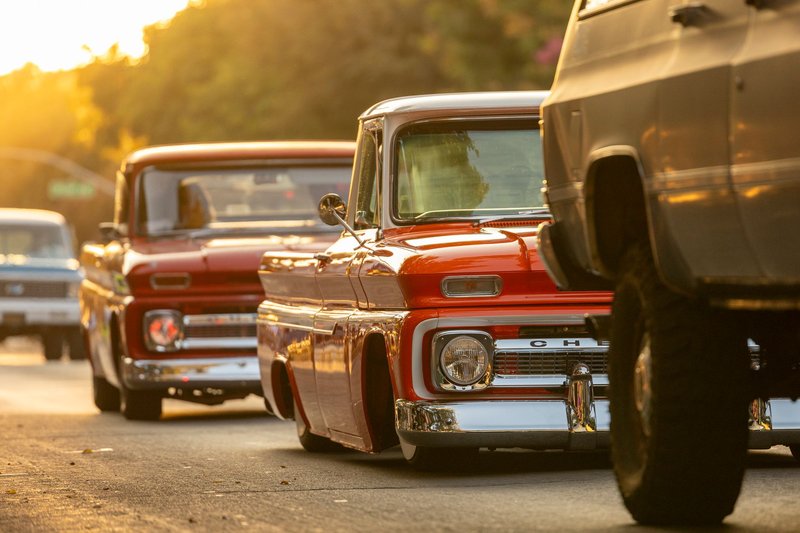
While the rest of this list was chasing quarter-mile times, the C10 was hauling lumber, and it outsold nearly every car on this list in raw units. The 1960 redesign gave Chevy trucks independent front suspension for the first time, an unusual move for a work truck, and the C10 carried that platform through a mid-decade redesign in 1967 that introduced the smoother “action line” body style still recognizable to anyone who’s spent time around a car show.
Buyers overlook the C10 because it’s a truck, not a muscle car, and that’s precisely the opening. Small-block V8 C10s from 1967-1972 combine easy parts sourcing — GM built millions of them and reproduction panels are widely available — with a driving experience that doesn’t punish you on a long trip the way a solid-axle muscle car sometimes does.
Quick Reference: Specs at a Glance
| Model | Years | Notable Engine | Peak Horsepower | Standout Fact |
|---|---|---|---|---|
| Corvette Sting Ray (C2) | 1963-1967 | 327 fuel-injected | 360 hp | 1963-only split rear window |
| Corvette C3 | 1968-1969 | 427 L88 | 430 hp (rated) | Longest-running Corvette body, debuted here |
| Impala SS 409 | 1961-1965 | 409 dual-quad | 425 hp | Inspired the Beach Boys’ “409” |
| Camaro (1st gen) | 1967-1969 | 427 COPO | 425-450 hp (unrated on paper) | Only 69 aluminum-block ZL1 COPOs built |
| Chevelle SS | 1964-1969 | 396 L78 | 375 hp | Proved mid-size beat full-size for muscle cars |
| Nova SS | 1963-1969 | 396 big-block (1968+) | 375 hp | Lightest big-block Chevy of the era |
| Corvair Monza | 1960-1969 | Turbocharged flat-six | 180 hp | Only mass-production rear-engine U.S. car |
| C10 Pickup | 1960-1969 | Small-block V8 | Varies by year | First Chevy truck with independent front suspension |
What to Check Before You Buy One
Every car on this list has the same three failure points, and they matter more than the badge on the fender.
Matching numbers versus a replacement engine. A “409” or “396” badge doesn’t guarantee the engine under the hood is original. Ask for the block casting number and cross-reference it against the VIN before you get attached to a price. This single check separates a driver-quality car from a car being sold as something it isn’t.
Rust in the structural spots, not just the visible ones. Frame rails, floor pans, and — on the Corvette specifically — the birdcage structure under the fiberglass are where hidden rust turns a restoration into a rebuild. A car that looks clean in photos can still need the same structural work as a rusty one.
Parts availability by model. Camaro, Chevelle, and C10 parts are reproduced widely enough that a full restoration is realistic on a moderate budget. Corvair and early Impala SS parts are thinner on the ground, particularly trim and interior pieces, which pushes total cost up even when the purchase price looks like a bargain.
Price ranges move with the market, but the relative order has held for years: driver-quality Novas and Chevelles sit at the accessible end, clean Camaros and C10s occupy the middle, and numbers-matching Corvettes and documented COPO cars sit in a different financial category entirely. Buy the one you’ll actually drive, not just the one that photographs best at a show.

Tyler Bridges
More from Tyler BridgesHow we reviewed this article
This article was researched against manufacturer records and editorially reviewed before publishing. We accept no payment for coverage. Some guides contain affiliate links; see our affiliate disclosure.