1966 was the year the muscle car stopped being a niche experiment and became the thing every Detroit showroom had to sell. Chevrolet dropped the 427 big-block into the Corvette. Pontiac turned the GTO into its own model line and sold 96,946 of them. Ford couldn’t build Mustangs fast enough — over 600,000 left the line that year. And in the background, a North Dakota senator named Ralph Nader and a book called Unsafe at Any Speed were about to change car design forever.
Most “1966 cars” lists give you the same ten icons and call it a day. This one covers the whole roster — the Mustangs and GTOs, sure, but also the everyday Impalas and Galaxies your dad actually drove — plus what each one cost new and what it’ll run you now if you want one in the garage.
Table of Contents
- TLDR: The 1966 Cars That Matter Most
- What Made 1966 Different
- General Motors
- Ford Motor Company
- Chrysler Corporation
- American Motors (AMC)
- Key Imports
- 1966 Specs & Values at a Glance
- How to Identify a 1966 Model
- What 1966 Cars Are Worth Now
TLDR: The 1966 Cars That Matter Most
If you only remember a handful from 1966, make it these:
- Shelby GT350 — the hottest Mustang you could buy, and now the most valuable.
- Pontiac GTO — the car that made “muscle car” a category. 1966 was its first year as a standalone model.
- Chevrolet Corvette 427 — the first year of the big-block Sting Ray. 425 horsepower in the L72.
- Ford Mustang — the volume king. A 1966 in good shape is still one of the most affordable ways into the classic-car hobby.
- Oldsmobile Toronado — the wild card: America’s first front-wheel-drive car since the 1930s Cord.
If you want a true blue-chip collectible, the Shelby and the big-block Corvette top the list. If you want a usable classic that won’t bankrupt you, a six-cylinder Mustang or a clean Impala is the smart buy.
What Made 1966 Different
Three things define the 1966 model year, and they all pull in different directions.
The big-block arms race peaked. Chevy’s 427 cubic-inch V8 arrived in the Corvette and full-size cars. Ford had its 428 and the race-bred 427 side-oiler. Mopar’s 426 Hemi, homologated for NASCAR the year before, was now a street option in the Belvedere and Coronet. Horsepower numbers stopped being marketing and started being a problem.
Pony cars went mainstream. The Mustang had a full year to prove the segment was real, and 1966 sales confirmed it. Mercury readied the Cougar, Chevy was finishing the Camaro for ’67, and Plymouth had already fired back with the Barracuda. The two-door personal coupe became the car everyone wanted their name on.
Safety became a federal issue. Ralph Nader’s Unsafe at Any Speed hit shelves in late 1965 and put the Corvair — and Detroit’s whole approach to occupant protection — under a microscope. The fallout led directly to the National Traffic and Motor Vehicle Safety Act of 1966, the law that created what’s now the NHTSA and made seat belts, padded dashes, and collapsible steering columns mandatory on the cars that followed. 1966 was the last full model year before the rulebook changed.
General Motors
GM was the giant, and in 1966 it had a model for every wallet and every appetite. Several of these cars earned their place on any shortlist of the best cars of the 1960s, and the company’s depth is exactly why.
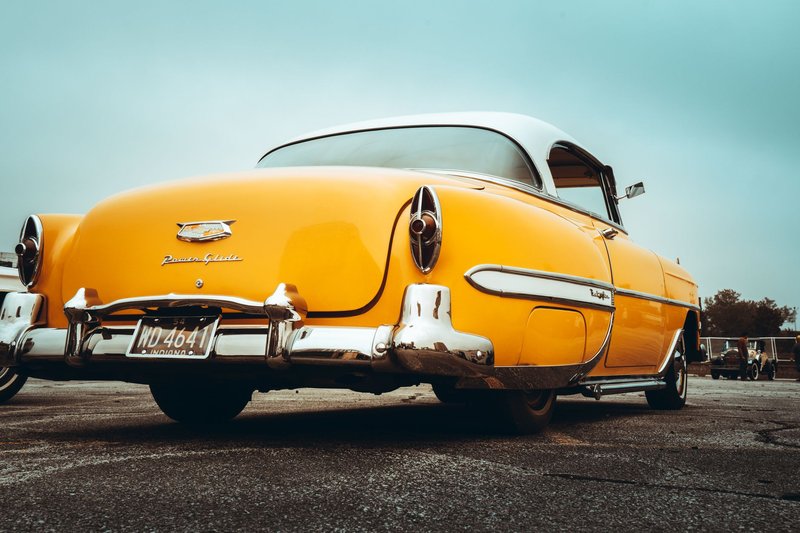
Chevrolet Corvette (C2 Sting Ray) — The headline was the new 427 big-block, replacing the previous 396. The top L72 version made a claimed 425 hp. The split-window coupe was already gone, but the 1966 Sting Ray remains one of the most coveted Corvettes ever built.
Chevrolet Impala / Caprice — The volume seller, and the best-selling car in America. The SS version with the 396 or 427 turned a full-size cruiser into a serious performer. The Caprice, introduced as a trim the year before, became its own series in ’66.
Chevrolet Chevelle SS 396 — Chevy’s mid-size muscle answer to the GTO. The SS 396 came with 325, 360, or 375 horsepower depending on how brave you were.
Chevrolet Corvair — The car at the center of the Nader storm. Ironically, 1966 was when GM finally fixed the rear suspension that caused the controversy, just as sales collapsed.
Pontiac GTO — Now a standalone model rather than a Tempest option. The 389 V8 made 335 hp standard, 360 with the Tri-Power triple-carb setup. Pontiac sold nearly 97,000, a record for the nameplate.
Pontiac Tempest / Le Mans / Bonneville — The full Pontiac ladder, from compact to flagship. The Le Mans donated its body to the GTO.
Oldsmobile Toronado — The most technically radical American car of the year. Front-wheel drive, a 425 cubic-inch V8 making 385 hp, and styling unlike anything else on the road. It won Motor Trend Car of the Year.
Oldsmobile 442 / Cutlass / 88 / 98 — The 442 (4-barrel, 4-speed, dual exhaust) was Olds’ muscle entry, sharing the GM A-body with the GTO and Chevelle.
Buick Riviera / Skylark Gran Sport / Wildcat — The Riviera got a sharp restyle for ’66, and the Skylark Gran Sport carried a 401 “nailhead” V8 that Buick cheekily badged as a 400 to skirt GM’s displacement rules.
Ford Motor Company
Ford’s year belonged to the Mustang, but the lineup ran deep.
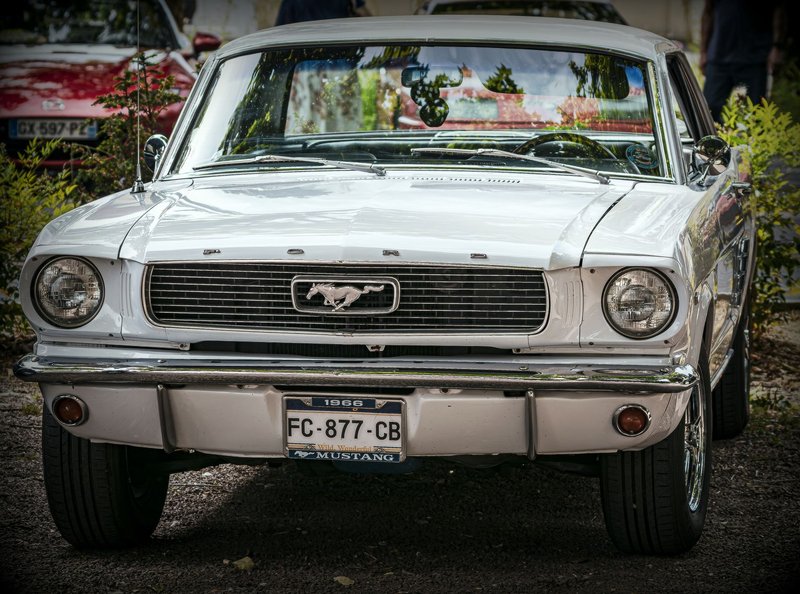
Ford Mustang — The phenomenon. 1966 was the best single sales year in the original Mustang’s history, with more than 600,000 built across the hardtop, fastback, and convertible. Engines ranged from a 200 cubic-inch six up to the 289 High Performance “K-code” V8 making 271 hp.
Shelby GT350 — Carroll Shelby’s hot-rodded Mustang fastback. The 1966 cars introduced the Hertz “Rent-A-Racer” GT350H in black and gold, which is exactly as legendary as it sounds. These are the most valuable 1966 Mustangs by a wide margin.
Ford Galaxie 500 / LTD — The full-size workhorse. The 7-Litre model packed Ford’s new 428 V8. The LTD pushed the Galaxie upmarket toward near-luxury territory.
Ford Fairlane — Redesigned for ’66 and now big enough to swallow a 390 — or, in a tiny run of factory drag specials, the 427. The Fairlane GT/GTA was Ford’s mid-size muscle play.
Ford Thunderbird — The personal-luxury coupe, now in its fourth generation, leaning hard into comfort over the sportiness of the original two-seaters.
Ford Falcon / Bronco — The compact Falcon soldiered on, and the Bronco, launched in 1966, kicked off Ford’s long run in the rugged 4×4 market.
Mercury Comet / Cyclone GT — The Cyclone GT paced the 1966 Indianapolis 500 and gave Mercury a credible muscle entry built on the Fairlane platform.
Chrysler Corporation
Mopar brought the Hemi to the street and built some of the year’s best-driving cars.
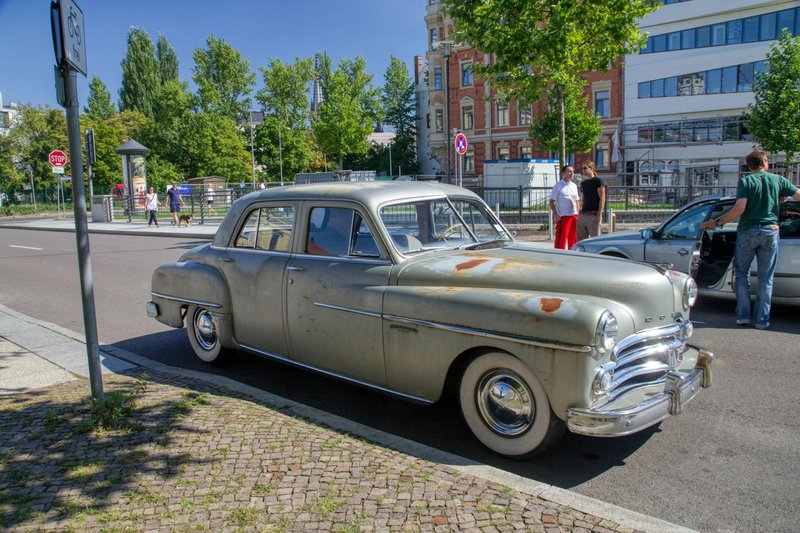
Plymouth Barracuda — The fastback A-body, still based on the Valiant, with its enormous wraparound rear glass. It predated the Mustang to market by a couple of weeks back in ’64 and remained Plymouth’s pony car.
Plymouth Belvedere / Satellite — The mid-size that could be ordered with the street 426 Hemi making 425 hp. A Hemi Satellite is one of the rarest and most valuable Mopars of the era.
Plymouth Fury — The full-size flagship, available as the Sport Fury with bucket seats.
Dodge Charger — All-new for 1966. The first-generation Charger was a full-size fastback with a four-bucket interior and hidden headlights, available with the 426 Hemi. It launched the nameplate that would dominate the late ’60s.
Dodge Coronet / Charger 426 Hemi — The Coronet 500 was the platform-mate to the Belvedere and another home for the Hemi.
Dodge Dart / Polara / Monaco — The compact Dart and the full-size Polara and Monaco rounded out a lineup that spanned every price point.
Chrysler 300 / Newport / New Yorker — Chrysler’s own brand handled the upper end, with the letter-series 300 keeping a performance halo alive.
American Motors (AMC)
The independent underdog had a quietly important year.
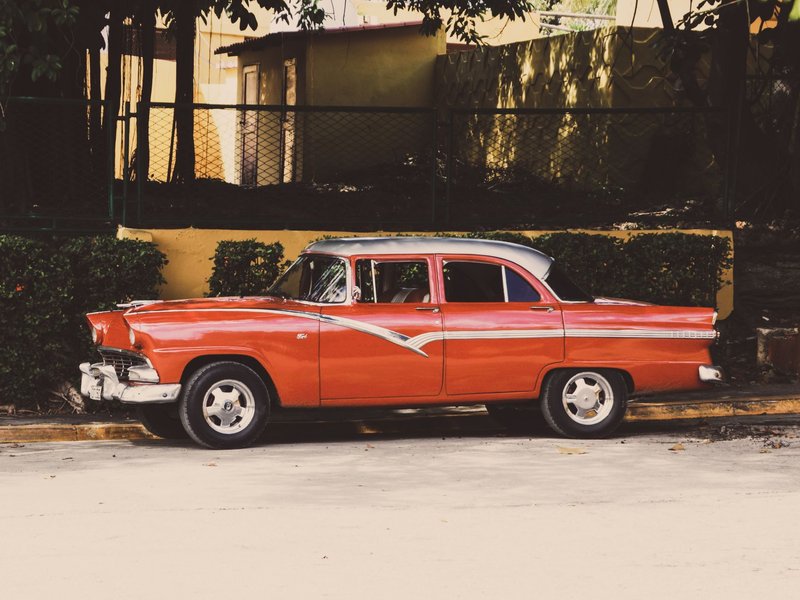
AMC Rambler Classic / Ambassador — The bread-and-butter sedans that kept AMC solvent, pitched squarely at value buyers, and a staple of any roundup of classic American sedans from the era.
AMC Marlin — A full-size fastback meant to chase the personal-coupe trend. It didn’t sell well, but it’s a genuine oddity collectors now hunt for.
AMC Rambler American / Rogue — The Rogue trim hinted at the sportier direction AMC would take with the Javelin and AMX a couple of years later.
Key Imports
The imports were a small slice of the U.S. market in 1966, but a few mattered enormously.
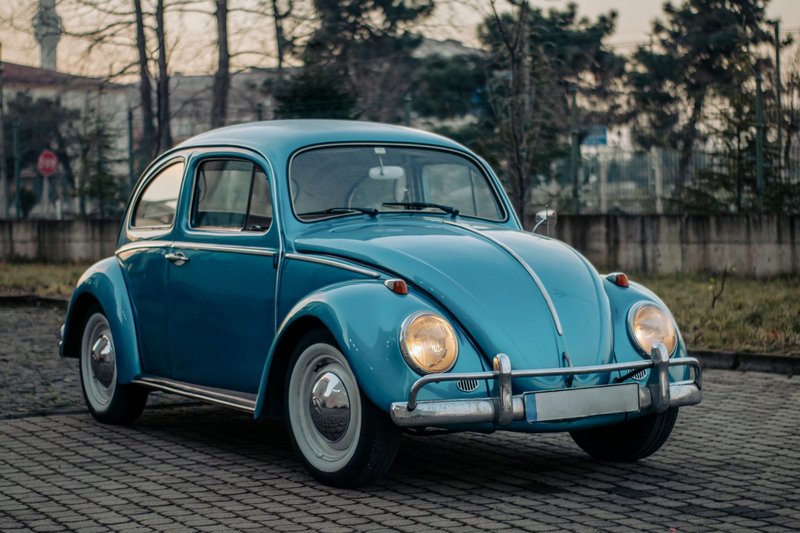
Volkswagen Beetle (Type 1) — The people’s car, and the import that proved Americans would buy small. The 1966 Beetle got a larger 1300cc engine. (If you want the full breakdown, 33Gears has a dedicated 1966 Volkswagen lineup guide.)
Jaguar E-Type (XKE) — Arguably the most beautiful car of the decade, the Series 1 E-Type was at the height of its run with the 4.2-litre straight-six, and it ranks among the best sports cars of the 1960s by almost any measure.
Toyota Corona / Datsun 411 — The opening shots of the Japanese invasion. Few noticed in 1966. Everyone noticed a decade later.
Volvo 122 / 1800 — Swedish steel for buyers who cared about safety before the U.S. government made them — fitting, given the year.
1966 Specs & Values at a Glance
Original prices are approximate base MSRP; current values reflect typical #2 (“excellent”) condition examples and vary widely with engine, options, and provenance.
| Model | Top Engine | Horsepower | Original Price | Value Today (est.) |
|---|---|---|---|---|
| Shelby GT350 | 289 V8 | 306 hp | ~$4,600 | $200,000–$400,000+ |
| Corvette 427 (L72) | 427 V8 | 425 hp | ~$4,300 | $120,000–$250,000 |
| Pontiac GTO (Tri-Power) | 389 V8 | 360 hp | ~$2,800 | $50,000–$90,000 |
| Dodge Charger 426 Hemi | 426 Hemi V8 | 425 hp | ~$3,100 | $80,000–$150,000 |
| Ford Mustang (289) | 289 V8 | 271 hp | ~$2,400 | $30,000–$60,000 |
| Chevelle SS 396 | 396 V8 | 375 hp | ~$2,800 | $45,000–$80,000 |
| Olds Toronado | 425 V8 | 385 hp | ~$4,600 | $25,000–$45,000 |
| Chevrolet Impala SS 427 | 427 V8 | 425 hp | ~$3,000 | $40,000–$70,000 |
| Plymouth Belvedere Hemi | 426 Hemi V8 | 425 hp | ~$2,900 | $90,000–$180,000 |
| VW Beetle | 1300cc flat-4 | 50 hp | ~$1,600 | $12,000–$25,000 |
How to Identify a 1966 Model
Cars changed fast in the ’60s, and a single model year often carried unique trim. A few quick tells for the big sellers:
- 1966 Mustang vs 1965: The grille is the easiest tell. The ’66 has a “floating” galloping horse in a slatted grille with thin horizontal bars, where the ’65 grille has a honeycomb pattern. The fake side scoops gained three chrome vertical bars on the ’66.
- 1966 GTO: The first year of the standalone GTO has stacked headlights and a split grille with a distinctive vertical bar. The 1966 tail uses louvered taillights — a one-year-only look.
- 1966 Corvette: Look for the egg-crate grille and the new big-block hood bulge on 427 cars. The roof-mounted radio antenna and the absence of fender vents distinguish it from earlier C2s.
- VIN and trim tags: Every car carries a build plate (the door jamb on most GM and Ford cars, the radiator support or firewall on Mopars) that decodes the year, plant, and original drivetrain. For a real purchase, decode it before you trust the badges.
What 1966 Cars Are Worth Now
The spread is enormous, and that’s the most useful thing to understand before you buy.
At the top, the blue-chip cars — Shelby GT350s, big-block Corvettes, Hemi Mopars — trade in six figures and behave like investments. A documented, numbers-matching Hemi Charger or Belvedere can clear $150,000 at auction. These prices reward originality above everything: a matching-numbers engine and verified options can double a car’s value over a clone.
In the middle, the muscle staples — GTOs, Chevelle SS 396s, Mustang V8s — sit in the $40,000–$90,000 range for clean examples. This is where most enthusiast money goes, and where the market is deepest if you want to sell later.
At the entry level, six-cylinder Mustangs, base Impalas, Galaxies, and Beetles still start in the teens to low twenties for a driver-quality car. These are the realistic first classics: parts are everywhere, every problem has been solved a thousand times over, and you can actually use the thing.
One rule cuts across all of it: condition and documentation beat the badge. A rust-free, well-sorted base car is a better buy than a rare model that needs a frame. Auction results from outfits like Hagerty’s valuation tools are the closest thing to a real-time price guide, and they’re worth checking before you make an offer on any car from this list.
Sixty years on, 1966 still holds up as one of the great model years — the muscle-car peak, the last lap before the safety era, and a roster deep enough that there’s a piece of it for almost any budget.

Marco Delantero
More from Marco DelanteroHow we reviewed this article
This article was researched against manufacturer records and editorially reviewed before publishing. We accept no payment for coverage.