1951 was the year Detroit tried to out-engineer a war it didn’t start. Six months after the first shots in Korea, the government was rationing the steel, chrome, and nickel that automakers needed to build cars, and every manufacturer from Ford to Packard had to figure out how to keep showrooms full with less metal per unit. At the same time, the automatic transmission — a luxury feature a decade earlier — was becoming something a Chevrolet or Ford buyer could check off on an order form. Both forces show up in nearly every model built that year, whether it’s a thinner grille or a new “Drive” position on the shifter.
This is a make-by-make look at what actually rolled off the line in 1951, plus the two industry-wide shifts that explain why the cars looked and drove the way they did.
Table of Contents
- How the Korean War Changed What Cars Were Made Of
- The Automatic Transmission Race
- Ford
- Chevrolet
- Buick
- Mercury
- Cadillac
- Plymouth
- Packard
- Studebaker
- Kaiser
- Nash
- Hudson
- 1951 at a Glance: Make-by-Make Comparison
- What 1951 Actually Changed
How the Korean War Changed What Cars Were Made Of {#korean-war-materials}
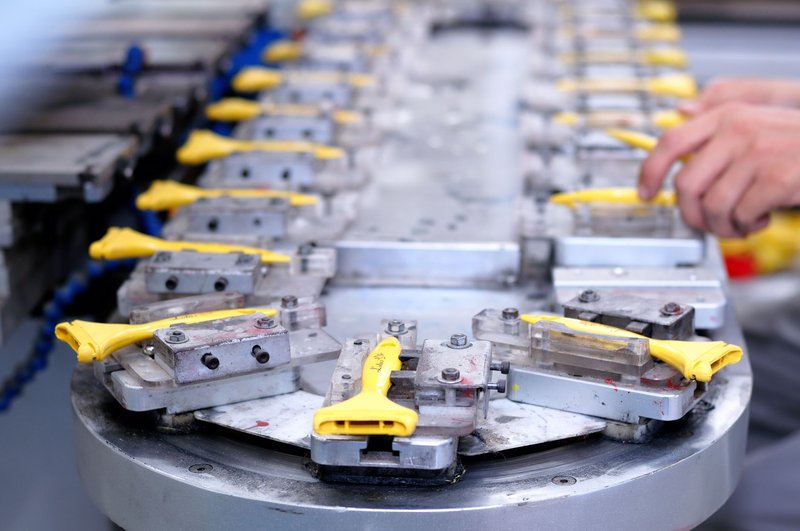
The National Production Authority didn’t ban car production in 1951, but it came close to rationing it out of existence. Steel output for civilian use dropped hard as military orders took priority — by early 1951, defense needs already claimed 12 percent of the country’s steel, a share the Army War College’s own account of the mobilization expected to hit 20 percent before the year was out. Whitewall tires briefly disappeared because rubber was diverted to the war effort. Nickel, needed to bond chrome properly to steel, got restricted as a strategic material, so platers switched to a copper-flash process collectors now call “Korean chrome” — trim that looked fine on the lot and rusted through within two winters.
The paper trail for all of this sits in the National Archives’ records of the NPA, which controlled allocation of the raw materials automakers depended on. The practical result on the showroom floor: thinner bumpers, less brightwork, and grilles that did more with less metal. Studebaker, for one, dialed back its signature “bullet nose” for 1951, painting over much of the outer ring instead of chroming it.
The Automatic Transmission Race {#automatic-transmission-race}
Chevrolet’s Powerglide had already proven, starting in 1950, that a fully automatic transmission didn’t have to be a Cadillac-only luxury. Ford answered in 1951 with Fordomatic, its first automatic, available across the mid-priced lineup. Buick’s Dynaflow — smoother than either, but slower off the line — kept its reputation as the transmission for buyers who valued a quiet cabin over a quick start. Plymouth buyers, notably, would wait until 1954 for a fully automatic option of their own, which tells you a lot about how conservative Chrysler’s product planning was compared to Ford and GM in this period.
This wasn’t a minor feature war. It reset what “mid-priced car” meant. A shopper cross-referencing a Ford against a Chevrolet in 1951 was, for the first time, comparing two automatics rather than a stick shift against a novelty.
Ford {#ford}
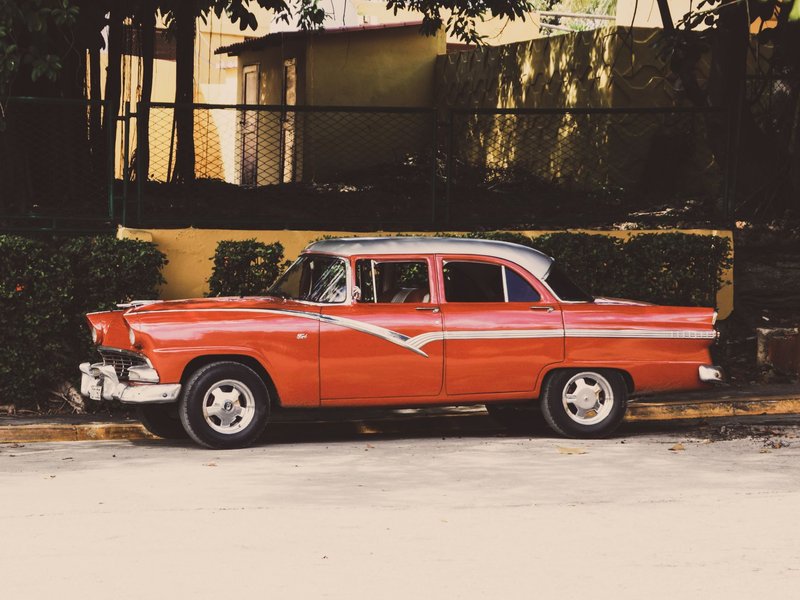
Ford’s 1951 lineup carried over its 1949-1951 “shoebox” body with a mild facelift — new grille, new trim — while the real news was mechanical. Fordomatic launched mid-year, and the flathead V8 continued as the performance draw against Chevrolet’s six-cylinder. At the top of the range sat the Ford Custom Deluxe, but the brand’s real flagship for image purposes was the Mercury-adjacent Lincoln Cosmopolitan, a large, slab-sided sedan built to go after Cadillac and Chrysler’s Imperial directly rather than compete on price.
Chevrolet {#chevrolet}
Chevrolet’s win in 1951 wasn’t styling — it was math. The Powerglide-equipped Chevrolet undercut Ford and Plymouth on price for a car that didn’t require the driver to work a clutch, and that combination made Chevrolet the sales leader for the model year. The Bel Air hardtop, which had debuted in 1950 as one of the first affordable pillarless coupes, carried a hardtop roofline into a segment that had previously reserved that body style for luxury makes.
Buick {#buick}
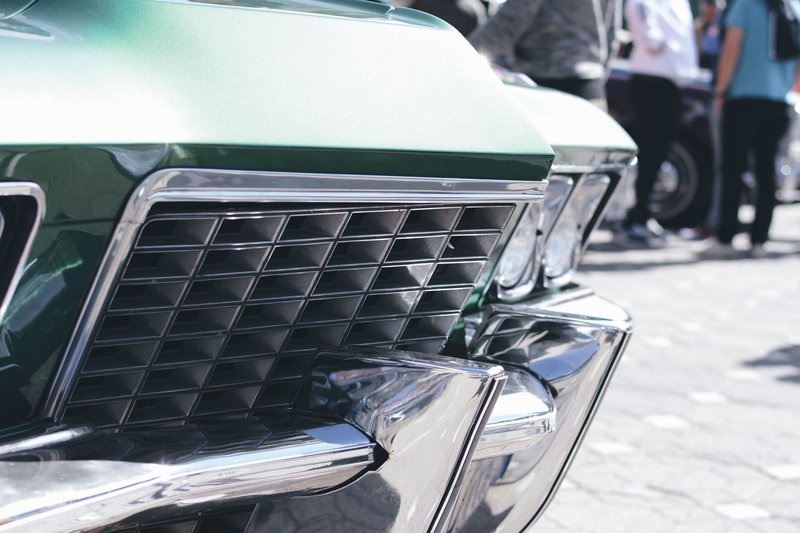
Buick’s identity in 1951 was built on two things: the Fireball straight-eight engine and the VentiPort, the row of fender portholes that told a passerby exactly which Buick trim they were looking at. Four ports meant a Roadmaster; fewer meant a step down the range. Dynaflow remained standard on the top trims and optional elsewhere, and Buick leaned hard into the idea that a smooth launch mattered more than a fast one — a pitch that worked on buyers who’d never floor a car in their life.
Mercury {#mercury}
Mercury carried its redesigned “shoebox” body into a second full year with a modest grille and trim update rather than a ground-up change. The Monterey, introduced as a top-tier hardtop the year before, stayed the halo model, positioning Mercury as the car for a buyer who’d outgrown a Ford but wasn’t ready to pay Lincoln money.
Cadillac {#cadillac}
Cadillac’s overhead-valve V8 — the engine that had reset the luxury segment when it launched in 1949 — carried into 1951 largely unchanged, because it didn’t need fixing. The Series 62 anchored the lineup, with the Coupe de Ville hardtop continuing to do the job of proving a two-door could be as prestigious as a formal sedan. Even under wartime material limits, Cadillac protected its chrome-heavy identity more aggressively than the mid-priced makes, since brightwork was central to how the brand justified its price.
Plymouth {#plymouth}
Plymouth’s 1951 range split into the Cambridge and the shorter-wheelbase Concord, both running a 217.8-cubic-inch inline six making 97 horsepower — adequate, not exciting, and exactly what Chrysler’s engineering-conservative reputation would predict. The Cambridge rode a 118.5-inch wheelbase; the Concord came in six inches shorter. Neither offered a fully automatic transmission yet, which put Plymouth at a real disadvantage against Ford and Chevrolet in a year when automatics were becoming the deciding factor for cross-shoppers.
Packard {#packard}
Packard entered 1951 with a genuinely new range: the 200, 300, and Patrician replaced the prior generation’s naming and styling. The 200 sat on the shortest wheelbase and the least expensive trim, running a 288-cubic-inch straight-eight; the 300 stepped up to a 327-cubic-inch straight-eight and full-size proportions. The Patrician was Packard’s answer to the question of how to look expensive without abandoning the brand’s conservative styling language — more chrome, more length, same formal roofline. It was the last major redesign before Packard’s long, slow decline through the decade.
Studebaker {#studebaker}
Studebaker’s Commander and Champion carried the “bullet nose” front end into its second and final year, though 1951 toned it down — the outer ring got painted instead of chromed, partly a styling choice and partly a material-cost one. Commanders picked up standard electric wipers, optional on Champions. Studebaker was riding the best sales years in its history in 1950 and 1951, a run that wouldn’t survive the decade.
Kaiser {#kaiser}
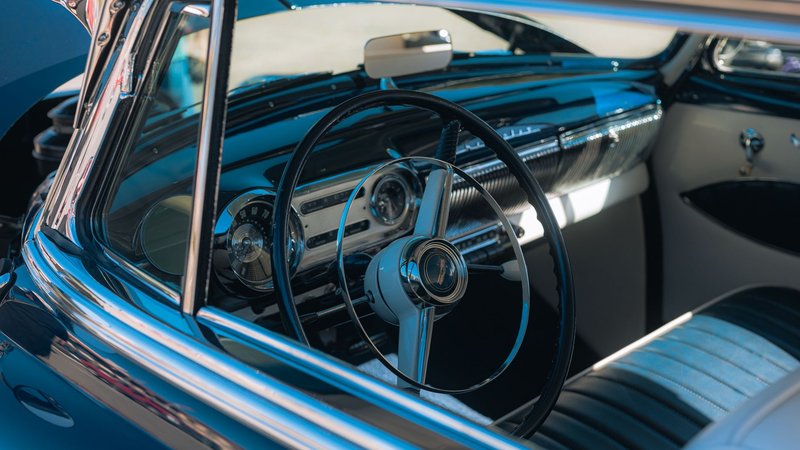
Kaiser’s 1951 redesign was the boldest styling swing of the model year: a low beltline and unusually large glass area earned the car the nickname “Anatomical” in period coverage, and the look carried the brand through to its 1955 exit from the passenger-car business. It was also one of the last genuinely new full-body redesigns an independent automaker would manage before the postwar independents began losing the capital race against Detroit’s Big Three.
Nash {#nash}
Nash entered 1951 still wearing its enclosed-front-fender “Airflyte” styling on the full-size Ambassador and Statesman, a look that had aged from distinctive to dated faster than Nash’s designers likely expected. The smaller Rambler, one model year into its life, gave Nash a second identity — compact, lower-priced, and aimed at a buyer the Big Three weren’t chasing yet.
Hudson {#hudson}
The Hudson Hornet debuted for 1951, built on Hudson’s “step-down” unibody design that placed the floor pan below the frame rails rather than on top of them. That lowered the center of gravity enough to make the Hornet genuinely competitive on early stock car racing circuits against cars with far bigger engines — a reputation Hudson leaned on hard in advertising, and one of the few times a mid-priced independent could credibly claim a performance edge over Detroit’s majors.
1951 at a Glance: Make-by-Make Comparison {#comparison-table}
| Make | Standout Model | Engine | Notable Feature |
|---|---|---|---|
| Ford | Custom Deluxe / Lincoln Cosmopolitan | Flathead V8 | Fordomatic launched mid-year |
| Chevrolet | Bel Air hardtop | Inline six | Powerglide undercut rivals on price |
| Buick | Roadmaster | Fireball straight-eight | Dynaflow, four-porthole VentiPorts |
| Mercury | Monterey | V8 | Carryover “shoebox” body, minor facelift |
| Cadillac | Series 62 / Coupe de Ville | Overhead-valve V8 | Protected chrome trim despite rationing |
| Plymouth | Cambridge / Concord | 217.8 ci inline six | No automatic transmission until 1954 |
| Packard | Patrician | 288–327 ci straight-eight | All-new 200/300/Patrician range |
| Studebaker | Commander | Inline six / V8 | Toned-down “bullet nose,” best sales years |
| Kaiser | Deluxe | Inline six | “Anatomical” low-beltline redesign |
| Nash | Ambassador / Rambler | Inline six | Enclosed front fenders, compact Rambler |
| Hudson | Hornet | Inline six | “Step-down” unibody, early stock car success |
What 1951 Actually Changed {#closing}
Look past the individual nameplates and 1951 reads as a hinge year. Automatic transmissions stopped being a luxury flourish and started being a mid-priced expectation, which is the real reason Ford rushed Fordomatic to market instead of waiting for a cleaner engineering solution. Material rationing forced every automaker to decide what its brand identity actually depended on — Cadillac protected its chrome, Studebaker sacrificed its bullet nose, and independents like Kaiser and Hudson bet on structural redesigns that cost less in raw material and delivered more in differentiation.
The independents’ bets mostly didn’t pay off long-term. Kaiser was gone from cars by 1955, Hudson merged into American Motors by 1954, and Packard’s new-for-1951 range was its last clean-sheet design before decline set in. But for one model year, wartime scarcity produced more genuine engineering variety across the American car market than most peacetime years managed.

Marco Delantero
More from Marco DelanteroHow we reviewed this article
This article was researched against manufacturer records and editorially reviewed before publishing. We accept no payment for coverage. Some guides contain affiliate links; see our affiliate disclosure.