Dodge started the 1970s building 425-horsepower Hemi Challengers and ended it building a St. Regis sedan that struggled to crack 200 horsepower from a 360 cubic inch V8. That’s not a company that lost its way — it’s a company that got dragged through the Clean Air Act, two fuel crises, and a total rethink of what an American car was allowed to be, all inside one decade. Understanding 1970s Dodge car models means understanding that whiplash.
This runs through every nameplate Dodge sold from 1970 to 1979, organized by the segment it competed in, because that’s how the lineup actually shifted — muscle cars first, then mid-size and full-size sedans, then the compacts and imports that carried the brand through the lean years, then the downsized “malaise era” replacements that closed out the decade.
Table of Contents
- The Muscle and Pony Cars That Opened the Decade
- The Mid-Size Backbone
- Full-Size Dodges Before Downsizing Hit
- Compacts and the Import Dodge Sold as Its Own
- The Downsized Lineup That Closed Out the Decade
- Which 1970s Dodges Are Actually Worth Buying Now
The Muscle and Pony Cars That Opened the Decade
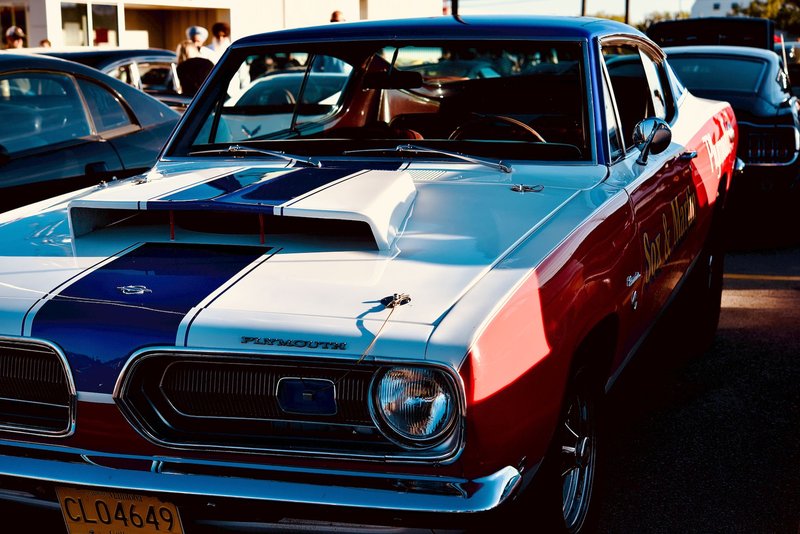
1970 was close to the ceiling for American performance cars, and Dodge had three separate nameplates fighting for the same buyer.
Dodge Challenger (1970–1974)
The Challenger arrived a full two years after the Mustang and Camaro, which meant Dodge overcompensated on options. The 1970 lineup ran from a 225 cubic inch slant-six up through the 426 Hemi, rated at 425 horsepower — a figure high enough that insurance companies started writing separate policies for it. The 340 small-block, underrated at around 275 horsepower, was the one enthusiasts actually wanted: light nose, better balance, and none of the Hemi’s finicky street manners.
The car’s cultural moment came from a movie, not an ad campaign. A white 1970 Challenger R/T was the car Barry Newman drove across the Southwest in Vanishing Point, and that single film did more for the model’s reputation than Dodge’s own marketing budget. By 1974, emissions equipment and insurance surcharges had gutted the performance options, and the E-body Challenger was dropped entirely — Dodge wouldn’t sell a car under that name again until a badge-engineered Mitsubishi coupe showed up in 1978.
Dodge Charger (1970–1974, third generation)
The 1971 redesign gave the Charger its “fuselage” look — a longer, more sculpted body that traded some of the 1968-1970 car’s crispness for curves. R/T trim carried the 440 Magnum and 426 Hemi through 1971, the last year you could order a Hemi Charger at all. After that, the Charger’s spec sheet shrank fast: by 1973 the biggest available engine was a 440 rated well under 300 horsepower under the new SAE net measurement standard, which alone made cars look weaker than they had two years earlier even where the hardware hadn’t changed much.
Dodge Super Bee (1970–1971)
Built on the Coronet platform through 1970, then shifted onto the Charger for its final 1971 model year, the Super Bee was Dodge’s answer to the Plymouth Road Runner — a stripped-down, budget-focused muscle car with a cartoon bee badge and a 383 or 440 Six Pack under the hood. It never sold in Road Runner numbers, which is exactly why surviving 1970 Super Bees are scarcer and more sought-after today than their more common Plymouth cousin.
The Mid-Size Backbone
Dodge Coronet (1970–1976)
The Coronet was the workhorse nameplate underneath the muscle cars — mid-size, available as a sedan, wagon, or hardtop, and the platform the Super Bee borrowed before 1971. Police departments loved it; the Coronet’s durability and simple pushrod V8s made it a common highway patrol pursuit car well into the mid-1970s. Dodge renamed the mid-size line Monaco for 1977, closing out the Coronet badge after seven years.
Dodge Charger SE (1975–1978)
This is the Charger most people forget existed. After the muscle-car version died, Dodge repositioned the nameplate as a personal luxury coupe — vinyl roof, opera windows, a plush interior, and engines tuned for smoothness over speed. It sold reasonably well against the Ford Thunderbird and Chevy Monte Carlo, which tells you where the market had actually gone by the mid-1970s, whatever enthusiasts wanted to believe.
Full-Size Dodges Before Downsizing Hit
Dodge Polara (1970–1973)
The Polara sat below the Monaco in Dodge’s full-size lineup and did most of its work as a taxi and police package rather than a private buyer’s car. It’s the least remembered nameplate on this list for a reason — competent, unglamorous, and gone by 1973 when Dodge consolidated its full-size offerings.
Dodge Monaco (1970–1977)
The Monaco was Dodge’s flagship sedan for most of the decade, a genuine full-size C-body car through 1977 before the name got reassigned to a smaller platform. Its lasting fame has nothing to do with sales figures: a decommissioned 1974 Monaco sedan, painted black and white, became the Bluesmobile in The Blues Brothers — the exact kind of ex-police-fleet car Dodge built these to be.
Compacts and the Import Dodge Sold as Its Own
Dodge Dart (1970–1976)
The Dart was the car that kept Dodge dealers afloat when the muscle cars stopped moving. Built around the nearly indestructible slant-six engine, it was cheap, easy to fix, and boring in the best possible way — the choice for driving schools, first cars, and anyone who wanted a Mopar without a Mopar’s usual maintenance headaches. It outlasted flashier siblings by six years before Dodge replaced it with the Aspen.
Dodge Demon / Dart Sport (1971–1976)
Dodge’s compact fastback launched in 1971 as the Demon, sharing its body with the Plymouth Duster. Religious groups objected to the name almost immediately, and Dodge renamed it Dart Sport for the 1973 model year rather than fight the controversy. The 340-powered Demon 340 is the version collectors chase now — genuinely quick, genuinely rare, and saddled with a name Dodge itself walked away from within two years.
Dodge Colt (1971–1979)
Not actually a Dodge under the skin — the Colt was a rebadged Mitsubishi, imported to give Dodge dealers a subcompact to sell once gas prices made big V8s a harder pitch. It’s an odd inclusion in a “1970s Dodge” list, but it sold in real numbers, especially after the 1973 oil embargo sent buyers looking for anything that sipped fuel instead of gulping it, a shift documented in the U.S. State Department’s account of the 1973 oil embargo.
The Downsized Lineup That Closed Out the Decade
By the back half of the 1970s, the Clean Air Act’s emissions targets and a second oil shock had forced every American automaker into smaller, lighter cars. The EPA’s own timeline of transportation emissions rules shows just how fast the regulatory floor moved between 1970 and the catalytic converter’s arrival in 1975 — and Dodge’s lineup shrank in step with it.
Dodge Aspen (1976–1980)
The Aspen replaced the Dart and won Motor Trend’s Car of the Year for 1976, which makes its second act sting more: early Aspens were plagued by rust, stalling, and recalls serious enough that the model’s reputation never fully recovered. It’s a genuinely important car in Dodge’s history — the first real step toward the downsized lineup that followed — and a genuinely rough one to own.
Dodge Diplomat (1977–1989)
Built on the same M-body platform as the Aspen, the Diplomat took over the mid-size slot from the outgoing Coronet and Monaco. It outlived nearly every other nameplate on this list, running into the late 1980s largely because police departments kept ordering it long after private buyers moved on — the same fleet-durability niche the Coronet had filled a decade earlier.
Dodge Magnum (1978–1979)
The Magnum replaced the Charger SE as Dodge’s personal luxury coupe, distinguished by hidden headlights and a more aggressive front end than anything else in the malaise-era lineup. It also had a brief NASCAR life, giving Dodge one last on-track connection to the muscle-car identity it had spent the rest of the decade walking away from.
Dodge St. Regis (1979–1981)
The last of the full-size Dodges, and the clearest evidence of how badly the timing worked against the brand: by the time the downsized St. Regis arrived for 1979, the second oil crisis had already hit, and a “smaller” full-size car still felt too big and too thirsty to buyers panicking over gas lines. Base engines topped out under 200 horsepower. Dodge pulled the plug after 1981.
Which 1970s Dodges Are Actually Worth Buying Now
Rarity and desirability don’t line up the way you’d expect. The 1970 Hemi Challenger and Hemi Charger are the blue-chip names — six-figure cars at auction, low production numbers, and documented history that collectors pay a premium to verify. One step down, the 340-powered Challenger and the 1970 Super Bee offer real performance and real scarcity without Hemi money attached, which is where most serious buyers actually land.
The Demon 340 is the sleeper on this list: fewer were built than people assume, the Demon name scared off casual buyers for decades, and prices haven’t caught up to how good the car actually is to drive. At the other end, Aspens, Diplomats, and St. Regis sedans are cheap and plentiful — not because they’re bad cars, but because nobody was racing to save a malaise-era Dodge in 1985. If you want a project that won’t punish your wallet, that’s where to look. If you want the car that defined what “1970s Dodge” actually meant, it’s still a Hemi, still a 1970, and still going to cost you.

Marco Delantero
More from Marco DelanteroHow we reviewed this article
This article was researched against manufacturer records and editorially reviewed before publishing. We accept no payment for coverage.