TLDR
- Dodge sold four car lines in 1953: the Meadowbrook (including the short-lived Special), the Coronet Six, the Coronet V8, and the export-only Kingsway. The B-4 series covered the light trucks.
- The big news was the Coronet V8, the first Dodge V8: a 241.3 cu in, 140 hp “Red Ram” hemi. It went into more than half the Dodges built that year.
- Everything else ran Dodge’s 230.2 cu in flathead six, rated at 103 hp.
- Wheelbase sorts most cars quickly: 114 inches for coupes, hardtops, convertibles and the Suburban wagon, 119 inches for four-door sedans.
Contents
- The 1953 Dodge lineup at a glance
- Meadowbrook and Meadowbrook Special
- Coronet Six and Coronet V8
- The Red Ram V8 versus the flathead six
- Kingsway: the one you couldn’t buy in America
- B-4 series trucks
- How to identify a 1953 Dodge
Dodge’s 1953 range is easy to get wrong because every source covers a slice of it. One page talks about the Meadowbrook, another about the pickups, a third gives a single paragraph to the whole brand. Here’s the full set, cars and trucks together, with enough detail to tell them apart in a driveway or a classified ad.
The 1953 Dodge lineup at a glance
| Model | Series code | Wheelbase | Engine | Body styles |
|---|---|---|---|---|
| Meadowbrook Special | D-47 | 114 or 119 in | 230.2 cu in six, 103 hp | Club coupe, four-door sedan (dropped by April 1953) |
| Meadowbrook | D-46 | 114 or 119 in | 230.2 cu in six, 103 hp | Club coupe, four-door sedan, Suburban wagon |
| Coronet Six | D-48 | 114 or 119 in | 230.2 cu in six, 103 hp | Club coupe, four-door sedan, Diplomat hardtop, convertible, wagon |
| Coronet V8 | D-44 | 114 or 119 in | 241.3 cu in Red Ram V8, 140 hp | Club coupe, four-door sedan, Diplomat hardtop, convertible, wagon |
| Kingsway | Export only | Meadowbrook-based | Six-cylinder | Export-market sedans |
| B-4 trucks | B-4 | 108 to 126 in | L-head six | Pickups and heavier chassis |
Dodge had retired the budget Wayfarer after 1952, so the Meadowbrook became the entry point for 1953. Body availability varied by series, and the table shows the general pattern. A given trim level didn’t offer every style.
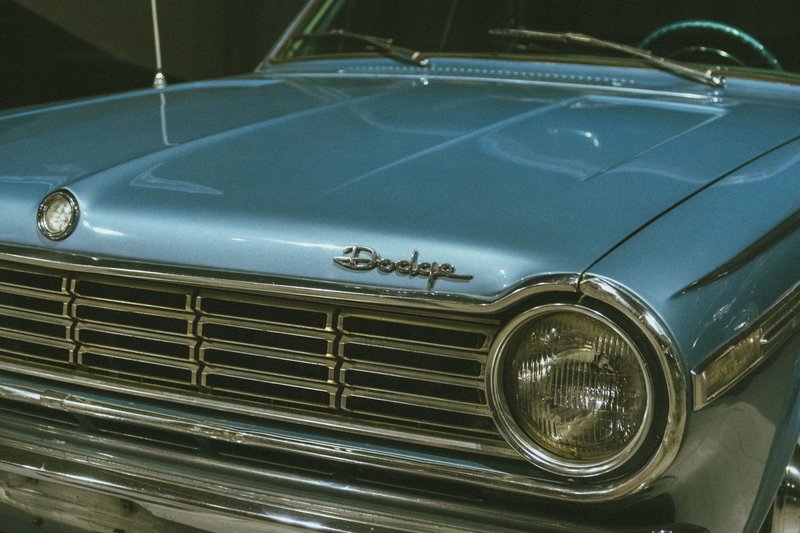
Meadowbrook and Meadowbrook Special
The Meadowbrook was the plain-spoken Dodge. Six-cylinder only, modest brightwork, rubber floor mats in the cheaper cars, and a price that undercut the Coronet by a few hundred dollars. Think roughly $1,900 for a sedan against the mid-$2,000s for a V8 convertible, a price that let the Meadowbrook hold its own in a crowded field of popular cars of the 1950s.
The Meadowbrook Special sat even lower. It was the stripped-down version of a cheap car, and Dodge dropped it by April 1953. If you find a Special, you’ve found one of the rarer cars in the lineup, simply because it sold for only a few months.
The Suburban belongs here too. It was a Meadowbrook-trim station wagon, offered for one year. Wagons from this era tend to be the ones that got used up, so surviving Suburbans are scarce next to the sedans.
Coronet Six and Coronet V8
The Coronet was the top of the car range, and it came two ways. The Coronet Six used the same 103 hp flathead as the Meadowbrook. The Coronet V8 got the new hemi. Body for body they look almost the same, which is exactly why identifying one is a puzzle later on.
Coronet bodies got the full menu: club coupe, four-door sedan, the Diplomat two-door hardtop, a convertible, and the Sierra station wagon. The Diplomat and the convertible are the ones collectors chase, much as they chase the classic American cars of the period. Both ride the shorter 114-inch wheelbase and pair a low roofline with the V8 when you find one optioned that way.
Trim is the easiest tell between Coronet and Meadowbrook. The Coronet carries more chrome, particularly the side molding and the interior fittings, and wears Coronet script on the body. V8 cars add V8 badging, so a quick look at the front fenders and trunk saves you from popping the hood.
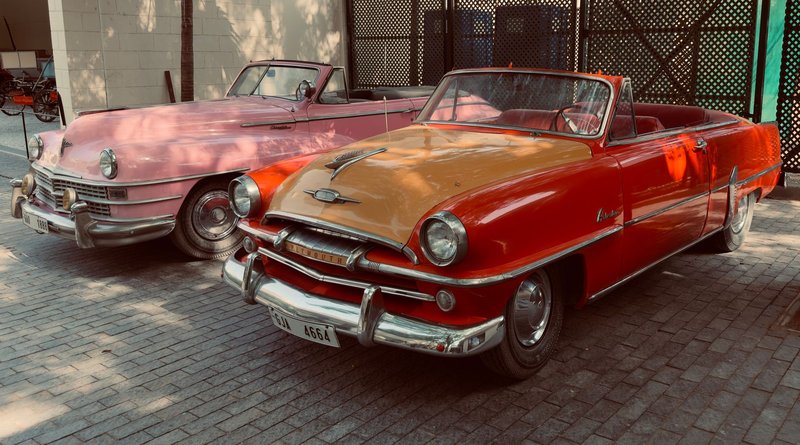
The Red Ram V8 versus the flathead six
For 1953, Dodge finally had a V8, and it was a hemi. The 241.3 cu in Red Ram made 140 hp, a 37 hp gain over the six, which is roughly a third more power from an engine with about 5% more displacement than the 230.2 cu in six. The ram’s-head hood mascot was already Dodge’s symbol, and the new engine borrowed its name.
The hemispherical combustion chamber was the same basic idea as Chrysler’s FirePower V8, scaled down for a cheaper car. Dodge sold it as the engine that turned an ordinary family sedan into something quick. Over half of the Dodges built in 1953 had one, so don’t treat a V8 car as unusual. The six is the one that’s become harder to find in good shape.
| Flathead six | Red Ram V8 | |
|---|---|---|
| Displacement | 230.2 cu in | 241.3 cu in |
| Power | 103 hp | 140 hp |
| Found in | Meadowbrook, Coronet Six, Kingsway | Coronet V8 |
For buyers, the six is simpler and cheaper to keep running. The V8 is the one with the story and the market premium. Neither is hard to live with if the car has been looked after.
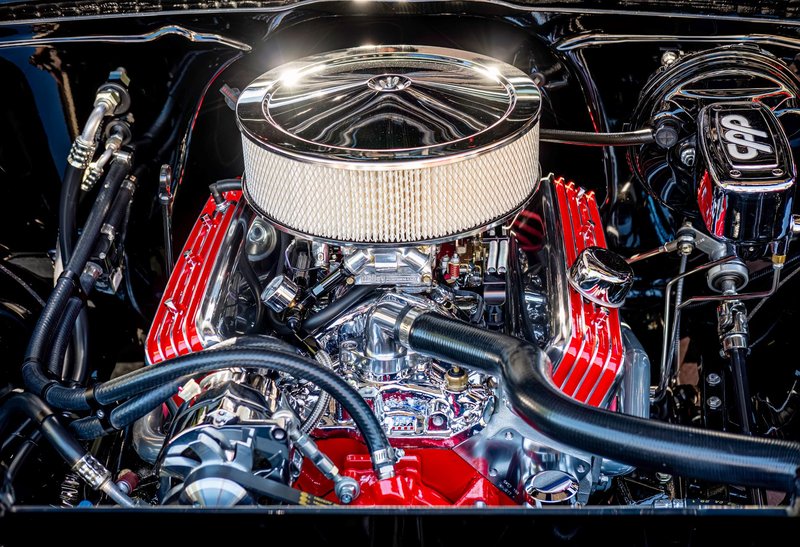
Kingsway: the one you couldn’t buy in America
The Kingsway was an export model. Dodge built it for overseas markets and it wasn’t sold new through US dealers, so it rarely turns up in American listings. It is based on the Meadowbrook, runs the six, and is mostly a footnote in the US story. You only need to know it exists because overseas cars occasionally surface in the States with Kingsway badging and confuse people who assume it’s a Coronet trim.
B-4 series trucks
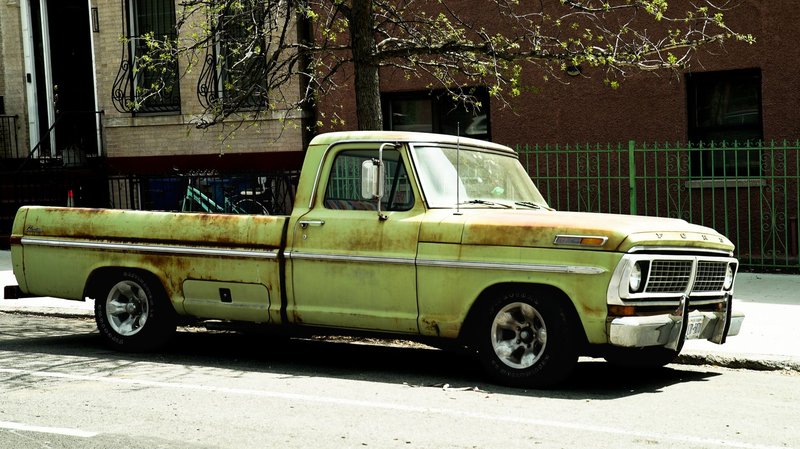
Dodge’s light trucks for 1953 were the B-4 series, the last year of the Pilot-House cab that had defined the postwar trucks. The 1954 trucks were a new generation.
The names work as a code:
- B-4-B is the half-ton pickup, available on 108-inch and 116-inch wheelbases.
- B-4-C and the heavier B-4 chassis step up in capacity and wheelbase.
- The number after the dash, like the 116 in B-4-B-116, is the wheelbase in inches.
Power was a flathead six. There was no V8 in the Dodge truck line in 1953, so the Red Ram story is a car story only. The pickups are Job-Rated, meaning Dodge matched axle, springs and engine to the load class. Check the cab and bed for rust on the lower edges. Parts for these trucks are far easier to find than for the cars, because the Pilot-House shape was built for years.
How to identify a 1953 Dodge
Work through these in order. Each step narrows the field.
1. Car or truck. The Pilot-House cab and separate fenders on a truck chassis are unmistakable. If it’s a pickup, the series code starts with B-4.
2. Measure the wheelbase. A tape from front axle center to rear axle center is a reliable test. About 114 inches means a coupe, Diplomat, convertible or the Suburban wagon. About 119 inches means a four-door sedan. This rules out half the lineup in two minutes.
3. Read the data plate. There’s no VIN in the modern sense. The 17-character VIN standard that the National Highway Traffic Safety Administration’s decoder works with only started in 1981, so a 1953 car relies on the body plate and serial number. The series code on the plate separates D-44 (Coronet V8) from D-46 (Meadowbrook) and D-48 (Coronet Six). Minor-series assignments, like the Special and export cars, are the ones worth cross-checking against a factory reference.
4. Look at the trim. Heavy chrome side molding and Coronet script mean Coronet. Plainer sides and less brightwork mean Meadowbrook. V8 badges mean Red Ram.
5. Confirm the engine. The engine number and the casting say more than any badge. A hemi V8 in a Meadowbrook body may be a later swap, since owners have been dropping bigger Chrysler hemis into these cars for decades.
Dodge was part of Chrysler by then; Chrysler had acquired Dodge Brothers in 1928, which is why the 1953 hemi shares so much thinking with the Chrysler engines of the day. That shared parentage also explains why so many parts interchange across the corporation’s lines.
Which one should you look for
If you want the car with the story, find a Coronet V8, ideally a Diplomat or a convertible. If you want an affordable entry point into 1950s Dodge ownership, a Meadowbrook sedan with the flathead is simple, honest and cheap to run. If you want something nobody else at the show has, find a Special or a Suburban. And if you want a working classic, a B-4 pickup is the practical choice.
Whatever the badge says, start with the wheelbase and the data plate. Those two checks sort a 1953 Dodge faster than any photo.

Tyler Bridges
More from Tyler BridgesHow we reviewed this article
This article was researched against manufacturer records and editorially reviewed before publishing. We accept no payment for coverage. Some guides contain affiliate links; see our affiliate disclosure.