Table of Contents
- Why 1968 Was Dodge’s Peak Year
- Dodge Charger & Charger R/T
- Dodge Coronet & Coronet R/T
- Dodge Super Bee: The New Kid
- Dodge Dart & Dart GTS
- Dodge Polara
- Dodge Monaco
- The Truck Side: D-Series and Power Wagon
- 1968 Dodge Lineup at a Glance
- What It All Adds Up To
Why 1968 Was Dodge’s Peak Year
Every 1968 Dodge model shares one thing: the company built it during the two or three years American automakers could put a 425-horsepower engine in a family-priced coupe and nobody blinked. Dodge spent 1968 redesigning its bread-and-butter fastback, launching a budget muscle car that undercut its own R/T line, and quietly selling more trucks than most people remember it made. Cars and trucks both got redesigned sheet metal that year, and three separate divisions of the lineup — Charger, Coronet, and Dart — were all fielding factory-backed performance packages at once.
That’s the part most rundowns of this year miss. They’ll cover the Charger because it’s the famous one, or the Super Bee because it’s cheap to collect now, but they treat the rest of the range like footnotes. Here’s the whole thing — Dart to D-Series — with the engine options, the numbers Dodge actually built, and what each one is worth if you’re shopping rather than reading.
Dodge Charger & Charger R/T
The second-generation Charger arrived for 1968 with a “coke bottle” fastback body that replaced the boxier 1966-67 car, and it’s the design most people picture when they hear the name. Dodge built 92,590 Chargers that year — a huge jump from the roughly 15,000 sold in 1967 — and 17,665 of those were ordered as R/T models, the trim that swapped in big-block power and a heavier-duty suspension.
R/T buyers got a 440 Magnum V8 rated at 375 horsepower as the standard engine, with the 426 Hemi available for an extra several hundred dollars. Only 475 of the nearly 100,000 Chargers built that year left the factory with the Hemi, which is most of why a documented, numbers-matching 1968 Hemi Charger now sells for real money at auction while a 440 car stays comparatively reachable.
The styling that made the Charger a design landmark also made it a handful on NASCAR’s high-banked ovals — the recessed grille added drag and the flying-buttress rear window generated enough lift to unsettle the car at speed. That problem didn’t get fixed until 1969, when Dodge grafted on a Coronet-style flush grille and a shallower backlight to create the homologation-special Charger 500, a redesign that marked the start of the design direction Dodge would follow through the 1970s. But the seed of that fix was planted by how the 1968 body actually behaved on track.
Dodge Coronet & Coronet R/T
The Coronet was Dodge’s mid-size backbone, sold as everything from a fleet-spec six-cylinder sedan to the R/T performance package, and it’s the platform both the Charger and the new Super Bee borrowed their bones from. Base Coronets ran the 225 slant six or a range of small-block V8s; the R/T trim locked buyers into big-block-only territory.
Dodge built 10,849 Coronet R/Ts for 1968. The standard engine was the 440 Magnum at 375 horsepower, with the 426 Hemi optional — and just 230 of those R/Ts left the factory with the Hemi, making it noticeably rarer in Coronet form than in the Charger. The R/T package added a bumblebee stripe around the tail, a fiberglass hood with simulated scoops, and the same heavy-duty suspension and brakes the Super Bee would use a few months later.
Dodge Super Bee: The New Kid
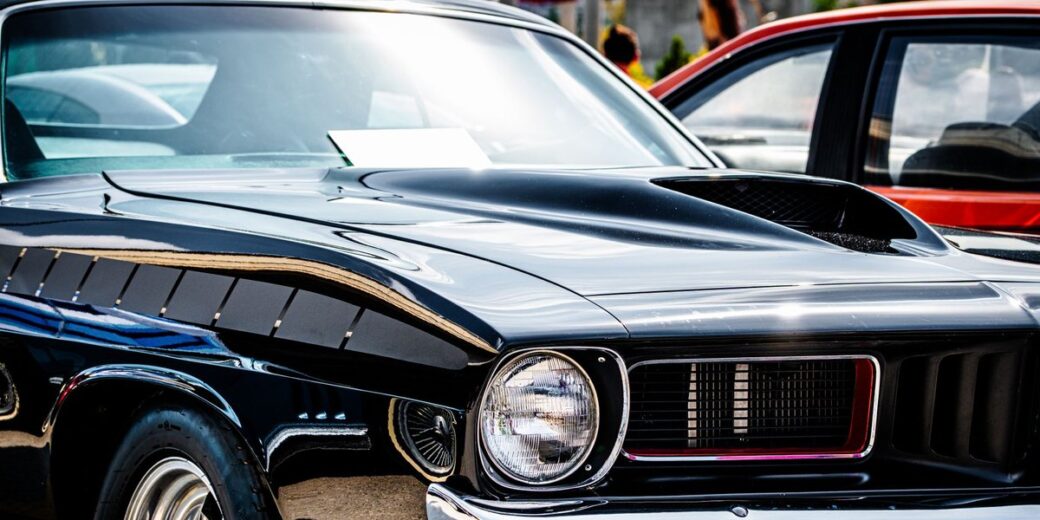
The Super Bee is the model that actually explains why 1968 matters to collectors now. It debuted partway through the model year as a stripped-down, lower-priced alternative to the Coronet R/T — Plymouth had already proven the formula worked with the Road Runner, and Dodge answered with its own version built on the plainer Coronet Deluxe two-door coupe body.
The formula was simple: keep the price down, keep the performance real. The standard engine was a 383 Magnum rated at 335 horsepower, good for a 0-60 run in around six seconds—competitive with the fastest cars of the 1960s—with the 426 Hemi available as the same optional upgrade offered on the R/T. Buyers got a heavy-duty suspension, wide tires, and the option of a Hurst-shifted four-speed manual — but none of the R/T’s extra brightwork or higher base price. That value proposition is exactly why the Super Bee, not the pricier R/T, became the car Mopar collectors chase hardest from this generation.
Dodge Dart & Dart GTS
The Dart doesn’t get the muscle-car reputation the Charger does, and that’s partly the point — it was Dodge’s compact, and the GTS package turned it into a genuine sleeper. For 1968, GTS buyers could order either a 340 small-block making 275 horsepower or a 383 big-block rated at 300 horsepower, dropped into a car hundreds of pounds lighter than a Coronet.
Dodge lumped GTS production into the broader Dart GT V8 total of 24,100 units for the year, but the breakdown that survives shows just 1,281 GTS cars built with the 340 and a four-speed manual — the combination enthusiasts consider the sweet spot. The GTS package added a Rallye suspension, dual exhaust with chrome tips, 14×5.5-inch wheels, and Red Streak tires, and a 340/four-speed Dart GTS ran the quarter-mile in the low 14s in contemporary magazine tests. Lighter than the Coronet-based cars and nearly as quick with the 340, it’s the model this list is most likely to make you reconsider.
Dodge Polara
The Polara was Dodge’s volume full-size car — the one that actually paid the bills while Charger and Super Bee got the magazine covers. For 1968 the 318 V8 at 230 horsepower became the standard engine, with the 383 optional at 290 horsepower with a two-barrel carburetor or 300 with a four-barrel.
Body styles covered nearly every use case: four-door sedan and hardtop, two-door hardtop and convertible, and a station wagon configurable with two or three rows of seats for up to nine passengers. The Polara 500 trim, offered on the two-door hardtop, added bucket seats and extra brightwork for buyers who wanted a full-size car with a little more presence without stepping up to a Monaco.
Dodge Monaco
Monaco sat above Polara as Dodge’s flagship, a position it had held since replacing the Custom 880 a couple of years earlier. The 1968 range included a four-door sedan and hardtop, a two-door hardtop, and a wagon rated for six or nine passengers depending on configuration.
The Monaco 500 sub-trim was where things got interesting: buyers could spec a 383 at 290 or 300 horsepower, step up to the 440 Magnum at 375 horsepower, or — for the buyer who wanted a genuinely quick full-size Dodge — the 426 Hemi at 425 horsepower. That’s the same engine motivating the Charger R/T, just wearing a formal four-door body instead of a fastback.
The Truck Side: D-Series and Power Wagon
Nobody puts the trucks in these roundups, which is a mistake, because 1968 was a real transition year on that side of the lineup too. Dodge offered 31 distinct pickup configurations for the model year, running from light-duty compacts up through heavy-duty models, and gave the D-Series a mild facelift with a new one-piece grille.
The D100 half-ton came standard with the 225 slant six, with 318 and 383 V8s optional. The split in how buyers actually ordered it is telling: on short-wheelbase D100s, the six-cylinder outsold V8 power by more than two to one (10,126 to 3,930), while V8s took over as the dominant choice once you moved up to longer-wheelbase and heavier-duty trucks. Dodge also replaced its old Custom Sports Special dress-up package with the new Adventurer trim, which added a center console, chrome trim, and a choice of four interior colors over thirteen exterior paint options.
The real curiosity is the Power Wagon, which in 1968 was still the old-school civilian version of the WWII-derived design — a flathead six around 250 cubic inches, making a gross 125 horsepower and 216 lb-ft of torque, in a truck that weighed nearly 4,920 pounds as a pickup. Dodge built just 2,461 of them for the North American market that year, plus 1,958 more for export, making the original-recipe Power Wagon one of the lowest-volume vehicles in the entire 1968 range — rarer, in raw numbers, than the Hemi Charger.
1968 Dodge Lineup at a Glance
| Model | Body Styles | Standard Engine | Top Factory Engine | Notable Production |
|---|---|---|---|---|
| Charger / Charger R/T | 2-door fastback | 318 V8 (base) | 426 Hemi (425 hp) | 92,590 built; 17,665 R/T; 475 Hemi |
| Coronet / Coronet R/T | Sedan, hardtop, coupe | 225 slant six (base) | 426 Hemi (425 hp) | 10,849 R/T built; 230 Hemi |
| Super Bee | 2-door coupe | 383 Magnum (335 hp) | 426 Hemi (425 hp) | Mid-year debut, based on Coronet Deluxe |
| Dart GTS | 2-door hardtop | 340 V8 (275 hp) | 383 V8 (300 hp) | 24,100 GT-series V8s; 1,281 GTS 340/4-spd |
| Polara | Sedan, hardtop, convertible, wagon | 318 V8 (230 hp) | 383 V8 (300 hp) | Full-size volume seller |
| Monaco | Sedan, hardtop, wagon | 318/383 V8 | 426 Hemi (425 hp) | Flagship full-size |
| D100 Pickup | Regular cab | 225 slant six | 383 V8 | 31 configurations offered |
| Power Wagon | Pickup | Flathead six (125 hp gross) | — | 2,461 domestic, 1,958 export |
What It All Adds Up To
Line the whole 1968 range up and a pattern shows: Dodge was selling the same handful of big-block engines — 383, 440, and the 426 Hemi — across a Dart, a Coronet, a Charger, and a Monaco, letting buyers pick the body style and price point while keeping the performance ceiling identical. That’s not a coincidence; it’s what a company does at the exact moment before insurance underwriters and federal emissions rules start narrowing the options. Within a few years, the Hemi would be gone from regular production and the Super Bee’s whole reason for existing — cheap, real speed — would get squeezed by both tightening emissions standards and rising insurance costs on anything with a big engine.
None of that had happened yet in 1968. What existed instead was a genuinely broad lineup — six passenger-car nameplates and a full truck range, most of them available with an engine that could embarrass cars costing twice as much. If you’re shopping this era now, that breadth is the useful part: a 1968 Dodge doesn’t have to mean a six-figure Hemi Charger. It can mean a 340 Dart GTS, a 383 Super Bee, or a full-size Monaco 500 that nobody else at the show bothered to bring.

Tyler Bridges
More from Tyler BridgesHow we reviewed this article
This article was researched against manufacturer records and editorially reviewed before publishing. We accept no payment for coverage. Some guides contain affiliate links; see our affiliate disclosure.