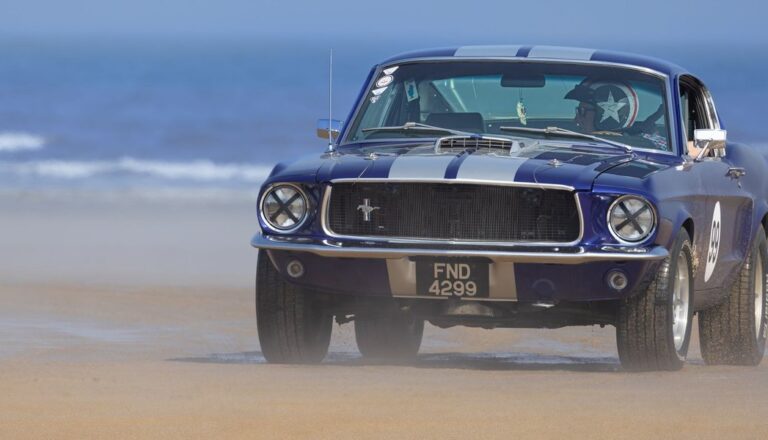
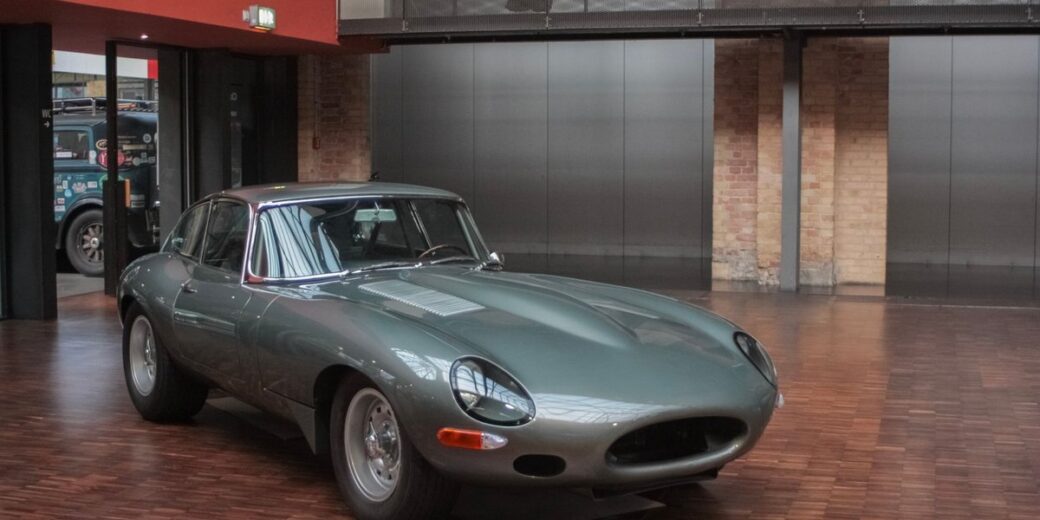
Jaguar’s 1955 range was four cars, and they couldn’t have been more different. One was a sports car you could drive to the shops, one was a wood-and-leather limousine-sized saloon, one was a compact family sedan that hadn’t existed a few months earlier, and one was a race car that won Le Mans. If you’re trying to sort out which 1955 Jaguar car models were which, this is the full list, with the dates that trip people up.
Contents
- TLDR
- The 1955 Jaguar lineup at a glance
- Which was which: a 1954-1955 timeline
- Jaguar XK140
- Jaguar Mark VII and Mark VIIM
- Jaguar 2.4 Litre (the “Mark 1”)
- Jaguar D-type
- Road cars vs race cars
- What 1955 Jaguars are worth today
TLDR
- Fun two-seater: XK140. Launched late 1954, sold as a 1955 model, 190 bhp from the 3.4-litre XK six.
- Big comfortable saloon: Mark VII, sold in updated Mark VIIM form from late 1954.
- Newest car: the 2.4 Litre saloon, announced 28 September 1955. Nobody called it the Mark 1 until 1959.
- Race car: D-type. It won the 1955 24 Hours of Le Mans and wasn’t a road car.
- Cheapest way in today: a 2.4 Litre or a Mark VII. Most collectible: a roadster XK140, and the D-type is in a different universe.
The 1955 Jaguar lineup at a glance
| Model | Engine | Power | Body | Gearbox | Production |
|---|---|---|---|---|---|
| XK140 | 3.4 L straight-six | 190 bhp (210 bhp SE/MC) | Roadster, fixed head coupe, drophead coupe | 4-speed manual, optional overdrive; automatic later | 8,884 (1954-57) |
| Mark VII / VIIM | 3.4 L straight-six | 160 bhp (VII), 190 bhp (VIIM) | Four-door saloon | 4-speed manual, optional overdrive; automatic option | about 30,500 (1950-57) |
| 2.4 Litre (“Mark 1”) | 2.4 L straight-six | 112 bhp | Four-door saloon, unibody | 4-speed manual, optional overdrive | 19,992 (1955-59) |
| D-type | 3.4 L straight-six, dry sump | roughly 250-plus bhp | Open race car, aluminum monocoque | 4-speed manual | about 70 (1954-57) |
All four use some version of Jaguar’s XK-family twin-cam inline-six. That’s the thread running through the whole year.
Which was which: a 1954-1955 timeline
The dates are where most online articles go sideways, so here they are in order.
- Late 1954: The XK140 replaces the XK120 and goes on sale. Cars delivered in 1955 are 1955 models. The Mark VIIM, with a power bump to 190 bhp, arrives around the same time.
- 11-12 June 1955: Mike Hawthorn and Ivor Bueb win Le Mans in a works D-type.
- 28 September 1955: Jaguar announces the 2.4 Litre saloon, its first unibody car. Customer deliveries follow in 1956.
- 1957: The 3.4 Litre version of the small saloon and the XK150 arrive, and the XK140 is gone.
- 1959: The Mark 2 appears. Only now does the earlier car get its nickname, Mark 1.
One more thing: the XK120 is not a 1955 car. Production ended in 1954, so if a seller calls their roadster a “1955 XK120,” something’s off. For the cars that were on sale the year before, see the 1954 Jaguar car models guide.
Jaguar XK140
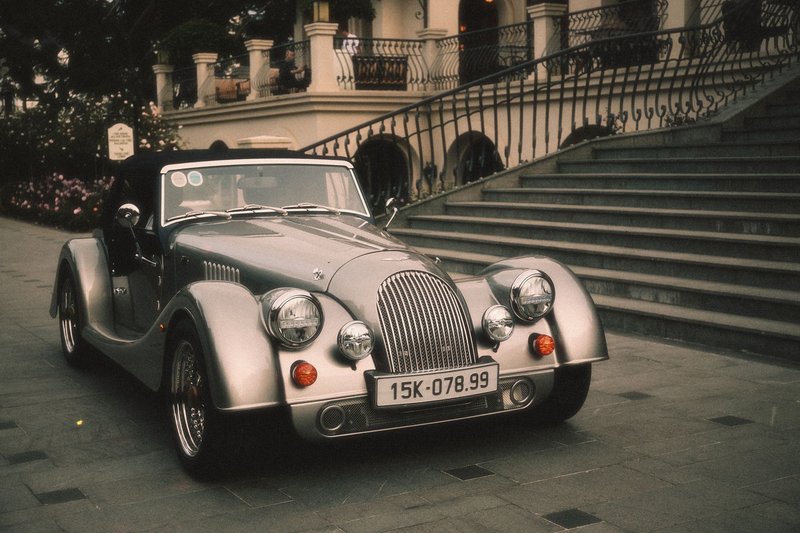
The XK140 is the car most people picture when they think of a 1955 Jaguar. It looks like the XK120 with a bigger chrome grille and heavier bumpers, and it is, but the changes matter. The engine moved forward about three inches, which gave the coupes real room behind the front seats and made the cabin less of a squeeze. Steering switched to rack-and-pinion.
Specs
- Engine: 3,442 cc inline-six, twin overhead cam
- Power: 190 bhp standard; 210 bhp with the C-type cylinder head (SE in Britain, MC in the US)
- Body styles: open two-seater (OTS), fixed head coupe (FHC), drophead coupe (DHC)
- Transmission: four-speed manual, overdrive optional, Borg-Warner automatic offered later in the run
- Top speed: around 120 mph
- Production: 8,884 total, split roughly 3,350 roadsters, 2,800 fixed head coupes and 2,740 drophead coupes
The roadster is the purist’s pick, with the lightest body and a removable soft top. The coupes are the practical ones: a little more weather protection, a tiny rear bench that’s fine for bags or a child, and generally lower prices.
Jaguar Mark VII and Mark VIIM
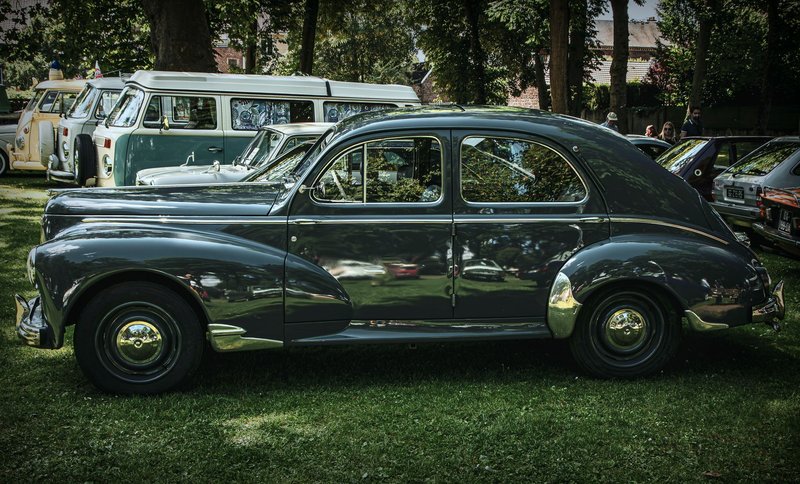
The Mark VII is the car that put Jaguar on American driveways, and it was the big one in the 1955 range: a four-door saloon with a wood dash, leather seats and a body that looks wider than it is. Don’t let the size fool you. With the XK engine under the bonnet, it could pass 100 mph, which was a serious number for a family-hauling sedan in the early 1950s.
The Mark VII ran from 1950 to 1957. The VIIM badge marks the 1954 update, which raised power from 160 to 190 bhp and added small tweaks to the gearing and trim. A 1955 car you find today is almost certainly a VIIM, though plenty of owners and dealers still just say “Mark VII.”
Specs
- Engine: 3,442 cc inline-six
- Power: 160 bhp (Mark VII), 190 bhp (VIIM)
- Body: four-door, five-seat saloon
- Transmission: four-speed manual with optional overdrive; Borg-Warner automatic available
- Production: about 30,500 for the Mark VII and VIIM combined
It was also a competition car in its own right. A Mark VII won the 1956 Monte Carlo Rally, which tells you something about how well the chassis took abuse.
Jaguar 2.4 Litre (the “Mark 1”)
The 2.4 Litre was Jaguar’s biggest strategic move in 1955. Everything before it sat on a separate chassis. This one was a unibody, built with Pressed Steel at Browns Lane in Coventry, smaller and cheaper than a Mark VII, and aimed at buyers who wanted a Jaguar but couldn’t stretch to the big car.
It was announced on 28 September 1955. The car had a short-stroke 2.4-litre version of the XK engine, which was a very different animal from the 3.4. It made 112 bhp, enough for roughly 100 mph, though acceleration was more relaxed than the badge suggested. Early cars had drum brakes all round, and the rear track is narrower than the front, which you can see if you look at the car from behind.
The name “Mark 1” is retroactive. In 1955, the car was simply the 2.4 Litre. Jaguar only started calling the earlier model the Mark 1 after the Mark 2 arrived in 1959, to tell them apart. If you’re searching for “1955 Jaguar Mark 1,” you’re looking for this car, but it won’t say Mark 1 anywhere on the bodywork.
Specs
- Engine: 2,483 cc inline-six
- Power: 112 bhp
- Body: four-door unibody saloon
- Transmission: four-speed manual, optional overdrive (automatic arrived later)
- Production: 19,992 in the 2.4 Litre form, 1955-59
Jaguar D-type
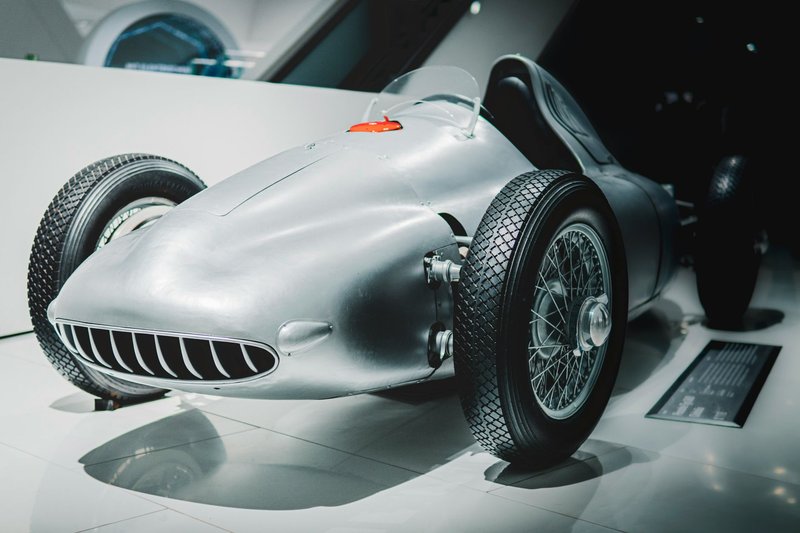
The D-type is the odd one out in this list, because you couldn’t walk into a showroom and order one for the road. It was a purpose-built race car, though Jaguar did sell customer cars to private teams, and it dominated Le Mans in the mid-1950s.
Its design was radical for the time. Rather than a chassis with a body on top, the D-type used an aluminum monocoque tub for the cockpit, with a tubular subframe up front to carry the engine. The XK six ran with a dry sump so it could sit low, and Dunlop disc brakes did the stopping. The result was a car shaped like a bullet, and the long tail fin behind the driver’s head was there for stability on the Mulsanne straight.
On 11-12 June 1955, a works D-type driven by Mike Hawthorn and Ivor Bueb won the 24 Hours of Le Mans. The race is also remembered for the crash involving Pierre Levegh’s Mercedes, which killed Levegh and more than 80 spectators; Mercedes withdrew from motorsport at the end of the season. Britannica’s Le Mans history covers the wider story, and the official Le Mans site lists the full results. Jaguar then won again in 1956 and 1957, the last two with the Scottish privateer team Ecurie Ecosse.
Specs
- Engine: 3,442 cc inline-six, dry sump, three Weber carburetors on early cars
- Power: roughly 250-plus bhp, depending on the car and year
- Body: open two-seater race car, aluminum monocoque
- Brakes: Dunlop discs
- Production: around 70 built between 1954 and 1957
Road cars vs race cars
Strictly speaking, 1955 Jaguars split into three groups.
- Pure road cars: the Mark VII/VIIM and the 2.4 Litre. They were built for owners who wanted comfort and a proper back seat.
- Road car with sports credentials: the XK140. Many were raced and rallied, but they were sold as touring sports cars.
- Race car only: the D-type. A road-going version, the XKSS, didn’t appear until 1957 and used leftover D-type parts.
If you read a “1955 Jaguar” list that includes the C-type, treat it carefully. The C-type ended in 1953 and was replaced by the D-type.
What 1955 Jaguars are worth today
Prices vary widely by country, condition and provenance, so treat these as ranges, not quotes. Check recent sales and a dedicated valuation guide before you buy.
- XK140 roadster: Usually the most expensive of the road cars, typically six figures in dollars for a good example. Coupes cost less.
- Mark VII/VIIM: Among the cheaper ways into pre-1960 Jaguar ownership. Tens of thousands of dollars buys a tidy car, and the biggest cost for a restorer is usually rust and the interior.
- 2.4 Litre: Similar territory to a Mark VII. Rust in the sills and wings is the main enemy. The 2.4 engine is also known for needing care. Check that it’s been rebuilt properly.
- D-type: Seven figures at minimum, with the right chassis worth far more. Most are in museums or serious collections, and you’re more likely to see one at Goodwood than in a classified ad.
If you want something to drive regularly, the XK140 coupe and Mark VII are the sensible picks. The XK140 roadster is the one you’ll want more, and the 2.4 Litre is the one that quietly gets underrated.

Marco Delantero
More from Marco DelanteroHow we reviewed this article
This article was researched against manufacturer records and editorially reviewed before publishing. We accept no payment for coverage. Some guides contain affiliate links; see our affiliate disclosure.