The 1940 Ford is the one that people still recognize from across a parking lot. Edsel Ford and designer Bob Gregorie gave it a clean, rounded body with the headlights pushed out to the fender edges, and hot rodders have been cutting, chopping and lowering it ever since. This guide covers every 1940 Ford car by body style, the specs that matter, how to separate a 1940 from a 1939, and what one costs now.
Table of Contents
- 1940 Ford cars at a glance
- Standard vs DeLuxe
- Every 1940 Ford body style
- 1940 Ford specs
- 1939 vs 1940 Ford: how to tell them apart
- Hot rods, stock cars and the afterlife
- What a 1940 Ford is worth today
- Summary
1940 Ford cars at a glance
Ford sold the 1940 line in two trim levels, Standard and DeLuxe, on a single 112-inch wheelbase. Under the hood sat one of two V8s: the 221 cubic inch flathead making 85 horsepower, or the small 136 cubic inch V8-60 making 60.
The 85 hp V8 is the engine you’ll find in nearly every car anyone cares about today. The 60 hp engine was the economy option, and it’s the reason a few Standard cars feel asleep at the wheel. It was also the last year Ford offered it in the US.
Standard vs DeLuxe
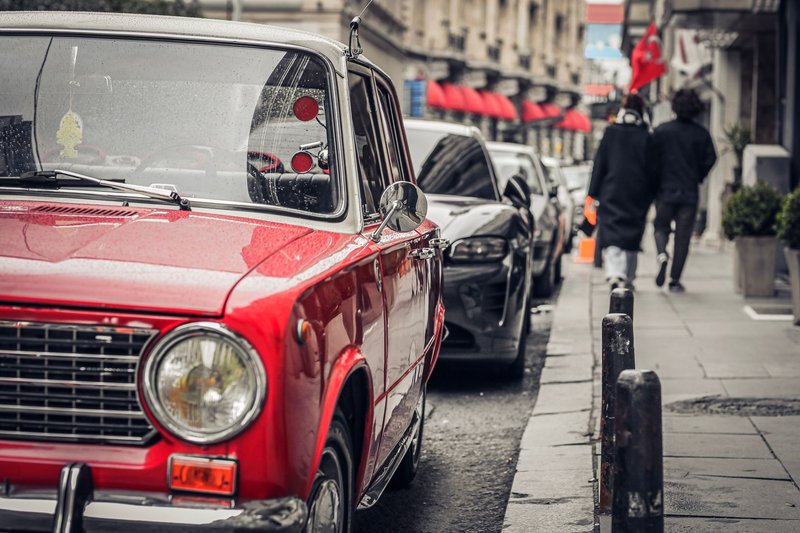
The Standard was the cheaper, plainer car. Painted headlight rings, less brightwork, a simpler interior and a plainer dash. It came in fewer body styles and was the trim most buyers who wanted a work car chose.
The DeLuxe added chrome trim, nicer upholstery, a fuller set of gauges and more body styles. It’s also the trim that got the flashier models: the convertibles and the wood-bodied station wagon were DeLuxe cars. If you see a 1940 Ford with a lot of chrome around the headlights and a more finished dash, it’s a DeLuxe, and it’s the more desirable starting point for a restoration.
Every 1940 Ford body style
Five-window coupe
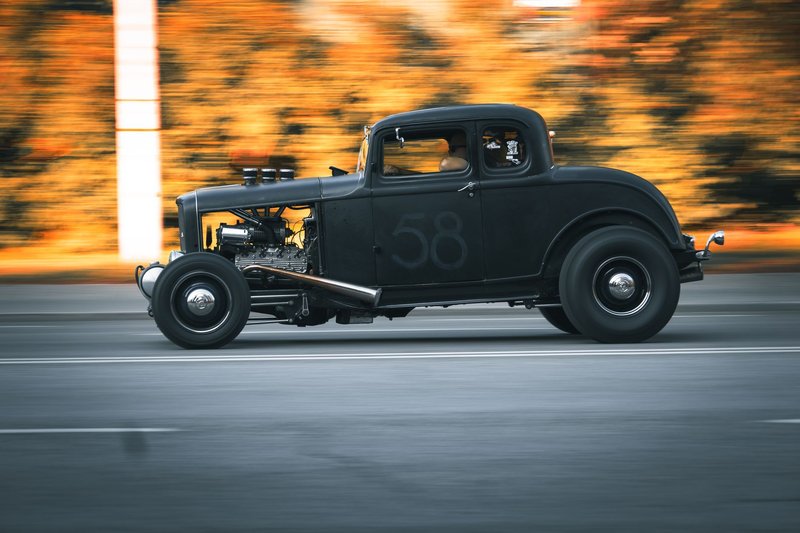
This is the car. The 1940 Ford five-window coupe has a short rear roofline, a window in each door, a small quarter window behind each door and a rear window. It sold as both a Standard and a DeLuxe, and the DeLuxe Coupe started at around $700 new. The shape is why the 1940 Ford hot rod exists as a category: the cabin is small, the proportions are right, and the roof looks good chopped.
Business Coupe
The Business Coupe drops the quarter windows and the back seat, leaving a three-window profile and a deep luggage shelf for a salesman’s sample cases. It’s the rarest-looking coupe and the one traditional hot rodders sometimes prefer, because there’s less glass and more flat panel to work with.
Tudor and Fordor sedans
Ford called the two-door sedan a Tudor and the four-door a Fordor, and both came as Standard and DeLuxe. They’re the volume cars of the year. For how the family sedan fit into the wider 1940s market, see 1940s sedans: the cars that defined the decade. They’re also the cheapest way into a 1940 Ford today, because buyers pay a premium for coupes and convertibles and not for family sedans.
Convertibles
Ford built a convertible club coupe and a DeLuxe convertible sedan. Both have power-folding tops on frames that are fragile after eight decades, and both sell for far more than a closed car in the same condition. The convertible sedan, with four doors and an open top, is the one you’ll rarely see at a show.
Station wagon
The wood-bodied wagon was a DeLuxe-only model. Ford built 8,730 DeLuxe wagons for 1940, up from 6,155 in 1939. The body was real wood, mostly birch and maple, and the wood is the problem: it needs regular refinishing, and a wagon with sound original framing is a rarity.
Pickup
Ford’s half-ton pickup wore the same smooth front-end look as the car line, which is part of why it’s so popular with builders. It isn’t a car, strictly speaking, but it shares sheet metal and the same V8 family, so it belongs in the conversation.
1940 Ford specs
| Spec | 1940 Ford |
|---|---|
| Wheelbase | 112 inches |
| Engines | 221 cu in flathead V8, 85 hp; 136 cu in V8-60, 60 hp |
| Transmission | Three-speed manual, column-mounted shifter |
| Brakes | Hydraulic drums |
| Trims | Standard, DeLuxe |
| Original price | Roughly $600s to about $900, with the DeLuxe Coupe near $700 |
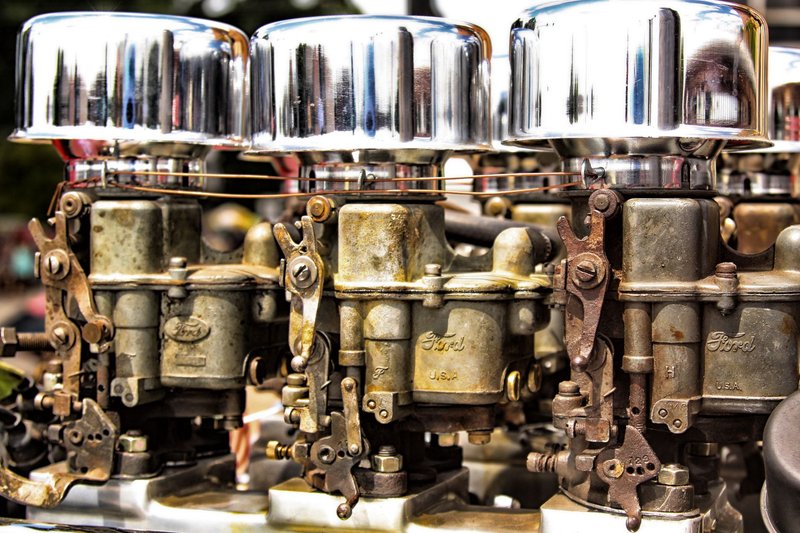
The flathead V8 is a side-valve engine, which means the valves sit in the block rather than the cylinder head. That layout is simple and cheap to build, and it’s the reason the engine was so easy to modify. Builders added aftermarket aluminum heads, extra carburetors and ignition upgrades, and an industry grew out of those parts. If you want the full numbers on the engine, the 85 hp rating is the one to quote. Anything past that came from the aftermarket.
1939 vs 1940 Ford: how to tell them apart
The two years look close in photos, and sellers get them mixed up. Check these four things.
| Feature | 1939 | 1940 |
|---|---|---|
| Headlights | Smaller, set into the fender fronts | Wider sealed-beam units, pushed outward on the fenders |
| Hood | Rounded profile with a visible crown | Flatter top line |
| Grille | Rounded, V-shaped look | Flatter, with a different bar pattern |
| Shifter | Floor-mounted | Steering column |
The sealed-beam headlights are the quickest tell. For 1940, every automaker moved to the standardized sealed-beam lamp, and Ford’s new, larger lights are the single most visible change from 1939. The grille and hood follow the same logic: the 1940 car looks lower and wider because the lamps and bodywork were redrawn to match.
Check the steering column and the dash too. A column shifter is a 1940 feature, and a floor shifter on a car sold as a 1940 usually means someone swapped parts around.
Hot rods, stock cars and the afterlife
The 1940 Ford was a cheap, fast, common car with a lightweight body and an engine that rewarded tuning. It’s one of the most iconic cars of the 1940s, and those two traits are a big part of why. After World War II, it showed up on dry lakes, at drag strips and in early stock-car racing. Returning servicemen found them in junkyards and used-car lots for little money, and the five-window coupe became the classic base for a hot rod.
Ford’s flathead stayed in service for years, and the aftermarket for it never really went away. A 1940 coupe with a period flathead, dropped suspension and a chopped top is a style of its own. The post-war custom crowd liked the same car for a different reason: the rounded body takes a smooth, lowered “mild custom” treatment well.
Museums keep stock examples too. The Henry Ford in Dearborn, Michigan, preserves the company’s early history, and the Smithsonian’s National Museum of American History holds material on the American automobile’s role in daily life. If you want context for where this car sits in Ford’s story, those are the places to start.
What a 1940 Ford is worth today
Listings on Autotrader Classics run from roughly $4,500 to $199,500, with an average asking price near $45,000. That spread is wide because it covers rusted project sedans and fully built show coupes in the same search.
A few rules of thumb:
- Sedans are the low end. A solid, running Tudor or Fordor costs far less than a coupe.
- Five-window coupes carry the premium, and modified cars with period-correct builds often ask more than stock ones.
- Convertibles and the wood-bodied wagon sit near the top for original, well-kept examples.
- Condition decides everything. Rust in the floors, rotted wood on a wagon and a missing top frame cost more to fix than the car is worth.
Before you buy, check the numbers on the body, the frame and the engine block against Ford’s 1940 records. A car with matching parts and a clean title will always sell faster than a mystery build.
Summary
The 1940 Ford is a Standard or DeLuxe car on a 112-inch wheelbase with either the 85 hp flathead V8 or the 60 hp V8-60, in a body style that runs from a plain Fordor to a DeLuxe convertible. Check the headlights, hood, grille and shifter to tell a 1940 from a 1939. Pay for the coupe if you want the hot rod, buy the sedan if you want the cheapest entry, and don’t underestimate what a wagon costs to keep.

Marco Delantero
More from Marco DelanteroHow we reviewed this article
This article was researched against manufacturer records and editorially reviewed before publishing. We accept no payment for coverage. Some guides contain affiliate links; see our affiliate disclosure.