1954 was the year Jaguar’s lineup hit a hinge point. The XK120 that had made the company famous was on its way out, the XK140 that replaced it landed mid-year, the D-Type was being built to win Le Mans, and the Mark VII saloon got a horsepower bump that made it genuinely quick for a four-door of its size. Four cars, four very different reasons to care.
Most pages about 1954 Jaguars either dump every model the brand ever built into one endless database, or show you a grid of auction listings with prices and nothing else. This is neither. Here’s each 1954 car on its own terms — what it was, what changed that year, and what one costs now.
Table of Contents
- The Quick Version
- 1954 Jaguar XK120: The Last of a Legend
- 1954 Jaguar XK140: The Mid-Year Successor
- Jaguar D-Type: Built to Win Le Mans
- 1954 Jaguar Mark VII: The Quick Saloon
- 1954 Jaguar Models Compared
- A Short Buyer’s Note
The Quick Version {#the-quick-version}
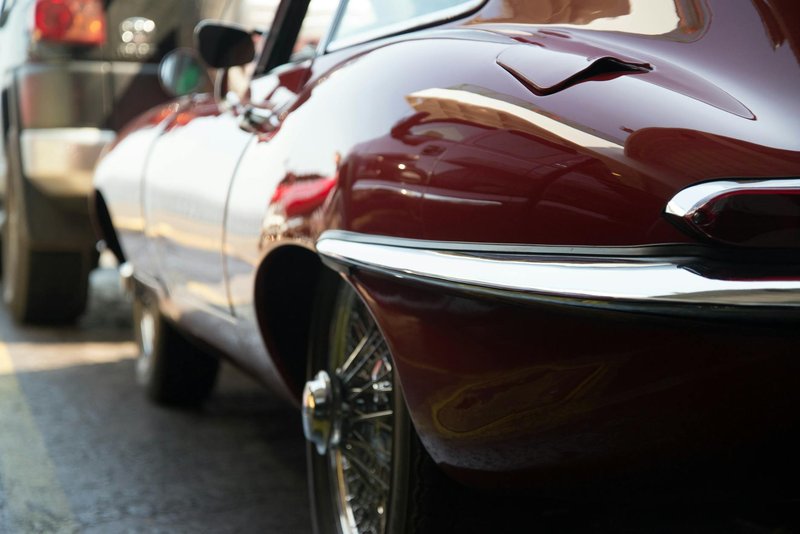
If you only remember one thing: 1954 is a transition year. The XK120 and XK140 overlap in the same calendar year, which trips up a lot of buyers reading a listing. Here’s the shape of it.
- XK120 — the final months of an icon. Same 3.4L straight-six, the car that started Jaguar’s sports-car reputation. Values roughly $90,000–$150,000 for good examples, more for the rare alloy and SE cars.
- XK140 — arrived in late 1954, more power, rack-and-pinion steering, better cabin room. Values roughly $80,000–$130,000.
- D-Type — the competition car, only a handful built, a Le Mans winner. This is a multi-million-dollar machine; not something you stumble across.
- Mark VII — the big sporting saloon. The September 1954 update pushed output toward 190 hp. Values roughly $25,000–$45,000, the bargain of the bunch.
All four share the same fundamental heart: Jaguar’s 3.4-liter DOHC XK straight-six, one of the great engines of the era and the reason these cars still drive the way they do.
1954 Jaguar XK120: The Last of a Legend {#xk120}
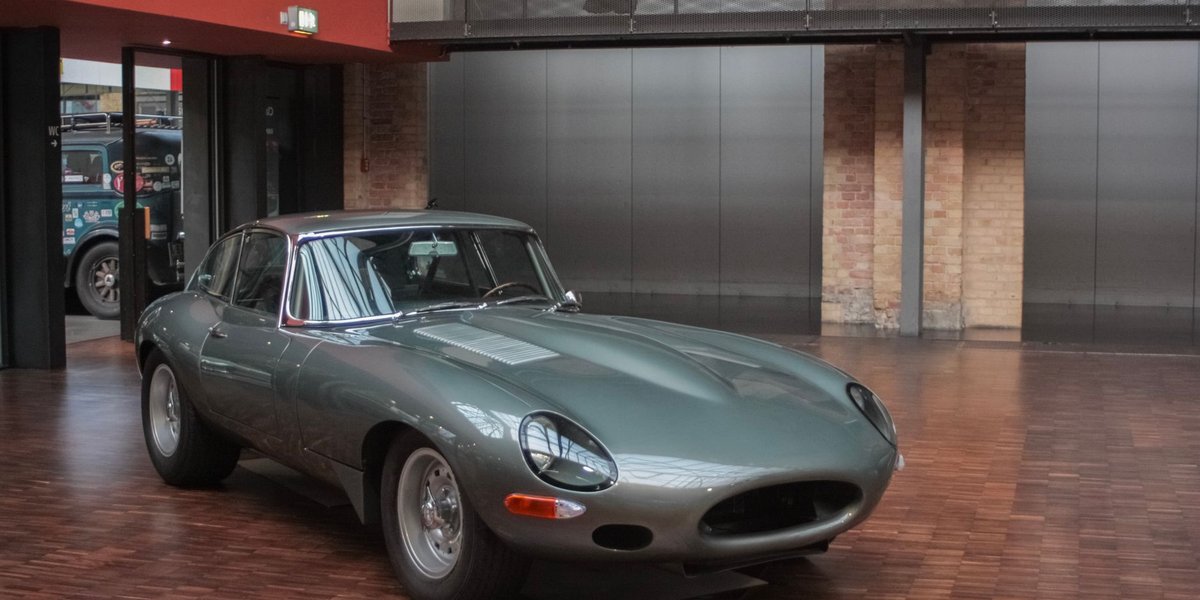
The XK120 had been around since 1948, and by 1954 it was living on borrowed time. Production wound down through the year as the XK140 took over. That makes a 1954 XK120 a genuine end-of-line car, and for collectors that matters.
The “120” in the name was a promise: 120 mph, a figure that sounds modest now but was outrageous for a road car in the early ’50s. When it landed it instantly belonged among the fastest and most desirable 1950s sports cars, and it stayed there. The 3.4-liter twin-cam six made around 160 hp in standard tune, more in Special Equipment (SE) trim with the higher-compression head and twin exhausts.
By 1954 you could get the XK120 in three body styles, and the differences are worth knowing because they swing value hard:
- Roadster (OTS, “open two-seater”) — the purist’s choice, lightest and most spartan, side curtains instead of wind-up windows. Most desirable, usually the most expensive.
- Drophead Coupe (DHC) — a proper folding top, wind-up windows, walnut dash. The civilized convertible.
- Fixed-Head Coupe (FHC) — the closed car, often the most affordable way into an XK120.
Early XK120s wore aluminum bodywork over an ash frame; Jaguar switched to steel as volume climbed, so a 1954 car is steel-bodied unless it’s something very special. Total XK120 production across all years ran north of 12,000 cars, but the 1954 cars are a sliver of that.
Current values land roughly between $90,000 and $150,000 for a sorted, matching-numbers example, with concours roadsters and rare alloy cars climbing well past that. A rough project or a car with a swapped engine sits much lower — which is exactly where buyers get burned.
1954 Jaguar XK140: The Mid-Year Successor {#xk140}
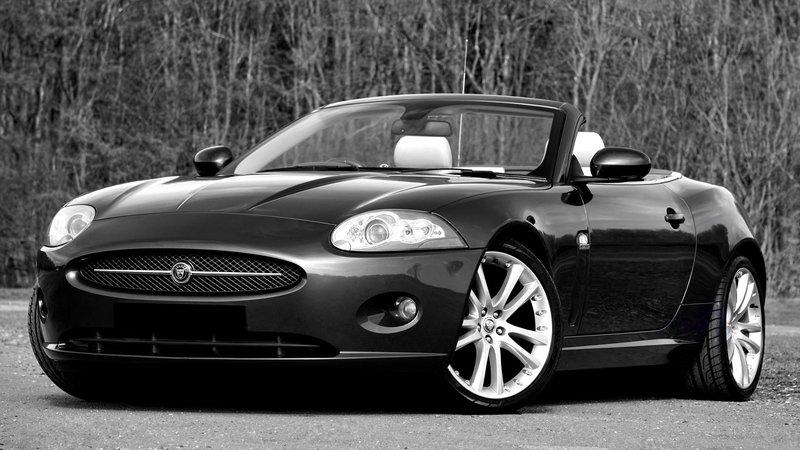
This is the new car of 1954. The XK140 arrived late in the year and addressed the XK120’s two biggest complaints: it wasn’t quite quick enough for serious drivers, and it was cramped for tall people.
Jaguar fixed both. The XK140 made about 190 hp in SE form thanks to a hotter cam and the C-Type cylinder head as an option, and the engine was moved forward three inches to free up cabin space. The steering switched from the old recirculating-ball setup to rack-and-pinion, which transformed how the car felt through a corner. If you’ve driven both back to back, the XK140 is the one that feels modern.
You can spot an XK140 by its heftier bumpers — federalized for the American market, which by then was buying the majority of these cars — and the chrome strip running down the bonnet and boot lid. Same three body styles carried over: roadster, drophead coupe, fixed-head coupe. The FHC and DHC gained more usable rear space, enough that Jaguar called it occasional 2+2 seating.
Because the XK140 only launched in late 1954, true 1954-build cars are scarcer than the 1955–1957 examples that make up most of the roughly 9,000 produced. Values run roughly $80,000–$130,000 for good cars, with SE roadsters at the top.
The Jaguar Heritage Trust holds the original build records for these cars, and a Jaguar Daimler Heritage Trust certificate confirming original engine, body, and color is one of the few documents that meaningfully moves the needle on value.
Jaguar D-Type: Built to Win Le Mans {#d-type}
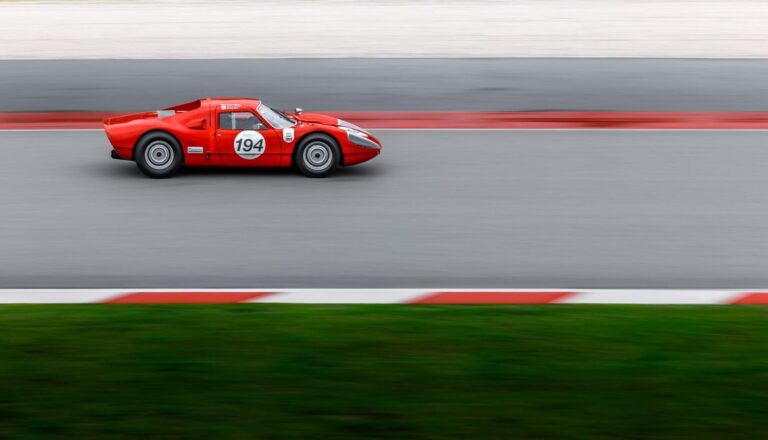
The D-Type is a different animal entirely. Where the XK cars were road cars you could race, the D-Type was a race car, full stop. Jaguar built it in 1954 specifically to win the 24 Hours of Le Mans, and it spent the next few years doing exactly that — the kind of competition pedigree that puts it on any shortlist of Britain’s greatest classic cars.
The engineering was a leap. The D-Type used a monocoque center section — a stressed-skin structure borrowed from aircraft design — instead of a conventional chassis, with a tubular subframe up front carrying the engine. Malcolm Sayer, who’d worked in aviation, shaped the body using actual aerodynamic math, which is why it has that distinctive tail fin behind the driver. The same 3.4-liter XK six was tuned with dry-sump lubrication and triple Weber carburetors to make well over 250 hp.
At the 1954 Le Mans, the D-Type finished second by a hair after a fuel-system issue, then came back to win the race outright in 1955, 1956, and 1957. Only around 75 D-Types were built in total, including the customer cars and the road-going XKSS conversions.
There’s no casual “current value range” here. D-Types trade privately and at top-tier auctions for several million dollars, and the works racing cars with period competition history are among the most valuable Jaguars in existence. According to reporting from The New York Times, a 1955 Le Mans-winning D-Type sold for over $21 million at auction. If you’re shopping for one, you already have people who do this for you.
1954 Jaguar Mark VII: The Quick Saloon {#mark-vii}
People forget the Mark VII when they talk 1954 Jaguars, and that’s a mistake. This big, formal four-door saloon shared its engine with the sports cars and was genuinely fast for a luxury sedan of its day — quick enough that a Mark VII won the Monte Carlo Rally in 1956. It also held its own against the most popular cars of 1954, few of which could match its blend of pace and presence.
The Mark VII used the same 3.4-liter DOHC straight-six as the XK120, wrapped in a stately body with leather, walnut, and room for a family. In September 1954 Jaguar introduced the Mark VIIM (“M” for modified), and that’s the version year-shoppers want. The M update brought higher-lift camshafts that pushed output to roughly 190 hp, along with revised lighting, horns mounted behind grilles, and updated bumpers.
That horsepower number is the thing people search for, so to be clear: a standard 1954 Mark VII made around 160 hp; the Mark VIIM from September 1954 onward made around 190 hp. Same engine family as the XK140, similar tune.
This is the affordable way into a 1954 Jaguar with the legendary engine. Good Mark VIIs change hands for roughly $25,000–$45,000, and even excellent examples rarely break $60,000. You get the XK six, real coachbuilt presence, and a car you can actually drive on a tour without losing sleep over the value.
1954 Jaguar Models Compared {#comparison}
| Model | Body Styles | Engine | Power (approx.) | What Changed in 1954 | Value Range |
|---|---|---|---|---|---|
| XK120 | Roadster, DHC, FHC | 3.4L DOHC six | 160–180 hp | Final year of production | $90K–$150K+ |
| XK140 | Roadster, DHC, FHC | 3.4L DOHC six | 190 hp (SE) | New model, rack-and-pinion, more cabin room | $80K–$130K |
| D-Type | Competition roadster | 3.4L dry-sump six | 250+ hp | New for 1954, raced at Le Mans | Multi-million |
| Mark VII | 4-door saloon | 3.4L DOHC six | 160 hp → 190 hp (M) | Mark VIIM upgrade in Sept 1954 | $25K–$45K |
A Short Buyer’s Note {#buyers-note}
A few things that separate a good 1954 Jaguar purchase from an expensive lesson.
Matching numbers is everything. On the XK cars especially, an original engine — confirmed by a Heritage Trust certificate — can be worth tens of thousands over an otherwise identical car with a replacement block. Listings that note “matching numbers” mean it; listings that go quiet on the subject usually have a reason.
Know which XK you’re looking at. Because the XK120 and XK140 overlap in 1954, read the spec sheet, not just the headline. Rack-and-pinion steering and the chrome bonnet strip mean XK140. The earlier recirculating-ball steering means XK120.
Bodywork over mechanicals. The XK engine is robust and rebuildable; specialists know it cold. Rust in the ash frame, sills, and floors is the expensive problem, and it hides. Budget a proper inspection before you wire money.
Provenance pays. Period competition history, a documented ownership chain, or an original build certificate adds real money — and protects you on resale.
The 1954 lineup gives you a genuine spread: a museum-grade racer, two collectible sports cars at the heart of the brand’s reputation, and a fast, usable saloon that lets you own that famous engine without remortgaging the house. Pick the one that matches how you actually plan to use it, and the year takes care of itself.

Marco Delantero
More from Marco DelanteroHow we reviewed this article
This article was researched against manufacturer records and editorially reviewed before publishing. We accept no payment for coverage.