Nineteen-forty was the last full model year before American factories switched from building cars to building tanks. Enthusiast sites love to fold it into a fuzzy “1940s cars” roundup, right next to jeeps and post-war Fords. That misses the point. The 1940 model year is its own moment — the year the fully automatic transmission arrived, the year sealed-beam headlamps became law, the year Lincoln quietly built the car that would define American elegance for two decades.
This is the exact-year guide: the cars that actually rolled out for 1940, what they cost when new, the one thing each did that nobody else did, and roughly what a good example runs today.
Table of Contents
- 1940 in one paragraph
- The marquee models
- Oldsmobile Series 60/70 (Hydra-Matic debut)
- Lincoln-Zephyr Continental
- Cadillac Series 62
- Packard One-Twenty and One-Eighty
- Ford V-8 Deluxe
- Buick Super and Special
- Chevrolet Master Deluxe
- LaSalle Series 50 (the last one)
- 1940 industry milestones
- 1940 price and spec comparison
- Buying a 1940 car today
1940 in one paragraph
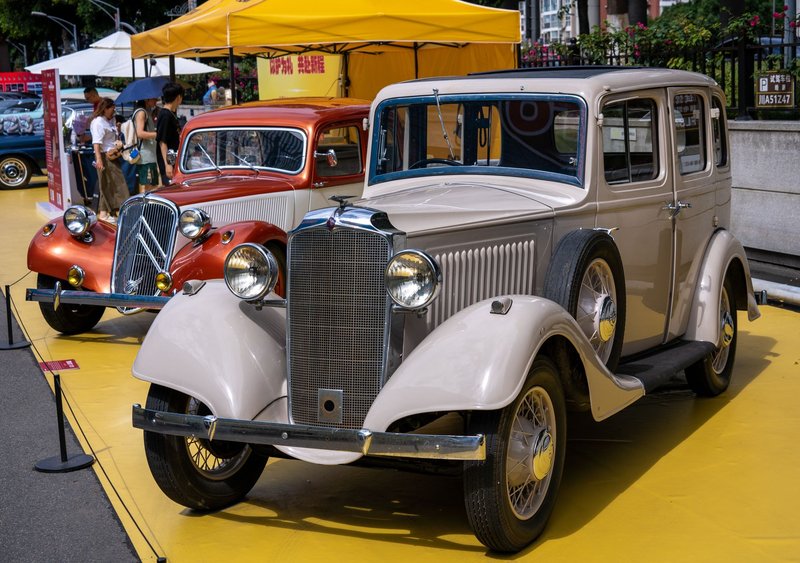
American plants turned out roughly 4.7 million vehicles in 1940, and the industry was flush — the Depression was fading, and buyers wanted the streamlined, teardrop-fendered styling that Detroit had been sharpening all decade. Running boards were on their way out. Headlights were sinking into the fenders. Chevrolet was about to cross a million units in a single year. Then Europe went to war, Roosevelt asked Detroit to build airplanes and tanks, and by early 1942 civilian production stopped cold — for the next few years the cars people actually drove were whatever they already owned. That’s why 1940 matters: it’s peak pre-war engineering, styled and equipped without wartime compromise.
The marquee models
Oldsmobile Series 60/70 — the first fully automatic transmission
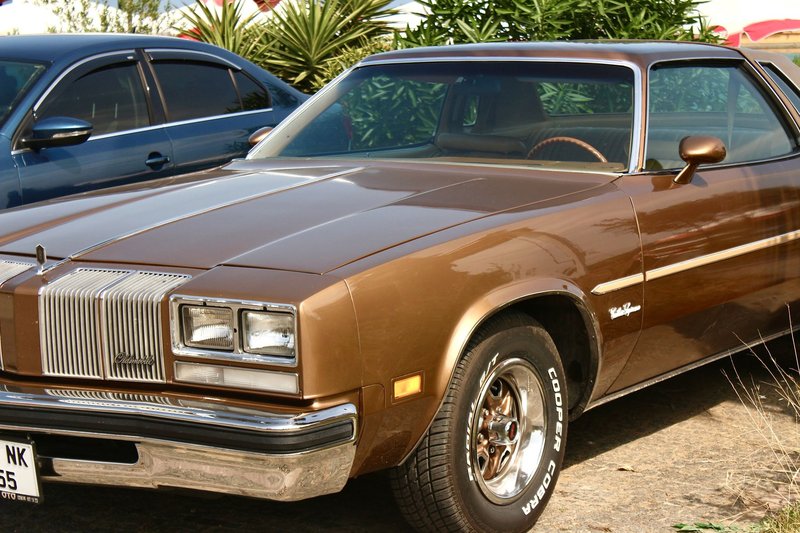
This is the big one. For 1940, Oldsmobile offered the Hydra-Matic Drive as a $57 option, and it was the first mass-produced, fully automatic transmission with no clutch pedal at all. Four forward speeds, a fluid coupling, and a gearshift you set once and forgot. Earlier “self-shifting” gimmicks still made you work a clutch; the Hydra-Matic genuinely didn’t. It’s the direct ancestor of every automatic you’ve ever driven, and Cadillac adopted it the very next year. A 1940 Olds with the box is a landmark car, not just a pretty one.
Original price: ~$900 with Hydra-Matic. Today: $18,000–$30,000 for a clean sedan.
Lincoln-Zephyr Continental — America’s first personal luxury car
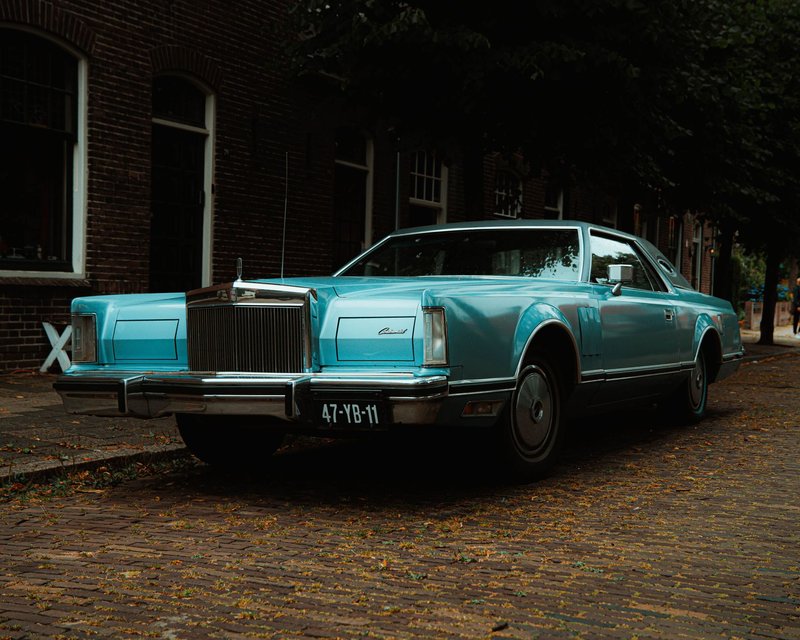
Edsel Ford had a one-off convertible built for his 1939 Florida vacation, based on the Lincoln-Zephyr, with a long hood, a stubby trunk, and that exposed spare tire standing up at the back. So many people asked where they could buy one that Lincoln put it into limited production for 1940. The Continental invented a category — the personal luxury coupe — and its proportions were so right that the Museum of Modern Art later displayed one as a work of design. It was also only the opening act of a dramatic ten years for the brand; the full 1940s Lincoln story runs from this coachbuilt Zephyr to the slab-sided Cosmopolitan at the decade’s close. Roughly 400 were built for that first year. It’s the most collectible mainstream American car of 1940, full stop.
Original price: ~$2,840. Today: $40,000–$90,000+ depending on body and condition.
Cadillac Series 62 — the shape of things to come
The Series 62 arrived for 1940 wearing GM’s new “torpedo” C-body: smooth, slab-sided, with the fenders flowing into the doors and almost no running board left. It looked a decade ahead of the boxy luxury cars it replaced. Under the hood sat Cadillac’s 346-cubic-inch L-head V-8, good for 135 horsepower and effortless in a way most 1940 cars weren’t. This was the year Cadillac dropped its own V-16 after the model year, betting everything on the smooth V-8 — a bet that paid off for decades.
Original price: ~$1,745. Today: $30,000–$55,000.
Packard One-Twenty and One-Eighty — factory air conditioning
Packard beat everyone to a genuinely modern luxury: the 1940 One-Eighty could be ordered with factory air conditioning, the first American car offered with it. The system was enormous — the evaporator ate half the trunk — and it cost a fortune, so almost nobody bought it. But it existed, and it worked, and it was a Packard. Below the senior 180 sat the One-Twenty, the volume car that had saved the company in the Depression by bringing Packard build quality to a mid-price straight-eight. In 1940, Packard still outranked Cadillac in a lot of buyers’ minds.
Original price: ~$1,100 (One-Twenty) to ~$2,200+ (One-Eighty). Today: $20,000–$45,000; more for a 180 with rare options.
Ford V-8 Deluxe — the everyman’s flathead
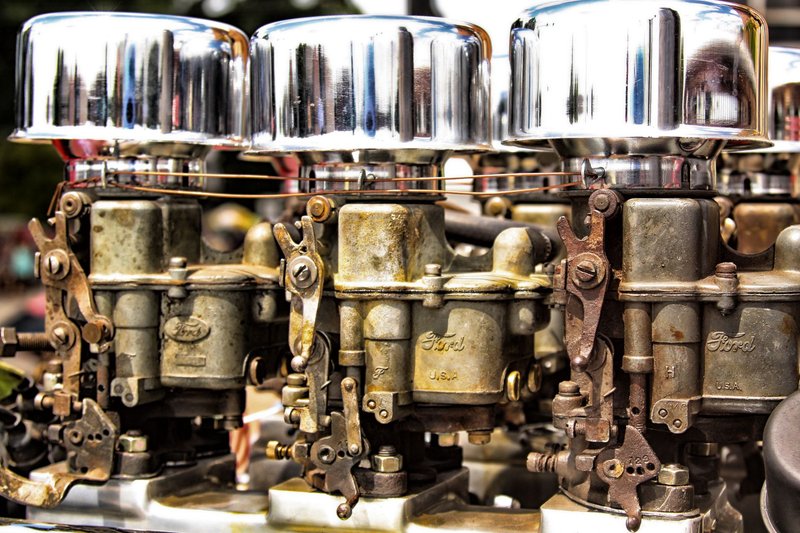
If the Continental was the halo, the Ford Deluxe was the volume. For around $650 you got Ford’s famous flathead V-8 — 221 cubic inches, 85 horsepower — in a body that, for 1940, is widely considered the best-looking of the pre-war Fords. Sealed-beam headlamps, a new dashboard, and that hopped-up little V-8 made it the default choice for people who wanted eight cylinders on a working budget. Hot rodders have been chopping and channeling 1940 Fords ever since; a bone-stock one is getting rare precisely because so many got modified.
Original price: ~$650–$700. Today: $25,000–$45,000 for a nice stocker; customs vary wildly.
Buick Super and Special — the volume GM straight-eight
Buick had a strong 1940, introducing the Super to slot between the entry Special and the senior Roadmaster. All of them ran Buick’s smooth overhead-valve straight-eight, a genuine point of difference when most rivals still used flatheads. The Special was the bargain — a real Buick for Chevrolet-adjacent money — and the styling shared that year’s flowing GM lines. Buicks of 1940 are underrated today: mechanically robust, comfortable, and cheaper to get into than the equivalent Cadillac.
Original price: ~$900 (Special) to ~$1,200 (Super). Today: $15,000–$28,000.
Chevrolet Master Deluxe — a million-car year
Chevrolet built its cars around the 216-cubic-inch “Stovebolt” six and the pitch of value: more car for less money than Ford, if you didn’t need a V-8. The Master Deluxe got knee-action independent front suspension and the clean 1940 face, and Chevy sold so many that it cemented its spot as America’s best-selling brand. This is the sensible-shoes 1940 car — no single headline feature, just a well-sorted six that ran forever.
Original price: ~$680. Today: $14,000–$24,000.
LaSalle Series 50 — the last one ever
Nineteen-forty was the final year for LaSalle, Cadillac’s junior companion brand launched in 1927 to bridge the gap between Buick and Cadillac. The 1940 cars were arguably the best-looking LaSalles ever built, with a slim grille and elegant proportions — which makes the timing sad. GM killed the marque and let the new Cadillac Series 61 fill the slot instead — and LaSalle was far from the last American nameplate to be quietly retired, as Nash’s own disappearance in 1957 would later prove. A 1940 LaSalle is a swan song, and collectors treat it that way.
Original price: ~$1,240. Today: $22,000–$40,000.
1940 industry milestones worth knowing
A few developments make 1940 a genuine hinge year rather than just another pre-war model run:
- Sealed-beam headlamps became mandatory. From 1940, U.S. cars were required to use standardized sealed-beam headlights, a big jump in nighttime safety and the reason 1940 cars all share that same round twin-lamp look. The U.S. Department of Transportation traces a lot of modern lighting standards back to this era of regulation.
- The automatic transmission went mainstream. Oldsmobile’s Hydra-Matic proved a clutchless car could sell, and it changed how America drove within a decade.
- Factory air conditioning appeared. Packard’s option was impractical and rare, but it was real — the first step toward something now universal.
- Running boards started disappearing. GM’s torpedo bodies tucked the fenders into the doors, and the running board began its slow exit from car design.
- Volume hit a pre-war peak. With roughly 4.7 million vehicles built, 1940 represents the high-water mark before the industry retooled for the war effort — a shift the Library of Congress documents as one of the largest industrial conversions in American history.
1940 car prices and specs at a glance
Approximate new prices, engines, and current values. Condition, body style, and options swing collector values hard, so treat the “today” column as a healthy-driver ballpark, not an appraisal.
| Model | Engine | Original price (approx.) | Standout fact | Value today (approx.) |
|---|---|---|---|---|
| Oldsmobile Series 60/70 | 230–257 cu in six/eight | $900 w/ Hydra-Matic | First fully automatic transmission | $18k–$30k |
| Lincoln-Zephyr Continental | 292 cu in V-12 | $2,840 | Invented the personal luxury coupe (~400 built) | $40k–$90k+ |
| Cadillac Series 62 | 346 cu in V-8 | $1,745 | New “torpedo” body, 135 hp | $30k–$55k |
| Packard One-Eighty | 356 cu in straight-8 | $2,200+ | First factory air conditioning | $25k–$45k |
| Packard One-Twenty | 282 cu in straight-8 | $1,100 | Mid-price Packard quality | $20k–$35k |
| Ford V-8 Deluxe | 221 cu in flathead V-8 | $650 | 85 hp V-8 on a budget; hot-rod favorite | $25k–$45k |
| Buick Super | 248 cu in straight-8 | $1,200 | New model; smooth OHV eight | $15k–$28k |
| Chevrolet Master Deluxe | 216 cu in six | $680 | Million-car sales year | $14k–$24k |
| LaSalle Series 50 | 322 cu in V-8 | $1,240 | Final year for the marque | $22k–$40k |
Buying a 1940 car today
If you’re shopping one of these, a few things matter more than the badge.
Parts availability tracks popularity. Ford flathead and Chevrolet six parts are everywhere — reproduction, NOS, and swap-meet. Packard V-12s and Lincoln V-12s are a different world: fewer specialists, pricier rebuilds, and you’ll wait for parts. Buy the running gear you can actually service.
The flathead V-12 is the enthusiast’s cautionary tale. Lincoln’s V-12 in the Continental is glorious and finicky — it runs hot and hates neglect. A Continental with documented engine work is worth the premium over a cheaper “runs and drives” example that’s overdue for a rebuild.
Originality versus restomod. So many 1940 Fords became hot rods that an unmolested stock car can be the harder find. Decide which camp you’re in before you buy — a tastefully modernized 1940 Ford with disc brakes and an overdrive is a lovely tour car, but it’s not a concours entrant.
Hydra-Matic is a feature, not a footnote. A 1940 Oldsmobile with a working original Hydra-Matic is a piece of engineering history, and it’s rarer than the three-on-the-tree version. If historical significance is your thing, that’s the one to chase.
The through-line across every car here is the same: 1940 was the year the pieces of the modern automobile — automatic shifting, standardized lighting, air conditioning, envelope bodywork — all showed up at once, right before the factories went quiet. That’s what makes a good 1940 car more than a pretty antique. It’s the last, best draft of the pre-war American car.

Marco Delantero
More from Marco DelanteroHow we reviewed this article
This article was researched against manufacturer records and editorially reviewed before publishing. We accept no payment for coverage. Some guides contain affiliate links; see our affiliate disclosure.