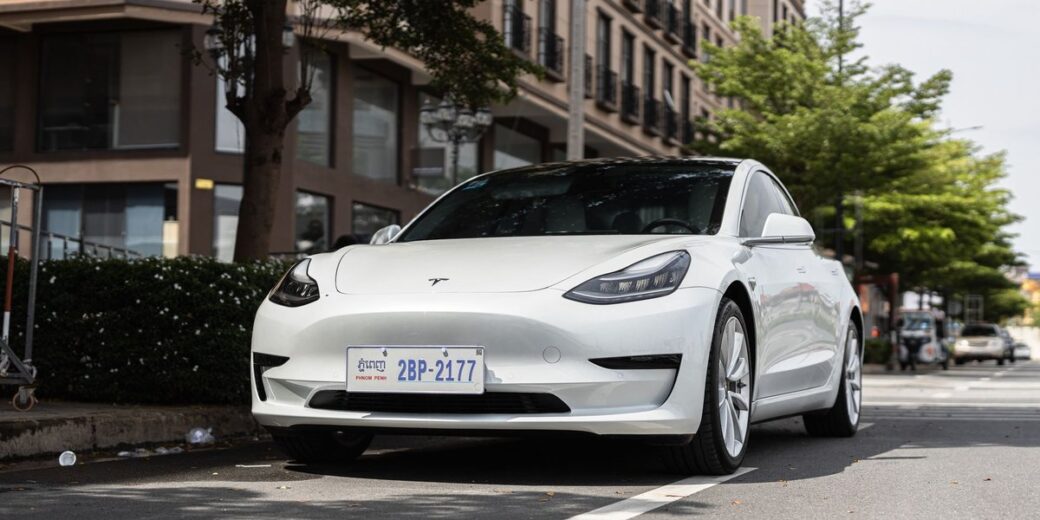
Ask three sources which Tesla is the most reliable and you’ll get three different answers. J.D. Power puts the Model 3 first and the Model Y last. An NHTSA-based ranking puts the 2022 Model X on top. Consumer Reports calls the Model Y the most reliable new EV on sale, then ranks used 2016-2021 Teslas dead last among brands. They aren’t lying. They’re measuring different things.
This guide lines the datasets up, explains where they clash, and gives you a model-and-year answer you can shop with.
Table of Contents
- TLDR
- Why the rankings disagree
- The most reliable Tesla by model
- Tesla model years to avoid
- New versus used
- The Cybertruck is its own story
- Used Tesla checklist
- Tesla repair costs: what to expect
TLDR
- Best pick overall: a Model 3 from 2022 onward.
- Best new car: the Model Y. The 2024 and 2025 model years are the ones to buy.
- Avoid: 2018 and 2021 Model 3, 2018 and 2023 Model X, 2021 Model S.
- Used buyers: pay for a pre-purchase inspection, check panel gaps, suspension and screen faults, and confirm how much of the 8-year battery and drive unit warranty is left.
- Cybertruck: too new and too recall-prone to call reliable.
Why the rankings disagree
Each source asks a different question.
Consumer Reports surveys owners about problems in the past 12 months. Its reliability research covers everything owners notice: squeaks, trim, software glitches, door handles. That’s why one report can praise a new Model Y and slam a five-year-old Model 3 at the same time. New cars have had fewer months to go wrong.
J.D. Power measures problems per 100 vehicles in a fixed window after purchase. In its comparison, the Model 3 scores 74 out of 100 and the Model Y 69. Both are middling to decent, and the five-point gap is small.
NHTSA complaints are a different animal. They’re filed by owners, mostly about safety issues, and they pile up with age. An older model year will always have more of them than a new one. Sites that normalize the NHTSA data across model years, like the Auto Reliability Index, end up ranking the 2022 Model X first and the 2025 Model Y second.
The pattern is the useful part. Newer builds from 2022 on keep landing near the top, and the early years of each model keep landing near the bottom.
The most reliable Tesla by model
| Model | Best years | What the data says | Verdict |
|---|---|---|---|
| Model 3 | 2022 onward | J.D. Power 74/100, the top Tesla in its ranking. Early 2018 and 2021 cars draw more complaints. | Safest used buy |
| Model Y | 2024-2025 | Consumer Reports’ most reliable new EV. J.D. Power gives it 69/100, last of the Teslas. The 2025 ranks second in the Auto Reliability Index. | Best new buy |
| Model X | 2022 | Ranks first in the Auto Reliability Index, but 2018 and 2023 are flagged. Thin data overall. | Good if you pick the right year |
| Model S | Later cars | Covered thinly by every source. 2021 is a year to skip. | Buy on condition, not on reputation |
| Cybertruck | None yet | Barely covered, with multiple recalls since launch. | Wait |
Model 3
The Model 3 is the safest bet because it’s the simplest Tesla. It has fewer moving parts than the SUVs: no falcon-wing doors, no air suspension, no complex tailgate. Fewer features means fewer ways to fail. The 2022 and later cars also benefit from several years of factory fixes after the rocky 2018 ramp-up.
Model Y
The Model Y shares most of its hardware with the Model 3, which is why it tracks close behind in nearly every ranking. Its J.D. Power score is the lowest of the group, yet Consumer Reports still names it the most reliable new EV. Both can be true: the score gap is small, and the owner-survey view is built on actual problems reported. For a new car with a warranty behind it, the 2024-2025 Model Y is the strongest recommendation here.
Model S and Model X
These two are the data-poor corner of the lineup. Fewer cars sold means smaller samples, so a single bad batch swings the numbers. The 2022 Model X topping one ranking is encouraging, but the same dataset flags 2018 and 2023. Treat the SUV as a year-by-year decision, not a model-wide one.
Tesla model years to avoid
Reliability in a Tesla depends on the build date as much as the badge. These years show up repeatedly as problem cars:
- 2018 Model 3. The first full-volume year. Production ramped fast, and early cars are where panel gaps, paint flaws and loose interior trim cluster.
- 2021 Model 3. Flagged by owner and complaint data despite being a mature design.
- 2018 Model X. A year with more reported problems than the Model X years around it.
- 2023 Model X. Flagged even though the 2022 sits at the top of the same ranking, which tells you how much the year matters.
- 2021 Model S. The refresh year, with a reworked interior and new hardware. First-year changes are where bugs live.
Skipping these doesn’t mean the cars are junk. It means a clean one needs a closer look, and a lower price to match.
New versus used
Buy new and Tesla’s warranty covers most of the risk. The basic warranty runs four years or 50,000 miles, and the battery and drive unit carry an 8-year warranty with a mileage cap that varies by model. The Model 3 and Model Y have caps around 100,000 to 120,000 miles depending on trim. The Model S and Model X are higher, around 150,000.
Buy used and the picture changes. Consumer Reports’ survey ranked used 2016-2021 Teslas last among brands, with a score of 31. That’s a broad group, and it includes the early-year cars above. A 2022 or newer Model 3 sits outside that window, which is a big part of why it’s the safer used sedan pick.
The rule that holds: the newer the car, the closer it gets to the model-year sweet spot, and the more of the powertrain warranty you inherit.
The Cybertruck is its own story
The Cybertruck is the outlier, even among electric-only carmakers. It uses a stainless steel exoskeleton, a steer-by-wire system and a 48-volt architecture, none of which any other Tesla has proven at scale. Almost no reliability dataset has meaningful sample sizes for it yet, and it has been recalled several times since deliveries began, including an accelerator pedal pad issue and a loose exterior trim panel. You can check any model’s open recalls by VIN on the NHTSA recall lookup.
If reliability is your priority, skip it for now. Let a few more model years prove out first.
Used Tesla checklist
A used Tesla can be an excellent car or an expensive lesson, and the checklist is where you find out which. Before you hand over money:
- Warranty status. Confirm how many years and miles remain on the 8-year battery and drive unit warranty. A car at 85,000 miles on a 100,000-mile cap is a different purchase from one at 30,000.
- Panel gaps and paint. Walk around the car in daylight. Uneven gaps at the hood, trunk and doors, or mismatched paint, point to poor assembly or past repairs.
- Suspension. Listen for clunks over bumps. Worn control arms and bushings are a known weak spot, particularly on higher-mileage cars. On Model S and Model X, check the air suspension raises and lowers evenly.
- Screen and cameras. Test the touchscreen for dead zones, ghost touches and lag. Cycle through the backup camera and Autopilot camera views, and check that no camera shows a fault.
- Battery health. Look at the displayed range at 100 percent charge versus the original rating. Ask for a battery report if the seller can produce one.
- Recalls and service history. Run the VIN through NHTSA and confirm that open recalls were completed.
- Pre-purchase inspection. Pay a shop that works on Teslas. The cost is small against what a missed drive unit fault would run.
Tesla repair costs: what to expect
Routine ownership is cheap. There’s no oil, no timing belt and no exhaust, and brake pads last a long time thanks to regenerative braking. Tires wear faster than on a comparable gas car because of the weight and instant torque.
The real exposure is out-of-warranty parts. Suspension arms are a few hundred dollars each plus labor. A touchscreen or control unit replacement is typically in the four-figure range. A drive unit or battery pack replacement outside warranty can run into five figures, which is why the warranty check above matters more than any other line on the list. Body repairs also tend to cost more than on a conventional car, since parts availability and certified shops are still limited in many areas.
The most reliable Tesla cars are the ones with the fewest features to fail and the most warranty left. Today that points to a 2022 or newer Model 3, with the 2024-2025 Model Y as the pick if you’re buying new.

Marco Delantero
More from Marco DelanteroHow we reviewed this article
This article was researched against manufacturer records and editorially reviewed before publishing. We accept no payment for coverage. Some guides contain affiliate links; see our affiliate disclosure.