Most electric car brands fall into three camps: companies that only build EVs (Tesla, Rivian, Lucid, Polestar), legacy automakers that bolted an electric line onto a century of combustion know-how (Ford, Chevrolet, Hyundai, Kia, BMW, Volkswagen, Nissan), and Chinese challengers that now sell more EVs than almost anyone (BYD, Geely, Xpeng). Which camp suits you depends on whether you value software, dealer support, or the lowest price.
This guide covers 14 brands, one flagship model each, and a drawback for every one. Selection criteria are simple: the brand sells a real, current EV lineup, it has meaningful volume or influence, and we can point to a specific car you could actually shop for.
Prices and ranges below are approximate US figures. Incentives, trims and model years change fast, so check the maker’s site before you commit. This list was last reviewed in October 2026.
Contents
- TLDR: which brand for whom
- Comparison table
- Pure-EV brands
- Legacy automakers with EV lines
- Chinese electric car brands
- How to choose an EV brand
- FAQ
TLDR: which brand for whom
- Best all-rounder: Tesla. Charging network, efficiency and software are still the benchmark.
- Best value from a legacy brand: Hyundai and Kia (Ioniq 5, EV6), or Chevrolet if you want something near $30,000.
- Best for adventure: Rivian.
- Longest range: Lucid.
- Best for design and driving feel: Polestar and BMW.
- Cheapest EVs on the planet: BYD, though you can’t buy one in the US.
- Easiest switch from a gas car: Ford or Nissan, depending on whether you want an SUV or a hatchback.
Comparison table
| Brand | Flagship EV | Starting price (approx.) | Range (best trim, approx.) | Charging port |
|---|---|---|---|---|
| Tesla | Model 3 / Model Y | $37,000+ | 350+ mi | NACS |
| Rivian | R1S / R1T | $75,000+ | up to ~400 mi | NACS via adapter |
| Lucid | Air | $70,000+ | 500+ mi | CCS, NACS via adapter |
| Polestar | Polestar 4 | $55,000+ | ~300 mi | CCS, NACS via adapter |
| Ford | Mustang Mach-E | $37,000+ | ~320 mi | CCS, NACS via adapter |
| Chevrolet | Equinox EV | $35,000+ | ~319 mi | CCS, NACS via adapter |
| Hyundai | Ioniq 5 | $35,000+ | ~318 mi | NACS |
| Kia | EV6 / EV9 | $42,000+ | ~320 mi (EV6) | NACS |
| BMW | i4 | $53,000+ | ~300 mi | CCS, NACS via adapter |
| Volkswagen | ID.4 | $40,000+ | ~290 mi | CCS, NACS via adapter |
| Nissan | Leaf | ~$30,000 | ~300 mi | NACS |
| BYD | Seal / Dolphin | Not sold in US | ~350 mi (WLTP, Seal) | CCS2 (Europe) |
| Geely (Zeekr) | Zeekr 001 | Not sold in US | 300-400 mi (WLTP) | CCS2 (Europe) |
| Xpeng | G6 | Not sold in US | ~350 mi (WLTP) | CCS2 (Europe) |
Charging ports are moving from CCS to NACS (the Tesla-style plug) model year by model year. Confirm the port on the exact car, because an adapter works but adds a step.
Pure-EV brands
These companies have no combustion legacy to protect. That shows up in clean-sheet platforms, strong software and, sometimes, thin service networks.
1. Tesla
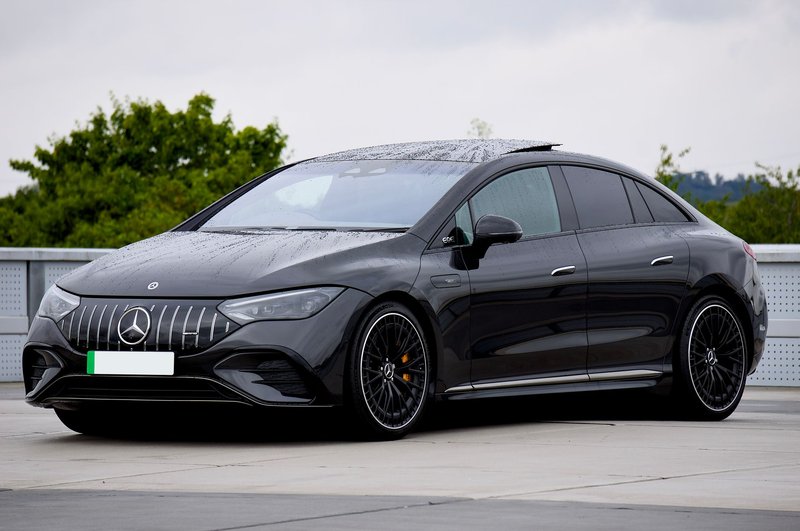
Tesla builds the Model 3 sedan and Model Y crossover, which together account for most of its volume, plus the Model S, Model X and Cybertruck at the top end. The Supercharger network is the real product: it is large, reliable and, as of now, open to most major brands through the NACS standard.
Best for: drivers who want the most frictionless road-trip experience and don’t mind a minimalist cabin with almost everything on one screen.
Drawback: build quality and panel fit still vary from car to car, and service appointments can be slow in some regions.
2. Rivian
Rivian’s R1T pickup and R1S SUV are the EVs for people who actually leave pavement. They have air suspension, real ground clearance, and clever touches like a built-in gear tunnel in the truck. The smaller R2, aimed at roughly $45,000, is the model that should widen Rivian’s audience.
Best for: outdoorsy buyers with a budget north of $70,000.
Drawback: price. The R1 pair sits well above what most shoppers will spend, and repair capacity is still growing.
3. Lucid
Lucid’s Air is the efficiency flex of the industry. Top versions are rated at over 500 miles on a charge, which no other production sedan matches, and the cabin feels more like a lounge than a car. The Gravity SUV adds a three-row option.
Best for: luxury buyers who want maximum range and are comparing against the Mercedes S-Class or Tesla Model S.
Drawback: limited showrooms and service points, and a price tag that starts around $70,000.
4. Polestar
Polestar is Volvo’s performance spin-off, owned by Geely, and it sells the Polestar 3 SUV and the Polestar 4 crossover in the US. The design is restrained and Scandinavian, and the steering and ride feel more engineered than most rivals at the price.
Best for: buyers who want a premium EV that looks different from a Tesla.
Drawback: a small sales and service footprint, and range that trails Tesla and Hyundai for the money.
Legacy automakers with EV lines
Legacy brands bring dealers, parts supply and years of reliability data. Several of them have also scaled back or reshuffled EV plans, so check that the specific model you want is still in production.
5. Ford
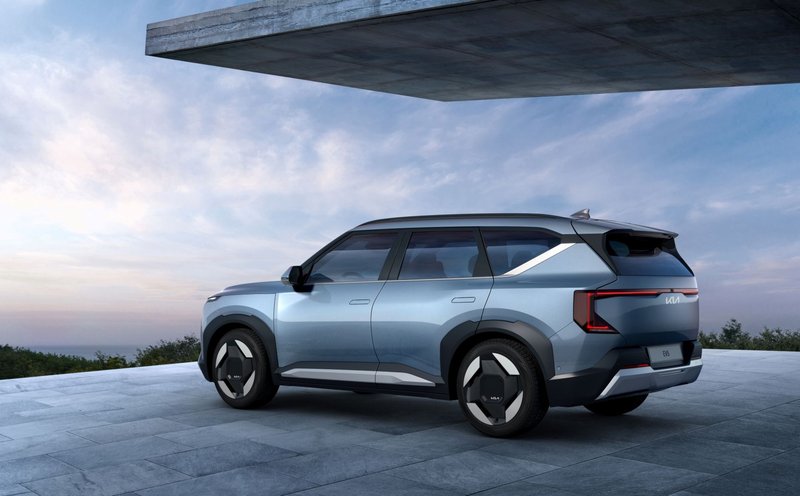
The Mustang Mach-E is Ford’s EV anchor: a crossover with real driving fun and an easy cabin. The F-150 Lightning, the electric truck that made headlines, has been discontinued as Ford pivots toward hybrids and a cheaper midsize EV platform planned for later in the decade.
Best for: buyers who want a familiar brand and a dealer down the street.
Drawback: Ford’s EV strategy has swung hard in the past two years, which makes long-term model support harder to predict.
6. Chevrolet
Chevrolet, part of GM, covers the widest price range of any American brand. The Equinox EV delivers about 319 miles of rated range starting near $35,000. The Blazer EV and Silverado EV sit higher, and a new Bolt returned at around $29,000 with a smaller battery and about 255 miles of range.
Best for: families who want an affordable SUV with plenty of space.
Drawback: early GM EVs had software and charging-speed complaints, and the Bolt’s name carries its own recall baggage from the first generation.
7. Hyundai
The Ioniq 5 is the benchmark for what a mainstream EV should be. It uses an 800-volt architecture that can charge from 10 to 80 percent in roughly 18 minutes on a fast enough charger, the interior is flat-floored and spacious, and it uses the NACS port. The Ioniq 6 sedan is more efficient; the Ioniq 9 adds a three-row SUV.
Best for: most first-time EV buyers.
Drawback: Hyundai’s discounts and lease offers swing a lot, and the most appealing trims get expensive quickly.
8. Kia
Kia shares Hyundai’s platform and often undercuts it on equipment per dollar. The EV6 is the sporty one, the EV9 is a large three-row SUV with real third-row space, and smaller models like the EV3 are sold in other markets.
Best for: families who want a three-row EV without a luxury badge.
Drawback: the EV9 starts well above $50,000, and the cheaper small Kias aren’t available everywhere.
9. BMW
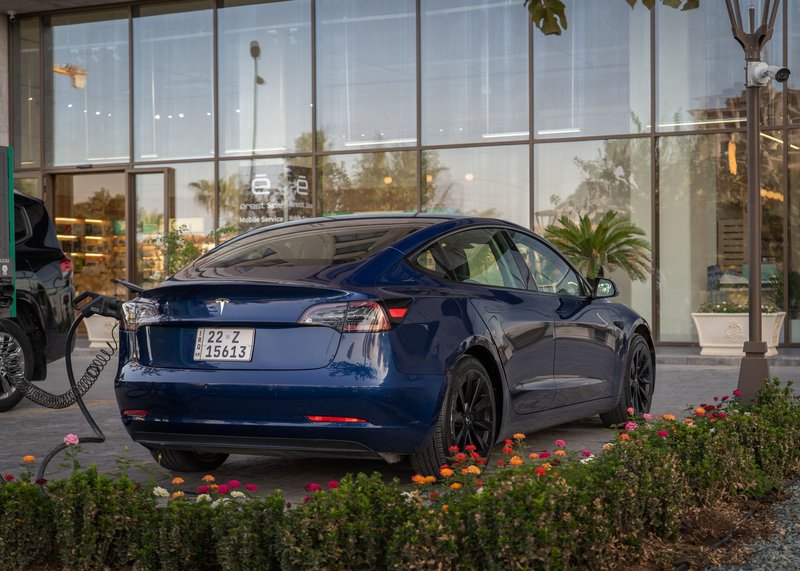
BMW sells the i4 sedan, i5, i7 and the iX SUV, all with the driving feel the brand is known for. The next generation, called Neue Klasse and starting with the iX3, moves to a new 800-volt architecture and is meant to be a reset for BMW’s EV lineup.
Best for: drivers who care about handling and are moving from a 3 Series or 5 Series.
Drawback: options push prices up fast, and current cars are not the most efficient in their class.
10. Volkswagen
Volkswagen’s ID.4 is the practical option: roomy, comfortable and predictable. The retro ID. Buzz van gets the most attention and costs about $60,000. The VW Group also owns Audi and Porsche, which use the same underlying EV technology at higher prices.
Best for: buyers who want a quiet, no-surprises family crossover.
Drawback: the infotainment software has been the most common complaint, and the ID.4 trails Hyundai and Tesla on charging speed.
11. Nissan
The Leaf was the first mass-market EV, and the latest generation is a sleeker crossover-style hatchback starting around $30,000 with roughly 300 miles of range and a NACS port. Nissan’s other EV, the Ariya, is a smaller-volume SUV.
Best for: commuters who want a cheap, simple first EV.
Drawback: the lineup is thin, and the Leaf’s liquid-cooling-free battery history means you should look closely at older used examples.
Chinese electric car brands
Chinese brands set the pace on price and battery technology. In the US they are effectively blocked by tariffs and rules on connected-vehicle software, so you’ll mainly meet them in Europe, Asia, Latin America and Australia. Range figures here use the more realistic WLTP test cycle, not the more generous Chinese CLTC.
12. BYD
BYD started as a battery company and is now a vertically integrated automaker. It has overtaken Tesla in global battery-electric sales. Its range runs from the Seagull, which sells for under $12,000 in China, to the Seal sedan, which competes with the Model 3 in Europe and Australia.
Best for: price-focused buyers outside the US.
Drawback: it’s not available in the US, and European tariffs have raised prices there.
13. Geely
Geely is the quiet giant. It owns Volvo, Polestar and Lotus, and it builds its own premium EV brand called Zeekr, whose 001 shooting-brake is the model most people know. Geely’s reach through this ownership is hard to match.
Best for: buyers outside the US who want a premium EV at a lower price than a European equivalent.
Drawback: the group’s brand structure is confusing, and Zeekr is only starting to build a service network in Europe.
14. Xpeng
Xpeng markets itself as a tech company first. Its G6 SUV and P7+ sedan lead with driver-assist software, and a partnership with Volkswagen supplies tech to VW’s China-market EVs. The Mona line sells at very low prices at home.
Best for: tech-focused buyers in Europe and Asia.
Drawback: it’s a smaller company with a less proven record, and its driver-assist features vary by market because of local rules.
How to choose an EV brand
Start with where you can charge. The US Department of Energy’s station locator shows public chargers near you, and the real answer to “which brand” is often “whichever one works with the chargers on my route and at my home.”
Then work through five questions:
- What’s your budget after incentives? The federal EV tax credit for new vehicles ended for purchases after September 30, 2025, according to the IRS, but state rebates and lease deals still exist.
- Do you have home charging? If you do, range matters less. If you don’t, charging speed matters more, which favors Hyundai, Kia and Tesla.
- Can you get it serviced? Check how far the nearest service center is before you buy a Rivian, Lucid or Polestar.
- Which charging port does it have? NACS access gives you Tesla’s network. CCS-only cars need an adapter.
- Are you comfortable with the software? Tesla leans on touchscreens, VW is improving, and Hyundai keeps physical buttons.
The market is also shifting. The International Energy Agency reports that electric cars made up about a quarter of new car sales worldwide in 2025, with China leading by a wide margin. That scale is why Chinese makers can push prices down.
FAQ
What are the best electric car brands overall?
Tesla leads on charging network and efficiency. Hyundai and Kia lead on value among legacy brands. Lucid leads on range. The best one for you depends on budget, charging access and whether you need a dealer nearby.
Which electric car brands are American?
Tesla, Rivian, Lucid, Ford and Chevrolet (GM) are the main American electric car brands. Several foreign brands also build EVs in US factories, including Hyundai, Kia, Volkswagen, BMW and Nissan.
Which Chinese electric car brands can I buy in the US?
Almost none directly. Chinese-built EVs face steep tariffs and connected-car software restrictions. Polestar and Volvo are Chinese-owned and sell in the US, but they’re Swedish brands, and some models are built in China.
What are the main luxury electric car brands?
Lucid, Polestar, BMW, Mercedes-Benz, Audi, Porsche and the higher trims of Tesla and Rivian. Lucid is the most range-focused, and Porsche is the most driver-focused.
Which electric car brands are the most reliable?
Reliability data for EVs is still thin and varies by model year. Brands with long EV experience, such as Tesla, Hyundai, Kia and Nissan, have the most data. Check owner-survey results and recall records for the exact model.

Marco Delantero
More from Marco DelanteroHow we reviewed this article
This article was researched against manufacturer records and editorially reviewed before publishing. We accept no payment for coverage. Some guides contain affiliate links; see our affiliate disclosure.