
Short answer
It depends on the state, and in most states it depends on size. 14 states ban hanging items from the rearview mirror by name, and 7 more (counting Washington, D.C.) ban anything that blocks the driver’s view. In nearly all of them the item has to obstruct your view to break the law. Only Minnesota and South Dakota ban a dangling object of any size. 24 states regulate only signs and material stuck to the glass, and 6 have no rule that covers hanging items at all. Five states (Virginia, Illinois, Maryland, Nebraska and South Dakota) bar police from pulling you over for a hanging item alone.
Air fresheners, fuzzy dice, rosaries, graduation tassels and parking passes all end up on the rearview mirror, and all of them have been the reason for a traffic stop somewhere in the US. The table below covers the windshield obstruction law in all 50 states and D.C., with a link to each statute. The sections after it explain how courts read these laws, which items cause trouble and what to do instead.
How rearview mirror laws work
No federal law covers what a private driver hangs from the mirror. Each state writes its own rule, and they fall into four groups.
- Bans hanging items (14 states). The statute names objects that are “hung”, “suspended” or “dangling” between the driver and the windshield. Pennsylvania and Maryland name the rearview mirror itself. Most of these laws add a qualifier such as “materially obstructs” or “significantly blocks”, so a small item can be legal.
- Bans anything that blocks the view (6 states and D.C.). The statute does not mention hanging items, but it bans any object that obstructs or reduces the driver’s view. California, Michigan and Arizona are in this group, and police there cite mirror-hung items under the general rule.
- Covers only items on the glass (24 states). The statute bans “signs, posters or other nontransparent material” on the windshield. Courts in California and Florida have ruled that an object hanging from the mirror is not “on” the windshield, so these laws are a weak basis for a ticket. Officers in these states still make the stop, and the outcome depends on the judge.
- No specific rule (6 states). Iowa, Massachusetts, Missouri, North Carolina, Tennessee and Hawaii (outside Honolulu) have no statute that reaches a hanging air freshener.
The word that decides most cases is “materially”. A material obstruction blocks enough of the windshield to affect how you see the road. A small cardboard air freshener at the top of the glass usually does not. A cluster of beads, a large tassel or a parking tag at eye level often does. The officer makes that call at the roadside, and a judge reviews it later if you contest the ticket.
Rearview mirror laws by state
Each row summarizes the statute that applies to hanging items or windshield obstructions. The citation links to the law text. Rows marked No stop are states where police cannot pull you over for a hanging item alone.
| State | What the law says |
|---|---|
| Alabama | Glass onlyBans signs, posters and nontransparent material on the windshield or windows that block the view. Nothing on hanging items.Ala. Code § 32-5-215(a) |
| Alaska | Glass onlyA state regulation bars signs and nontransparent material on the windshield that obstruct or impair the view.13 AAC 04.225 |
| Arizona | Bans view blockersBans any object on the windshield or in the car that obstructs or reduces the driver's clear view. Dash cams may sit just behind, above or below the mirror.A.R.S. § 28-959.01(B) |
| Arkansas | Glass onlyBans material attached to the windshield more than 4.5 inches above its bottom edge if it obstructs the view. Class C misdemeanor.Ark. Code § 27-37-304 |
| California | Bans view blockersBans objects on the windshield and anything inside the car that obstructs or reduces the driver's clear view. Courts require the officer to explain how the item blocked the view.Cal. Veh. Code § 26708 |
| Colorado | Bans view blockersThe driver's view through the windshield must be normal and unobstructed. Class A traffic infraction.C.R.S. § 42-4-201(4) |
| Connecticut | Bans hanging itemsBans any ornament, sticker or item hung in the car that significantly blocks the driver's view or distracts the driver. The "significantly" standard took effect October 1, 2025.Conn. Gen. Stat. § 14-99f |
| Delaware | Glass onlyBans signs and nontransparent material on the glass, and bans driving with a disability placard hanging from the mirror. $10 to $28.75 for a first offense.21 Del. C. § 4309 |
| District of Columbia | Bans view blockersBans any object in any position that obstructs a significant part of the driver's view to the front or sides. $75 fine.18 DCMR § 2213.1 |
| Florida | Glass onlyBans signs and nontransparent material that materially obstruct the view. Mirror-hung items are not named. $30 base fine.Fla. Stat. § 316.2004(2)(b) |
| Georgia | Glass onlyBans signs and nontransparent material on the windshield and windows that block the view. Phone and GPS mounts on the windshield are allowed since 2021.O.C.G.A. § 40-8-73(a) |
| Hawaii | No specific ruleNo statewide rule on hanging items. Honolulu County separately bans objects suspended in the windshield area (ROH § 15-19.30).HRS § 291C-124 |
| Idaho | Glass onlyBans signs and nontransparent material on the windshield or windows that obstruct the driver's view.Idaho Code § 49-943(1) |
| Illinois | Bans hanging items No stopBans objects placed or suspended between the driver and the windshield that materially obstruct the view. Since 2024 police cannot stop or search you for this alone.625 ILCS 5/12-503(c-5) |
| Indiana | Glass onlyBans signs, sunscreening and nontransparent material on the windshield or windows that obstruct the view.Ind. Code § 9-19-19-3(b) |
| Iowa | No specific ruleWindshields and windows must permit clear vision. The law does not mention hanging items. $70 scheduled fine.Iowa Code § 321.438(1) |
| Kansas | Glass onlyBans signs and nontransparent material that substantially obstruct, obscure or impair the driver's view.K.S.A. § 8-1741(a) |
| Kentucky | Glass onlyBans signs, sunscreening and coverings in or upon the windshield. No court has settled whether a hanging item counts.KRS § 189.110(2) |
| Louisiana | Glass onlyBans objects placed on or affixed to the windshield or front side windows that obstruct the view. Up to $150 for a first offense.La. R.S. § 32:361.1(B) |
| Maine | Bans hanging itemsBans objects placed or hung in the vehicle that obstruct or interfere with the view through the windshield. Traffic infraction.29-A M.R.S. § 2082(2) |
| Maryland | Bans hanging items No stopBans objects hanging from the rearview mirror that interfere with the driver's clear view. Secondary offense: police need another reason to stop you.Md. Transp. § 21-1104(c)(3) |
| Massachusetts | No specific ruleNo law on hanging items. An appeals court threw out a 2005 stop that was based only on small items on the mirror.M.G.L. c. 90 § 13 |
| Michigan | Bans view blockersBans any object that obstructs the driver's vision. Civil infraction. Michigan courts have upheld stops for dangling air fresheners.MCL § 257.709(1)(c) |
| Minnesota | Bans hanging itemsBans any object suspended between the driver and the windshield, whether or not it blocks the view. GPS units and toll tags near the bottom of the glass are allowed. Petty misdemeanor.Minn. Stat. § 169.71, subd. 1 |
| Mississippi | Glass onlyBans signs, posters and mirror-effect glazing on the windshield and windows. Nothing on hanging items.Miss. Code § 63-7-59(1) |
| Missouri | No specific ruleNo general rule on hanging items, but driving with a disability placard hanging from the mirror is illegal.Mo. Rev. Stat. § 304.079(4) |
| Montana | Glass onlyBans signs and nontransparent material that materially obstruct the view. $10 to $100 for a first conviction.Mont. Code § 61-9-405(2) |
| Nebraska | Bans hanging items No stopBans objects placed or hung in the car that significantly and materially obstruct the view. Secondary offense. $50 for a first offense.Neb. Rev. Stat. § 60-6,256 |
| Nevada | Glass onlyBans signs and nontransparent material on the windshield and windows that obstruct the view. A 6-inch square in the lower corner farthest from the driver is allowed.NRS § 484D.435 |
| New Hampshire | Glass onlyBans signs, stickers and nontransparent material on or next to the glass that obstruct the view, plus loads that block it. $75 fine.RSA § 265:95 |
| New Jersey | Bans view blockersBans stickers on the windshield and driving a car loaded or equipped so it unduly interferes with the driver's vision. Courts have upheld stops for hanging boxing gloves.N.J.S.A. § 39:3-74 |
| New Mexico | Glass onlyBans signs and nontransparent material on the windshield and driver-side front windows.NMSA § 66-3-846 |
| New York | Bans hanging itemsBans objects placed or hung in the car that obstruct the view through the windshield. A ticket needs a second violation, but courts still uphold the stop. Up to $150.N.Y. VTL § 375(30) |
| North Carolina | No specific ruleNo statute on hanging items or windshield obstruction. The inside mirror must give a reasonably clear view to the rear.N.C. Gen. Stat. § 20-126 |
| North Dakota | Glass onlyBans signs and nontransparent material on the windshield or windows that obstruct the view.N.D.C.C. § 39-21-39(1) |
| Ohio | Bans view blockersThe driver must have a clear and unobstructed view to the front and both sides. Minor misdemeanor.Ohio Rev. Code § 4513.23(A) |
| Oklahoma | Bans hanging itemsBans objects suspended from the interior that materially obstruct the driver's view. $5 to $500 fine.47 O.S. § 12-404(C) |
| Oregon | Glass onlyBans signs, film and other material on the windshield and front side windows that impair the view. Class D violation.ORS § 815.220 |
| Pennsylvania | Bans hanging itemsBans objects hung from the rearview mirror that materially obstruct the view through the windshield. $25 fine. Secondary offense inside Philadelphia since 2022.75 Pa.C.S. § 4524(c) |
| Rhode Island | Glass onlyBans signs, nontransparent material, dirt, snow or ice on the glass that obstruct the view.R.I. Gen. Laws § 31-23-16 |
| South Carolina | Glass onlyBans signs and nontransparent material on the windshield and windows that obstruct the view. Up to $100.S.C. Code § 56-5-5000 |
| South Dakota | Bans hanging items No stopPetty offense to drive with any object or gadget dangling between the driver and the windshield, whatever its size. Secondary offense.SDCL § 32-15-6 |
| Tennessee | No specific ruleNo statute on hanging items. The law covers loads or passengers that block the driver's view, and window tint.Tenn. Code § 55-8-165 |
| Texas | Glass onlyBans objects placed on or attached to the windshield or windows that obstruct or reduce the view. Up to $200.Tex. Transp. Code § 547.613 |
| Utah | Bans hanging itemsBans objects hanging or mounted in a way that materially obstructs the driver's view. Infraction.Utah Code § 41-6a-1635(2) |
| Vermont | Bans hanging itemsBans items hung behind the windshield when they materially obstruct the view. Toll transponders are allowed behind the mirror.23 V.S.A. § 1125 |
| Virginia | Bans hanging items No stopBans objects suspended so they substantially obstruct the view, but police cannot stop you for it, and evidence from such a stop is inadmissible.Va. Code § 46.2-1054 |
| Washington | Glass onlyBans signs and nontransparent material on the windshield and windows that obstruct the view. Traffic infraction.RCW § 46.37.410(2) |
| West Virginia | Glass onlyBans signs and nontransparent material on the windshield and windows that obstruct the view.W. Va. Code § 17C-15-36(a) |
| Wisconsin | Bans hanging itemsBans objects placed or suspended so as to obstruct the clear view through the windshield. $20 to $40 for a first offense.Wis. Stat. § 346.88(3)(b) |
| Wyoming | Glass onlyBans signs or other material upon the windshield or windows that materially obstruct the view. Up to $200.Wyo. Stat. § 31-5-955(a) |
No state matches that search.
Statutes checked November 2026.
Cities and counties can add their own rules. Honolulu bans suspended objects even though Hawaii state law does not, and Chicago has a city ordinance that federal courts have used to uphold air freshener stops.
Can police pull you over for an air freshener?
In most states, yes. Two US Supreme Court decisions make the stop easy to justify.
- Whren v. United States (1996) held that a stop is lawful when the officer has probable cause of any traffic violation, even if the officer’s real interest is something else. A dangling air freshener can be the legal reason for a stop that is really about something else.
- Heien v. North Carolina (2014) held that a stop can stand when the officer makes a reasonable mistake about what the law prohibits. In Wisconsin, State v. Houghton (2015) applied that rule: the state supreme court said the statute does not ban every object on the mirror, but upheld the stop because the officer’s belief was reasonable.
State courts then decide whether the officer had a real basis to think the item blocked the view. The results go both ways.
- Stops thrown out: People v. White (California, 2003), a tree air freshener with no evidence it reduced the view. Commonwealth v. Holmes (Pennsylvania Supreme Court, 2011), objects on the mirror with no testimony that they materially obstructed anything. People v. Arias (Colorado Supreme Court, 2007), same reasoning. Commonwealth v. Brazeau (Massachusetts, 2005), two or three small items in a state with no mirror law.
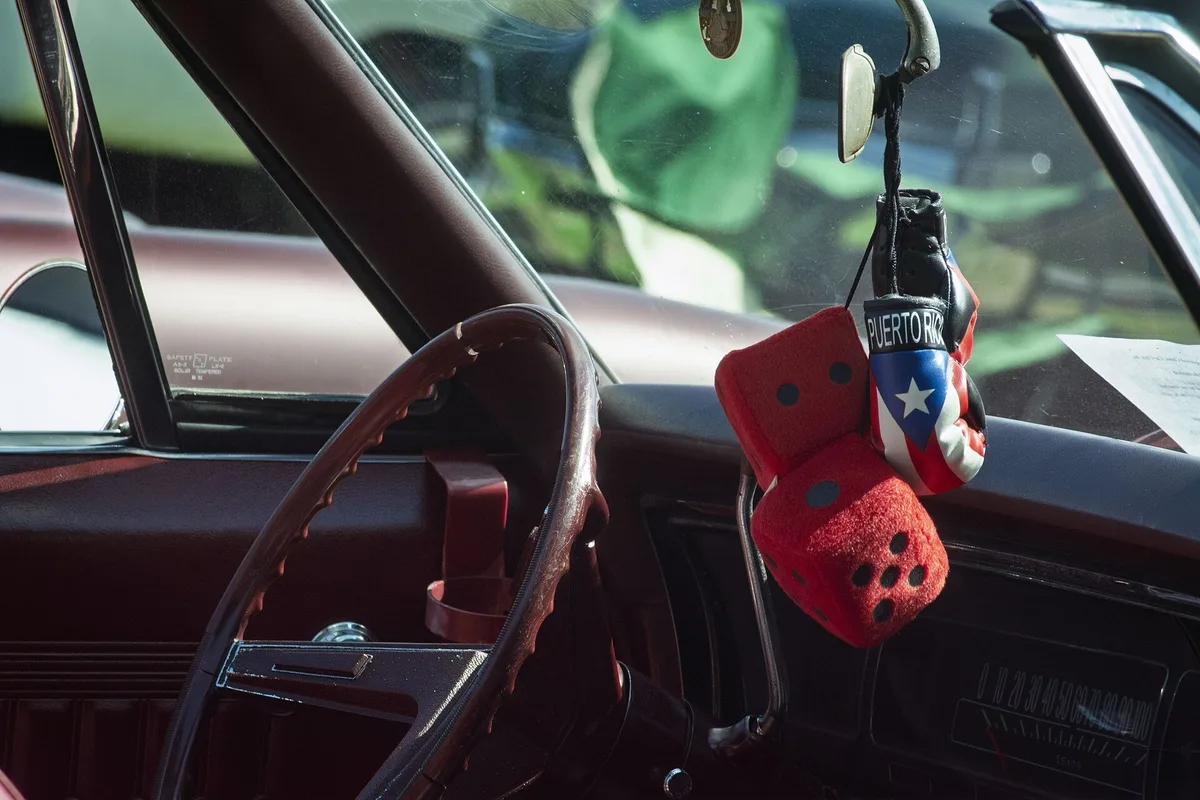
- Stops upheld: People v. Colbert (California, 2007), where the officer described the air freshener’s size and position. State v. Barrow (New Jersey, 2009), miniature boxing gloves hanging about 7 inches at eye level. Mason v. Commonwealth (Virginia Supreme Court, 2016), a 3 by 5 inch parking tag. Gerding v. Commissioner of Public Safety (Minnesota, 2001), where any suspended object violates the statute.
The pattern is consistent. When the officer testifies to the item’s size, where it hung and how it blocked the view, the stop usually holds. When the officer only says something was hanging, it often does not.
The issue drew national attention in April 2021, when Daunte Wright was shot by a police officer in Brooklyn Center, Minnesota. Police said the stop was for expired registration tabs. Wright told his mother on the phone that he had been pulled over for an air freshener hanging from his mirror. A bill to repeal Minnesota’s ban was introduced that year and did not pass.
Other states changed their laws. Virginia barred these stops in 2020 and made evidence from them inadmissible. Illinois did the same in 2024. Maryland, Nebraska and South Dakota already treated the offense as secondary, meaning police can cite it only after stopping you for something else. Philadelphia made it secondary inside city limits in 2022. In New York the stop is still allowed, but the officer can write the ticket only if you committed a second violation.

Common items and how the law treats them
- Air fresheners. The single most litigated item. A flat cardboard tree at the top of the glass is legal in most states that require a material obstruction, and illegal in Minnesota and South Dakota. Two or three stacked together or a bulky jar-style freshener invites a stop. A vent clip avoids the question entirely; our car air freshener guide covers the clip and under-seat options.
- Fuzzy dice, rosaries, beads and charms. Treated like any other hanging object. Size and swing matter. A long rosary or a strand of beads that sways into your sight line is a stronger case for the officer than a short charm.
- Graduation tassels. Same rules. A tassel is light but long, often 9 inches or more with the cord, which puts it into the windshield area most laws protect.
- Disability parking placards. Delaware and Missouri ban driving with one hanging from the mirror, and Hawaii’s law allows it on the mirror only while parked. A placard is a large, flat, opaque object at eye level, so it fits the obstruction rule in most other states as well. Hang it when you park and take it down before you drive.
- Parking permits and gate tags. The Virginia Supreme Court upheld a stop over a 3 by 5 inch parking tag in 2016. Clip it to the visor or move it to a windshield sticker zone if your lot allows that.
- Toll transponders. Allowed in most states that list exceptions. California permits one in a 5-inch square at the top center of the windshield, and Vermont allows it behind the mirror. Mount it where the toll agency’s instructions say.
- Dash cams and GPS units. Several states now name them as exceptions. Arizona and Minnesota allow driver-monitoring cameras mounted at the mirror, Virginia allows a dash cam mostly hidden behind it, and California allows a GPS unit in a lower corner outside the airbag zone. Georgia has allowed phone and GPS mounts on the windshield since 2021.
How big is too big?
No state sets a size limit for hanging items. The size limits that exist apply to stickers on the glass:
| Rule | Allowed area |
|---|---|
| California, Arizona | 7-inch square in the lower passenger-side corner, 5-inch square in the lower driver-side corner |
| Nevada | 6-inch square in the lower corner farthest from the driver |
| Arkansas | Bottom 4.5 inches of the windshield |
| Wisconsin | Government-required sticker up to 15 square inches, lower left corner |
| Trucks and buses (49 CFR 393.60) | Decals within 4.5 inches of the bottom or sides, outside the wiper area; safety cameras up to 8.5 inches below the top of the wiper area |
For items on the mirror, the court cases give a working scale. A 3 by 5 inch tag and 3.5-inch boxing gloves have been enough to uphold a stop. A thin strand of small beads was not. Sit in the driver’s seat and look at the road ahead and to both front corners. If the item covers any part of that view, or swings into it when you brake or turn, it is the kind of item officers cite.
Why the rule exists
The area around the rearview mirror sits in your line of sight to the right side of the road, where pedestrians step off the curb and cars pull out of side streets. An object there creates a blind spot that moves with your head. A swinging object also pulls your eyes toward it every time the car brakes, accelerates or turns, which is the same kind of glance away from the road that distracted-driving rules target.
There is a mechanical reason as well. Most modern rearview mirrors are glued to a metal button on the windshield. Heavy items pull on that joint every time the car hits a bump, and a loose mirror vibrates enough to blur what you see behind you.
Where to put things instead
- Scent: a vent clip, a cup holder can or a pouch under the seat.
- Sentimental items: clip a rosary or charm to the visor strap, the gear shift area or the rear headrest posts, where it stays out of your view.
- Permits and placards: keep them in the visor or door pocket and hang them only when parked.
- Toll tags and dash cams: mount them behind the mirror housing or in the corner zones your state allows.
Keeping the mirror clear also leaves room for the gear that belongs in the car. See our car emergency kit checklist for what to carry.
What happens if you get a ticket
In most states it is a non-moving equipment violation or a minor infraction. Fines listed in the table run from $10 in Delaware to as much as $500 in Oklahoma, plus court costs. Points on your license are uncommon, though Nebraska assigns them.
If you want to contest it, the case law points to two questions. First, does your state’s law cover hanging items at all, or only material on the glass? Second, can the officer describe how the item blocked your view? Photos taken from the driver’s seat showing the item and the windshield help answer the second. If the stop led to a search or an arrest, talk to a criminal defense lawyer, because the legality of the stop decides whether the evidence can be used.
FAQ
Is it illegal to hang things from your rearview mirror?
In 20 states plus D.C., it is illegal when the item obstructs your view of the road, and Minnesota and South Dakota ban dangling items of any size. 24 states only regulate material on the glass, and 6 have no rule that covers hanging items.
Can you get pulled over for something hanging from your rearview mirror?
Yes, in most states. Police cannot stop you for a hanging item alone in Virginia, Illinois, Maryland, Nebraska or South Dakota, or inside Philadelphia.
Is it illegal to hang an air freshener from your rearview mirror?
Only if it obstructs your view in most states, and courts have split on whether a single small tree does. In Minnesota and South Dakota any dangling air freshener breaks the law. A vent clip avoids the issue.
Is it illegal to hang a disability placard from the mirror while driving?
Delaware and Missouri ban it by name, and Hawaii allows it on the mirror only while parked. In most other states a placard counts as a view obstruction. Hang it when parked and remove it before driving.
What is the fine for hanging things from your rearview mirror?
Usually small. Examples from the statutes: $25 in Pennsylvania, $30 base in Florida, $50 for a first offense in Nebraska, $75 in Washington, D.C., and $20 to $40 in Wisconsin. Court costs are extra.
Which states ban anything hanging from the rearview mirror?
Minnesota bans any object suspended between the driver and the windshield, and South Dakota bans any dangling object or gadget. Twelve other states ban hanging items only when they obstruct the view.
Can I hang a dash cam or toll tag behind my mirror?
Usually yes. Vermont, Minnesota and California allow toll transponders, and Arizona, Minnesota and Virginia allow cameras mounted behind or next to the mirror. Keep them within the area the mirror already blocks.
Do these laws apply to trucks?
Commercial trucks and buses follow the federal rule in 49 CFR 393.60, which limits decals to the bottom or sides of the windshield and keeps devices out of the driver’s sight lines. State laws apply to all vehicles on top of that.
Sources & References
- Minnesota Statutes § 169.71: https://www.revisor.mn.gov/statutes/cite/169.71
- Virginia Code § 46.2-1054: https://law.lis.virginia.gov/vacode/title46.2/chapter10/section46.2-1054/
- Illinois 625 ILCS 5/12-503: https://www.ilga.gov/legislation/ilcs/fulltext.asp?DocName=062500050K12-503
- California Vehicle Code § 26708: https://leginfo.legislature.ca.gov/faces/codes_displaySection.xhtml?lawCode=VEH§ionNum=26708
- Pennsylvania 75 Pa.C.S. § 4524: https://www.legis.state.pa.us/WU01/LI/LI/CT/HTM/75/00.045.024.000..HTM
- 49 CFR § 393.60, glazing in specified openings: https://www.law.cornell.edu/cfr/text/49/393.60
- Whren v. United States, 517 U.S. 806 (1996): https://supreme.justia.com/cases/federal/us/517/806/
- Heien v. North Carolina, 574 U.S. 54 (2014): https://supreme.justia.com/cases/federal/us/574/54/
- Commonwealth v. Holmes, 14 A.3d 89 (Pa. 2011): https://hallapproved.com/pa/cases/supreme/2011/2551548/
- State v. Houghton, 2015 WI 79: https://law.justia.com/cases/wisconsin/supreme-court/2015/2013ap001581-cr.html
- People v. Colbert, 157 Cal.App.4th 1068 (2007): https://cases.justia.com/california/court-of-appeal/h031479.pdf
- Mason v. Commonwealth, 291 Va. 362 (2016): https://hallapproved.com/va/cases/supreme/2016/3200832

James Kowalski
More from James KowalskiHow we reviewed this article
This article was researched against manufacturer records and editorially reviewed before publishing. We accept no payment for coverage. Some guides contain affiliate links; see our affiliate disclosure.