Contents
- What Counts as Cars Made in 2020
- How COVID-19 Cut Car Production in 2020
- Supercars and Sports Cars
- Electric Cars
- Trucks and SUVs
- 2020 Cars Compared
- Where Cars Made in 2020 Stand Today
What Counts as Cars Made in 2020
“Cars made in 2020” means two different things depending on who’s asking. One reader wants the cars that debuted that year. Another wants the 2020 model year, which includes cars revealed in 2019 that only reached customers in 2020. A third wants to know where cars were physically assembled that year.
This list covers the first two: 14 cars that launched, started deliveries or were revealed in 2020, grouped by type. Each entry gives the engine or battery, the price at launch, and the place it was built, because that last detail gets skipped almost everywhere else. A Land Rover Defender built in Slovakia and a Mustang built in Mexico tell you something about how the industry worked in 2020.
How COVID-19 Cut Car Production in 2020
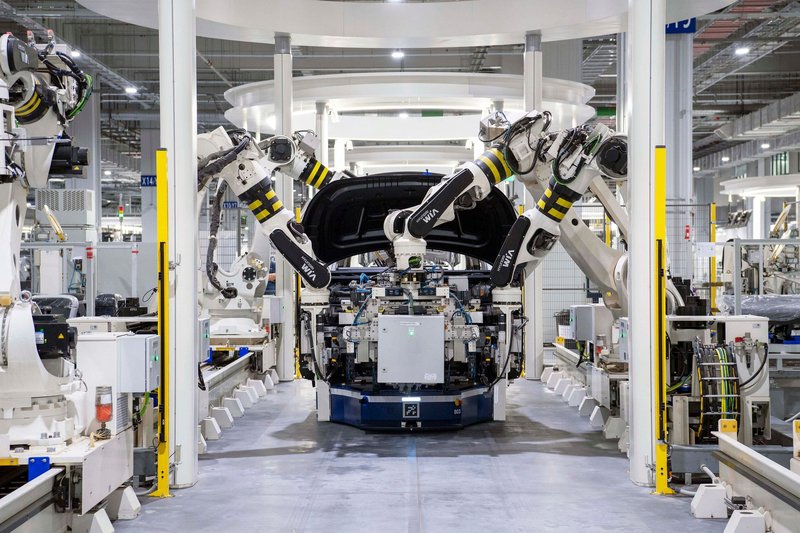
2020 was the one year in recent history when the main story about new cars was how few got made. Plants in Europe began closing in March. Volkswagen, Daimler, BMW and Ford idled lines across the continent, and North American plants followed within weeks. Tesla’s Fremont factory, which had just started building the Model Y, stopped from late March until May.
The numbers are bad. According to the industry body OICA, world vehicle production fell about 16% to just under 78 million units, roughly the level of 2010. Europe dropped around 21% and the United States about 19%. China was the outlier, losing only about 2% because its factories restarted first.
The shutdowns also scrambled launch calendars. Reveals happened over livestreams. Some cars announced in 2020, like the Ford Bronco and Lucid Air, didn’t reach buyers until 2021. A few, like the Chevrolet Corvette, had their first full year of production cut short twice: once by the UAW strike in late 2019 and again by the pandemic. That context explains why so many entries below carry the words “deliveries began later.”
Supercars and Sports Cars
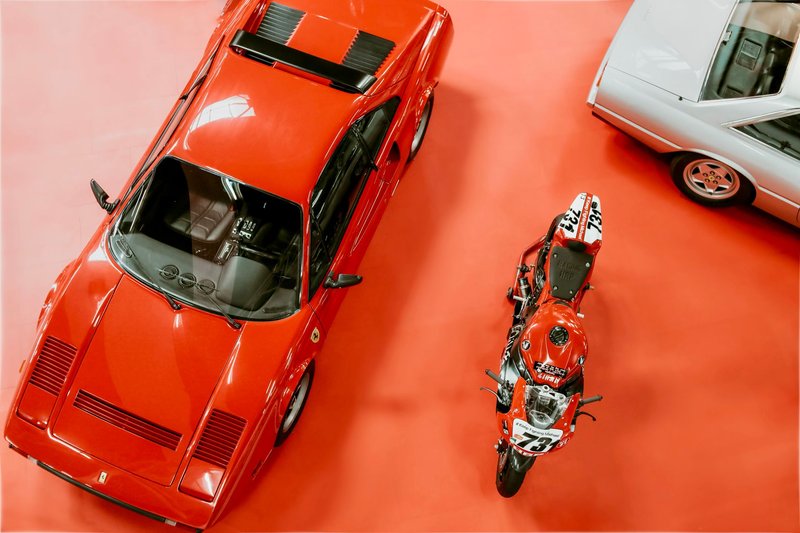
Supercar makers mostly kept their reveal dates. Hypercar buyers were still ordering, and the cars were built in small batches by hand.
Chevrolet Corvette Stingray (C8)
The first mid-engine Corvette was revealed in 2019, but 2020 was the year it reached driveways. The 6.2-liter LT2 V8 makes 490 hp, or 495 with the performance exhaust. Chevrolet quoted 2.9 seconds to 60 mph for the Z51 package. The price was the point: $59,995 to start, in a segment where the nearest rival from Europe cost double. It’s built in Bowling Green, Kentucky, and early cars were hard to find after the strike and the spring shutdown.
Ferrari SF90 Stradale
Ferrari’s first series-production plug-in hybrid pairs a 4.0-liter twin-turbo V8 with three electric motors for a combined 986 hp and all-wheel drive. It does 0 to 62 mph in 2.5 seconds. Pricing started around $625,000, and deliveries from Maranello ran through 2020. This is the car that proved a hybrid Ferrari could be the fastest Ferrari.
McLaren 765LT
Revealed in March 2020 just as lockdowns started, the 765LT is a lighter, angrier 720S: 755 hp from a 4.0-liter twin-turbo V8 and up to 80 kg shaved off. McLaren capped production at 765 cars, all of which sold. It started at £280,000 in the UK and was built in Woking.
Gordon Murray T.50
Revealed in August 2020, the T.50 is the anti-hypercar. It uses a 3.9-liter Cosworth V12 that revs to 12,100 rpm and makes 654 hp, weighs about 986 kg, and has a rear fan for downforce and a three-seat layout with the driver in the middle. Only 100 road cars were planned, at £2.36 million before taxes. Customer cars took until 2023.
Toyota GR Yaris
The most interesting small car of 2020 started life as a rally homologation special. Its 1.6-liter turbocharged three-cylinder makes about 257 hp, it comes with all-wheel drive, and it’s a three-door only, built on a dedicated line at the Motomachi plant in Toyota City. It launched at £29,995 in the UK. It was never sold in the United States, which is a large part of why Americans still ask about it. Americans who want a Japanese-market car can start with this guide to modern JDM cars and how to get one.
BMW M3 (G80)
The M3’s 2020 reveal split opinion for one reason: the grille. The rest of the car was less controversial. A 3.0-liter twin-turbo straight-six makes 473 hp in the base car and 503 hp in the Competition, and the base car came with a six-speed manual and rear-wheel drive. It started around $70,000 in the US and is built in Munich.
Electric Cars
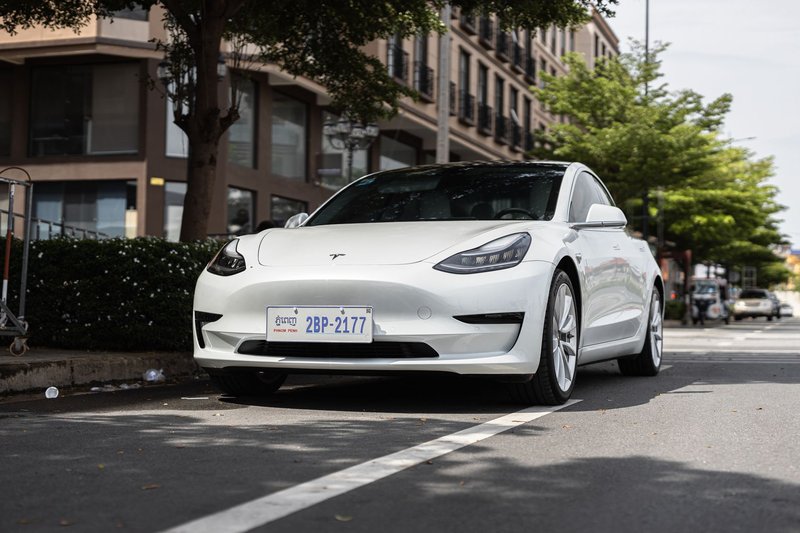
The EV wave is the part of 2020 that aged best. Several of the cars below are now the default picks for new EV buyers.
Tesla Model Y
Deliveries began on March 13, 2020, from Fremont, California. The Long Range dual-motor version was listed at $52,990 with an EPA range of 316 miles. Early cars had well-documented panel-gap and paint complaints, which Tesla fixed in later batches. The sales results were enormous: by 2023, JATO Dynamics ranked the Model Y as the best-selling vehicle in the world, ahead of every gas car.
Ford Mustang Mach-E
Ford revealed it in November 2019 and began deliveries a year later. It’s built at Cuautitlán, Mexico, not Michigan, which annoyed some Mustang owners and didn’t bother anyone else. The base Select started at $42,895. The extended-range rear-drive version was rated at 300 miles by the EPA, and the GT topped out around 459 hp. It worked because it’s a good crossover first and a Mustang second.
Volkswagen ID.3
Volkswagen’s first MEB-platform car reached customers in September 2020, built in Zwickau, Germany, a plant that was converted entirely to EVs. The 58 kWh battery gave up to 420 km on the WLTP cycle with 204 PS. It started around €36,000. The launch was messy: early cars shipped with unfinished software and needed updates at dealers. The ID.4 SUV followed as a reveal in September 2020, with deliveries in 2021.
Polestar 2
Built in Luqiao, China, by a Volvo-owned brand under Geely, the Polestar 2 is a 2020 example of where cars were actually made. It uses a 78 kWh battery and dual motors for 408 hp, and it was the first production car to ship with Google’s Android Automotive system built in. The US launch edition cost $59,900 with 233 miles of EPA range.
Lucid Air
Lucid revealed the Air Dream Edition in September 2020: 1,080 hp, a claimed 517 miles of range, and a $169,000 price. Cars are built in Casa Grande, Arizona, and first deliveries arrived in October 2021. Its real impact in 2020 was proving a startup could claim a range number that beat Tesla’s.
Trucks and SUVs
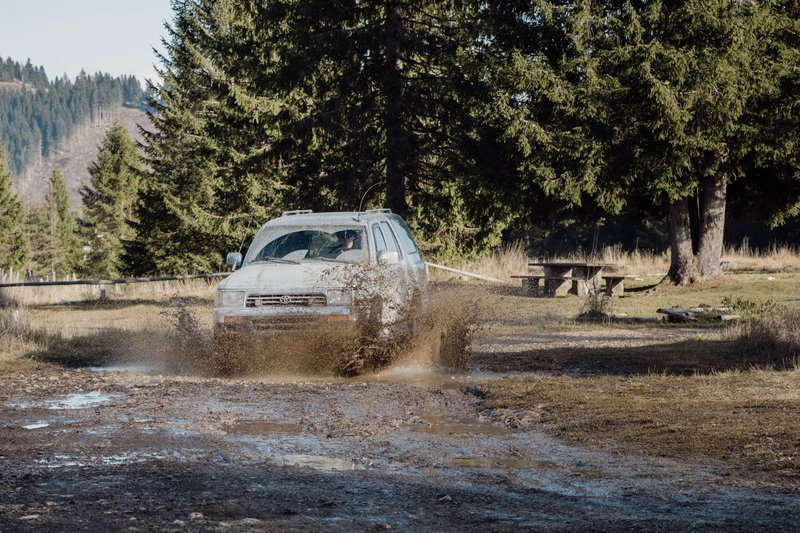
Ford Bronco
Revealed in July 2020 after a 24-year gap, the Bronco came as a two-door or four-door with removable roof and doors. A 2.3-liter four or a 2.7-liter V6 both make roughly 300 hp. The base two-door started at $29,995, and it’s built at Michigan Assembly in Wayne, Michigan. Deliveries did not begin until mid-2021, which is why it counts here as a 2020 reveal and a 2021 model year.
Land Rover Defender (L663)
The new Defender reached US buyers in early 2020. The 110 started at $49,900 with a 296 hp 2.0-liter turbo four, and a 395 hp mild-hybrid 3.0-liter straight-six sat above it. The old Defender came out of Solihull. This one is built in Nitra, Slovakia, a detail that surprised a lot of people.
Ram 1500 TRX
Ram put the 6.2-liter supercharged Hellcat V8 in a pickup: 702 hp and 650 lb-ft of torque, with a quoted 4.5 seconds to 60 mph. It arrived for the 2021 model year at about $71,000. It’s built in Sterling Heights, Michigan, and its main rival, the Ford Raptor, was suddenly outgunned by about 300 hp.
2020 Cars Compared
| Model | Type | Power / range | Launch price |
|---|---|---|---|
| Chevrolet Corvette Stingray | Mid-engine sports car | 490-495 hp | $59,995 |
| Ferrari SF90 Stradale | Hybrid supercar | 986 hp | about $625,000 |
| McLaren 765LT | Supercar | 755 hp | £280,000 |
| Gordon Murray T.50 | Hypercar | 654 hp | £2.36 million |
| Toyota GR Yaris | Hot hatch | about 257 hp | £29,995 |
| BMW M3 (G80) | Sport sedan | 473-503 hp | about $70,000 |
| Tesla Model Y Long Range | Electric crossover | 316 miles (EPA) | $52,990 |
| Ford Mustang Mach-E | Electric crossover | up to 300 miles (EPA) | from $42,895 |
| Volkswagen ID.3 | Electric hatchback | 204 PS, 58 kWh | about €36,000 |
| Polestar 2 | Electric fastback | 408 hp | $59,900 |
| Lucid Air Dream Edition | Electric sedan | 1,080 hp | $169,000 |
| Ford Bronco (two-door) | Off-road SUV | about 300 hp | $29,995 |
| Land Rover Defender 110 | Off-road SUV | 296-395 hp | $49,900 |
| Ram 1500 TRX | Performance pickup | 702 hp | about $71,000 |
Where Cars Made in 2020 Stand Today
Six years on, the cars made in 2020 split into three groups.
The limited cars, the 765LT and T.50, are fixed-supply collectibles. Their values follow collector demand, not mileage. The Corvette sits between collectible and everyday car. Chip shortages in 2021 and 2022 pushed buyers to pay over sticker for new C8s, and used examples have lost far less than a typical new car would have.
The EVs are the opposite story. Used EV prices dropped sharply after Tesla’s price cuts in 2022 and 2023, and 2020-era cars lost range as batteries aged and newer models improved. That makes a used Model Y or Mach-E the cheapest it has ever been, but check the battery health report before buying. Early Model Ys, ID.3s and Mach-Es also had software and build quality issues that the later cars fixed.
The Defender and the other 2020 trucks fall in the middle. Land Rover ranks near the bottom of most reliability surveys, so a used Defender is something to inspect carefully, ideally with a service history. Before you buy any of these cars, run its VIN through the NHTSA recall database, and compare its EPA numbers against your commute on fueleconomy.gov.
The cars made in 2020 are the cars of a strange year. They are a record of how fast the industry moved toward electric power while it was being forced to stop moving at all.

James Kowalski
More from James KowalskiHow we reviewed this article
This article was researched against manufacturer records and editorially reviewed before publishing. We accept no payment for coverage. Some guides contain affiliate links; see our affiliate disclosure.