Romania built five families of car between 1968 and the mid-2000s that matter to collectors, and almost all of them started life as a foreign design. Renault supplied the Dacias, Citroën supplied the Oltcit, and the ARO was the one that was mostly Romania’s own. Classic Romanian cars are cheap, mechanically simple, and weirdly under-documented outside Romania, which is exactly why they’re worth a closer look.
This guide goes model by model, then covers where to see them and what to check before you buy one.
Contents
- Dacia 1100: the Renault 8 that started it
- Dacia 1300 and 1310: the car Romania drove
- Dacia 2000: the Renault 20 for the elite
- ARO 10 and 24: the off-roaders
- Oltcit and Citroën Axel: the Craiova hatchback
- Comparison table
- Where to see and ride them
- Buying notes: rust, parts and prices
- Summary
Dacia 1100: the Renault 8 that started it
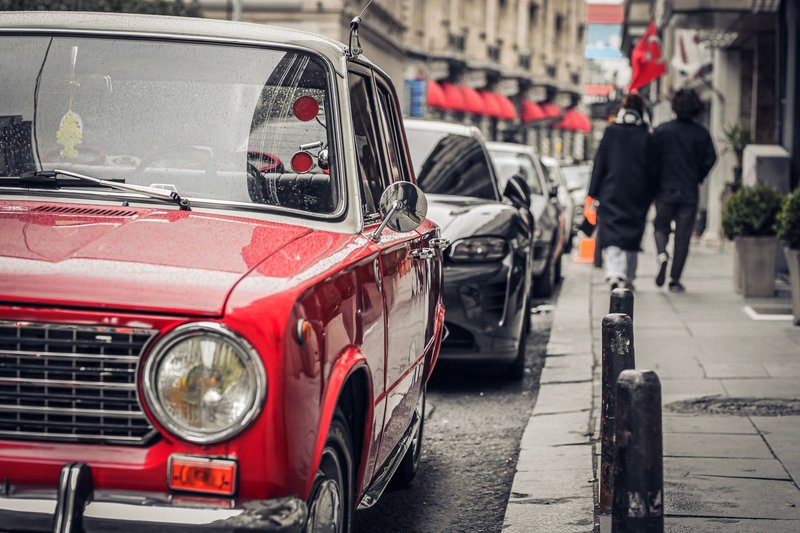
Years: 1968 to the early 1970s. Engine: 1.1-litre four-cylinder, rear-mounted, in the 45 to 50 hp range. Basis: Renault 8, assembled at Pitești from kits.
The 1100 is where Dacia begins. Romania had no car industry to speak of, so the state bought a licence, took Renault 8 components in crates, and learned to build cars by building this one. It’s rear-engined, four-door and slightly odd-looking next to what came after it.
It also barely lasted. Dacia replaced it with the front-engined 1300 within a few years, so the 1100 is the shortest-lived and now the hardest of the mainstream Dacias to find. Survivors turn up in Romania, mostly as long-term family cars that somebody never sold. Because so few get listed, there’s no real price benchmark: expect to negotiate, and expect to pay more for an honest, unrestored car than its modest spec suggests.
Dacia 1300 and 1310: the car Romania drove
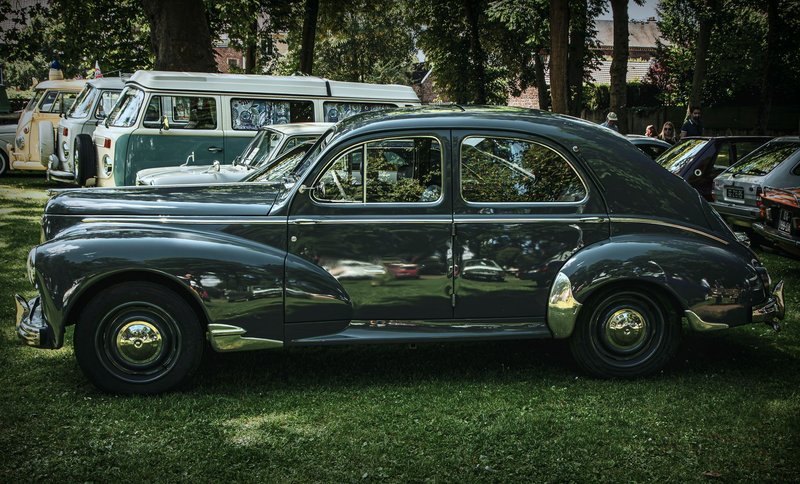
Years: 1969 to 2004. Engine: 1.3-litre four-cylinder, around 54 hp, later a 1.4 in the 60s. Basis: Renault 12. Built: roughly 2 million across all variants.
This is the one. The Dacia 1300 was licensed from the Renault 12, launched in 1969, and it was the car that put Romania on the open roads. In a country where cars were rationed by waiting lists and paperwork, the 1300 was what most families got, if they got anything. People waited years and then kept the car for decades.
Dacia facelifted it as the 1310 in 1979, with squarer bumpers and a revised front end, and kept building variants: estate, pickup, and a late hatchback called the Liberta. Production of the 1310 family ran until 2004, which makes it one of the longest-lived Renault 12 derivatives anywhere.
Rarity is the wrong lens here. Two million cars means plenty survive, though most are worn out, rusty, or modified. The ones collectors look for are early 1300s in original condition and late, low-mileage 1310 sedans, particularly the TLX trim. A sound Dacia 1310 classic typically sits in the low thousands of euros. A concours-condition early example can go higher, but this is not an expensive car, and that’s part of the appeal.
Dacia 2000: the Renault 20 for the elite
Years: 1980s. Engine: Renault 20 mechanicals (the donor car’s 2.0-litre four made roughly 110 hp). Basis: Renault 20. Built: very few; only two restored survivors are known.
The Dacia 2000 is the odd one. It’s the Dacia 2000 Ceaușescu-era prestige car: a Renault 20 reworked and rebadged for the party elite, in a country where the people’s car was a 1300. Daily Driven’s profile of the car is the best English-language starting point.
It was not meant for sale to the public, so it was never going to be a volume car, and what survives is a short list. Two restored examples are known. That makes it a museum piece rather than something you can price. If one ever came to auction, the figure would be set by two or three bidders and nothing else.
ARO 10 and 24: the off-roaders
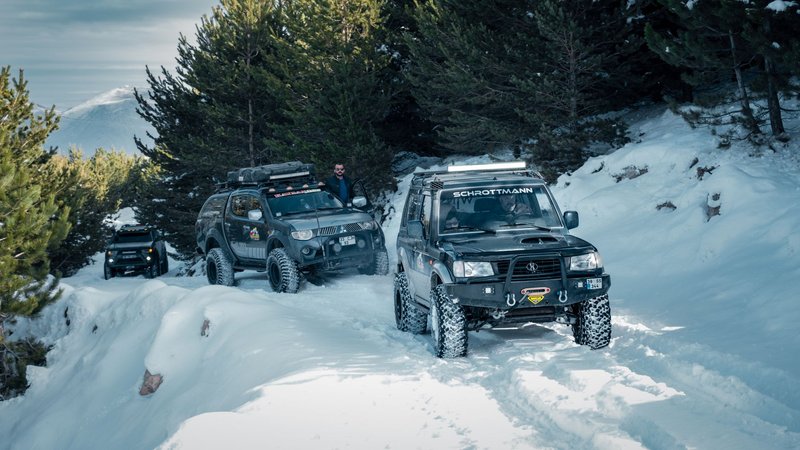
Years: ARO 24 series from 1972; ARO 10 from 1980; production at Câmpulung ended in 2006. Engine: ARO 24 had a 2.5-litre petrol four of roughly 80 hp, with diesel options later; the smaller ARO 10 used Dacia-derived engines. Built: substantial, across many body variants.
ARO made the one Romanian car that wasn’t a Western design in disguise. The 24 series is a proper body-on-frame 4×4 with leaf springs, a short wheelbase, and a cab you can strip the roof from. It’s closer in spirit to a Land Rover or a Jeep than to anything Dacia made, and it was used by farmers, forestry crews, the army and the police.
The ARO 10 is the smaller, lighter, more road-friendly sibling. It was exported to Western Europe too, including to the UK, where it was sold as the Dacia Duster, long before Renault revived the name.
ARO coverage in English is thin, so people tend to underestimate these. They’re simple enough to fix with a spanner set, and they’re good in mud. In Romania, a solid ARO 24 usually costs more than a Dacia 1310 in comparable condition, because working vehicles keep their value. Expect a mid-range price in the low-to-mid thousands of euros for a tidy example, more if it’s an unmolested early one.
Oltcit and Citroën Axel: the Craiova hatchback
Years: 1981 into the early 1990s. Engine: a 1.1-litre four of around 57 hp in the Club, with a 1.3 in higher trims; a small flat-twin in the basic version. Basis: a Citroën design, sold in Western Europe as the Citroën Axel.
The Oltcit was Romania’s joint venture with Citroën. The factory sat in Craiova, the car was a front-wheel-drive hatchback, and unlike the Dacias it looked like it belonged to the 1980s. In Romania the Oltcit Club was the aspirational option: newer, more modern, and harder to get.
It’s also the reason Oltcit enthusiasts have an unusually active community. The Oltcit Club name stuck, and owners’ groups still trade parts and tips. The cars themselves rust faster than almost anything else on this list, so clean survivors are scarce. Prices are generally low, from about a thousand euros for a project to a few thousand for a good one. The Oltcit gets far less attention than the 1300, and the value gap is the opportunity.
Comparison table
| Model | Years | Scale | Rarity | Collector appeal |
|---|---|---|---|---|
| Dacia 1100 | 1968 to early 1970s | Small run | High | Moderate, as the first Dacia |
| Dacia 1300/1310 | 1969 to 2004 | About 2 million | Low (clean cars are scarcer) | High in Romania, steady elsewhere |
| Dacia 2000 | 1980s | Handful | Extreme | Museum-level; two restored survivors known |
| ARO 10/24 | 1972 to 2006 | Large | Low to medium | High for 4×4 fans |
| Oltcit/Axel | 1981 to early 1990s | Medium | Medium (rust-limited) | Growing, still cheap |
Where to see and ride them
The easiest place to start is Bucharest. The Țiriac Collection celebrated a decade of opening in 2023, and it’s the main classic car museum in the city. It leans toward the broader collection rather than just Romanian cars, so go for context, then look for Dacia and ARO examples.
For events, the Motor Retro Parade in Timișoara pulls local owners out with their Dacias and Oltcits, and Retromobil Club Romania runs meets and shows across the year. Dates move, so check their pages before you plan a trip. Vintage Dacia city tours in Bucharest and other cities let you ride in a 1310 without owning one, which is the cheapest way to find out how a 1.3-litre Renault 12 derivative actually feels at 50 km/h.
Buying notes: rust, parts and prices
Rust. This is the main thing. On the Dacia 1300 and 1310, check the sills, floors, door bottoms, wheel arches and the area under the windscreen. Oltcits rust in the same places and faster. ARO 24s rust in the body panels and door pillars more than the frame, but check the chassis too. Any repainted car deserves a magnet and a torch.
Parts. The Dacia 1300 shares a lot with the Renault 12, so mechanical parts are straightforward to find. Bodywork and trim are harder. For the Oltcit, some parts cross over with Citroën models of the period, but Oltcit-specific panels and trim are scarce. ARO parts are easiest to source inside Romania. Owners’ clubs are the fastest route to anything obscure.
Prices. Treat these as ranges, not quotes, and check current listings on sites such as Classic Trader before you commit:
- Dacia 1300/1310: low thousands of euros for a sound car; more for early or very original examples.
- ARO 24: mid thousands for a tidy example.
- Oltcit/Axel: roughly a thousand to a few thousand euros.
- Dacia 1100: few examples change hands, so price is whatever you agree.
- Dacia 2000: not realistically for sale.
Paperwork. If you’re importing, check the car’s registration history and whether the VIN matches. Romanian cars are cheap to buy but import costs and compliance add up, so budget for them.
Summary
Classic Romanian cars split into three groups: the Dacia family, from the early 1100 through the ubiquitous 1300 and 1310 to the almost mythical 2000; the ARO off-roaders, the only truly home-grown line; and the Oltcit/Axel, the 1980s hatchback with a good community and a rust problem. The 1310 is the sensible entry point, the ARO 24 is the one with the broadest appeal outside Romania, and the Oltcit is the quiet bargain. The 1100 and 2000 are for people who already know what they’re looking for. Whichever you pick, buy the cleanest body you can find and sort the mechanics later.

Marco Delantero
More from Marco DelanteroHow we reviewed this article
This article was researched against manufacturer records and editorially reviewed before publishing. We accept no payment for coverage. Some guides contain affiliate links; see our affiliate disclosure.