The best book to learn about cars from zero is How Cars Work by Tom Newton. It explains 250 car parts in 96 pages of simple drawings and short text, and you can finish it in a weekend. Read Auto Repair For Dummies next to learn maintenance and basic repairs, then buy the Haynes or Chilton repair manual for your own car. That manual was the single most recommended book in 31 Reddit threads on learning about cars. Everything after those three depends on where you want to go: engines, wiring, handling, restoration or racing.
As an Amazon Associate we earn from qualifying purchases. Disclosure
I spent ten years in independent shops and dealership service bays, and I held ASE certifications for most of that time. Every new lube tech asked me the same thing in their first month: what should I read? The honest answer was never one book. A kid who wants to understand why the engine knocks needs a different book than someone who wants to pass the ASE brake test, and both need a different book than the guy restoring his grandfather’s Chevelle. Books still beat videos for one reason: a good book teaches the system in order, from the basic principle to the parts, so a video about one repair finally makes sense.
This guide lists 29 books sorted by what you want to learn, from first-timer books to the engineering texts used in Formula SAE teams and university engine labs. Each pick shows the edition, the page count and who it is for. Picks come from what mechanics and enthusiasts recommend on Reddit, the textbooks used in automotive programs, and Amazon listings checked on November 11, 2026.
Quick picks: the best books to learn about cars
| Book | Best for | Level | Pages |
|---|---|---|---|
| How Cars Work | Best overall for beginners | Beginner | 96 |
| Auto Repair For Dummies | Learning maintenance and repair | Beginner | 480 |
| Haynes manual for your car | Fixing your own car | Beginner to advanced | 300 to 450 |
| Auto Repair & Maintenance for Beginners | Visual step-by-step jobs | Beginner | 288 |
| Auto Fundamentals | Learning like a mechanic student | Intermediate | 768 |
| How to Diagnose and Repair Automotive Electrical Systems | Electrical problems | Intermediate | 160 |
| How to Rebuild the Small-Block Chevrolet | First engine rebuild | Intermediate | 144 |
| Tune to Win | How suspension and handling work | Advanced | 173 |
| How to Build a Car | Car design, read for fun | Any | 400 |
Which car book to read first: reading paths by goal
Most people who ask “what book should I read to learn about cars” want one of six things. Pick the row that matches you and read the books in that order. Each path starts with something short so you build the vocabulary before you open a 700-page text.
| Your goal | Read first | Then | Then |
|---|---|---|---|
| Understand how a car works | How Cars Work | Auto Repair For Dummies | Auto Fundamentals |
| Do my own maintenance | Auto Repair & Maintenance for Beginners | Haynes manual for my car | Haynes OBD-II Techbook |
| Become a mechanic or pass ASE tests | Auto Fundamentals | Automotive Technology: A Systems Approach | ASE study guides |
| Build or modify engines | How to Rebuild the Small-Block Chevrolet | Four-Stroke Performance Tuning | Engine Management: Advanced Tuning |
| Understand handling and racing | Ultimate Speed Secrets | Tune to Win | Race Car Vehicle Dynamics |
| Teenager or younger reader | Car Science | How Cars Work | Auto Repair For Dummies |
Best books about cars for beginners
A beginner book has one job: teach the names of the parts and what each one does, so that the words a mechanic uses stop sounding like noise. None of the four books below assume you have held a wrench. Read one of them before anything else on this list.
Best overall for beginners
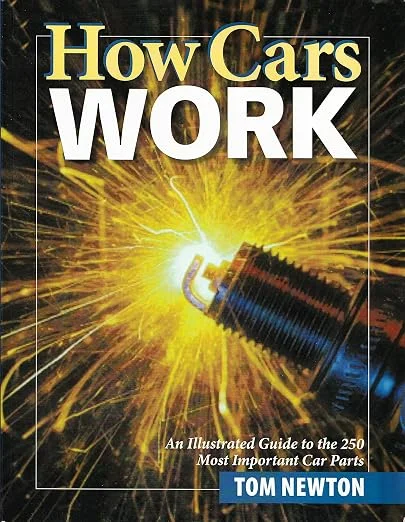
1. How Cars Work by Tom Newton
Tom Newton wrote this book for teenagers at his tutoring center, as reading practice about something they cared about. That origin is why it works for adults who know nothing about cars. Every page covers one part or system, from the crankshaft to the CV joint, with a simple line drawing and a few paragraphs in plain English. Service managers use it to show customers what a repair means. It was the most recommended beginner title on Reddit, named in six of the 31 threads, usually with the comment that you can read it in an afternoon.
- 96 pages, 250 parts explained with drawings
- Engine, drivetrain, brakes, steering, suspension, electrical and fuel systems
- 4.6 stars from more than 1,600 ratings
Good: the fastest way to learn the vocabulary, and the drawings make each part easy to picture. Not great: first published in 1999, so there is nothing on hybrids, electric cars or modern driver-assist systems. Read it for the fundamentals, which have not changed.
Best for learning maintenance and repair
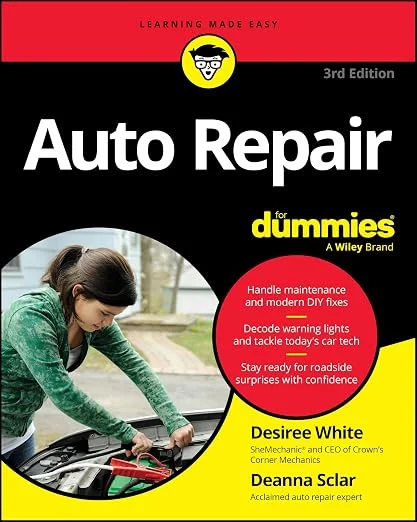
2. Auto Repair For Dummies (3rd Edition)
Deanna Sclar’s Auto Repair For Dummies has taught car basics to readers for decades, and four Reddit threads named it as the book to read after a picture book like Newton’s. The third edition came out in September 2026, updated by Desiree White, and it adds what earlier editions lacked: hybrids and electric cars. The first half explains how each system works and how it fails. The second half walks through the jobs a beginner can do at home, from changing a tire and jump-starting a battery to brakes, steering and suspension, plus how to find a good mechanic for the jobs you should not do.
- 480 pages, published September 15, 2026
- Covers gas, hybrid and electric vehicles
- Tool buying advice and a chapter on talking to mechanics
Good: the most complete beginner book, now current. Not great: line drawings, not photos, and the new edition has few reviews so far. The previous edition (2nd) is still sold used and covers the same basics minus the EV material.
Best visual step-by-step guide
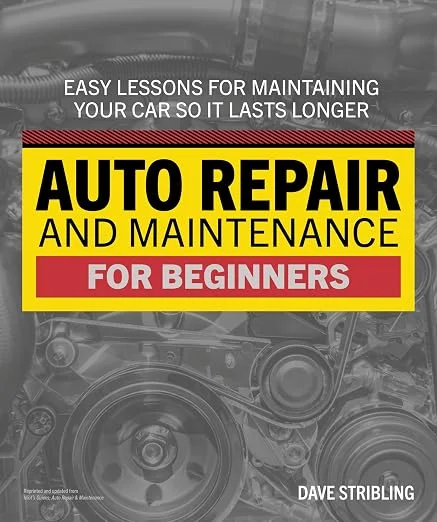
3. Auto Repair & Maintenance for Beginners by Dave Stribling
This is the DK book for people who learn from pictures. Dave Stribling runs a shop that puts modern technology into older cars, mostly Ford Mustangs, and has written technical columns for more than 20 years. The book covers the same beginner jobs as the Dummies guide (oil, filters, spark plugs, belts, tire rotation, brakes, cooling system, headlights) but shows each one as a sequence of color photos. If you plan to do the work with the book open on the fender, this is the easier one to follow.
- 288 pages, DK, 2023
- Color photo sequences for each job
- 4.8 stars
Good: the clearest photos of any beginner book here. Not great: less theory than Auto Repair For Dummies, so it tells you how more than why.
Best for kids and teens
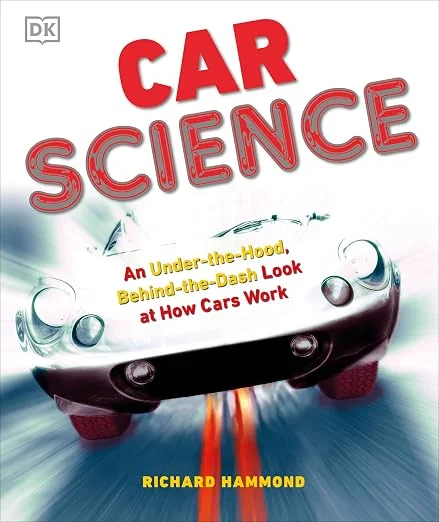
4. Car Science by Richard Hammond
Richard Hammond, of Top Gear and The Grand Tour, wrote this DK book to explain the physics behind cars: combustion, friction, aerodynamics, braking and crash safety. It is laid out like every DK book, with big photos, cutaways and short blocks of text, so a 10-year-old can read it alone and an adult will still learn something. Buy it for a kid who likes cars, then hand them How Cars Work when they want more.
- 96 pages, hardcover, DK
- Best for ages 9 to 14
- 4.8 stars from more than 1,100 ratings
Good: teaches the science, not only the parts. Not great: from 2008, and too light for an adult who wants to work on a car.
Best books to learn to fix your own car
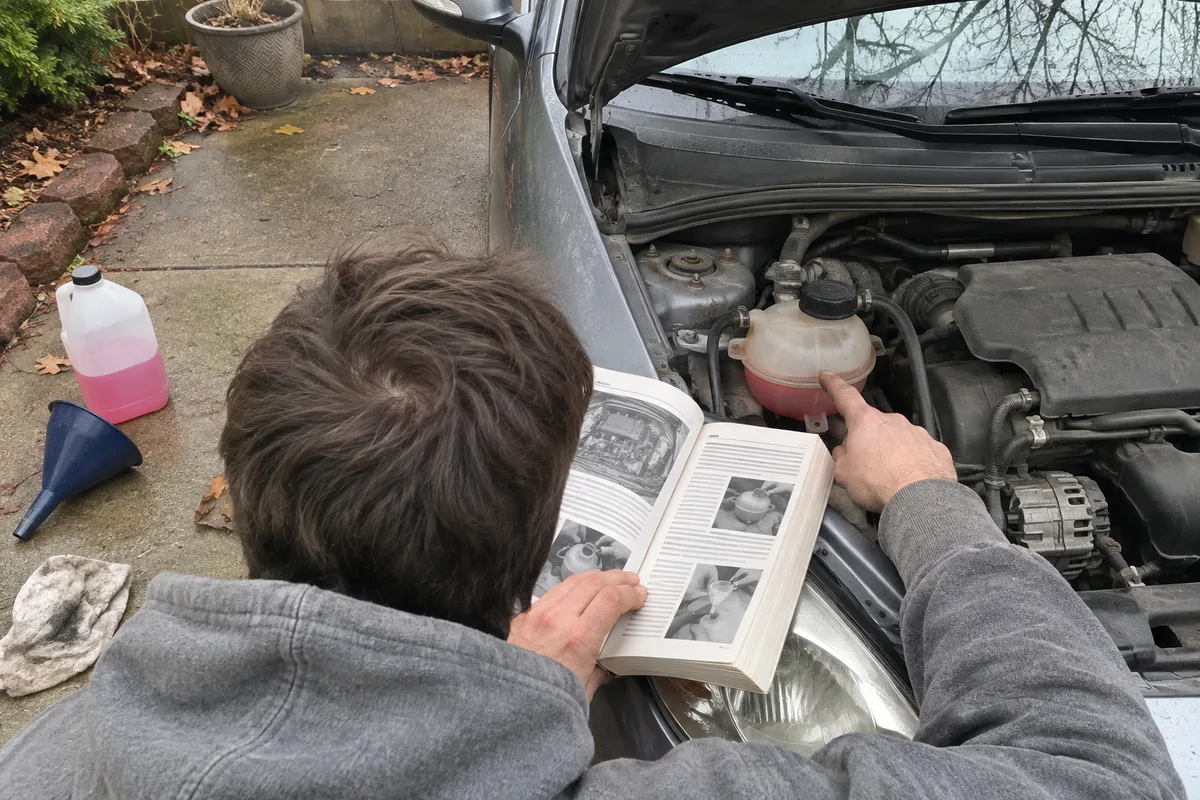
Beginner books teach the systems in general. To fix a real car you need the procedure, torque specs and fluid capacities for that exact model. That is the job of a repair manual, and on Reddit it was the most common answer by a wide margin: more than half the threads (16 of 31) told the asker to buy the Haynes or Chilton manual for their car before anything else. One commenter put it simply: “For the last 3 vehicles I have owned, the 1st thing I buy after picking it up is the Haynes manual.”
Best for fixing your own car
5. Haynes Repair Manual for Your Car
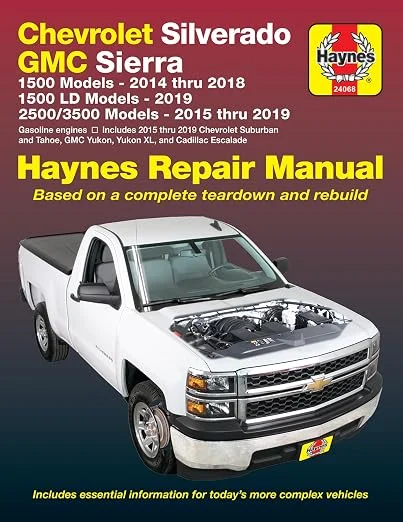
Haynes writes each manual by taking one car apart in their workshop and photographing every step. That is why the procedures match what you see under the hood, with the bolts in the order you will meet them. Each manual covers routine maintenance, tune-up, engine, cooling, fuel, exhaust, transmission, brakes, suspension, body and the wiring diagrams. Chilton manuals cover the same ground (Haynes owns Chilton now). The example below is the Silverado and Sierra 1500 manual, one of the best sellers. Search for your own year, make and model.
- One manual per model and range of years
- Step-by-step photos, torque specs, fluid capacities, wiring diagrams
- Most manuals run 300 to 450 pages
Good: the cheapest way to get model-specific procedures, and it is written for home mechanics. Not great: covers the common engines and trims, not every variant, and complex jobs on newer cars are often left out. For those, mechanics on Reddit point to the factory service manual (FSM) or an online subscription such as ALLDATA DIY.
Find the Haynes manual for your car
Example: Silverado and Sierra 1500 2014-2018.
Best for check engine lights
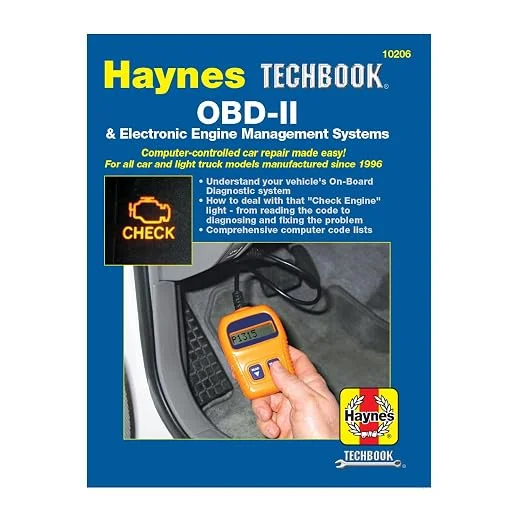
6. Haynes OBD-II & Electronic Engine Management Systems Techbook
Every car sold in the US since 1996 has an OBD-II computer that stores a trouble code when something goes wrong. This Haynes Techbook explains how that system works: what the sensors measure, what the readiness monitors test and what each code means. It lists the generic codes for all cars and the maker-specific codes for GM, Ford, Chrysler, Toyota, Lexus, Honda and Acura. Pair it with a cheap OBD-II scanner and the check engine light stops being a mystery.
- 272 pages, more than 250 photos and drawings
- Generic and manufacturer-specific trouble codes
- 4.5 stars from more than 1,400 ratings
Good: teaches you to diagnose instead of replacing parts until the light goes off. Not great: the 2006 edition predates newer network diagnostics; the principles are the same, but newer codes are not listed.
Best for electrical problems
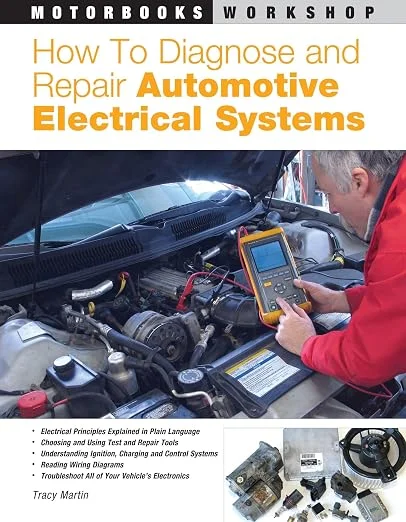
7. How to Diagnose and Repair Automotive Electrical Systems by Tracy Martin
Electrical faults are where most home mechanics give up, because you cannot see electricity. Tracy Martin’s Motorbooks guide fixes that by teaching the multimeter first: how to measure voltage, resistance and current, how to do a voltage drop test and how to read a wiring diagram. Then it applies those tests to the battery, charging system, starter, lighting and accessories. It is short and practical, and it was written for people who have never used a meter.
- 160 pages, color photos
- Multimeter use, voltage drop testing, wiring diagrams
- 4.6 stars from nearly 800 ratings
Good: the best introduction to electrical diagnosis for a beginner. Not great: covers the basics well but stops before modern computer networks.
Best for wiring projects
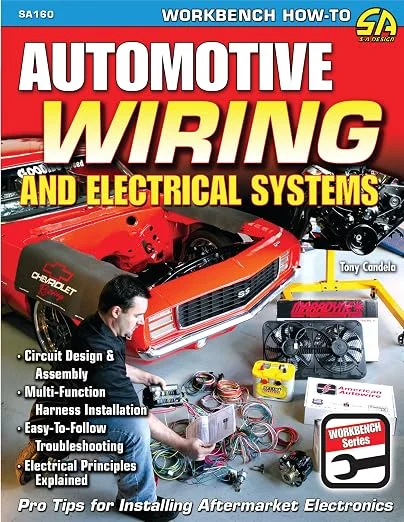
8. Automotive Wiring and Electrical Systems by Tony Candela
Where Martin’s book teaches you to find faults, Candela’s CarTech Workbench book teaches you to build circuits: choosing wire gauge, crimping and soldering, adding relays and fuses, and wiring a new accessory or a whole harness. It is the book for anyone adding lights, a stereo, a fuel pump or rewiring a project car. A second volume, Projects, applies the same skills to complete builds.
- 144 pages, step-by-step photos
- Wire, terminals, relays, switches, fuses and harness building
- 4.5 stars from more than 900 ratings
Good: clear on the hands-on skills most guides skip. Not great: aimed at hot rods and project cars more than diagnosing a modern daily driver.
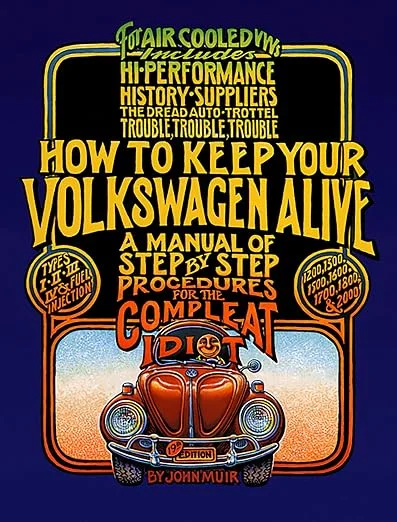
Classic: best for air-cooled VWs
9. How to Keep Your Volkswagen Alive by John Muir
First published in 1969, John Muir’s “manual for the compleat idiot” is the most loved repair book ever written. It covers the air-cooled Beetle, Bus, Karmann Ghia and Type 3, and it explains every job in a friendly, funny voice, with Peter Aschwanden’s hand-drawn illustrations. Readers still recommend it to people with no VW at all because it teaches how to think about a car: listen, look, test, then fix. If you own an air-cooled VW, it is the first book to buy. If you do not, read it for the method.
- 480 pages, 19th edition
- Air-cooled Volkswagens from the 1950s to 1979
- 4.8 stars from more than 3,000 ratings
Good: teaches the mindset of a mechanic better than any modern book. Not great: the procedures only apply to old VWs.
Best automotive textbooks to learn like a mechanic
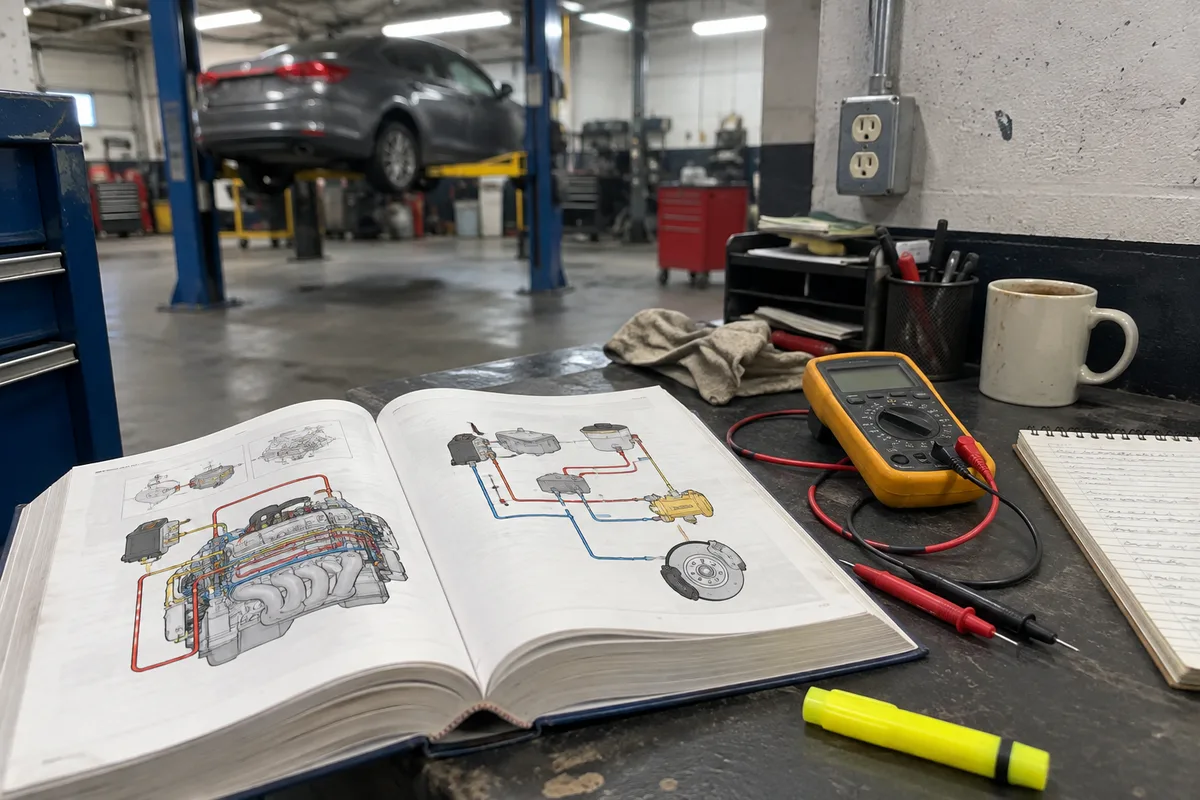
Automotive programs at community colleges and tech schools teach from thick textbooks, and those books are the most complete way to learn every system in order. They are written for students with no background, so the first chapters are easy, and they follow the eight ASE test areas: engine repair, transmission, drivetrain, suspension and steering, brakes, electrical, heating and air conditioning, and engine performance. They cost more than any other book here, but older editions sell used for much less and the content has changed little.
Best textbook for self-study
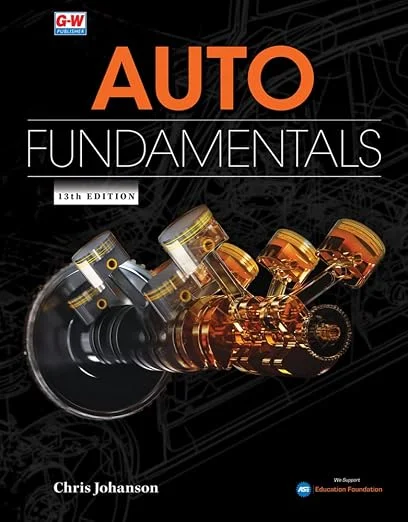
10. Auto Fundamentals by Stockel, Stockel and Johanson
Goodheart-Willcox’s Auto Fundamentals is the textbook used in many high school auto shop classes and entry-level college courses. It explains each system from its basic function down to the individual parts, with clear color diagrams, and it reads more easily than the college textbooks below. If you finished a beginner book and want the full picture of how a modern car works, this is the next step.
- 768 pages, 13th edition, December 2022
- Every major system, plus careers in the industry
- 4.9 stars
Good: the most readable full textbook. Not great: premium cost new. The 11th and 12th editions sell used for much less.
Best for mechanic school and ASE study
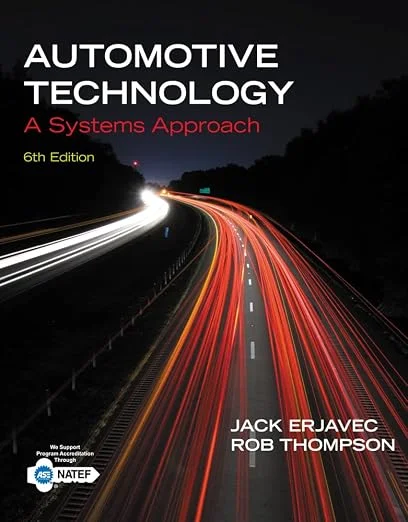
11. Automotive Technology: A Systems Approach by Jack Erjavec
Erjavec’s textbook is the standard in many college automotive programs. It is longer and more detailed than Auto Fundamentals, with service procedures, diagnosis and safety alongside theory, and its chapters line up with the ASE tests. The 6th edition from 2014 is listed here because it sells for a fraction of the newest edition and covers the same systems. The current edition, now written by Rob Thompson, adds more on hybrids, EVs and driver-assist systems.
- 1,712 pages, 6th edition
- Theory, diagnosis and service for every system
- 4.7 stars
Good: the most complete reference on this list for a future mechanic. Not great: heavy and dense, not a cover-to-cover read.
Best engineering reference
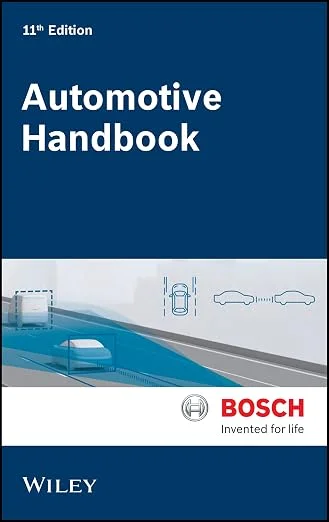
12. Bosch Automotive Handbook (11th Edition)
Bosch supplies parts to nearly every carmaker, and its handbook is the reference engineers keep on the desk. It covers physics, materials, engines, fuel injection, transmissions, chassis, electronics, safety systems and electric drives in a dense, compact format. A Reddit commenter with more than 25 years in auto factories called it the reference they have used more than any other. It is a book you look things up in, not one you read.
- 2,048 pages, 11th edition, 2022
- Engineering data and system descriptions for every area of the car
- 4.7 stars
Good: the deepest single reference on car technology. Not great: assumes some engineering background, and the small print is hard going for beginners.
Best books on engines and performance
Engine books split in two: hands-on build guides with step-by-step photos, and theory books that explain why an engine makes power. Start with a build guide even if you never plan to rebuild an engine, because seeing every part come out in order teaches more than any diagram. If you want the numbers behind gearing and acceleration, our gear ratio calculator and 0-60 calculator show how engine output turns into speed.
Best first engine rebuild book
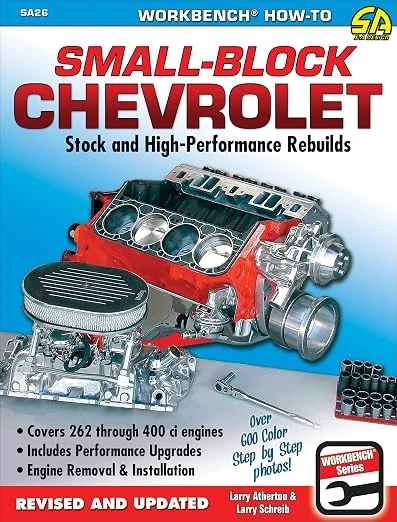
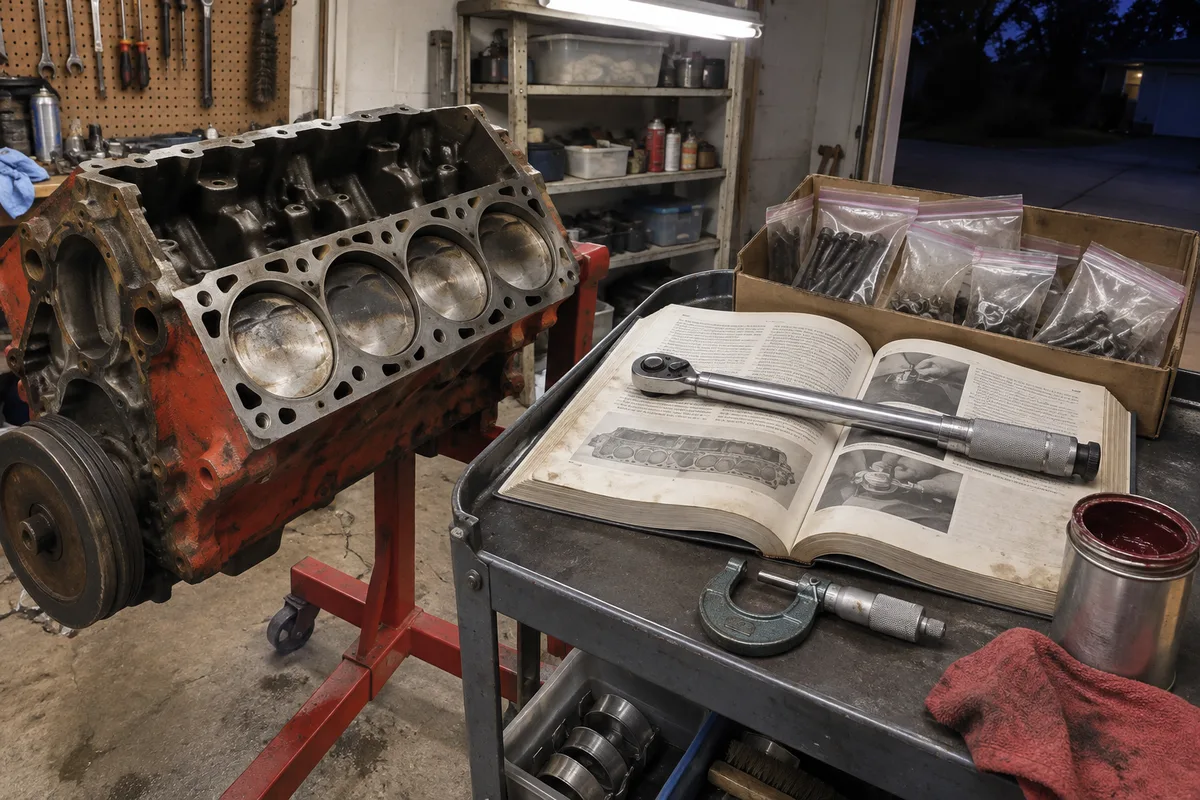
13. How to Rebuild the Small-Block Chevrolet by Larry Atherton
The small-block Chevy V8 is the most built engine in America, and this CarTech Workbench book walks through a full rebuild with hundreds of photos: teardown, inspection, machine work, measuring, assembly and first start. Reviewers in Muscle Car Review and Corvette Fever called it the book every auto shop class should teach from. Even if your car has a different engine, the process is the same, and CarTech sells matching Workbench books for Ford, Mopar, LS and Honda engines.
- 144 pages, step-by-step photos
- Stock and mild performance rebuilds
- 4.5 stars
Good: the clearest photo walkthrough of an engine rebuild. Not great: specific to the classic small-block; for an LS engine buy the LS version.
Best book on engine tuning theory
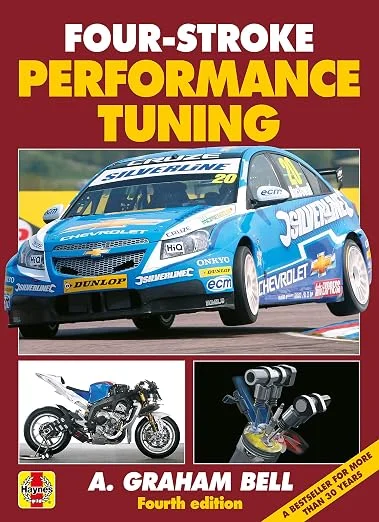
14. Four-Stroke Performance Tuning by A. Graham Bell
Graham Bell’s book has been the standard text on making a four-stroke engine produce more power since the 1980s. It covers cylinder heads and porting, camshafts, intake and exhaust design, carburetors and fuel injection, ignition and the bottom end, always explaining the reason behind each change. It applies to car and motorcycle engines alike, and it was one of the theory books recommended in Reddit’s engine design threads.
- Heads, cams, induction, exhaust, ignition, bottom end
- Car and motorcycle engines
- 4.8 stars
Good: explains why modifications work, which build guides skip. Not great: limited coverage of modern direct injection and electronic tuning.
Best book on turbochargers
15. Maximum Boost by Corky Bell
Corky Bell’s book is still the reference on turbocharging, recommended in r/cars’ essential books thread “for your supercharging and turbocharging needs.” It explains how a turbo works, how to size one with compressor maps, and how intercoolers, wastegates, fuel delivery and ignition timing have to change to live with boost. Read it before you buy a turbo kit and you will understand what the kit is doing.
- 256 pages, Bentley Publishers
- Turbo sizing, intercooling, fuel and ignition under boost
- 4.8 stars
Good: teaches the principles every turbo build still follows. Not great: from 1997, so the examples use older cars and electronics.
Best book on ECU tuning
16. Engine Management: Advanced Tuning by Greg Banish
Greg Banish is a former Ford calibration engineer, and this book explains how an engine computer decides how much fuel and spark to deliver. It covers volumetric efficiency, fuel and ignition tables, air-fuel ratios and how to tune on a dyno or the street. Anyone using a laptop tuner on a modern car or a standalone ECU on a project car should read it first.
- 128 pages, CarTech
- VE tables, fuel and spark maps, data logging
- 4.7 stars from more than 900 ratings
Good: the clearest explanation of tuning in print. Not great: “advanced” is accurate; read an engine basics book first.
Best engineering textbook on engines
17. Internal Combustion Engine Fundamentals by John Heywood
Heywood taught engines at MIT for decades, and his textbook is the one engineering students use. It covers thermodynamic cycles, combustion, gas flow, heat transfer, friction and emissions with full math. It was the most recommended book in the engine theory threads on Reddit (four threads), always with the warning that you need calculus and thermodynamics to get through it.
- 1,056 pages, 2nd edition, 2018
- University-level engine engineering
- 4.7 stars
Good: the definitive text on how engines work at the physics level. Not great: not for beginners, and premium cost.
Best books on handling, suspension and racing
Suspension and handling are where car knowledge gets interesting and where most people’s understanding stops. These books explain why a car grips, why it slides and what springs, dampers, alignment and aerodynamics change. If you are changing wheels, our wheel offset calculator shows how offset moves the wheel relative to the suspension.
Best book on how handling works
18. Tune to Win by Carroll Smith
Carroll Smith was a race engineer for Ford’s Le Mans program and in Formula 1, and his “To Win” series is still recommended on every racing and car forum. Tune to Win is the one about handling: tires, weight transfer, springs, anti-roll bars, dampers and aerodynamics, written in plain language with almost no math. The rest of the series covers preparation (Prepare to Win), engineering (Engineer to Win) and driving (Drive to Win).
- 173 pages, first published 1978
- Tires, weight transfer, suspension tuning, aero
- 4.8 stars
Good: the best plain-English book on vehicle dynamics. Not great: the racing examples are from the 1970s, though the physics has not changed.
Best advanced vehicle dynamics book
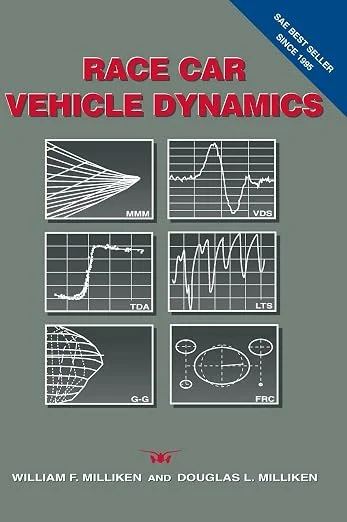
19. Race Car Vehicle Dynamics by William and Douglas Milliken
Known as “RCVD” in Formula SAE teams, the Millikens’ book is the engineering reference on how tires and suspension create grip. It covers tire behavior, steady-state cornering, suspension geometry, aerodynamics and data analysis with full math. Read Tune to Win first; come here when you want the equations.
- 920 pages, SAE International
- Tire models, cornering, suspension geometry
- 4.7 stars
Good: the most complete book on vehicle dynamics. Not great: math-heavy and premium cost.
Best book on aerodynamics
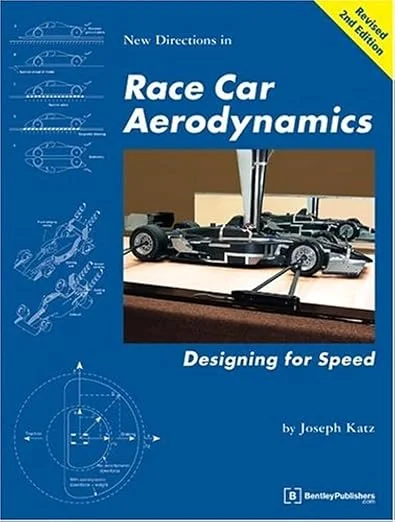
20. Race Car Aerodynamics by Joseph Katz
Joseph Katz is an aerospace engineering professor who has worked with racing teams, and this book explains downforce, drag, wings, diffusers and ground effect from first principles. It uses less math than an engineering textbook and plenty of diagrams and wind tunnel examples. It suits F1 fans who want to understand what the teams argue about every season.
- 280 pages, 2nd edition, Bentley Publishers
- Downforce, drag, wings, underbody aero
- 4.6 stars
Good: the most readable aero book. Not great: the cars in the examples are from the 1990s.
Best book on driving technique
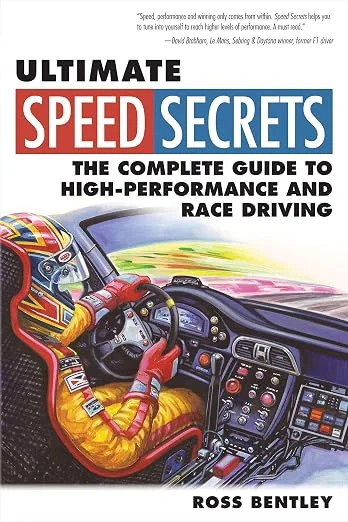
21. Ultimate Speed Secrets by Ross Bentley
Ross Bentley is a former Indy car driver and driving coach, and this book collects his Speed Secrets series into one volume: the racing line, braking, weight transfer, car control and the mental side of driving. It came up in three Reddit threads, and one commenter said it made them faster in sim racing. It is the most useful book here for track days and autocross.
- 336 pages
- Racing line, braking, car control, mental skills
- 4.8 stars from more than 900 ratings
Good: practical, well organized and useful for street drivers too. Not great: covers driving, not the mechanical side.
Best racing school textbook
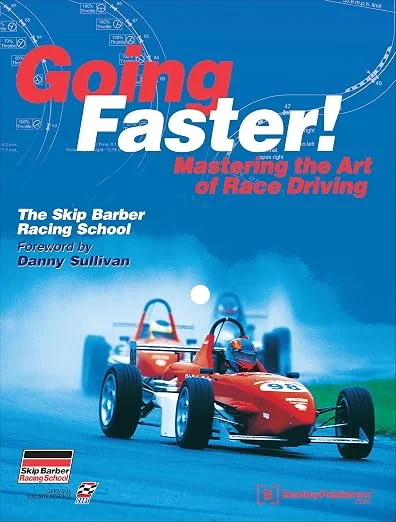
22. Going Faster! by Carl Lopez and the Skip Barber Racing School
This is the course book of the Skip Barber Racing School, written by Carl Lopez with the school’s instructors. It goes deeper than Speed Secrets on the physics of the tire’s grip limit, corner types, braking zones and car setup, with many diagrams. Read it if Speed Secrets left you wanting the why.
- 294 pages, Bentley Publishers
- Tire limits, cornering, braking, setup
- 4.8 stars
Good: thorough and well illustrated. Not great: denser than Bentley’s book, and focused on open-wheel race cars.
Best books on restoration and bodywork
Restoring a car teaches every system at once, because every part comes off and goes back on. These two Motorbooks Workshop titles are the usual starting points. For more books on classic cars and gifts for the people restoring them, see our list of gifts for classic car enthusiasts.
Best restoration guide
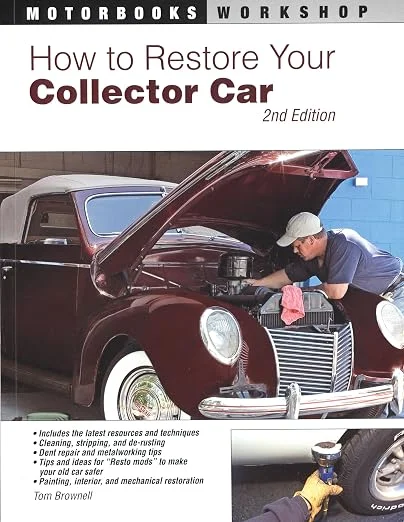
23. How to Restore Your Collector Car by Tom Brownell
Brownell covers a full restoration in the order you would do it: choosing a car, setting up the shop, disassembly, rust repair, body and paint, mechanical rebuilds, upholstery, wiring and reassembly. It is general enough for any American or European classic and honest about what to farm out to specialists.
- 272 pages, 2nd edition, Motorbooks Workshop
- Planning, disassembly, body, paint, mechanical, interior
- 4.5 stars
Good: the best overview of the whole job before you buy a project car. Not great: covers a lot, so each topic is brief.
Best book on bodywork and paint
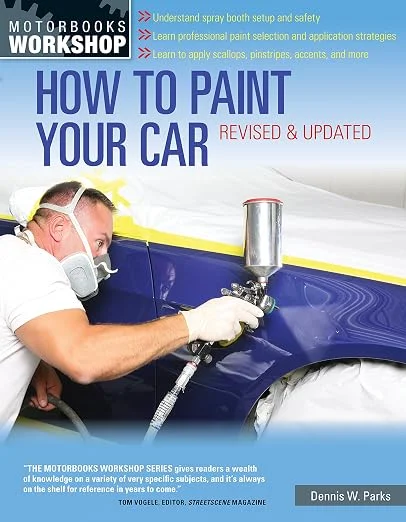
24. How to Paint Your Car by Dennis Parks
Dennis Parks walks through paint and body in the order a shop does it: stripping, rust and dent repair, body filler, primer, block sanding, spraying base and clear coat, then color sanding and buffing. It explains the equipment and materials too, which saves money on the first job.
- 192 pages, revised edition, Motorbooks Workshop
- Prep, filler, primer, paint, clear coat, buffing
- 4.4 stars
Good: complete process with photos of each step. Not great: a book cannot replace practice on scrap panels.
Best book on modern car computers
A new car has dozens of computers talking on internal networks. Few books explain that layer for non-engineers. This one does, from the security side.
Best for programmers and electronics fans
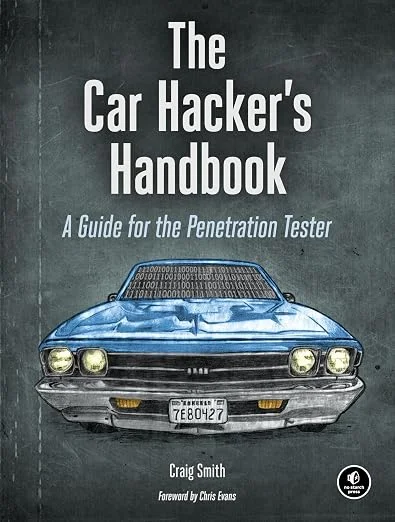
25. The Car Hacker’s Handbook by Craig Smith
Craig Smith’s No Starch Press book explains how a modern car’s computers communicate: the CAN bus, OBD-II, ECUs, infotainment and wireless systems. It shows how to read and send messages on the network with cheap hardware and free software. It is written for security researchers, but anyone with some programming background who wants to understand modern car electronics will learn more here than in any repair book.
- 304 pages, No Starch Press
- CAN bus, diagnostics, ECUs, reverse engineering
- 4.6 stars
Good: the clearest explanation of in-car networks. Not great: from 2016, and it assumes you are comfortable with Linux.
Best car books about history, design and culture
Learning about cars is not only mechanics. Knowing why cars look and work the way they do comes from their history, and the books below were the most named titles in Reddit’s “favorite car book” threads. For big photo books to keep on the table, see our best car coffee table books.
Best car book to read for fun
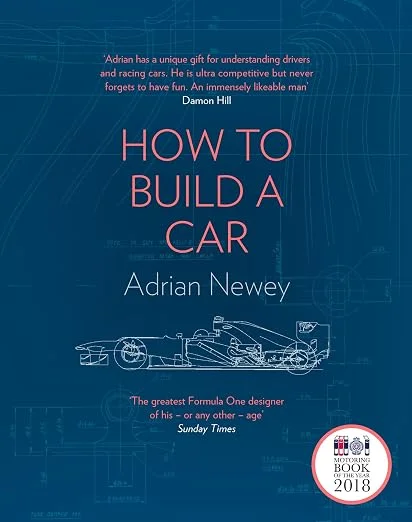
26. How to Build a Car by Adrian Newey
Adrian Newey designed championship-winning Formula 1 cars for Williams, McLaren and Red Bull, and his autobiography is organized around the cars he designed. Each chapter explains a design problem and how he solved it, with his own sketches. It was the most recommended book in Reddit’s car design and favorite-book threads. A commenter warned it is “more of a Newey autobiography than a guide on how to build a car,” which is true, and the book is better for it.
- 400 pages, hardcover, foreword by David Coulthard
- F1 design from the 1980s to the 2010s, with sketches
- 4.7 stars from more than 9,000 ratings
Good: engineering explained through stories, readable for anyone. Not great: about race cars, not the car in your driveway.
Best car history book
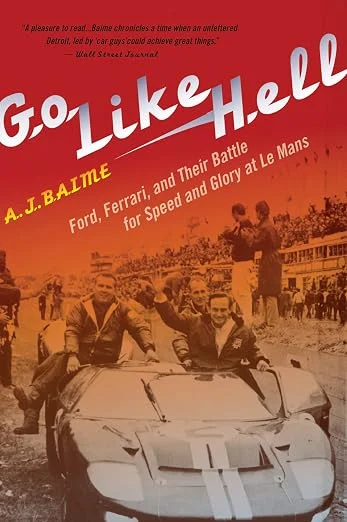
27. Go Like Hell by A. J. Baime
Baime tells the story of Ford’s campaign to beat Ferrari at Le Mans in the 1960s: Henry Ford II, Enzo Ferrari, Carroll Shelby, Ken Miles and the GT40. It was the history book named most often on Reddit, praised for its research and its ending. It is the easiest way into car history for someone who saw the 2019 film Ford v Ferrari.
- 336 pages, paperback
- Ford, Ferrari and Le Mans 1963 to 1967
- 4.7 stars from more than 3,600 ratings
Good: a fast read with real engineering and business history in it. Not great: narrative history, not a technical book.
Best visual history of the automobile
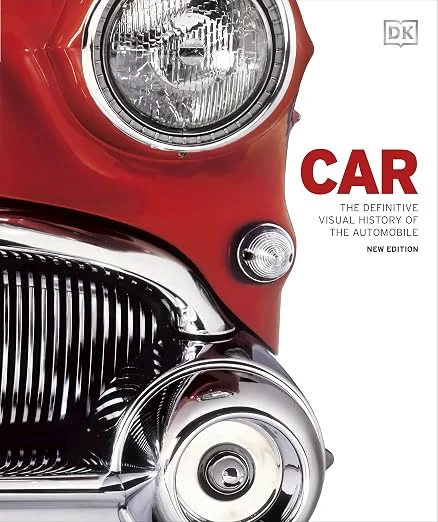
28. Car: The Definitive Visual History of the Automobile (DK)
DK’s Car lays out the automobile decade by decade, with photos and specs for more than 2,000 models, plus features on the great makers and engines. It is the best book for learning to recognize cars and to see how design changed over time. Our lists of old car brands that vanished and vintage car brands every collector should know cover many of the makes in it.
- 368 pages, new edition 2022
- Cars from the 1880s to today, by decade
- 4.8 stars
Good: huge coverage in one book. Not great: short entries, so it shows what changed more than why.
Best book on why to learn
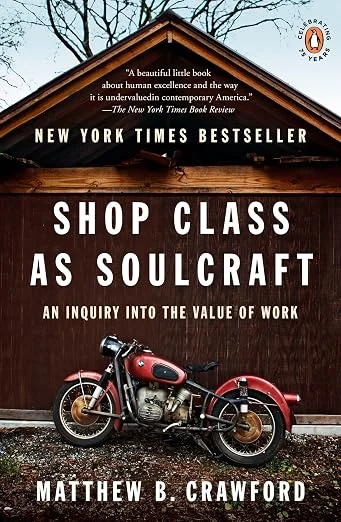
29. Shop Class as Soulcraft by Matthew B. Crawford
Matthew Crawford has a PhD in political philosophy and left a think tank job to run a motorcycle repair shop. His book argues that fixing machines is real intellectual work, and it describes diagnosis better than most repair books. It is not a how-to, but it is the book to give someone who wonders whether learning to wrench is worth their time.
- 246 pages, paperback
- Essays on skilled manual work and diagnosis
- 4.3 stars from more than 1,800 ratings
Good: thoughtful and well written. Not great: philosophy, with no practical instructions.
Best books to learn about cars according to Reddit
We read 31 Reddit threads where people asked how to start learning about cars, mostly r/cars, r/MechanicAdvice, r/askcarguys, r/Cartalk, r/AskAMechanic and the engineering subreddits. These are the books and resources named most often, counted once per thread:
| Book or resource | Threads | What people said |
|---|---|---|
| Haynes or Chilton manual for your car | 16 | Buy it the day you buy the car |
| How Cars Work (Newton) | 6 | The best first book, quick to read |
| ChrisFix (YouTube) | 5 | Best videos for first DIY jobs |
| Engineering Explained (YouTube) | 5 | Best for understanding the theory |
| Auto Repair For Dummies | 4 | Good next step after a picture book |
| Factory service manual | 4 | More complete than Haynes for newer cars |
| Heywood, Internal Combustion Engine Fundamentals | 4 | The engine theory textbook, needs calculus |
| Speed Secrets (Bentley) | 3 | Made people faster on track and in sim racing |
| Carroll Smith’s “To Win” books | 2 | “All of Carroll Smith’s books are great” |
| Maximum Boost (Bell) | 2 | The turbo book |
Two pieces of advice came up in almost every thread. First, reading is not enough: get a cheap old car or a junkyard engine and take it apart with the manual open. Second, be careful where you learn online. Several mechanics warned that much of the repair advice in comment sections is wrong, and that some popular YouTube channels give outdated or biased advice. Books from established publishers and the factory service manual are the safer sources.
How to choose a book to learn about cars
Start with your goal, not the most famous title. Someone who wants to stop being ripped off at the shop needs How Cars Work and Auto Repair For Dummies, not Heywood. Someone who wants to build a race car will be bored by beginner books within a week. Use the reading paths table above.
Buy the manual for your own car early. General books explain how a system works. Only a model-specific manual tells you which bolt to remove first and how tight it goes back on. Your owner’s manual is also worth reading cover to cover: it lists the service schedule, fluid types and what every warning light means.
Check the edition and date. Engine and suspension principles do not change, so a 1978 book on handling is still correct. Electronics, emissions, hybrids and EVs change fast, so for those topics buy the newest edition you can. The publication year is on each card above.
Buy older editions of textbooks. A college automotive textbook can cost more than a set of tires new. The edition before the current one usually sells used for a small fraction of the price, and the core chapters are nearly identical.
Pick photos or drawings to match how you learn. Haynes manuals, CarTech Workbench books and the DK beginner book use step-by-step photos. Newton and the Dummies book use simple line drawings. Photos are better with the book open in the garage; drawings are better for understanding how parts fit together inside.
How to learn about cars beyond books
Books build the understanding. Hands-on work makes it stick. These are the next steps mechanics recommend most:
- Do your own maintenance. An oil change, air filter, wiper blades and a tire rotation teach you where everything is. Our guide to how to pressure wash a car is an easy first weekend job, and the tire DOT code decoder teaches you to read a tire’s age and origin from the sidewall.
- Watch videos for the job in front of you. ChrisFix is the most recommended channel for DIY jobs and Engineering Explained for theory.
- Take a class. Community colleges offer evening auto maintenance courses, and many high schools still run auto shop. If you want a career, the ASE site lists the certification tests and official study guides.
- Check your own car’s recalls. Enter your VIN on the NHTSA recall lookup. Reading the recall notices for your car is a good lesson in how its systems fail.
- Buy a cheap OBD-II scanner. Plug it in, read the live data and look up what each sensor does in the Haynes OBD-II book.
Shopping for a car fan rather than yourself? Our gifts for car lovers list has a quick quiz, and F1 fans will find more books in our gifts for F1 fans.
Frequently asked questions
What is the best book to learn about cars for beginners?
How Cars Work by Tom Newton is the best first book. It explains 250 car parts with simple drawings in 96 pages and takes a weekend to read. Follow it with Auto Repair For Dummies to learn maintenance and basic repairs.
What book does Reddit recommend to learn about cars?
In 31 Reddit threads on learning about cars, the most common answer was the Haynes or Chilton repair manual for your own car, named in 16 threads. How Cars Work by Tom Newton was the most recommended general book, followed by Auto Repair For Dummies.
Is a Haynes manual good for learning about cars?
Yes. A Haynes manual shows every common repair on one model with step-by-step photos, torque specs and wiring diagrams. It teaches how your car is put together. Read a general beginner book first so the terms make sense.
Haynes or Chilton: which is better?
Both cover the same jobs for home mechanics, and Haynes owns Chilton. Haynes manuals are based on a full teardown of the car and use more photos. Pick whichever covers your exact year, engine and trim. For newer cars, the factory service manual is more complete than either.
Can you learn to be a mechanic from books?
Books teach the theory and procedures that ASE tests cover, and textbooks such as Auto Fundamentals and Automotive Technology: A Systems Approach follow the same program used in mechanic schools. You still need hands-on practice, which is why most mechanics start in a shop or a school program with a lab.
What book explains how a car engine works?
For beginners, How Cars Work and Car Science explain engines in simple terms. For a deeper look, Four-Stroke Performance Tuning explains why engines make power, and Internal Combustion Engine Fundamentals by John Heywood is the university-level textbook.
What is the best car book for a teenager?
Car Science by Richard Hammond suits ages 9 to 14 with big photos and short text. Older teens can read How Cars Work, which Tom Newton wrote for teenage students, then Auto Repair For Dummies.
Are old car books still useful?
For mechanics, engines, suspension and handling, yes: the physics has not changed, and books like Tune to Win from 1978 are still the standard. For electronics, emissions, hybrids and electric cars, buy recent editions.
What is the best book on car suspension and handling?
Tune to Win by Carroll Smith explains tires, weight transfer and suspension tuning in plain language. Race Car Vehicle Dynamics by William and Douglas Milliken is the advanced engineering reference with full math.
How can I learn about cars as an adult with no experience?
Read How Cars Work, then Auto Repair For Dummies, then buy the Haynes manual for your car and start with simple jobs like an oil change and air filter. Add YouTube videos for each job and consider an evening auto maintenance class at a community college.

James Kowalski
More from James KowalskiHow we reviewed this article
This article was researched against manufacturer records and editorially reviewed before publishing. We accept no payment for coverage. Some guides contain affiliate links; see our affiliate disclosure.