Key Takeaways
- Use 1,200 to 1,900 PSI and a white 40-degree nozzle on paint.
- Hold the nozzle 18 inches from the paint and keep it moving.
- Pre-rinse from the top down, apply soap, wash by hand, rinse and dry.
- Never use the red 0-degree nozzle on a car.
Affiliate links: as an Amazon Associate we earn from qualifying purchases.
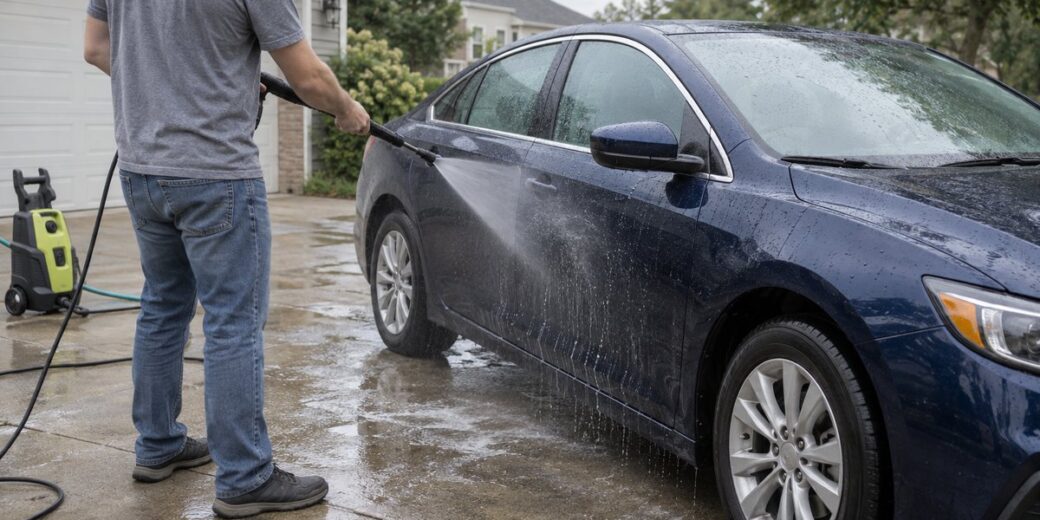
To pressure wash a car, rinse it from the top down with a white 40-degree nozzle held 18 inches from the paint, apply soap, wash it by hand with a mitt, rinse again and dry it with a microfiber towel. Use 1,200 to 1,900 PSI and keep the spray moving. The job takes about 45 minutes.
What you need
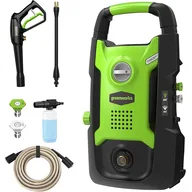 Pressure washer. The Greenworks 1600 PSI sits inside the safe range and includes 25-degree, 40-degree and soap nozzles. The Sun Joe SPX3000 flows more water, which makes thicker foam.
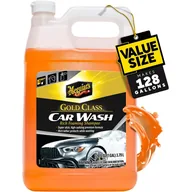 Car wash soap. Meguiar’s Gold Class works in a bucket or foam cannon. Our guide to the best car wash soap for a pressure washer covers soaps for onboard tanks and siphon tubes.
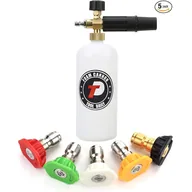 Foam cannon (optional). The Tool Daily foam cannon fits any 1/4-inch quick connect wand. The soap nozzle does the same job with less foam.
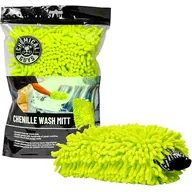 Wash mitt. A chenille microfiber mitt holds grit in its fibers, away from the paint.
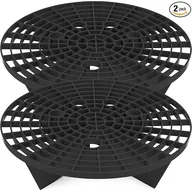 Two 5-gallon buckets and grit traps. Grit trap inserts keep dirt at the bottom of the bucket.
 Wheel brushes. Use a separate wheel brush kit so brake dust never reaches the mitt.
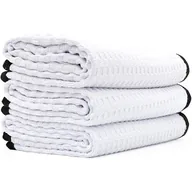 Drying towels. The Rag Company 3-pack covers a full car. See our best car drying towel guide for larger options.
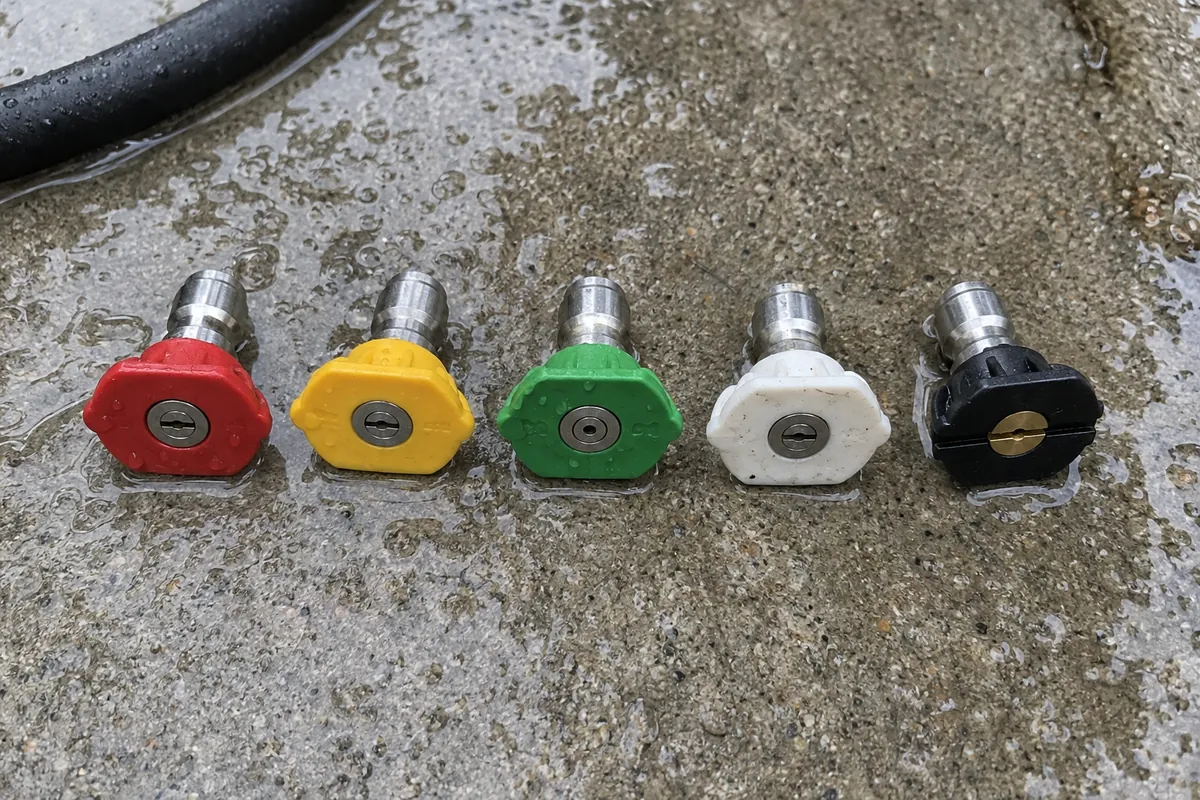
Which nozzle to use
| Tip | Spray | Use on a car |
|---|---|---|
| Red | 0 degrees | Never |
| Yellow | 15 degrees | Never on paint |
| Green | 25 degrees | Tires and wheel wells |
| White | 40 degrees | Paint, glass and trim |
| Black | Soap | Applying soap |
How to pressure wash a car
1. Set up
Park in the shade with the paint cool and the windows closed. Connect the garden hose, turn on the water and squeeze the trigger until the flow runs steady before you switch on the washer. Fit the white tip.
2. Clean the wheels first
Rinse the tires and wheel wells with the green tip. Scrub the wheels with soapy water and a wheel brush, then rinse them.
3. Rinse the car from the top down
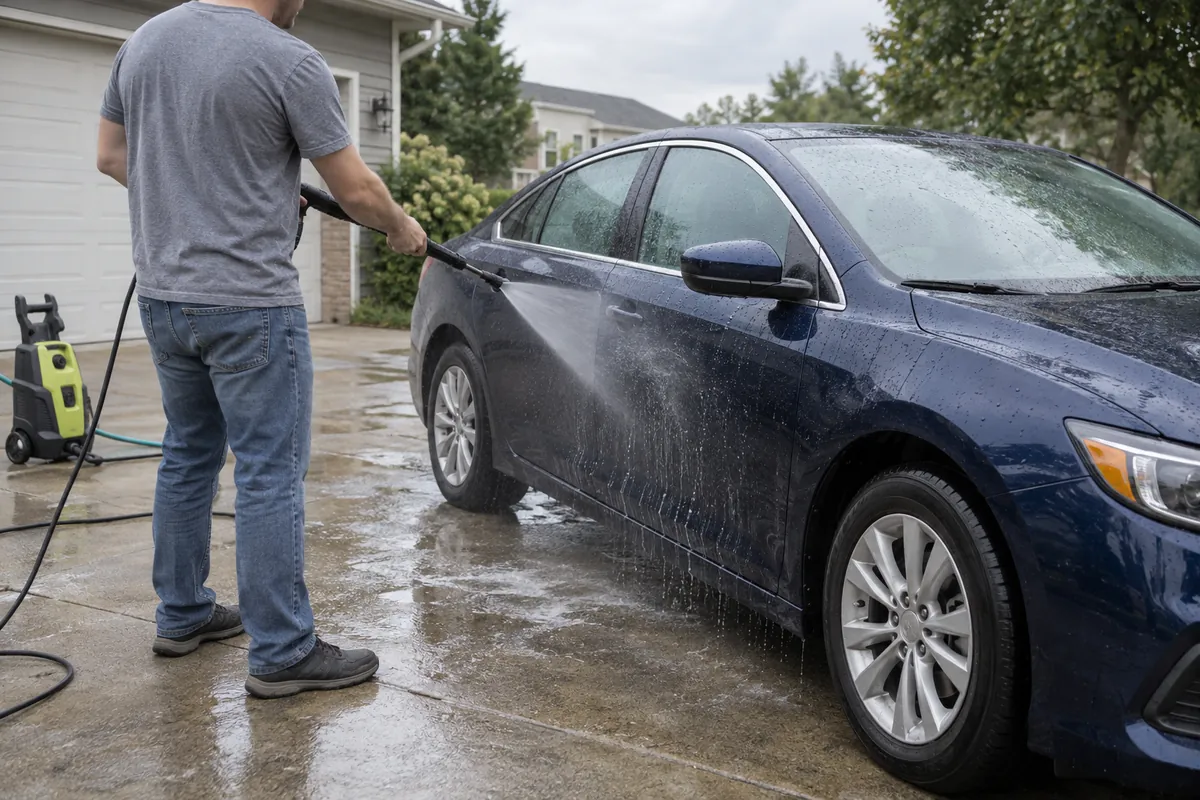
Switch to the white tip and hold it 18 inches from the paint at a 45-degree angle. Work from the roof to the rocker panels. This step removes the loose grit that would otherwise scratch the paint during the hand wash.
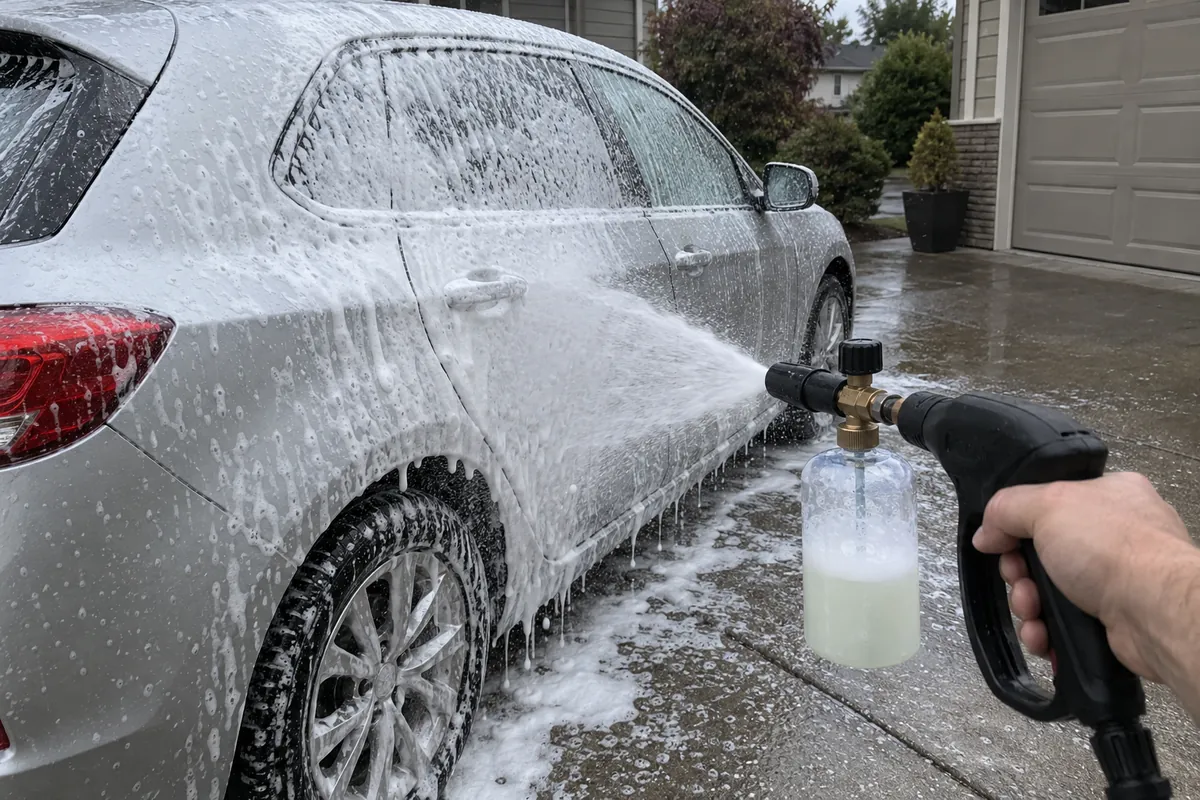
4. Apply soap
Spray foam or soap from the bottom of the car upward so the lower panels get the most time. Let it sit for 1 to 2 minutes and do not let it dry on the paint.
5. Wash by hand
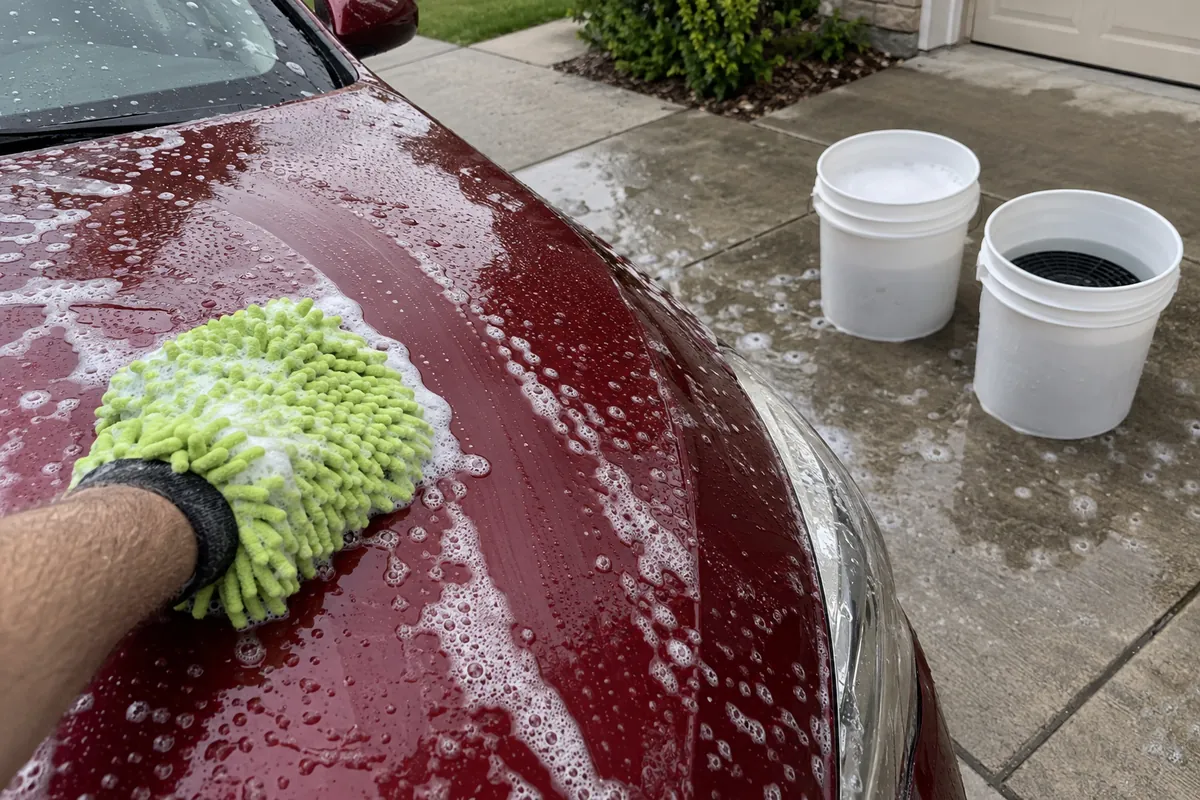
Fill one bucket with soapy water and one with clean water, with a grit trap in each. Wash in straight lines from the roof down and rinse the mitt in the clean bucket after each panel. Leave the lower doors and bumpers for last.
6. Do the final rinse
Rinse from the top down with the white tip until no suds run off. Check the mirrors, door handles and panel gaps, where soap collects.
7. Dry the car
Lay a drying towel flat on each panel and pull it toward you. Start with the glass and roof. Drying stops water spots from forming.
Where to keep the spray away
- Sensors and cameras. Tesla says not to aim the jet at parking sensors or cameras. BMW sets a 12-inch minimum for sensors, cameras, seals and lights.
- Door and window seals. Spray across them, never straight at them.
- Glass sunroofs. BMW’s X5 manual sets a 31.5-inch minimum.
- Damaged paint and film. Pressure lifts rock chips, peeling clear coat, emblems and the edges of vinyl wraps.
- Charge ports. Tesla rules out high-velocity spray at the port while the car charges.
FAQ
Is it safe to pressure wash a car?
Yes, with a 40-degree nozzle, 1,200 to 1,900 PSI and 18 inches of distance on sound paint. The risk comes from narrow tips, close range and spraying chipped paint.
What PSI is safe for washing a car?
1,200 to 1,900 PSI. Chemical Guys suggests staying near 1,200 to 1,500 PSI on older paint, fresh wax or ceramic coatings.
What nozzle should you use to pressure wash a car?
Use the white 40-degree nozzle on paint and glass, the green 25-degree nozzle on tires and wheel wells and the black nozzle for soap. Never use the red 0-degree nozzle on a car.
How far should a pressure washer be from a car?
Hold the nozzle 18 inches from the paint. Tesla and BMW both set 12 inches as the minimum, and more distance is always safer.
Can you use a 3,000 PSI pressure washer on a car?
Yes, with the white 40-degree tip and at least 18 inches of distance. Pressure at the paint falls as the spray widens and the distance grows.
Can a pressure washer damage car paint?
Yes. A narrow tip at close range can strip clear coat, and any tip can lift paint that is already chipped or peeling. Sound factory paint handles a 40-degree fan from 18 inches.
Do you need to hand wash after pressure washing a car?
Yes, unless the car has only light dust. A pressure washer removes loose dirt, while the bonded road film needs a mitt.
Can you use dish soap in a pressure washer to wash a car?
No. Dish soap strips wax and sealant. Use a pH-balanced car wash soap made for your washer’s tank, siphon tube or foam cannon.
Can you pressure wash a car engine?
No. High-pressure water can reach connectors and sensors in the engine bay. Clean it with a degreaser, a brush and a damp cloth.
Sources & References
- Tesla Model 3 owner's manual, cleaning: https://www.tesla.com/ownersmanual/model3/en_us/GUID-65384C1F-86F2-44E8-A8BC-8A12E7E00A40.html
- BMW X5 2023 owner's manual, vehicle care: https://www.manualslib.com/manual/3077812/Bmw-X5-2023.html?page=385
- Chemical Guys, can you pressure wash a car: https://www.chemicalguys.com/blogs/exterior-how-tos/can-you-pressure-wash-a-car

James Kowalski
More from James KowalskiHow we reviewed this article
This article was researched against manufacturer records and editorially reviewed before publishing. We accept no payment for coverage. Some guides contain affiliate links; see our affiliate disclosure.