Key Takeaways
- Lift the rear wheel, spray an O-ring safe cleaner, scrub with a soft brush, wipe dry and lube right away.
- Keep the engine off for the whole job.
- Clean a street bike chain about every 600 miles or at every second or third lube.
- Do not use a wire brush, pressure washer, steam or gasoline on a sealed chain.
Affiliate links: as an Amazon Associate we earn from qualifying purchases.
To clean a motorcycle chain, lift the rear wheel, spray an O-ring safe cleaner on the chain, scrub it with a soft brush, wipe it dry and lube it right away. Keep the engine off the whole time. The job takes about 20 minutes, and a sealed chain needs it about every 600 miles.
What you need
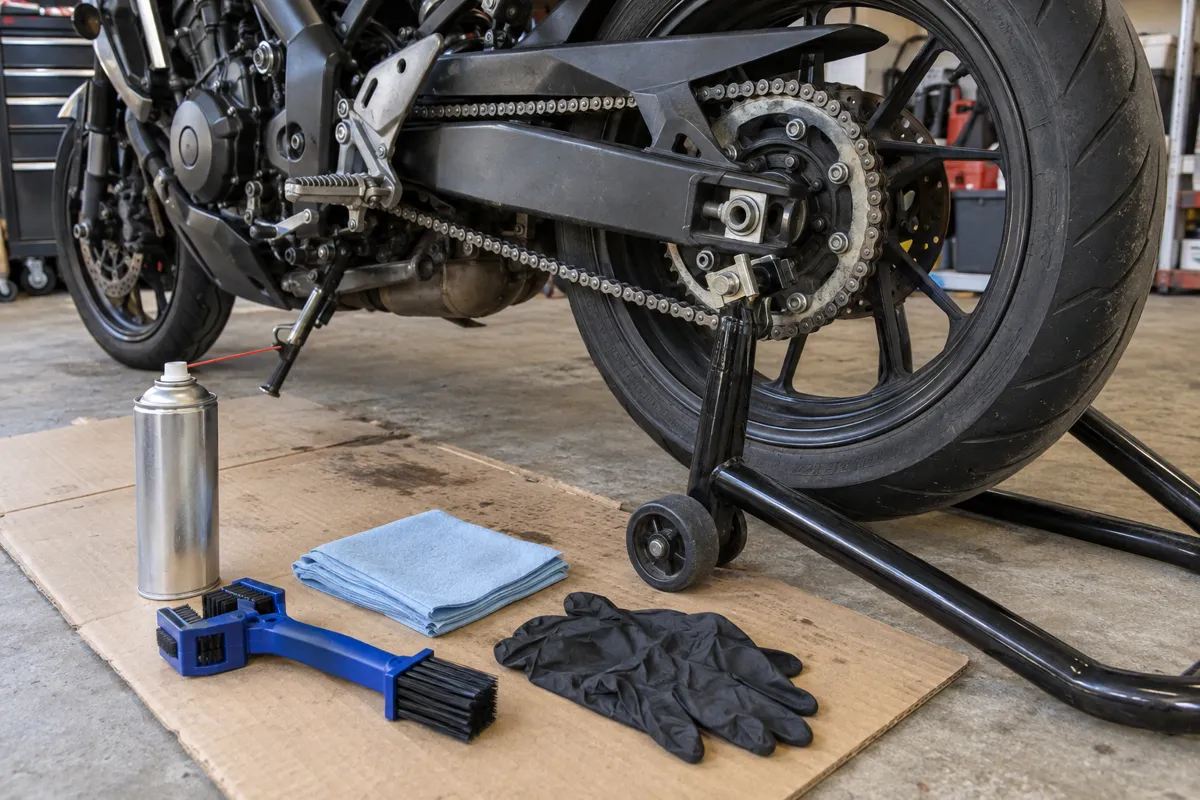
- O-ring safe chain cleaner. Motul C1 needs no water rinse. Our guide to the best motorcycle chain cleaner covers the other options, including stronger cleaners for hardened wax.
- Soft three-sided brush. The Muc-Off chain brush has a second end for the sprocket. This soft nylon 2-pack is the cheaper choice.
- Chain lube. Motul C2 suits street bikes. See our best lube for a motorcycle chain guide for wax, paste and dirt bike options.
- Rags and gloves. Shop towels and nitrile gloves, plus a sheet of cardboard from the recycling.
- Rear stand (optional). A rear paddock stand lets you turn the wheel by hand. A center stand does the same job.
Buying everything at once? The Motul chain care kit includes the cleaner, lube, a brush and gloves.
How to clean a motorcycle chain
1. Set up the bike
Put the bike on a rear stand with the engine off, the transmission in neutral and the exhaust cool. Without a stand, clean the section you can reach, roll the bike forward and repeat.
2. Protect the tire and brakes
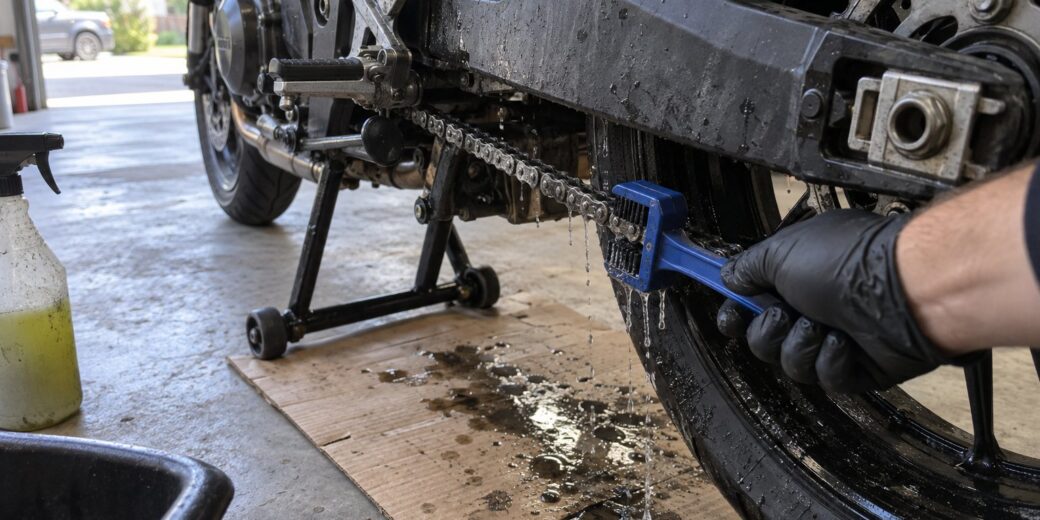
Lay cardboard under the chain and hold a second piece behind the lower run to shield the tire. Cleaner on the tire or brake disc costs you grip.
3. Apply the cleaner
Spray the lower run while you turn the wheel by hand until the whole chain is wet. For less mess, follow RK’s method: douse a rag with cleaner and wipe the chain.
4. Let it work
Wait for the time on the label. Most sprays need about a minute.
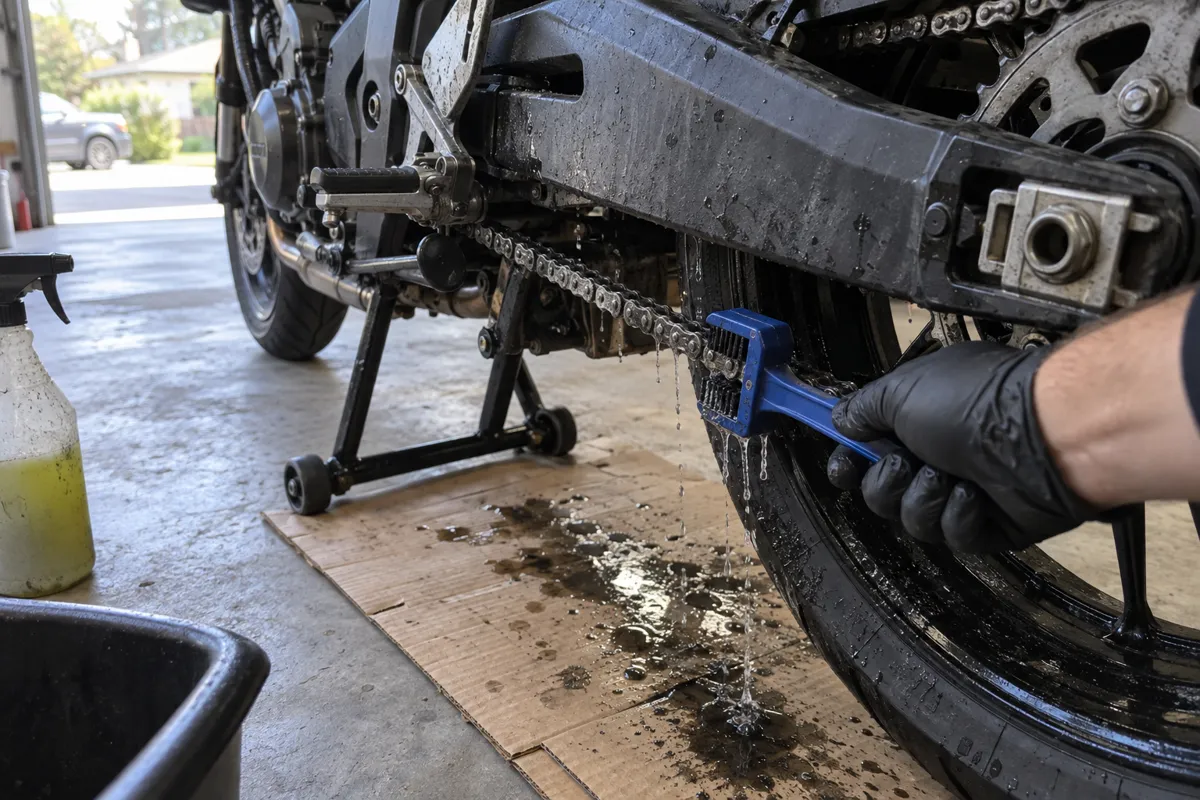
5. Scrub with a soft brush
Work the brush along the chain instead of pressing hard across the seals. Stop when the plates and rollers show clean metal.
6. Rinse if the label says to
No-rinse cleaners skip this step. For rinse-off cleaners, use a garden hose at low pressure. Honda rules out steam and high-pressure washers on O-ring chains.
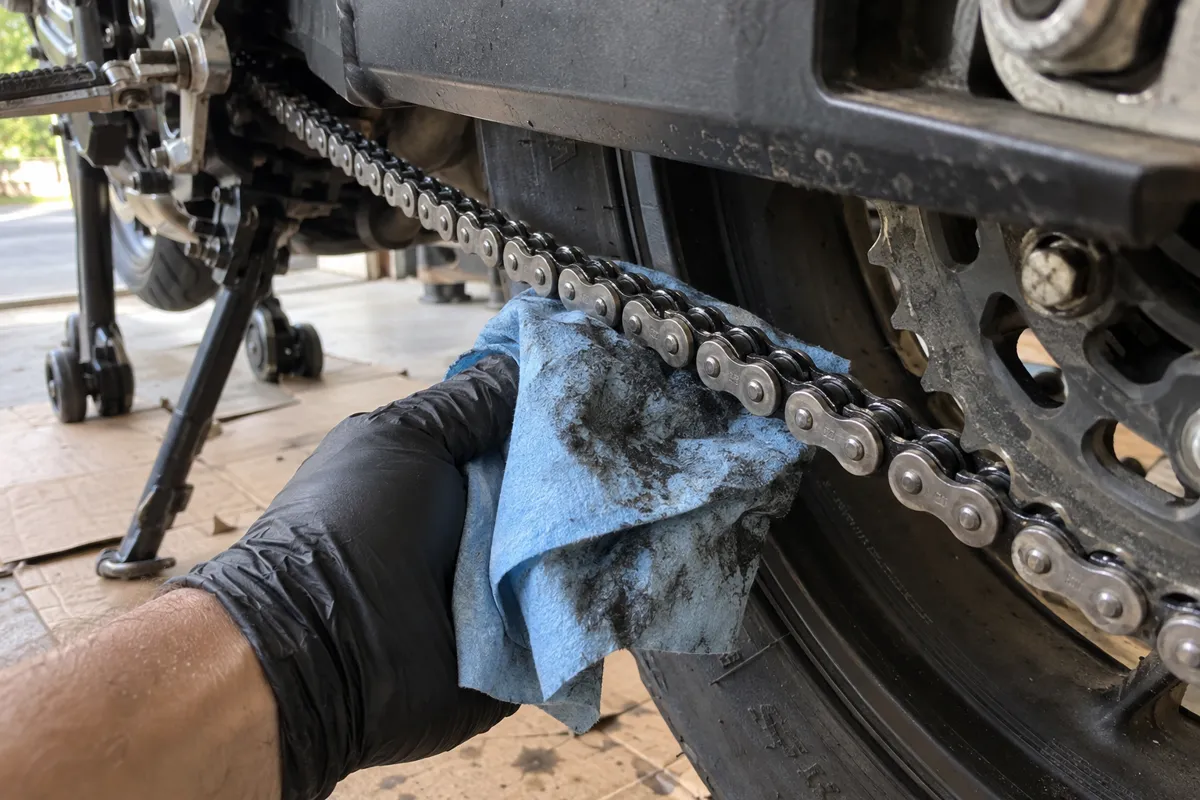
7. Wipe it dry
Hold a clean towel around the chain and turn the wheel until the towel stays mostly clean. Keep your fingers away from the sprocket.
8. Lube the chain
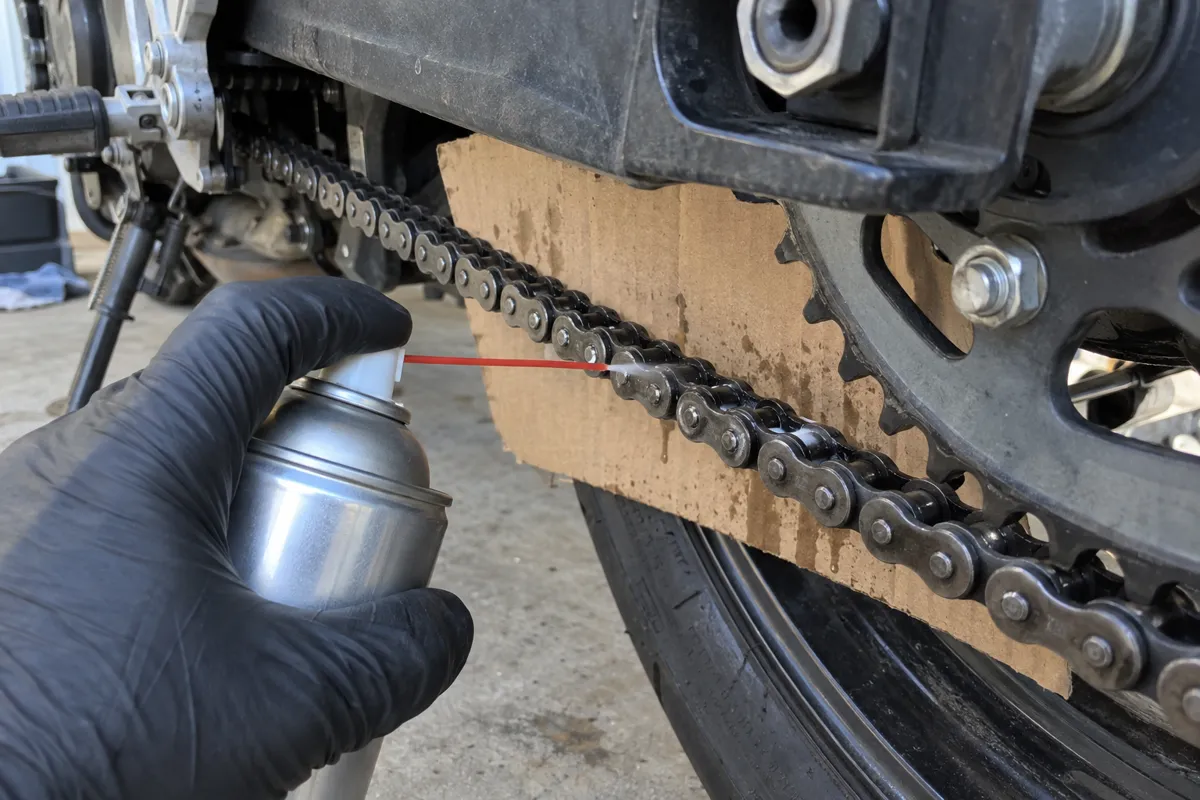
A degreased chain can flash rust within hours in damp air, so do not skip this. RK suggests a short ride first to throw off leftover cleaner, then lubing while the chain is warm. Spray a thin line on the inside of the lower run, aiming at the rollers and both rows of seals, and give the wheel one or two turns. Let it set for the time on the label before you ride.
What not to use on a sealed chain
- Wire or hard-bristle brushes. D.I.D, RK and Honda all rule out wire brushes, and RK warns that hard bristles damage the seals.
- Pressure washers and steam. Honda and D.I.D rule out steam, and Honda rules out high-pressure cleaners.
- Gasoline, thinner and benzene. These solvents damage the rubber rings.
- Kerosene and WD-40. RK’s instruction sheet bans both on sealed chains, and D.I.D does not recommend kerosene. Yamaha manuals specify kerosene, so check your chain maker’s rule first.
FAQ
How often should you clean a motorcycle chain?
Clean a street bike chain about every 600 miles or at every second or third lube. Motul recommends about every 1,000 km. Clean it sooner after rain, gravel or dirt riding.
How long does it take to clean a motorcycle chain?
A full clean and lube takes about 20 minutes with a rear stand. Without one, allow extra time to roll the bike and work in sections.
Can you clean a motorcycle chain without a rear stand?
Yes. Clean the section you can reach, roll the bike forward and repeat until you have covered the whole chain. Keep the engine off and the transmission in neutral.
What can I use instead of motorcycle chain cleaner?
Neutral detergent with a soft brush is the safest household option, and a Honda XR650L manual allows it. Dry the chain and lube it right away.
Can you use kerosene to clean a motorcycle chain?
D.I.D and RK say not to, while Yamaha manuals specify it. Follow your chain maker. If it allows kerosene, wipe the chain with a damp rag and never soak it.
Can you clean a motorcycle chain with WD-40?
RK says not to use WD-40 on sealed chains. An O-ring safe cleaner is the better choice, and WD-40 does not replace chain lube.
Can you pressure wash a motorcycle chain?
No. Honda rules out high-pressure and steam cleaners on O-ring chains. Use a garden hose at low pressure for rinse-off cleaners.
Should you lube a chain right after cleaning it?
Yes. A degreased chain has no protection on its rollers or plates. RK suggests a short ride first, then lubing while the chain is warm.
Sources & References
- RK, chain instruction sheet: https://images.carid.com/rk-excel-america/items/pdf/chain-instruction-sheet.pdf
- D.I.D, chain maintenance: https://didchain.com/blogs/news/d-i-d-chain-maintenance
- Honda XR650L owner's manual, drive chain: https://www.bike-parts.fr/thumbs/pdf_url/img/owner_manuals/owner_XR650LF_EN/2500_2500/0046.pdf
- Yamaha YZF-R6 owner's manual, cleaning and lubricating the drive chain: https://www.manualslib.com/manual/1162904/Yamaha-Yzf-R6.html?page=77
- Motul C1 Chain Clean, technical data sheet: https://azupim01.motul.com/media/motulData/DO/base/chain_clean_mc_de_de_motul_23001_20260327.pdf

James Kowalski
More from James KowalskiHow we reviewed this article
This article was researched against manufacturer records and editorially reviewed before publishing. We accept no payment for coverage. Some guides contain affiliate links; see our affiliate disclosure.