BMW’s motorcycle division spent the early 1980s in a corner. The boxer twin, a layout the company had been building since 1923, was selling to a shrinking circle of loyalists, and Japanese four-cylinder bikes were faster, cheaper and smoother. By the end of the decade BMW had invented a new category, won the Dakar Rally four times, and replaced its signature engine with a water-cooled four. The 1980s BMW motorcycles are three different stories running at once, and this guide covers all of them.
Contents
- The rescue: how the R80 G/S changed BMW
- The airhead boxers: R45, R65, R80, R100
- The R100RS and R100RT
- From G/S to R100GS: the Dakar years
- The K-series: the flying brick arrives
- Boxer or K-series: which one suits you
- Buying a 1980s BMW today
- Summary
The rescue: how the R80 G/S changed BMW
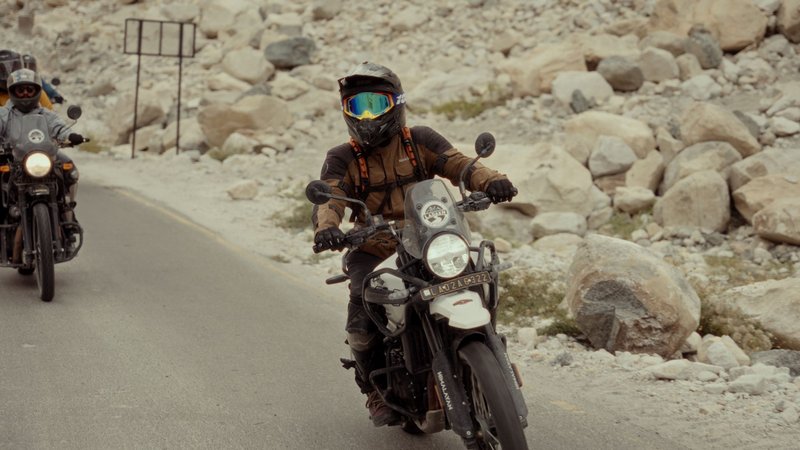
BMW launched the R80 G/S in 1980. The letters stand for Gelände/Straße, German for off-road/road, and the bike was built on a simple idea: take the 800 cc boxer from the R80/7, put it in a lighter frame with long-travel suspension, a high front fender and a 19-inch front wheel, and see what happens.
What happened was a new segment. Nobody had sold a big, road-legal, long-travel twin as a mainstream product before. The G/S also introduced the Monolever, a single-sided swingarm with one shock, which saved weight and made rear-wheel removal easier. At roughly 170 kg dry it was a good 50 kg lighter than the big touring boxers it sat next to in the showroom.
Then it started winning. The Paris-Dakar Rally had begun in 1979, and BMW-backed G/S machines took the overall victory in 1981 (Hubert Auriol), 1983 (Auriol again), 1984 and 1985 (Gaston Rahier). That record sold bikes to people who would never ride one on sand, which is the whole story of the adventure-bike market in one sentence.
Production ran from 1980 to 1987, with 21,864 R80 G/S units built. For a company that had been building motorcycles for six decades and was not sure its two-wheeled division had a future, that was a rescue, not a model run.
The airhead boxers: R45, R65, R80, R100
“Airhead” is the retrospective name for BMW’s air-cooled boxer twins, coined once the oil-cooled “oilhead” engines arrived in the 1990s. In the 1980s they were simply BMWs. The range was a ladder of displacement, all sharing the same basic layout: two cylinders sticking out into the airstream, pushrods, a single-plate dry clutch, and shaft drive.
| Model | Years | Engine | Power | Weight (approx., dry) | Who it suits |
|---|---|---|---|---|---|
| R45 | 1978-85 | 473 cc boxer twin | 27 or 35 hp | ~190 kg | New riders, or anyone who wants a boxer without the weight |
| R65 | 1978-85 | 649 cc boxer twin | 45 hp (restricted versions exist) | ~190 kg | Commuters and smaller riders; the best-balanced airhead |
| R65 LS | 1981-85 | 649 cc boxer twin | 45 hp | ~195 kg | Collectors who like oddities; it has a cockpit fairing and cast wheels |
| R80 | 1984-95 (Monolever) | 797 cc boxer twin | 50 hp | ~200 kg | The default all-rounder |
| R100 | 1980s Monolever and earlier | 980 cc boxer twin | 70 hp | ~215 kg | Riders who want the full airhead character without a fairing |
The R45 and the R65 are the models people skip, and they shouldn’t. The R65 weighs about the same as an R80 G/S, handles better than the bigger bikes, and is a good first step into the airhead world. German insurance classes pushed BMW to offer the R45 in 27 hp form, which is why you’ll still see that figure quoted.
The R80 was the volume seller. Its 797 cc engine makes about 50 hp, which sounds modest until you remember what the bike is for: 140 km/h cruising, 5 l/100 km economy, and the ability to run for 100,000 km if the owner changes the oil. In 1984, the R80 and R100 got the Monolever rear end first seen on the G/S, replacing the old twin-shock swingarm and giving the airheads a more modern ride.
The 1980s also saw the introduction of a quieter evolution: Bosch electronic ignition, revised gearboxes, and a longer-lasting final drive. These upgrades are the reason experienced buyers favor later airheads over the 1970s /5 and /6 models.
The R100RS and R100RT
At the top of the airhead range sat the two bikes that defined what a 1980s BMW touring rider wanted. The 980 cc engine makes about 70 hp, and the two fairing designs split the buyers into sport-tourers and long-distance riders.
| Model | Years | Engine | Power | Weight (approx.) | Who it suits |
|---|---|---|---|---|---|
| R100RS | 1976-84 (updated Monolever versions later in the decade) | 980 cc boxer twin | 70 hp | ~215 kg dry | Riders who want 200 km/h capability and a classic silhouette |
| R100RT | 1978-84 (updated Monolever versions later) | 980 cc boxer twin | 70 hp | ~225 kg | Long-distance riders who value wind and weather protection |
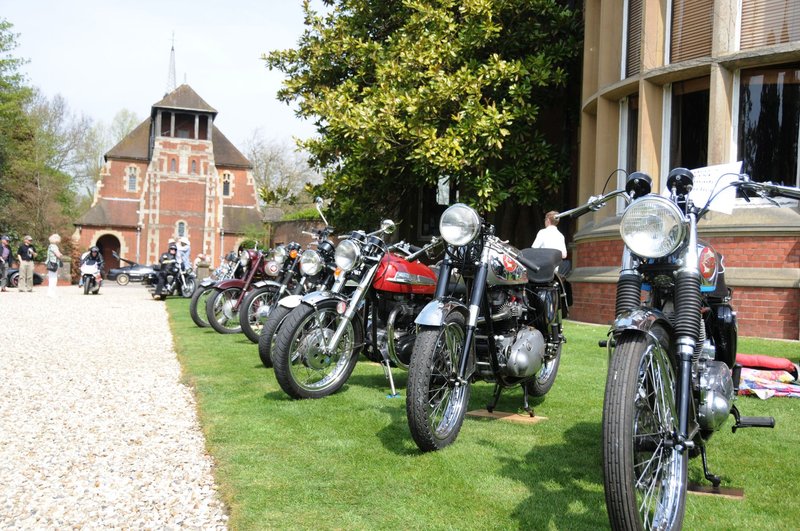
The R100RS was the first production motorcycle sold with a full wind-tunnel-developed fairing. It is also the bike people picture when someone says “classic BMW”. The fairing is bolted to the frame, not the forks, so steering stays light while wind pressure at speed is pushed away from the rider. It’s an elegant answer to a problem most manufacturers solved later with bigger screens.
The R100RT is the more sensible cousin. The bigger fairing and wider screen make it a better bike for 800 km days, and for that reason the RT often sells for less than the RS today despite being the better touring tool. Many collectors still pay the RS premium for the styling.
From G/S to R100GS: the Dakar years
The G/S ended in 1987, replaced by two bikes: the R80 GS and the R100 GS. The new bikes kept the idea and fixed the weak points. The key change was the Paralever, a rear swingarm with an extra link that stopped shaft-drive torque from lifting the rear end under power. The R100GS also got a 980 cc engine, rated at around 60 hp, with the peak tuned for low-down torque rather than top-end speed.
| Model | Years | Engine | Power | Weight (approx., dry) | Who it suits |
|---|---|---|---|---|---|
| R80 G/S | 1980-87 | 797 cc boxer twin | 50 hp | ~170 kg | Collectors, light off-road riders |
| R80 GS | 1987-95 | 797 cc boxer twin | 50 hp | ~185 kg | Riders who want a GS but don’t need 980 cc |
| R100GS | 1987-96 | 980 cc boxer twin | 60 hp | ~200 kg | The classic “round the world” bike, still a safe bet |
The original G/S and its immediate successors are now the most collectible BMWs of the decade. Limited editions and early examples carry the highest prices, particularly when they have documented history and unmolested paintwork. The Dakar-replica versions that followed at the end of the decade, with their huge 32-litre tanks, are collector bikes in their own right.
Dakar’s link to the road bike is the reason a GS still has resale value. A buyer in 2025 isn’t paying for the sand; they’re paying for the idea that this machine could cross the Sahara and then take them to work on Monday.
The K-series: the flying brick arrives
The K-series came from a different philosophy and a different company. BMW needed a modern engine, one that could meet noise and emissions rules, run quietly at motorway speeds, and compete with the Japanese fours that dominated the market in the early 1980s. It built an in-line four-cylinder, water-cooled and fuel-injected, and mounted it lying on its side with the cylinders pointing to the left and the crank running lengthwise. That layout lowered the center of gravity and kept shaft drive simple. The K100 appeared in 1983 and was BMW’s first water-cooled production motorcycle.
The press called it the “flying brick”, partly because of the slab-sided engine casting and partly because the first bikes looked like they had been designed with a ruler. BMW leaned into it.
| Model | Years | Engine | Power | Weight (approx.) | Who it suits |
|---|---|---|---|---|---|
| K100 / K100RS | 1983-92 | 987 cc inline-four | 90 hp | ~215-235 kg | Riders who want speed and mile-munching ability |
| K75 | 1985-96 | 740 cc inline-three | 67-75 hp | ~210 kg | Smooth, long-legged commuters and tourers |
| K1 | 1988-93 | 987 cc 16-valve inline-four | 100 hp | ~235 kg | Collectors; it was an aerodynamic sport-touring statement with ABS |
The K100RS, with its sport fairing, was the model that made BMW credible to a new group of riders. It made 90 hp, ran fuel injection when most competitors were still on carburetors, and held 200 km/h on the motorway with a calm that boxers couldn’t match.
The K75 followed in 1985. It was a three-cylinder version of the same architecture with a balance shaft, and it’s a case where less was more. It’s smoother than the four in the middle of the rev range, lighter, and cheaper to buy. For many buyers it is the best K-series bike.
Then came the K1 in 1988, the most radical bike BMW had ever built. It had a full-enclosure bodywork developed in a wind tunnel, a 16-valve version of the four making 100 hp, a Paralever rear end and, importantly, anti-lock brakes as standard. Only 6,921 were built, and its colors, bright yellow and red, were polarising. A good one is now a serious collector’s item.
Boxer or K-series: which one suits you
The K100 versus R100RS debate comes up often, and the answer depends on what you value.
- The R100RS is lighter in character, easier to fix with a toolkit and a Haynes manual, and has a following that keeps parts supply healthy. It’s slower, vibrates more and needs more regular attention. You buy it because you like the engine’s sound and the sense of mechanical honesty.
- The K100RS is faster, smoother and more refined. It’s also heavier, more complex, and when something electronic fails, harder to diagnose. You buy it because it works as a modern-feeling tourer.
- The R80 G/S and R100GS are for people who want to ride the bike, not just look at it. They’re the best compromise of road manners and off-road ability.
None of the three is “better”. They are answers to different questions, and BMW was selling all three at the same time. That’s what makes the decade so interesting.
Buying a 1980s BMW today
Prices vary a lot by country, condition and provenance, so treat the following as rough ranges for sound, running bikes in the US and UK in recent years, and check recent sale results before you commit, or see 15 iconic old BMW models and what they’re worth now for a longer view.
| Model | Rough price range (USD) |
|---|---|
| R45 / R65 | $2,500-$5,500 |
| R80 / R100 (non-fairing) | $3,500-$7,000 |
| R100RS / R100RT | $5,000-$10,000 |
| R80 G/S | $7,000-$15,000+ |
| R100GS | $5,000-$10,000 |
| K100 / K75 | $2,000-$5,500 |
| K1 | $8,000-$15,000+ |
Known weak points
Airheads:
- Splines: The gearbox input shaft and the final drive have splined joints that need grease. If they’ve been neglected, the splines wear, producing a clunk on take-up. Ask when they were last serviced.
- Carburetors: Bing carbs go out of sync. A poor idle or flat spot usually means they need setting up, not replacing.
- Valve covers and seals: Oil weeps are common and usually cheap to fix.
- Rust and electrics: Check tanks, exhaust headers and the wiring harness, especially if the bike lived near the sea.
K-series:
- Fuel system: The fuel pump, rubber hoses and injection components age. Fuel leaks and starting problems are the usual symptom.
- Final drive and splines: Same advice as for the boxers.
- Plastics: Fairing panels on the K1 and RS models are expensive and sometimes impossible to find. Inspect for cracks and repaired mounts.
- Electronics: Dashboards, relays and ignition modules do fail. Check everything works.
What to inspect
- Service history. A pile of receipts beats a shiny paint job.
- Cold start. The bike should start without drama and settle at idle.
- Test ride. Listen for the clunk on take-up, check the clutch for slipping, and note any vibration from the driveshaft.
- Frame and swingarm. Look for signs of impact, bent bars or a crooked front end.
- Parts availability. Airhead parts are plentiful thanks to a dedicated community. K-series mechanical parts are generally available, but bodywork and some electronics are harder to find.
Summary
The 1980s BMW motorcycles were a decade of three overlapping bets. The airhead boxers kept the brand’s identity alive, from the humble R45 to the R100RS. The R80 G/S created a segment and won four Dakar Rallies, turning a struggling division into a trendsetter. The K-series, from the K100 to the K75 to the K1, modernised everything and gave BMW the engine it would build on for the next two decades.
If you want a bike you can maintain yourself, buy an airhead. If you want to ride long distances at speed, buy a K100RS or K75. If you want the model that changed the industry, find an R80 G/S or an early R100GS and look after it. All of them are still on the road today, and that says as much about the engineering as any spec sheet.

Tyler Bridges
More from Tyler BridgesHow we reviewed this article
This article was researched against manufacturer records and editorially reviewed before publishing. We accept no payment for coverage. Some guides contain affiliate links; see our affiliate disclosure.