Most write-ups on the 1953 Chevrolet lineup pick a lane. You get a Bel Air retrospective here, a 3100 truck feature there, and a paragraph or two about a “sports car experiment” called the Corvette tacked onto the end of some other article. Nobody puts the whole year in one place — which is strange, because 1953 is the year Chevrolet’s postwar identity actually clicked into place: three clearly stratified passenger series, a truck line that barely needed changing, and a two-seat roadster nobody at the dealership knew what to do with.
Here’s the full picture: what each series actually was, what was under the hood, what a ’53 cost new, and what to check if you’re chasing one now.
Table of Contents
- The Three Passenger Series
- What Changed for 1953
- The Engine and Transmission
- The 3100 Series Trucks
- The Corvette’s Quiet Debut
- What to Look For When Buying a ’53 Today
- The Takeaway
The Three Passenger Series
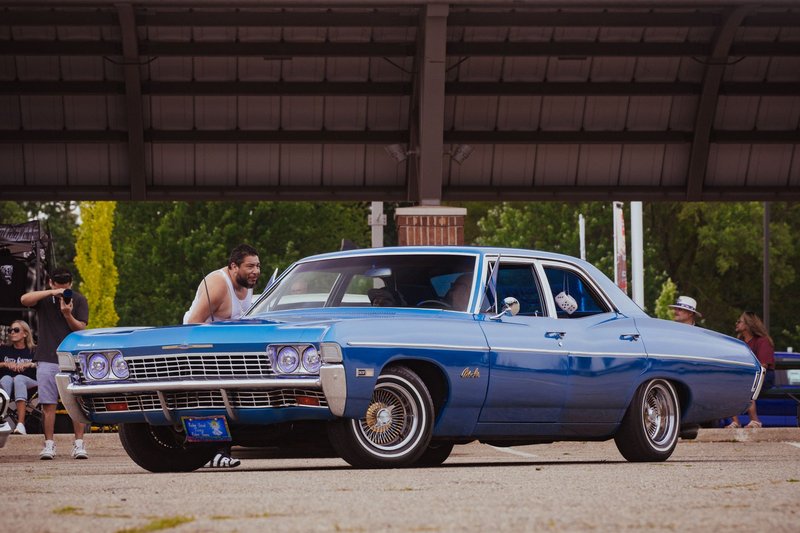
1953 was the year Chevrolet stopped treating its price ladder as an afterthought. The old Special/DeLuxe split got replaced with a three-tier structure that would define the brand for the rest of the decade: One-Fifty, Two-Ten, and Bel Air.
One-Fifty was the base series — the car a fleet buyer or a budget-conscious family actually drove home. Stripped trim, rubber floor mats instead of carpet, and a single sun visor on some body styles. A One-Fifty two-door sedan started at $1,613, which made it the cheapest way into a new Chevrolet that year.
Two-Ten was the volume seller, and it’s easy to see why. You got brightwork the One-Fifty skipped — extra trim around the windows, two-tone paint options, a nicer interior — for not much more money. Chevrolet built more Two-Tens in 1953 than either of the other two series combined, and that’s the car you’ll actually find most often at swap meets today.
Bel Air, for the first time, stood on its own as a distinct series rather than just a trim package bolted onto the DeLuxe. It carried the brightest chrome, the richest interior fabrics, and Chevrolet’s only convertible and hardtop body styles that year. A Bel Air two-door sedan ran $1,820; the four-door, $1,874; the Sport Coupe hardtop, $2,051. The convertible topped the range at $2,175, making it the single most expensive Chevrolet you could order in 1953 — Corvette included, at least on paper.
All three series shared the same 115-inch wheelbase and the same basic body shell. The difference was entirely in trim, upholstery, and the small stuff that told your neighbors what you’d spent.
What Changed for 1953
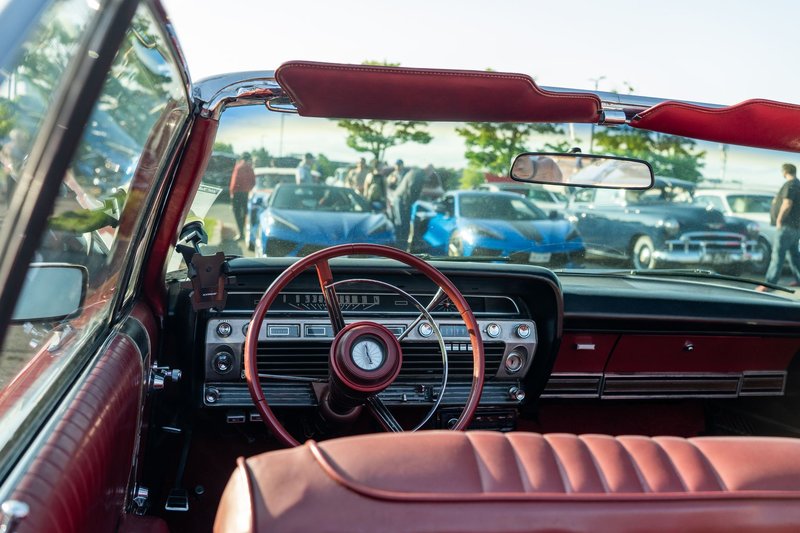
The headline engineering change was glass. 1953 brought Chevrolet’s first one-piece curved windshield, replacing the split two-pane setup that had carried over from the 1949 redesign. It sounds minor until you sit in one — the dash-to-roof sightline opens up, and the car reads noticeably more modern than a ’52 parked next to it.
Sheet metal picked up the theme. Rear fenders lost their bolted-on, separate-looking shape and blended into the body in a way that made the whole car look lower and longer than the numbers actually were. Combined with a new grille and revised taillights, it was enough of a shift that period buyers could clock a ’53 from a ’52 at a glance — which mattered, because Ford and Plymouth were both swinging hard at Chevrolet’s low-price crown that same year.
The Engine and Transmission
Every 1953 Chevrolet passenger car ran the same basic engine: a 235.5-cubic-inch “Blue-Flame” inline six, rated at 108 horsepower at 3,600 rpm with 7.5:1 compression. It wasn’t quick. It was, however, nearly impossible to kill with normal use, which is a large part of why so many are still running seven decades later.
Transmission choice split the lineup in a way that tells you a lot about who bought which car. The standard gearbox was a three-speed manual, column-shifted, no synchro on first — the setup a One-Fifty fleet buyer expected and didn’t pay extra for. Powerglide, Chevrolet’s two-speed automatic, was optional across the range and standard equipment on nothing, but it sold disproportionately well on Bel Airs, where buyers were already paying for convenience elsewhere on the car. A Powerglide-equipped ’53 also got a slightly different engine tune, with a marginally higher compression ratio to make up for the automatic’s inherent power loss.
The 3100 Series Trucks
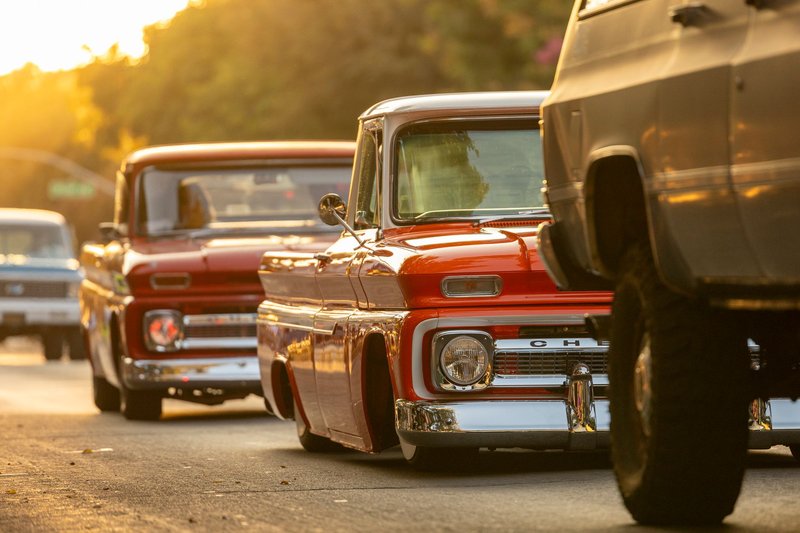
While the passenger cars got a styling refresh, the 3100 half-ton pickup barely moved. It was still riding the Advance Design platform Chevrolet had introduced back in 1947, and 1953 was effectively the last year of that generation before a full redesign arrived in 1954 — including, notably, the curved windshield the cars had already gotten. The ’53 truck kept its split windshield right to the end of the run.
Under the hood, the 3100 ran a smaller 216.5-cubic-inch six making 92 horsepower — a genuinely different engine block from the passenger-car Blue-Flame, not a detuned version of it. Base pricing landed in the $1,075 to $1,935 range depending on body configuration, which put a basic work truck within reach of buyers who’d have been priced out of even a One-Fifty sedan.
That combination — proven platform, low price, an engine built for abuse rather than speed — is exactly why so many ’53 3100s survived as farm and ranch trucks long after the cars around them got scrapped. It’s also why collector demand for clean examples has climbed hard in the last decade; a well-kept 3100 now often draws more attention at a show than the sedan parked next to it.
The Corvette’s Quiet Debut
Buried inside the same model year as the One-Fifty and the 3100 pickup, Chevrolet built something nobody in the lineup had prepared buyers for: a two-seat fiberglass roadster called the Corvette. Production started June 30, 1953, and exactly 300 units came off the line before the year closed out, every one of them hand-assembled in a converted delivery garage in Flint, Michigan rather than on a normal assembly line.
Every 1953 Corvette left the building in Polo White with a red interior and a black canvas top — no color options, no engine options, nothing. Chevrolet reportedly steered a meaningful number of that first-year run toward celebrities and dealers rather than ordinary retail buyers, treating the car more as a rolling advertisement than a product line with volume targets. According to the National Corvette Museum, the last of the 300 wasn’t completed until Christmas Eve of that year.
It shared the same 235-cubic-inch Blue-Flame six as the sedans, though in a “Blue Flame Special” tune with triple carburetors that pushed output to 150 horsepower — and it came only with Powerglide. No manual transmission was ever offered on a 1953 Corvette, a decision that still irritates purists today. For the full story of this groundbreaking production run, our 1953 Corvette models guide has the complete details.
What to Look For When Buying a ’53 Today
The market for these cars has matured past “any survivor will do.” A few things separate a good buy from a slow money pit:
- Body style drives value more than trim level. A Bel Air convertible or Sport Coupe will always command more than a One-Fifty sedan, but a clean, well-documented One-Fifty two-door often costs less to acquire and insure while still delivering the same driving experience.
- Check the windshield seal and lower cowl for rust first. The curved one-piece glass on the passenger cars was a new design in 1953, and the seals around it are a common water-entry point that rots the cowl and floor pans from the inside out.
- Verify engine originality on anything marketed as numbers-matching. The 235 Blue-Flame is common enough, and period-correct enough across other GM applications, that non-original swaps get passed off as factory more often than buyers expect.
- On the 3100, confirm which generation of Advance Design parts you’re actually getting. Because the platform ran with minimal changes from 1947 to 1953, trim and small parts get mixed across model years at swap meets; a “correct” ’53 restoration should use ’53-specific brightwork, not whatever fits.
- For a Corvette, provenance beats condition. With only 300 built, documentation tracing a specific car back through its ownership history matters more to serious buyers than a fresh restoration with no paper trail.
Worth knowing before you start pricing any of this out: according to the Bureau of Labor Statistics inflation calculator, a dollar in 1953 is worth roughly twelve and a half dollars today — so that $1,613 One-Fifty sedan represents something like $20,000 in purchasing power at launch, well below what a clean restored example fetches now.
The Takeaway
1953 doesn’t get talked about as one of Chevrolet’s iconic years the way 1955 does, and on paper that’s fair — nothing in the lineup was revolutionary engineering. But it’s the year the pieces that made the Tri-Five era possible actually landed: a real three-tier passenger lineup, a windshield and body language that read as modern, and a low-volume halo car built almost as an experiment. The Smithsonian’s automobile collection treats these postwar years as the moment American car design found its footing, and the ’53 Chevrolet lineup — sedan, truck, and Corvette alike — is a good argument for why.
If you’re shopping this year specifically, know what you’re actually after: a One-Fifty or Two-Ten for an honest, affordable driver; a Bel Air if you want the trim and the hardtop or convertible options; a 3100 if you want a truck that’s forgiving to own; or a Corvette if you’ve got the budget and patience that a 300-unit production run demands.

Tyler Bridges
More from Tyler BridgesHow we reviewed this article
This article was researched against manufacturer records and editorially reviewed before publishing. We accept no payment for coverage. Some guides contain affiliate links; see our affiliate disclosure.