Chevrolet built more than a dozen distinct body styles for 1951, spread across two series, two engines, and a truck lineup that outlived the cars by years. Most write-ups on this model year either fold it into a generic “1950s Bel Air” overview or list a handful of cars for sale with no context. Here’s what Chevrolet actually made that year, what each one is worth now, and what to check before you hand over money.
Table of Contents
- The Special and the Deluxe
- Styleline Deluxe: Sedans, Sport Coupe, and Bel Air
- Fleetline Deluxe: Chevrolet’s Last Fastbacks
- The Special Series
- The 3100 and 3600 Trucks
- Engines and Drivetrain
- What a 1951 Chevrolet Costs Today
- Rust and Mechanical Problems
- Parts Availability
- Which One Should You Buy
TLDR
Every 1951 Chevrolet model rides on the same 115-inch box-girder frame and shares a 216 or 235 cubic-inch inline-six. The differences are in trim and body: the Special series was the stripped-down price leader, the Styleline Deluxe was the volume seller and home of the Bel Air hardtop, and the Fleetline Deluxe was the last year for Chevrolet’s fastback sedans. On the truck side, the 3100 and 3600 carried over the Advance Design body with vent windows newly added to the doors. Prices today run from around $7,000 for a rough sedan to well over $200,000 for a built 3100 restomod, with plain sedans and business coupes as the cheapest way into the hobby and Bel Air hardtops, wagons, and convertibles commanding the biggest premiums.
The Special and the Deluxe: Two Different Chevrolets
Chevrolet split its 1951 passenger-car line into two series that shared mechanicals but nothing in the way of trim. Both rode the same 115-inch wheelbase box-girder frame and both used four-wheel hydraulic drum brakes, but that’s roughly where the similarity ended.
The Special was the entry point — a car aimed at buyers who wanted a Chevrolet badge and nothing extra. The Deluxe series carried the chrome, the two-tone paint options, and every distinct body style Chevrolet offered that year, split further into two sub-lines: the notchback Styleline Deluxe and the fastback Fleetline Deluxe. If you see a listing for a “1951 Chevrolet Model” with no series named, that ambiguity alone should make you ask which one you’re actually looking at, since the difference in trim level (and today’s resale value) is significant.
Styleline Deluxe: Sedans, Sport Coupe, and Bel Air
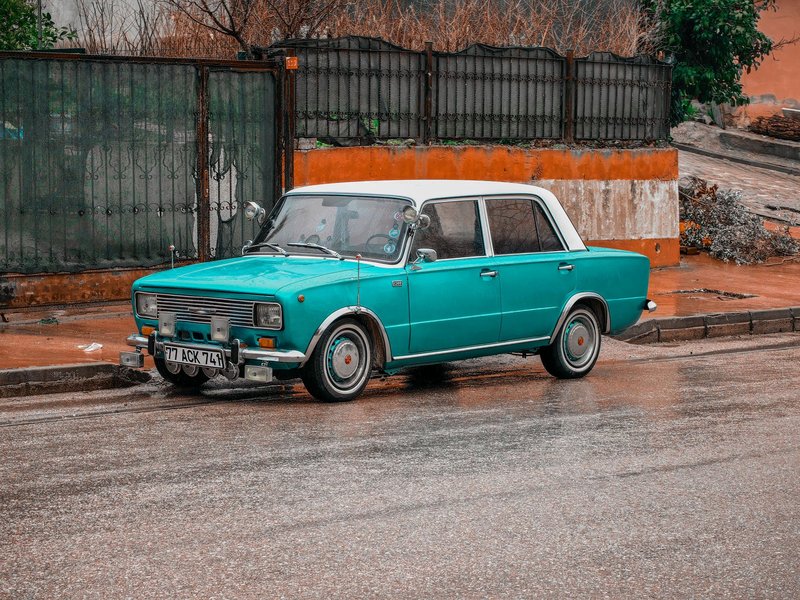
The Styleline Deluxe was the notchback body — a conventional three-box sedan silhouette — and it carried Chevrolet’s volume in 1951. The four-door sedan and the two-door “Sport Coupe” sedan made up the bulk of production, with four distinct low-volume body styles rounding out the line: the Bel Air hardtop (103,356 built), the station wagon (23,586 built), and the convertible (20,172 built).
That last car isn’t a “Bel Air convertible,” despite how often the listings call it one. In 1951, the Bel Air name applied to exactly one body: the two-door hardtop coupe, styled to look like a convertible with the top up but built with a fixed steel roof. Chevrolet didn’t put the Bel Air badge on a convertible until 1953. Get this wrong and you’ll misread a fair number of “for sale” ads.
The station wagon deserves a mention on its own. 1951 was still early in the transition to all-steel wagon construction — Chevrolet’s version used steel panels with simulated wood-grain trim rather than the structural ash framing of prewar wagons — and low production numbers make surviving examples genuinely scarce today.
Fleetline Deluxe: Chevrolet’s Last Fastbacks
The Fleetline Deluxe used a fastback roofline that swept down to the rear bumper, a style Chevrolet had sold since 1942 and that was rapidly falling out of fashion by 1951. It came in two body styles only — a four-door sedan (57,693 built) and a two-door sedan (131,910 built) — with no hardtop, wagon, or convertible variant offered.
1951 turned out to be the end of the line. Chevrolet dropped the Fleetline name entirely after this model year as notchback styling took over the market, which makes a clean Fleetline Deluxe one of the more overlooked “last of its kind” classics from this generation. The two-door outsold the four-door by more than two to one, so the sedan is the rarer body if you’re chasing scarcity rather than back-seat space.
The Special Series: Where the Volume Went
The Special series stripped away the two-tone paint, extra brightwork, and Fleetline/Bel Air/wagon/convertible options, leaving a business coupe, a two-door sedan, and a four-door sedan as the entire lineup. These were fleet cars and family transportation first, collector cars a distant second.
That’s exactly what makes them the value play today. A Special-series sedan carries the same 216 six, the same frame, and the same basic driving experience as a Deluxe, at a fraction of the purchase price, because nobody’s bidding these up at auction. If your interest is period-correct cruising rather than investment-grade chrome, this is the series to search first.
The 3100 and 3600 Trucks
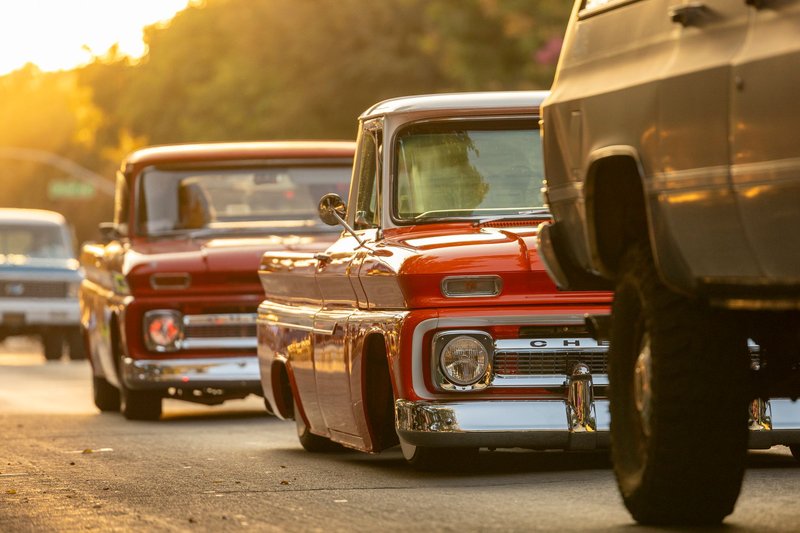
Chevrolet’s trucks in 1951 belonged to the Advance Design generation, a body style that ran from 1947 through 1953 with only incremental changes year to year. The 3100 (half-ton) and 3600 (three-quarter-ton) shared the passenger cars’ 216 cubic-inch six, paired with a three-speed manual and a column shifter, and both kept the split windshield and wood bed floor with steel skid strips that define the look.
The one notable 1951 update: vent windows were added to the doors, a small but real running change that lets you date a truck at a glance if you know to look for it. The one-piece windshield that later replaced the split design didn’t arrive until 1954, so every ’51 you’ll find has the two-pane glass.
Engines and Drivetrain: 216, 235, and Powerglide
Every 1951 Chevrolet, car or truck, ran an overhead-valve inline-six — Chevrolet’s “Stovebolt,” named for its visible slotted-head bolts. Two displacements were available depending on transmission choice.
The 216.5 cubic-inch six, rated up to 92 horsepower, paired with the standard three-speed manual and used babbit-poured connecting rod bearings with splash lubrication — adequate for the load in 1951, but genuinely weak by any later standard, and a real consideration if you plan to drive one regularly today. Chevrolet didn’t move this engine to full pressurized oiling and insert bearings until the 1953 model year.
The larger 235.5 cubic-inch six was reserved for cars ordered with Powerglide, the two-speed automatic that debuted for the 1950 model year as the first automatic transmission offered in a low-priced American car — Ford didn’t have an automatic option until 1951, and Plymouth buyers waited until 1954. The 235 got full-pressure lubrication and insert bearings from the start, because the automatic’s added strain demanded it. Early Powerglide wasn’t a smooth two-speed by later standards, either: 1950-52 units didn’t automatically shift from Low to Drive, so most owners started in Low and manually moved to Drive around 30-40 mph.
Steel wasn’t unlimited that year, either. The Korean War pushed the government to ration key materials through the Controlled Materials Plan, with steel allocations administered by the National Production Authority cutting into what automakers could build — one reason 1951 production ran well below 1950’s pace industry-wide.
What a 1951 Chevrolet Costs Today
Pricing splits sharply by body style, and the gap has more to do with what Chevrolet built in the smallest numbers than with any mechanical difference.
Bel Air hardtops are the benchmark: comparable sales run from around $7,000 for a rough driver up to roughly $25,000 for a well-sorted example, with condition and originality doing most of the work in between.
Wagons and convertibles track close behind the hardtop and sometimes ahead of it at auction, simply because Chevrolet built so few — 23,586 wagons and 20,172 convertibles against more than 100,000 hardtops.
Plain Styleline and Fleetline sedans, and Special-series cars, are the bargain end of the lineup. Nobody’s chasing a four-door sedan the way they chase a hardtop, and prices reflect that — this is where a real driver-quality ’51 Chevrolet is still attainable on a modest budget.
3100 and 3600 trucks span the widest range of any body style in the lineup: rusty projects start around $3,500, clean original or restored drivers average somewhere in the $47,000-$66,000 range depending on the source you check, and finished restomods with modern drivetrains have sold north of $260,000. The truck market rewards build quality and originality documentation more than any car in this lineup does.
Rust and Mechanical Problems to Check For
These cars are 75 years old, and the sheet metal shows it in predictable places. Check the rear wheel wells and fender heels, the trunk floor, the front inner fenders, and the frame rails over the rear axle — the classic rust zones on this generation of Chevrolet, and the spots a seller’s photos conveniently crop out.
Mechanically, budget for attention to the 216 six’s oiling system if you’re buying a manual car — the babbit bearings and splash lubrication mean it’s not built for sustained highway speeds the way a modern engine is, and low oil pressure at idle is common even on a healthy example. Powerglide cars with the 235 fare better here since the pressurized system was designed in from day one.
Worth knowing before you drive one regularly: federal law didn’t require seat belts in new cars until the 1968 model year, so a 1951 Chevrolet left the factory with none. Most owners who drive theirs on modern roads retrofit lap belts as a first upgrade, well before touching anything cosmetic.
Parts: Easier to Find Than You’d Think
The good news across this entire lineup is parts support. The 1949-1954 Chevrolet body generation sold in enormous numbers, and specialist suppliers focused specifically on these cars — sheet metal, trim, glass, interior kits, and drivetrain parts are all in active reproduction. The Advance Design trucks are even better supported, since the same basic body ran for seven years and a dedicated aftermarket has grown up around it. Sourcing a fender or a wiring harness for a ’51 Chevrolet is a different experience than doing the same for most European classics from the same decade — you’re not hunting swap meets as your only option.
Which 1951 Chevrolet Is Right for You
If you want the classic look with the strongest resale and the deepest parts and club support, the Bel Air hardtop is the safe, obvious pick — and the reason it costs what it does. If you want something rarer for close to the same money, look at the wagon or the Fleetline two-door, both genuinely scarce and both overlooked next to the hardtop. If your budget is tight and you just want an honest 1951 Chevrolet to drive, a Special-series sedan or a Styleline Deluxe four-door gets you the same six-cylinder charm for a fraction of the price. And if a truck fits your life better than a car, the 3100 offers the widest range of entry points of anything on this list, from a $3,500 project to a turn-key driver — you just need to know what you’re buying into before the bill comes due.

Marco Delantero
More from Marco DelanteroHow we reviewed this article
This article was researched against manufacturer records and editorially reviewed before publishing. We accept no payment for coverage. Some guides contain affiliate links; see our affiliate disclosure.