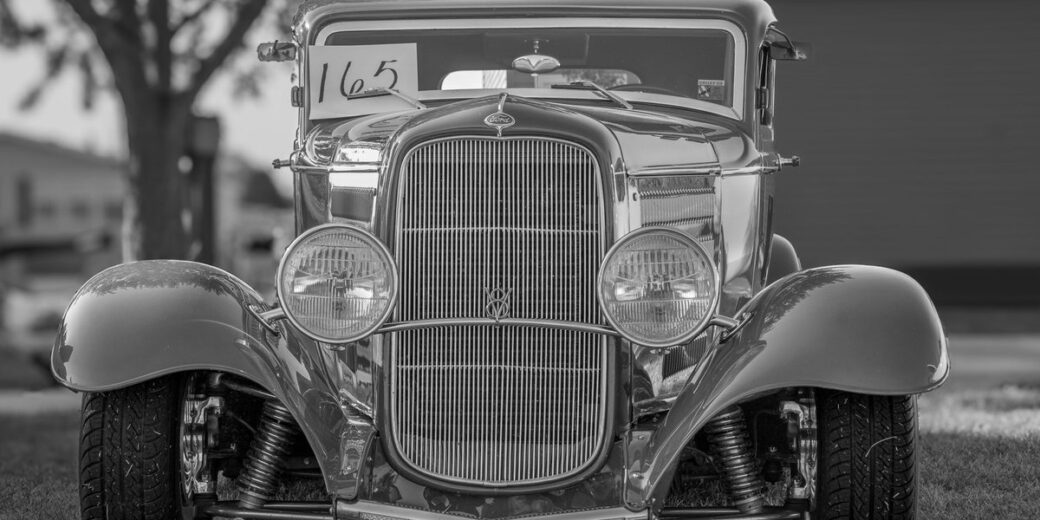
Table of Contents
- The Short Answer
- Why the Search Gets Confusing
- The Engine That Started Everything: Ford’s 1932 Flathead V8
- Broke, Bored, and Fast: How Depression-Era Kids Built Hot Rod Culture
- From Dry Lakebeds to Detroit Boardrooms
- The Timeline: How ’30s Hot Rods Became ’60s Muscle Cars
- Actually Shopping for a 1930s Car?
- Where That Leaves Us
The Short Answer
There’s no such thing as a 30s muscle car. The category didn’t exist until 1964, when Pontiac dropped a big-block V8 into a mid-size Le Mans and called it the GTO. Anyone searching “30s muscle cars” expecting a list of Depression-era street brawlers is going to come up empty, because those cars weren’t built yet.
What did exist in the 1930s was the raw material. A cheap, powerful engine. A generation of broke, restless kids with time on their hands and access to a welding torch. And a stretch of dry lakebed north of Los Angeles where they went to find out how fast a stripped-down Ford could actually go. That’s not a footnote to the muscle car story — it’s the first chapter.
Why the Search Gets Confusing
Google’s results for this query are split down the middle, and both halves are half-right. Some sites read “30s” as a decade and serve up pre-war classics — Packards, Model As, the odd Chevrolet — none of which have anything to do with horsepower wars. Others read “30” as a round number and stack up listicles of 1960s Chevelles and Road Runners, thirty deep, with zero mention of where any of it started.
Neither approach answers the actual question a curious reader has: what, if anything, connects the 1930s to muscle cars at all? The honest answer is a straight line, and it runs through one engine.
The Engine That Started Everything: Ford’s 1932 Flathead V8
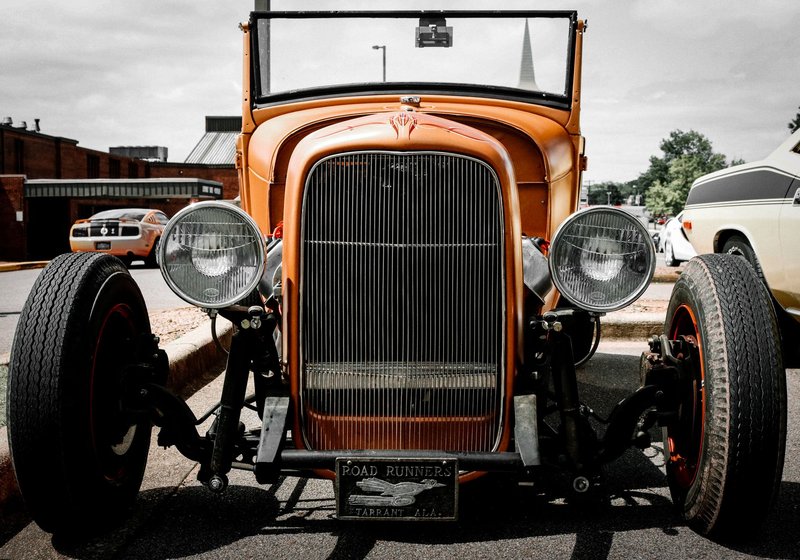
Before 1932, a V8 engine was a luxury item — something you found in a Cadillac or a Lincoln, not a car a factory worker could afford. Henry Ford broke that arrangement with the flathead V8, a low-cost, mass-produced eight-cylinder engine built into the 1932 Ford line at a price point regular people could actually reach.
It wasn’t a fast engine by later standards — roughly 65 horsepower stock. But it was cheap, it was everywhere, and it responded well to home tinkering. Ford kept building variations of the flathead through 1953, and one of them still survives in the Smithsonian’s collection: a 1932 Ford coupe that racer Leon Hurd rebuilt in 1952 with a stiffened frame, upgraded springs, and a 1942 “59A”-block flathead swapped in for extra power, then raced under Atlantic Racing Association rules. According to the Smithsonian’s National Museum of American History, that kind of modification — stock body, warmed-over flathead, stripped for speed — was the standard formula for backyard racers well into the following decade.
That’s the part that matters. Ford didn’t build a fast car. It built an affordable, modifiable one, and handed it to exactly the people who’d spend the next thirty years figuring out how to make it faster.
Broke, Bored, and Fast: How Depression-Era Kids Built Hot Rod Culture
The Great Depression put a lot of young men out of work with a lot of free time and access to used Ford parts. Model Ts, Model As, and the new flathead-powered Model Bs and 18s were cheap, plentiful, and simple enough to work on with hand tools in a home garage. Strip the fenders, lighten the body, hop up the engine — the goal wasn’t a nicer car, it was a faster one, built for the price of scrap parts and Sunday afternoons.
They needed somewhere to actually run them, and Southern California had it: the flat, hard-packed dry lakebeds northeast of Los Angeles, places like Muroc and El Mirage. Racing there dated back to the 1920s in a loose, informal way, but by the mid-1930s enough people were doing it — and getting hurt doing it without rules — that organizers stepped in. The Southern California Timing Association formed in 1937 to standardize classes and safety rules for what had become a real, if unofficial, motorsport.
This is the part of the story most “muscle car” content skips entirely, because it doesn’t have chrome or a factory badge attached to it. But every idea that later defined a muscle car — strip the weight, add the power, forget the comfort — was worked out first on a dry lake in a car built by a teenager, not an engineer.
From Dry Lakebeds to Detroit Boardrooms
Land speed racing gave the same era its more famous stage: the Bonneville Salt Flats in Utah. Racer Ab Jenkins had been running speed trials there through the decade, and in 1935 he brought British racing legend Sir Malcolm Campbell out to attempt a land speed record on the salt. By 1949, according to the Bureau of Land Management, Bonneville had become the standard course for world land speed record attempts — the same flat, wide-open logic that made the SoCal dry lakes useful for local racers, scaled up to a national stage.
None of this happened inside a car company yet. It happened in garages and on salt flats, driven by people with no stake in what Detroit was planning. But Detroit was watching. Hot rodding didn’t stay a fringe hobby — it became a visible, growing subculture with its own magazines, its own sanctioning bodies, and eventually its own paying customers. By the early 1950s, factories started building cars that came with some of that speed already installed, instead of waiting for owners to add it themselves.
The Timeline: How ’30s Hot Rods Became ’60s Muscle Cars
Here’s the actual line connecting the two eras, in order:
- 1932 — Ford’s flathead V8 launches. The first affordable mass-produced V8, and the engine that made home-built speed possible for the average buyer.
- Mid-1930s — Dry lake racing takes off at Muroc and El Mirage, run by teenagers in stripped-down Fords with nothing to lose.
- 1935 — Ab Jenkins and Malcolm Campbell bring land speed racing to Bonneville, giving hot rod culture its biggest stage.
- 1937 — The Southern California Timing Association forms, turning informal dry lake racing into an organized, ruled motorsport.
- 1949 — Oldsmobile’s Rocket 88 arrives, pairing a lightweight mid-size body with a high-output V8 borrowed from a bigger car — the formula that would define muscle cars fifteen years later, though nobody called it that yet.
- 1951 — The NHRA is founded, moving illegal street racing onto sanctioned drag strips and giving factory-built performance cars somewhere legitimate to prove themselves.
- 1955 — Chrysler’s C-300 blends luxury and outright power, showing Detroit that buyers would pay a premium for a factory hot rod.
- 1964 — The Pontiac GTO launches, dropping a 6.4-liter V8 into a mid-size Le Mans body and, more or less by consensus, starting the muscle car era by name.
- 1966–1970 — The genre peaks: Chevelle SS, Plymouth Road Runner, Dodge Charger, Mustang GT — all running the same stripped-weight, added-power math hot rodders had been doing since the Depression, just with a factory warranty attached.
- Today — Flathead-powered hot rods are still built and shown, deliberately, as tributes to the cars that started the whole chain of thinking.
Read that list top to bottom and the “1930s muscle car” search makes sense for the first time. It’s not that muscle cars existed in the ’30s. It’s that muscle cars are, functionally, factory-built hot rods — and hot rods are a 1930s invention.
Actually Shopping for a 1930s Car?
If you landed here because you’re actually hunting for a real pre-war car — a Model A, a Model 18, an early Packard or Chevrolet — that’s a different project than muscle car shopping, and it comes with different math. These are 90-plus-year-old vehicles: mechanical brakes or early hydraulics, six-volt electrics, and parts availability that depends heavily on which model you pick. A Ford flathead-powered car has the deepest aftermarket support of any pre-war platform, precisely because hot rodders never stopped building for it. Budget for a pre-purchase inspection from someone who specializes in pre-war vehicles specifically — a mechanic who’s great with a ’69 Camaro can still miss something obvious on a car with a completely different fuel and electrical architecture.
Where That Leaves Us
Search for “30s muscle cars” and you’ll get pointed either toward a decade of cars that don’t fit the term or a list of ’60s icons with no explanation of the name. Both miss the actual story: a $500 V8, a generation with nothing but time and a welding torch, and a dry lakebed where they worked out, thirty years early, exactly what a muscle car would eventually need to be.
The GTO gets credit for starting the muscle car era, and it should. But the flathead V8 and the kids who hopped it up on a Depression-era budget built the blueprint. Detroit just put it into production.

Marco Delantero
More from Marco DelanteroHow we reviewed this article
This article was researched against manufacturer records and editorially reviewed before publishing. We accept no payment for coverage. Some guides contain affiliate links; see our affiliate disclosure.