Table of Contents
- TLDR
- Economy and Family Cars That Quietly Changed Everything
- Luxury Sedans Got Serious
- The Sports and Performance Cars Made in 1988 That Still Turn Heads
- Industry Milestones: A Sale, a Secret Project, and an Award
- 1988 in Numbers: Fun Facts and What These Cars Cost Today
TLDR
1988 wasn’t a flashy year for cars, it was a foundational one. Volkswagen replaced the Passat from the ground up, Ford snuck a Mazda-based coupe into showrooms under the “Probe” name, and Fiat built a hatchback so solid it would go on to win European Car of the Year. Meanwhile the halo cars were doing halo-car things: Ferrari kept building the Testarossa at full tilt, Lamborghini marked its 25th anniversary with a wilder Countach, and AMG bolted a 6.0-liter V8 into a Mercedes sedan and called it the Hammer. Behind the scenes, Toyota was quietly finishing a secret project that would blow up the luxury segment a year later, and the British government sold off what was left of its state-owned car industry. If you only remember five things from this list: the Countach 25th Anniversario, the Testarossa, the M3 Evolution II, the Hammer, and the Fiat Tipo’s surprise award win.
Economy and Family Cars That Quietly Changed Everything
Most “best of 1988” lists skip straight to the exotics, which is a mistake. The cars that actually moved the industry forward that year were the boring ones — or at least the ones that looked boring on a dealer lot.
Volkswagen’s third-generation Passat, launched at the Geneva Motor Show in March 1988, was the bigger deal than it looked. Every previous Passat had shared its bones with the Audi 80, engine mounted longitudinally, more or less a rebadged cousin. The 1988 car broke that link entirely: transverse engine, Golf-derived underpinnings, and a body engineered by Herbert Schäfer that finally gave the Passat its own identity instead of Audi’s hand-me-downs. It’s the car that set the template VW still uses.
Fiat had a rougher reputation to fix. The Ritmo and Strada that came before the Tipo were rust magnets, the kind of car people bought once and warned their friends about. The Tipo answered with fully galvanized body panels and a stiff new chassis that reviewers actually praised for ride quality — a genuine turnaround for a brand that needed one.
Ford’s contribution was stranger. In May 1988 the company revealed the Probe, a front-wheel-drive coupe built on a Mazda platform at the AutoAlliance plant in Flat Rock, Michigan. It started life as a proposal to replace the Mustang outright — a front-drive, four-cylinder Mustang with no V8 option, which is about as well as you’d expect that to go over with Mustang buyers. Ford backed off, kept the Mustang alive, and sold the Probe as its own thing instead. It never wore a Mustang badge, but the outrage it caused shaped Ford’s pony car strategy for a decade.
Luxury Sedans Got Serious
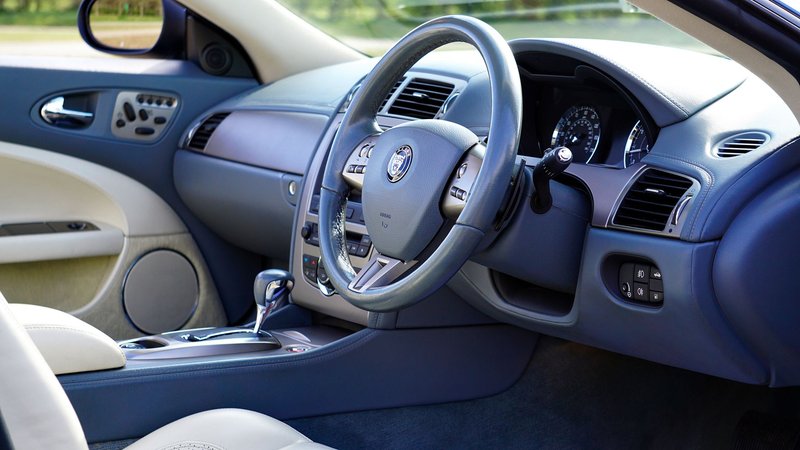
The luxury segment in 1988 split into two very different stories: one about restraint, one about none whatsoever.
Mercedes-Benz already made a serious sedan in the W124 300E. AMG, at the time still an independent tuning house rather than the in-house division it is today, decided serious wasn’t enough. They pulled the 6.0-liter V8 from the 560 SEC, dropped it into the 300E’s engine bay, reworked the automatic transmission, fitted a Torsen limited-slip differential, and built a beefier rear subframe to hold it all together. The result, nicknamed the Hammer, ran a 5.0-second 0-60 and a 186 mph top speed — numbers that embarrassed contemporary sports cars, let alone other four-door sedans. Road & Track had already called an earlier prototype “a 4-door that runs like a Ferrari Testarossa,” and the Hammer only pushed that comparison further.
Chrysler took the opposite approach to standing out: safety. In 1988, Chrysler became the first American automaker to offer driver’s-side airbags as standard equipment across a broad range of its lineup, years ahead of the federal mandate. NHTSA had only begun phasing in automatic crash protection requirements starting with the 1987 model year, with the full requirement not landing until September 1989. Chrysler got there first voluntarily, at a moment when plenty of automakers were still treating airbags as an expensive option nobody would pay for.
The Sports and Performance Cars Made in 1988 That Still Turn Heads
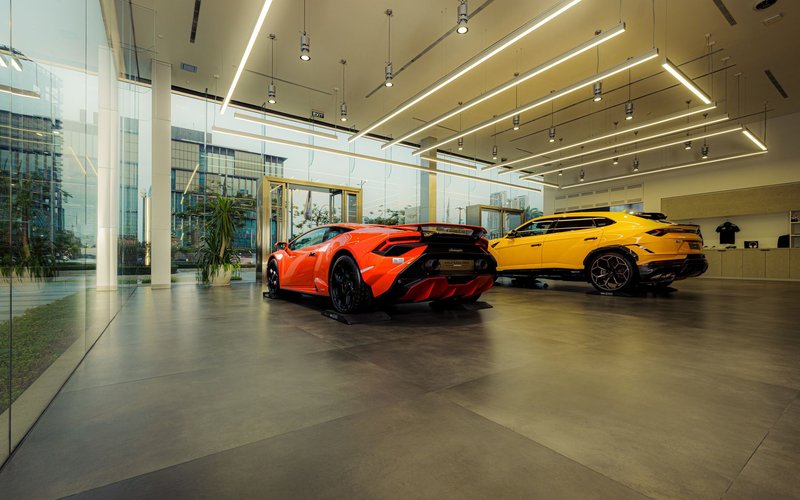
This is the section people actually came here for, and 1988 delivers.
Lamborghini turned 25 that year, and the Countach 25th Anniversario is how the company chose to celebrate — which tells you everything about Lamborghini’s priorities. Built from September 1988 through January 1990 with 657 units produced, the Anniversario kept the 5.2-liter V12’s 455 hp output but added an aggressive aero package, complete with a rear wing large enough to double as a picnic table. 0-60 came in around 4.3 seconds, top speed near 183 mph. It wasn’t a subtle send-off to the Countach’s production run, but nobody was asking Lamborghini for subtle.
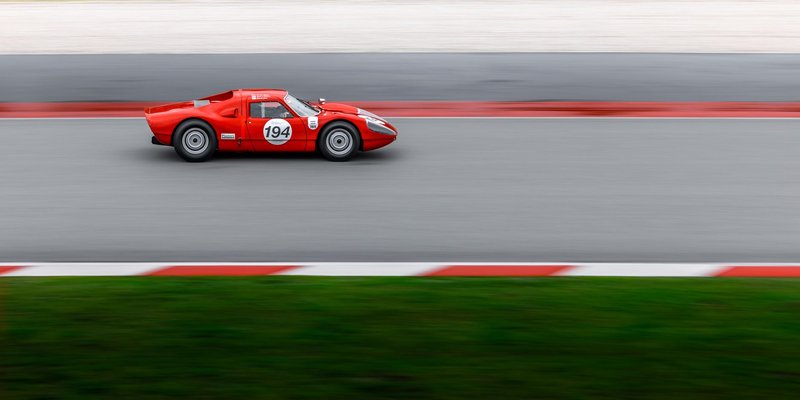
Ferrari, meanwhile, kept the Testarossa in full production — a flat-12, 4.9-liter engine putting out 385 hp, good for a factory-claimed top speed north of 180 mph and a 4.8-second sprint to 60. The Testarossa had already been around since 1984, but 1988 cars represent the model at its most dialed-in, before the minor mid-cycle changes that followed.
Porsche answered with the 944 Turbo S, a car built for people who wanted 911 performance without the 911’s rear-engine handling quirks. The turbocharged inline-four made 250 hp, enough for a 5.5-second 0-60 as tested by Car & Driver, backed by the M030 suspension package and a 40%-locking limited-slip differential as standard equipment.
BMW’s answer was smaller and, in its own way, more serious: the M3 Evolution II. Only 500 were built between March and May of 1988, each with a reworked S14 engine bumped to 220 hp through a higher compression ratio, a revised cylinder head, and a new exhaust manifold. At a 1,200 kg curb weight, it ran 0-60 in 6.4 seconds — modest next to the Italians, until you remember it’s a homologation special built to win touring car races, not stoplight drags.
| Car | Engine | Power | 0-60 mph | Top speed |
|---|---|---|---|---|
| Lamborghini Countach 25th Anniversario | 5.2L V12 | 455 hp | 4.3 sec | 183 mph |
| Ferrari Testarossa | 4.9L flat-12 | 385 hp | 4.8 sec | 180 mph |
| Mercedes 300E AMG Hammer | 6.0L V8 | 385 hp | 5.0 sec | 186 mph |
| Porsche 944 Turbo S | 2.5L turbo I4 | 250 hp | 5.5 sec | 162 mph |
| BMW M3 Evolution II | 2.3L I4 | 220 hp | 6.4 sec | 147 mph |
Industry Milestones: A Sale, a Secret Project, and an Award
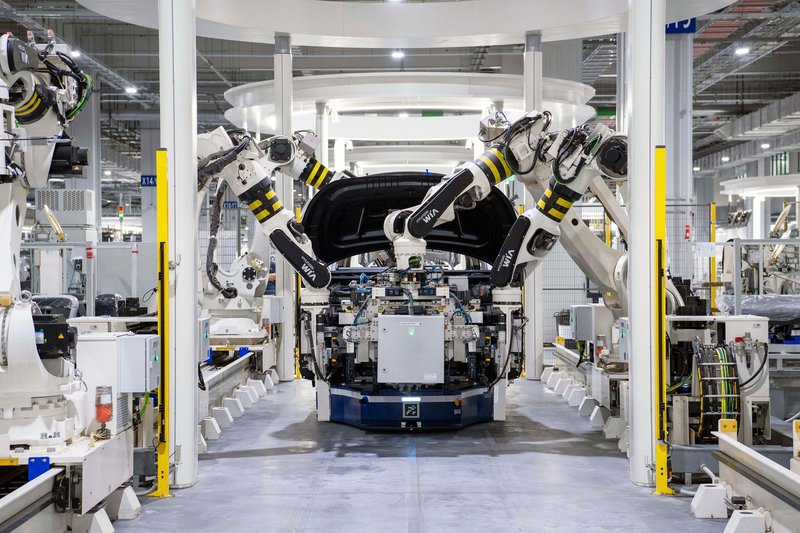
Three things happened off the showroom floor in 1988 that mattered more than any single model launch.
First, the British government finally got out of the car business. Rover Group — what remained of British Leyland after the bus and commercial vehicle divisions had already been sold off — was privatized in 1988, sold to British Aerospace for £150 million. The deal wasn’t cheap for taxpayers: the government first injected £800 million to strengthen Rover’s balance sheet and wrote off over £1 billion in trading tax losses just to make the company saleable. Parliament’s own record of the debate shows just how contentious the terms were at the time. British Aerospace wouldn’t hold onto Rover for long — it sold its majority stake to BMW just six years later, in 1994.
Second, in a design studio in Japan, Toyota was finishing something it hadn’t told the public about yet. Under the codename “Circle-F” — F for flagship — Toyota had spent since 1984 building a car with no budget ceiling and no deadline, on direct orders from chairman Eiji Toyoda to build the best luxury sedan in the world, full stop. By May 1987 the final design was locked; through 1988, engineers were deep into prototype testing that would eventually rack up 4.5 million kilometers of validation driving. That car wouldn’t reach customers until January 1989, badged as the first-ever Lexus LS 400. But the version of luxury it represented — silence, precision, zero drama — was built and tested in 1988, a full year before anyone outside Toyota knew Lexus existed.
Third, the industry recognized what Fiat had actually accomplished with the Tipo. The car launched in 1988, and reviewers who drove it that year kept coming back to the same thing: this didn’t feel like a Fiat. It felt engineered. That impression held — in 1989, the Tipo won European Car of the Year, beating the Opel Vectra by a wide margin and handing Fiat the credibility it had been missing since the Ritmo years.
1988 in Numbers: Fun Facts and What These Cars Cost Today
A few things worth knowing if you’re chasing any of these cars now rather than just reading about them.
The Countach 25th Anniversario is the one with real money behind it. Clean examples regularly clear six figures at auction, and the nicer ones push well past $400,000 — the Countach’s status as the poster-on-every-kid’s-wall supercar of the era hasn’t faded, and pricing reflects it.
The 300E AMG Hammer occupies a strange, undervalued corner of the market. Because it looks like an ordinary Mercedes sedan from the outside, plenty of buyers don’t realize what they’re looking at, which keeps prices lower than the performance numbers would suggest — though that gap has been closing fast as more collectors catch on.
The BMW M3 Evolution II, by contrast, is one of the most sought-after E30s in existence specifically because only 500 exist. Values have climbed steadily for a decade, and verified, numbers-matching examples now trade for multiples of what a standard E30 M3 brings.
And the Fiat Tipo? Almost nobody collects it, despite the award, despite the engineering turnaround. It did its job — proving Fiat could build a durable car — and then got quietly forgotten, which might be the most 1988 outcome of all: the car that mattered most industrially is the one nobody’s restoring in their garage today.

Marco Delantero
More from Marco DelanteroHow we reviewed this article
This article was researched against manufacturer records and editorially reviewed before publishing. We accept no payment for coverage. Some guides contain affiliate links; see our affiliate disclosure.