Harley-Davidson sold roughly two dozen distinct models in 1999, and they split cleanly into five families: Sportster, Dyna, Softail, Touring and the short-lived FXR2/FXR3. The year matters because it is the dividing line for the engine. Dyna and Touring bikes got the new Twin Cam 88. Softails and Sportsters kept the old Evolution.
Most online lists give you a flat database dump. This one groups the lineup by family, gives the model code you’ll find on a title or tank, and tells you what each bike is actually like.
Table of Contents
- TLDR
- What made 1999 different
- Sportster family
- Dyna family
- Softail family
- Touring family
- FXR2 and FXR3
- Quick comparison table
- How to identify your 1999 Harley
- Values and what to check before buying
TLDR
- Dyna and Touring models (FXD, FLHT, FLHR, FLTR families) have the Twin Cam 88, 1,450 cc.
- Softail and Sportster models still run the Evolution engine: 1,340 cc in Softails, 883 or 1,200 cc in Sportsters.
- Original prices ran from $5,345 for a Sportster 883 to $18,480 for an Ultra Classic.
- 1999 was the debut year of the Night Train, and it was the end of the line for the FXR name.
- The tenth character of the VIN is X for a 1999 model year.
What made 1999 different
The Twin Cam 88 is the headline. It replaced the Evolution V-twin in the Dyna and Touring lines with a 1,450 cc (88 cubic inch) engine that uses two chain-driven camshafts in place of the Evolution’s four gear-driven cams. You can spot the difference without opening anything: the Twin Cam’s cylinder heads and rocker boxes are visibly squarer and bulkier than the rounded Evo castings. The Twin Cam stayed in the big touring bikes until 2017, when Harley replaced it in the touring line.
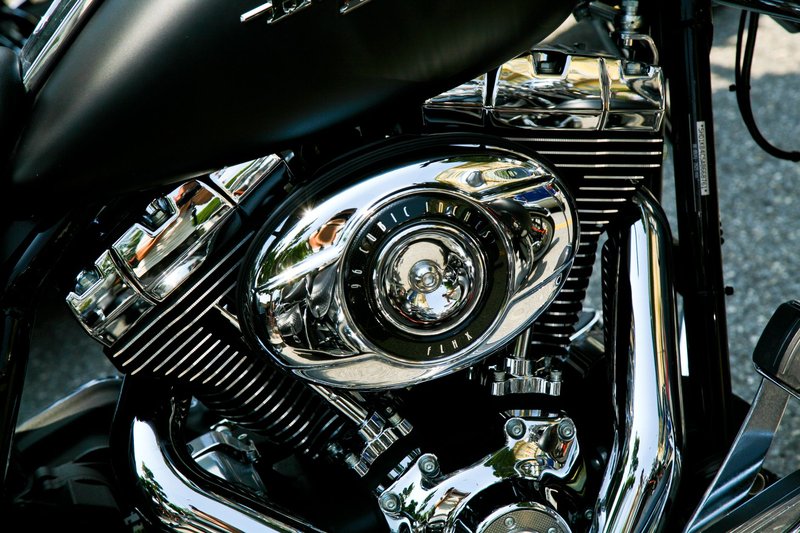
Softails had to wait. Harley kept the Evolution 1340 in the whole Softail range for 1999 and moved them to a balanced Twin Cam 88B the following year. Sportsters stayed on Evolution engines for many more years.
Two other things set the year apart. The Night Train debuted as a blacked-out Softail, an early version of the dark, stripped look Harley later sold in volume. And the FXR badge, which had been retired in 1994, made a short comeback with the FXR2 and FXR3.
Sportster family
The Sportster is the entry point. It’s the smallest engine, the lowest price, and the one most people mean when they say “my first Harley.” All 1999 Sportsters use the air-cooled Evolution V-twin bolted rigidly into the frame, which is why they vibrate more than the big bikes.
- XL 883 (XL883): 883 cc Evolution. The base bike at $5,345 MSRP, and the cheapest new Harley that year. Plain, narrow and cheap to fix.
- XL 883 Hugger (XL883H): The 883 with shortened suspension and a lower seat. It’s the pick for shorter riders.
- XL 883 Custom (XL883C): The 883 engine in a more styled package. It sits between the base bike and the 1200 Custom in looks.
- XL 1200 Custom (XL1200C): 1,200 cc Evolution, with chrome and the dressier styling. The best all-round Sportster of the year.
- XL 1200 Sport (XL1200S): The performance one, with firmer suspension and better brakes. It’s the Sportster for people who corner, and it’s the one collectors look for.
Engine details are the main buying point. The 1200 has about 36% more displacement than the 883, which shows up immediately on the highway. If you plan to ride long distances, skip the 883.
Dyna family
Dynas use a rubber-mounted Twin Cam 88 in a frame built for handling rather than chrome. They’re the sporty side of the Big Twin range, with a fork-based front end and a simple, bare-bones look.
- FXD Super Glide (FXD): The base Dyna, $11,155 MSRP. Minimal styling, big engine, and a blank slate for modifications.
- FXDX Super Glide Sport (FXDX): Stiffer suspension, adjustable fork, a dual front disc and a sportier riding position.
- FXDL Dyna Low Rider (FXDL): A lower stance with cruiser-style touches. It’s the cruiser-focused Dyna.
- FXDWG Dyna Wide Glide (FXDWG): The chopper-flavored Dyna, with a wide fork, a 21-inch front wheel and forward-looking custom styling. The model code FXDWG is one of the most searched in the whole lineup.
- FXDS-CONV Dyna Convertible (FXDS-CONV): A touring-lite Dyna that lets you remove the windshield and saddlebags in a few minutes, so one bike works as both a commuter and a weekend tourer.
Softail family
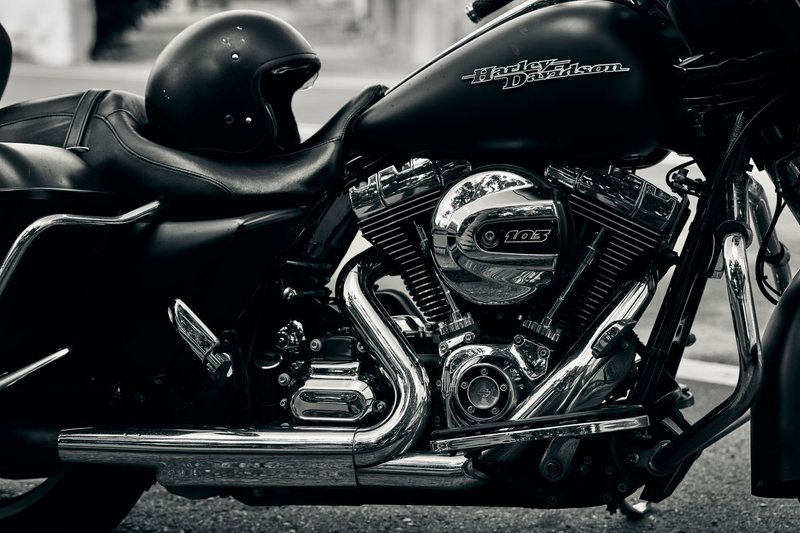
Softails hide the rear shocks under the frame so they look like rigid-frame choppers. In 1999 they all carried the Evolution 1340, so they’re the last Softails with the old engine and the easiest 1999 Harleys to keep running with ordinary parts.
- FXST Softail Standard (FXST): The base model. Clean lines and few options.
- FXSTB Night Train (FXSTB): The new 1999 model. Blacked-out finish and an aggressive custom stance. It’s the one that started a trend.
- FXSTC Softail Custom (FXSTC): The chrome-heavy custom version, with a wide front end and a large front fender.
- FXSTS Springer Softail (FXSTS): The Springer front end, a visible spring-and-rod fork that looks like a 1940s Harley and rides like it.
- FLSTF Fat Boy (FLSTF): Solid disc wheels and a heavy, low look. The 1999 Fat Boy is the best known Softail, and the one most buyers ask about.
- FLSTC Heritage Softail Classic (FLSTC): Leather saddlebags, a windshield and a buckhorn-style bar. A retro touring bike with the Softail frame.
- FLSTS Heritage Springer (FLSTS): The Heritage look on the Springer front end. It’s the most nostalgia-heavy bike Harley made that year.
Touring family
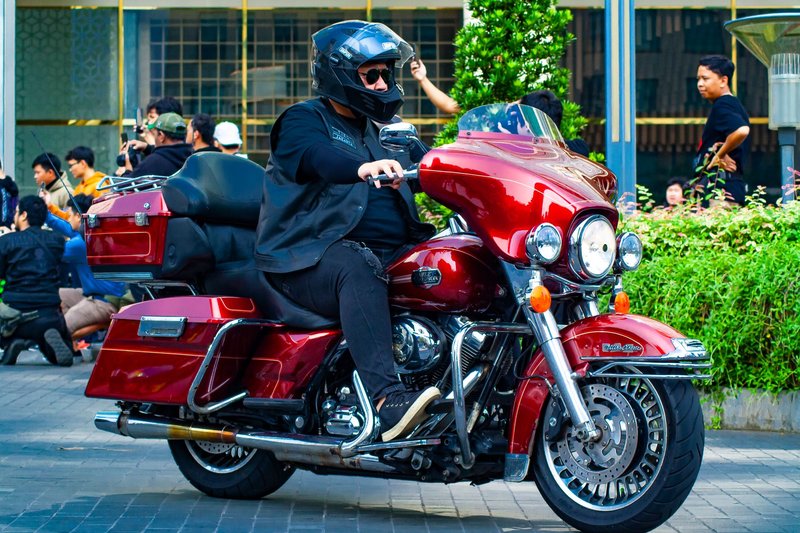
Touring bikes are the largest, heaviest and most comfortable Harleys of the year. They’re also where the Twin Cam 88 arrived, with the engine rubber-mounted to smooth out highway vibration. Many carried an “I” in the model code, for electronic fuel injection, which was optional on the Touring line in 1999 as an alternative to the carburetor. This is why listings sometimes show two separate entries for the same model.
- FLHT Electra Glide Standard (FLHT): The cheapest Electra Glide, with a frame-mounted fairing, simple trim and few extras.
- FLHTC Electra Glide Classic (FLHTC): The fully equipped Electra Glide, with more comfort features and a Tour-Pak.
- FLHTCUI Ultra Classic Electra Glide (FLHTCUI): The flagship, $18,480 MSRP, with fuel injection and the fullest equipment. The most expensive of the bikes listed here.
- FLHR Road King (FLHR): $15,065 MSRP. A big Touring bike with no fairing, only a detachable windshield. It’s the pick for riders who want a tourer without a fairing.
- FLHRCI Road King Classic (FLHRCI): A Road King with a more upscale, classic trim.
- FLTR Road Glide (FLTR): The frame-mounted shark-nose fairing, which stays fixed while the bars turn. Stable at highway speed and unmistakable from the front.
FXR2 and FXR3
The original FXR line ended in 1994 and enthusiasts never stopped asking for it. In 1999, Harley issued the FXR2 and FXR3 as FXR-styled limited bikes. Production was small and these are not the same machines as the 1980s FXRs, so a bike advertised as an “FXR” needs a VIN and engine check before you pay a premium for it.
Quick comparison table
| Family | Models | Engine | MSRP anchor |
|---|---|---|---|
| Sportster | XL883, XL883H, XL883C, XL1200C, XL1200S | Evolution 883 or 1,200 cc | $5,345 (883) |
| Dyna | FXD, FXDX, FXDL, FXDWG, FXDS-CONV | Twin Cam 88 (1,450 cc) | $11,155 (Super Glide) |
| Softail | FXST, FXSTB, FXSTC, FXSTS, FLSTF, FLSTC, FLSTS | Evolution 1340 | Between Sportster and Touring |
| Touring | FLHT, FLHTC, FLHTCUI, FLHR, FLHRCI, FLTR | Twin Cam 88 (1,450 cc) | $15,065 (Road King), $18,480 (Ultra Classic) |
| FXR | FXR2, FXR3 | Verify per bike | Limited production |
How to identify your 1999 Harley
Start with the VIN. It’s 17 characters and starts with 1HD. The tenth character is the model year, and X means 1999. The VIN is stamped on the frame at the steering head and on the engine crankcase, and the two should match. You can also run it through the NHTSA VIN decoder to confirm basic details.
Then check the engine. If the cylinder heads are squared-off and the badge says “Twin Cam 88,” you have a Dyna or Touring bike. If the heads are rounded and the cases are visibly different, you have a Softail or Sportster with an Evolution.
The model code on the title often looks like FLSTF or FXDWG. The first letter tells you the family: X is Sportster, FX is the sport-oriented line, FL is the touring and heritage line. The rest decode into the model name.
Values and what to check before buying
Most 1999 Harleys in decent condition sell for a fraction of the new price. A Sportster 883 trades at the bottom of the market. A Fat Boy, Road King or Wide Glide with low miles holds the most value, and an Ultra Classic with fuel injection and a well-kept Tour-Pak is the premium bike. Use a current price guide for your region, because mileage and modifications move the number more than the model year does.
The problems depend on the engine:
- Twin Cam 88 (Dyna, Touring): The cam chain tensioners are the known weak spot. The early spring-loaded units wear, and the cam support plate bearing can fail on 1999 to 2006 engines. Ask whether they’ve been replaced, and listen for a rattle on a cold start.
- Evolution (Softail, Sportster): The engines are tougher, but base gasket oil leaks are common. Look at the cases and the area under the engine for fresh oil.
- All models: Check for open recalls using the NHTSA recalls database, and confirm that the title and VIN agree.
Pick by use. For commuting, a Sportster 1200 or a Dyna works. For long trips, a Road King or a Road Glide. For the best part of 1999’s lineup, a Night Train or a Fat Boy still looks like the bike that every other Harley was trying to be.

Sarah Thornton
More from Sarah ThorntonHow we reviewed this article
This article was researched against manufacturer records and editorially reviewed before publishing. We accept no payment for coverage. Some guides contain affiliate links; see our affiliate disclosure.