Table of Contents
- The Pivot: Ford Kills Its Sedans
- 2021: The Bronco Comes Back
- 2020–2021: Ford Goes Electric With the Mustang Name
- 2021–2022: Maverick, the Truck Nobody Asked For and Everyone Wanted
- 2022: F-150 Lightning Electrifies the Best-Seller
- The Landmark Launches at a Glance
- What’s Next for Ford
- FAQ
Ford spent the 2010s as a company that made a bit of everything — sedans, hatchbacks, minivans, trucks, SUVs. By the end of the 2020s, that variety is gone. What’s left is a lineup built almost entirely around trucks, SUVs, and a handful of EVs wearing badges that used to belong to something else entirely.
That’s not an accident. It’s a strategy that started with a single announcement in April 2018 and is still playing out, model by model, a decade later.
The Pivot: Ford Kills Its Sedans
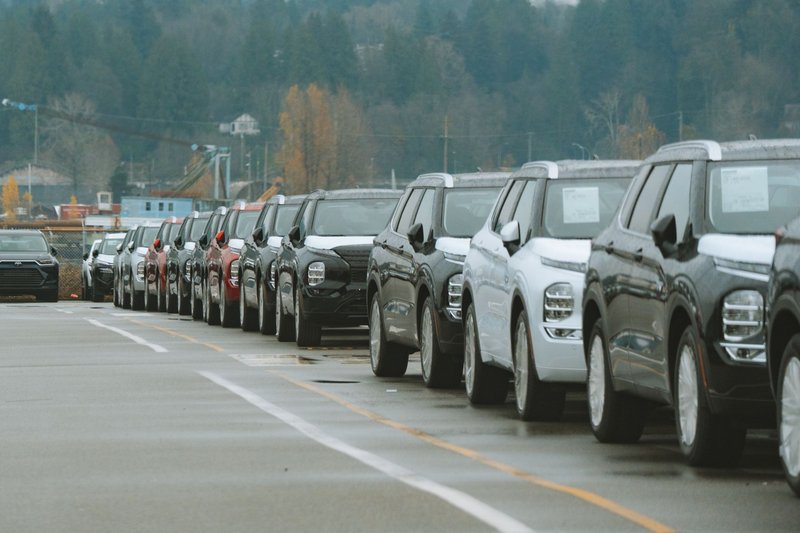
The 2020s didn’t start with a new car. They started with an absence. By the time the decade opened, Ford had already announced it would stop selling the Taurus, Fusion, Focus, Fiesta, and C-Max in North America — four sedans and a hatchback, gone in favor of what the company called “a lineup of icons.” The last Fusions rolled off the line in 2020, closing out the era.
The logic was blunt: sedans were losing money and losing buyers. SUVs and trucks carried better margins and Americans had already voted with their wallets for years. Ford just stopped pretending otherwise. Jim Farley, who took over as CEO in October 2020, inherited this plan rather than authored it, but he leaned into it harder than anyone expected — redirecting billions from sedan development into electrification and truck platforms.
The result is a company that, by the middle of the decade, sells exactly one traditional car body style in the U.S.: none. Everything is a crossover, an SUV, a truck, or a van.
2021: The Bronco Comes Back
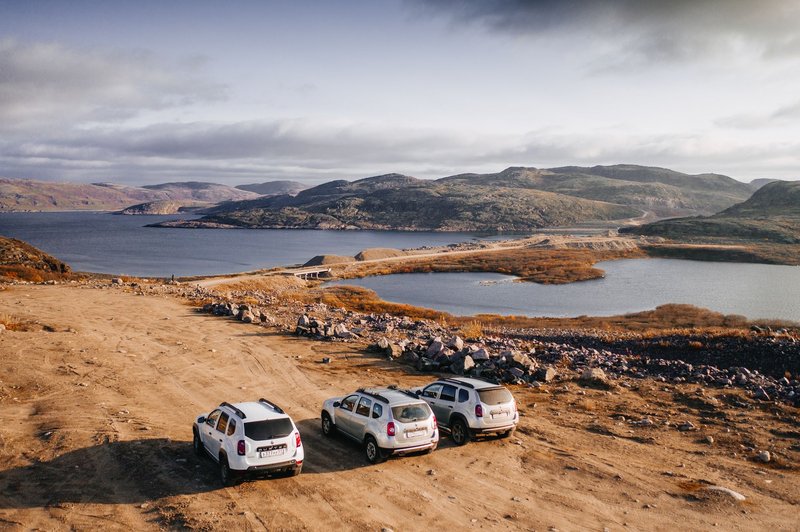
If one vehicle defines Ford’s 2020s, it’s the Bronco. The nameplate had been dead since 1996, killed off after the O.J. Simpson chase made it briefly, unfortunately, the most famous vehicle in America. Ford revived it for the 2021 model year, and the timing mattered: Jeep’s Wrangler had owned the boxy off-road SUV segment uncontested for a generation.
The new Bronco shares its T6 platform with the Ranger pickup rather than a car platform, which is what let Ford give it real off-road hardware — solid rear axle on some trims, removable doors and roof, a 35-inch tire option, and the Sasquatch package that bundles locking differentials with beadlock-capable wheels. Launch was delayed into summer 2021 by parts shortages, and early production trucks had well-documented issues with soft tops and hardtop panel gaps. Ford extended warranties and fixed the supplier problem, but it dented the “flawless comeback” narrative for the first model year.
The smaller Bronco Sport, launched alongside it, is a different animal entirely — a unibody crossover built on the same architecture as the Escape, aimed at buyers who want the look without the price or the compromises of body-on-frame off-roading. It became the volume seller of the two.
2020–2021: Ford Goes Electric With the Mustang Name
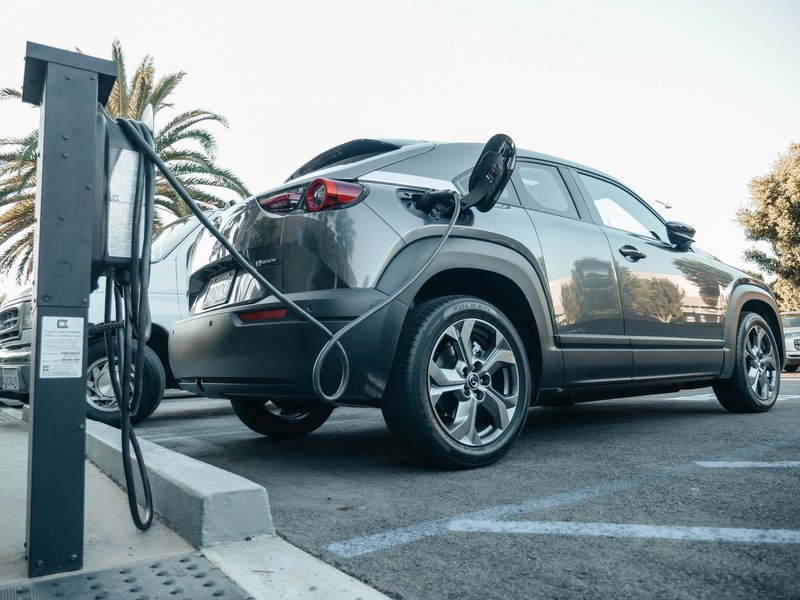
Before Bronco returned, Ford made its first real electric vehicle argument, and it did it by borrowing its most protected badge. The Mustang Mach-E launched for the 2021 model year as a five-door electric crossover — no manual transmission, no V8, four doors more than any Mustang before it.
The badge choice drew genuine backlash from enthusiasts who felt the Mustang name should mean a two-door coupe with a gas engine, full stop. Ford’s bet was that most buyers cross-shopping electric crossovers had never owned a Mustang and never would, and that the name recognition was worth more than the purists’ approval. Sales data over the following years suggests that bet mostly paid off — the Mach-E consistently outsold Ford’s expectations for a first-generation EV, even as overall EV demand growth slowed mid-decade.
Range varies by configuration, running from roughly the mid-200s to over 300 miles depending on battery size and drivetrain, according to EPA fuel economy ratings. The GT trim adds real performance credibility — sub-4-second 0-60 times — while the standard-range rear-wheel-drive version is the one that actually competes on price with gas crossovers.
2021–2022: Maverick, the Truck Nobody Asked For and Everyone Wanted

The Maverick might be the decade’s biggest surprise. Ford built a small, unibody pickup on the same platform as the Escape and Bronco Sport, priced it starting under $20,000, and gave the base version a standard hybrid powertrain rated around 40 mpg in the city — numbers that sounded more like a compact sedan than a truck.
Buyers who’d been priced out of the F-150’s steadily climbing average transaction cost noticed immediately. Ford had to reopen order banks multiple times and still couldn’t keep up with demand through much of 2022 and 2023. It’s built at Ford’s Hermosillo plant in Mexico, and its runaway popularity forced Ford to rethink how much room there was in the market below the full-size truck segment — a space Ford had mostly ceded for two decades.
The Maverick also matters as a counterpoint to the Bronco’s rocky launch: it arrived with comparatively few complaints, which did a lot to reassure buyers that Ford’s newer platforms weren’t universally troubled.
2022: F-150 Lightning Electrifies the Best-Seller
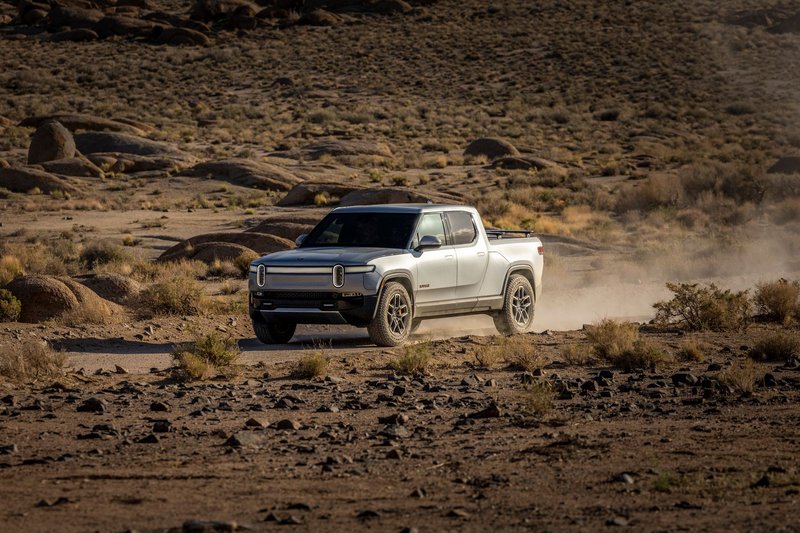
Ford didn’t just electrify a niche nameplate — it electrified the vehicle that has been America’s best-selling vehicle, gas or otherwise, for over four decades. The F-150 Lightning went on sale in spring 2022 after a splashy unveiling that included Farley personally drag-racing a prototype against a gas F-150.
The pitch was practical as much as green: an onboard generator system called Pro Power Onboard that can export up to 9.6 kilowatts, enough to run a work site or back up a house during an outage. EPA-estimated range spans from roughly 230 miles on the standard-range battery to over 300 on the extended-range pack, per EPA data.
Demand ran hot enough in 2022 that Ford temporarily halted orders. It didn’t last. By 2023 and 2024, EV demand growth cooled across the industry, and Ford cut Lightning production multiple times, idled the plant for stretches, and pushed back its next-generation EV truck plans. The Lightning remains a genuinely capable truck — it’s the volatility in demand around it, not the product itself, that became the story.
The Landmark Launches at a Glance
| Model | Year Launched | Segment | Powertrain | Why It Mattered |
|---|---|---|---|---|
| Mustang Mach-E | 2020 (MY2021) | Electric crossover | Single/dual-motor electric | Ford’s first mainstream EV, controversially wearing the Mustang badge |
| Bronco | 2021 | Off-road SUV | 2.3L I4 / 2.7L V6 | Revived after 25 years to directly challenge the Jeep Wrangler |
| Bronco Sport | 2021 | Compact crossover | 1.5L / 2.0L turbo I4 | Off-road styling on a car-based platform, became the volume seller |
| Maverick | 2021 (MY2022) | Compact pickup | Standard hybrid / turbo I4 | Sub-$20K truck that created demand Ford didn’t anticipate |
| F-150 Lightning | 2022 | Electric pickup | Dual-motor electric | Electrified America’s best-selling vehicle |
What’s Next for Ford
The EV retreat that hit the Lightning wasn’t isolated. Ford canceled a planned three-row electric SUV, delayed next-generation EV programs, and shifted R&D dollars toward hybrids across the lineup — the Maverick, F-150, and Bronco all now offer hybrid powertrains, and more are coming. That’s a real reversal from the all-in EV messaging of 2021, a strategy shift even Porsche followed, with the German automaker also recalibrating its EV approach mid-decade.
At the same time, Ford hasn’t abandoned electric entirely. A dedicated “skunkworks” team led by veteran engineer Doug Field is developing a low-cost, modular EV platform Ford has compared internally to what the original Model T did for gas cars — small parts count, simplified assembly, a target price near $30,000. The first vehicle off that platform is expected to be a mid-size pickup, not before the back half of the decade.
Whatever comes next will arrive under tighter safety and recall scrutiny than earlier in the decade. Ford issued an unusually high number of recalls across 2022–2024 — the Bronco Sport, Escape, and Lightning were all subject to multiple actions, some tied to fire risk in battery packs and fuel systems. Anyone shopping a 2020s Ford should check open recalls through NHTSA’s database before buying, not after.
FAQ
What Ford models were discontinued in the 2020s? The Fusion ended production in 2020, joining the Taurus, Focus, Fiesta, and C-Max that had already exited the U.S. market by 2019–2020 as part of the same decision. If you’re curious about what the best sedans of the 2020s looked like before Ford pulled out entirely, Ford’s U.S. lineup now consists entirely of trucks, SUVs, vans, and Mustang variants.
Is the Ford Bronco reliable? Early Bronco production (2021 model year) had documented issues with hardtop panel fit and soft-top water leaks, both addressed under extended warranty coverage. Later model years have fewer reported issues. It’s worth checking model-year-specific reliability data rather than judging the nameplate as a whole.
How far can the F-150 Lightning go on a charge? EPA-rated range runs from about 230 miles on the standard-range battery to over 300 miles on the extended-range pack, depending on trim and wheel size. Cold weather and towing both reduce real-world range meaningfully, as with any EV.
What replaced Ford’s sedans? Nothing directly — Ford didn’t launch replacement sedans. The Escape, Bronco Sport, and Edge absorbed the compact and midsize buyers who previously bought a Focus or Fusion, while the Maverick pulled in budget-focused buyers who might have considered a Fiesta.
What’s Ford’s next major EV? A low-cost, modular-platform EV targeting a price near $30,000, reportedly starting with a mid-size pickup. It’s still in development, with no confirmed on-sale date as of this writing.

Tyler Bridges
More from Tyler BridgesHow we reviewed this article
This article was researched against manufacturer records and editorially reviewed before publishing. We accept no payment for coverage. Some guides contain affiliate links; see our affiliate disclosure.