1949 is the year the American car stopped looking like a 1941 car. Ford, Mercury and Lincoln arrived with slab-sided bodies and no separate fenders. Cadillac got an overhead-valve V8. Oldsmobile put a V8 in a mid-priced body and called it the 88. And a Dutch importer landed two Volkswagen Beetles in New York, which sold exactly two that year.
This guide covers the cars you can actually find, photograph or restore, grouped by manufacturer, with trims, engines, body styles and the detail that sets each one apart.
Table of Contents
- The short version
- Why 1949 mattered
- Ford, Mercury and Lincoln
- General Motors: Chevrolet, Pontiac, Oldsmobile, Buick, Cadillac
- Chrysler Corporation: Plymouth, Dodge, DeSoto, Chrysler
- The independents
- British cars of 1949
- European cars of 1949
- Engines at a glance
- Which 1949 cars are most collectible
- Model year versus calendar year
The short version
- Most important new designs: Ford, Mercury, Lincoln, Oldsmobile 88, Cadillac V8, Plymouth, Dodge, Nash Airflyte, Jaguar XK120.
- Best known to collectors: the 1949 Mercury coupe, Oldsmobile 88, Cadillac Coupe de Ville, Buick Roadmaster Riviera, Jaguar XK120.
- Cheapest way in: a Chevrolet Styleline De Luxe or a Plymouth. Parts are everywhere.
- Biggest surprise: a 1949 Volkswagen Beetle is a rarity in the US, and a Porsche 356 from this period is rarer still.
Why 1949 mattered
The war ended in 1945, but Detroit spent three years selling warmed-over 1942 designs to buyers who had waited four years for a new car. By 1949 the backlog was gone and the real redesigns started.
Four things define the year:
- Ford replaced its prewar body. The 1949 Ford was the first new Ford under Henry Ford II, and The Henry Ford museum displays a 1949 Tudor sedan as the example. Ford’s design was a “shoebox”: one smooth slab from front to rear.
- The high-compression V8 went mainstream. Cadillac and Oldsmobile both shipped short-stroke overhead-valve V8s, the layout almost every American V8 still follows.
- Hardtops arrived. Buick, Cadillac and Oldsmobile each launched a pillarless coupe that looked like a convertible with a steel roof.
- Imports started. The Beetle reached America, the Jaguar XK120 started reaching customers, and the Citroën 2CV went on sale in France.
Ford, Mercury and Lincoln
Ford’s lineup was the sensation of 1949, partly because the company needed it. Ford was losing money and the all-new car was a rescue.
Ford
- Trims: Standard and Custom.
- Body styles: Tudor (two-door sedan), Fordor (four-door sedan), coupe, club coupe, convertible and a wood-bodied station wagon.
- Engines: a 226 cubic-inch flathead six and a 239 cubic-inch flathead V8 making 100 hp. “Flathead” means the valves sit beside the cylinders instead of above them, which is cheap to build and bad for breathing.
- The detail: independent front suspension, a first for Ford’s mainstream line, plus a flathead V8 that was still the cheapest way to 100 hp.
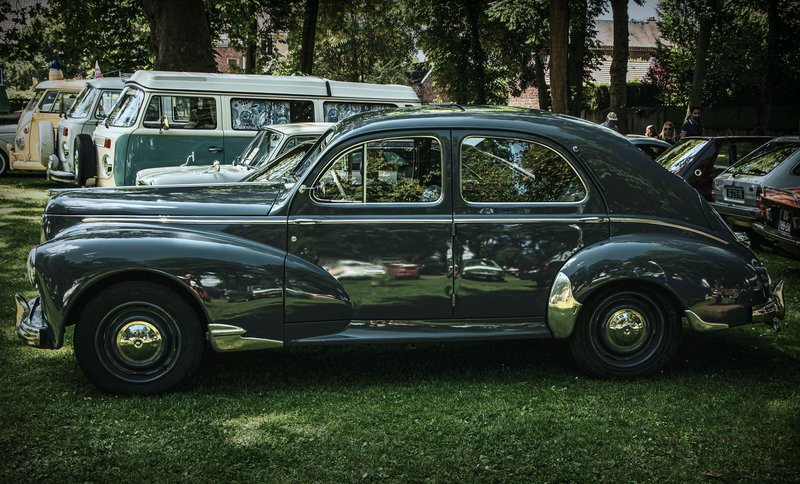
Mercury
- Trims: one model line, the Mercury Eight.
- Body styles: two-door and four-door sedans, coupe, convertible and wood-trimmed station wagon.
- Engine: a 255 cubic-inch flathead V8 making 110 hp.
- The detail: this is the car from Rebel Without a Cause. James Dean drove a 1949 Mercury coupe, and the model became the starting point for the “lead sled” custom scene: chopped roofs, shaved trim, bodies lowered until they scraped.
Lincoln
- Trims: Lincoln and Cosmopolitan.
- Body styles: sedans, coupes and convertibles, with the Cosmopolitan the larger and pricier of the two.
- Engine: a 337 cubic-inch flathead V8 making 152 hp, among the largest flatheads ever built.
- The detail: the Lincoln shared its basic body design with Mercury but sat on a longer wheelbase with a heavier look.
General Motors: Chevrolet, Pontiac, Oldsmobile, Buick, Cadillac
GM’s cars were the most varied of the year. They ran from a six-cylinder Chevrolet to a Cadillac that made 160 hp.
Chevrolet
- Trims: Special and De Luxe, each in Styleline (notchback) or Fleetline (fastback) form.
- Body styles: two-door and four-door sedans, club coupe, business coupe, convertible and station wagon.
- Engine: a 216 cubic-inch overhead-valve inline six making 90 hp.
- The detail: the new 1949 body was lower and wider, and the Fleetline’s sloped rear is the part collectors now chase. The Styleline De Luxe is still the easiest 1949 car to find and finish.
Pontiac
- Trims: Streamliner (fastback) and Chieftain, in Six and Eight forms.
- Engines: a 239 cubic-inch flathead six or a 248 cubic-inch flathead straight-eight.
- The detail: the “Silver Streak” chrome strips down the hood and trunk, a Pontiac signature that ran for years.
Oldsmobile
- Series: 76, 88 and 98.
- Body styles: sedans, club coupes, convertibles, station wagons and, on the 98, the Holiday hardtop.
- Engines: a six-cylinder in the 76. The new 303 cubic-inch Rocket V8 making 135 hp in the 88 and 98.
- The detail: the 88 put the big engine in the lighter 76 body, and the result won races. It also gave its name to “Rocket 88,” often cited as the first rock-and-roll record. The Rocket V8 itself is in The Henry Ford’s collection.
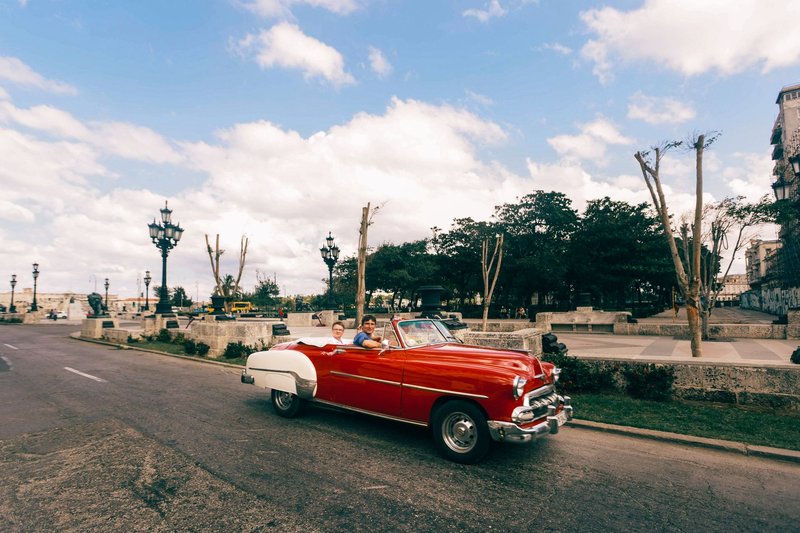
Buick
- Series: Special, Super and Roadmaster.
- Body styles: sedans, coupes, convertibles, station wagons and the Roadmaster Riviera hardtop.
- Engine: Buick straight-eights, up to 320 cubic inches and 150 hp in the Roadmaster.
- The detail: the “VentiPorts,” chrome portholes on the front fenders, and Dynaflow, a smooth automatic that moved without ever shifting up.
Cadillac
- Series: 61, 62, Sixty Special and 75.
- Body styles: sedans, coupes, convertibles and the new Coupe de Ville hardtop.
- Engine: a 331 cubic-inch overhead-valve V8 making 160 hp.
- The detail: this engine was lighter, more efficient and more powerful than the flathead it replaced, and it set the template for the next decade of American V8s.
Chrysler Corporation: Plymouth, Dodge, DeSoto, Chrysler
Chrysler’s new bodies arrived in the spring of 1949, partway through the model year. They were upright, roomy and conservative, built around the company’s rule that a man should be able to get in and out wearing his hat.
Plymouth
- Trims: De Luxe (P17) and Special De Luxe (P18).
- Body styles: sedans, coupes, convertible and the Suburban, a two-door station wagon marketed as the first all-steel wagon.
- Engine: a 218 cubic-inch flathead six making 97 hp.
- The detail: Plymouth was the safe, cheap and durable choice. The Suburban’s steel body marks the point where wood-bodied wagons started to fade.
Dodge
- Trims: Wayfarer, Meadowbrook and Coronet, the same three names Dodge used the following year.
- Body styles: sedans, coupes and a convertible.
- Engine: a 230 cubic-inch flathead six making 103 hp.
- The detail: Dodge offered Fluid Drive, a fluid coupling that let you pull away in top gear without working the clutch. It wasn’t a true automatic, but it was a step toward one.
DeSoto
- Trims: Deluxe and Custom.
- Body styles: sedans, coupes, convertible and the Suburban, a nine-passenger wagon-sedan.
- Engine: a 236 cubic-inch flathead six making 112 hp.
- The detail: the DeSoto Suburban had a cargo area behind the second seat and folding jump seats, which suited taxi work and large families.
Chrysler
- Series: Royal, Windsor, Saratoga, New Yorker and Town & Country.
- Engines: a flathead six in the Royal and Windsor; a 323 cubic-inch straight-eight making 135 hp in the Saratoga and New Yorker.
- The detail: the Town & Country, with real wood framing, was Chrysler’s signature. It was available as a convertible, and the wood was functional rather than decorative.
The independents
The small independent makers had less money and bolder ideas. Several of them are the most interesting cars on this list.
- Studebaker Champion and Commander: the same 1947 body that famously looked the same going or coming. The bullet-nose redesign arrived for 1950.
- Nash 600 and Ambassador: the new Airflyte had a unitized body with enclosed front wheels and a profile that earned the nickname “bathtub.” Nash’s Weather Eye combined heater and ventilation in one system.
- Hudson Commodore, Super Six and Super Eight: the “step-down” design put passengers inside the frame, so you stepped down into the car. Low and stable, it made Hudson a stock-car winner.
- Packard: the Eight, Super Eight and Custom Eight carried a bulbous body that critics called the “pregnant elephant.” It sold well on the strength of its reputation.
- Kaiser and Frazer: Kaiser added the Traveler and Vagabond, an early hatchback with a fold-down rear door, and the Frazer Manhattan was the more luxurious sibling.
- Willys: the CJ-3A Jeep, the Jeepster and the Jeep station wagon, which gained four-wheel drive that year.
- Crosley Hotshot: a tiny sports roadster with a 26 hp four-cylinder. It won the first Sebring race in 1950 on handicap.
- Tucker 48: the “Tin Goose” ended production in 1949 after about 51 cars. The central headlight, the rear engine and the safety features have kept its legend alive.
British cars of 1949
British makers had to export to survive, and the cars show it: small, thrifty and increasingly sporty.
- Jaguar XK120: unveiled in late 1948 with a 3.4-litre twin-cam six making 160 bhp. The “120” was its claimed top speed in mph, and Jaguar proved it on a Belgian motorway in 1949.
- Morris Minor: a 1948 launch, designed by Alec Issigonis, with rack-and-pinion steering and lively handling for a small family saloon.
- Land Rover Series I: introduced in 1948. Early cars were green because the wartime paint stocks were military surplus.
- MG TC and YA: the TC was the sports car many American servicemen took home; the YA was its more civilised saloon sibling.
- Triumph Mayflower: launched in 1949 with razor-edge styling aimed at American buyers.
- Austin A40 Devon and Morris Oxford: the everyday British family cars of the year.
- Bentley Mark VI and Rolls-Royce Silver Wraith: the coachbuilt luxury end of the market.
European cars of 1949
- Volkswagen Beetle (Type 1): the Beetle was still a small, loud, air-cooled car with 25 hp. Dutch importer Ben Pon brought the first pair to New York, and only two sold in the US in 1949. Volkswagen of America did not exist until 1955. For the Beetle a year later, see the 1950 Volkswagen lineup.
- Citroën 2CV: shown in 1948, on sale in 1949. A flat-twin, a soft suspension and a canvas roof.
- Citroën Traction Avant: front-wheel drive since 1934 and still ahead of the field.
- Renault 4CV and Peugeot 203: the French mass-market alternatives.
- Ferrari 166 MM: won the 1949 Mille Miglia and the 24 Hours of Le Mans, which put Ferrari on the map as a racing maker.
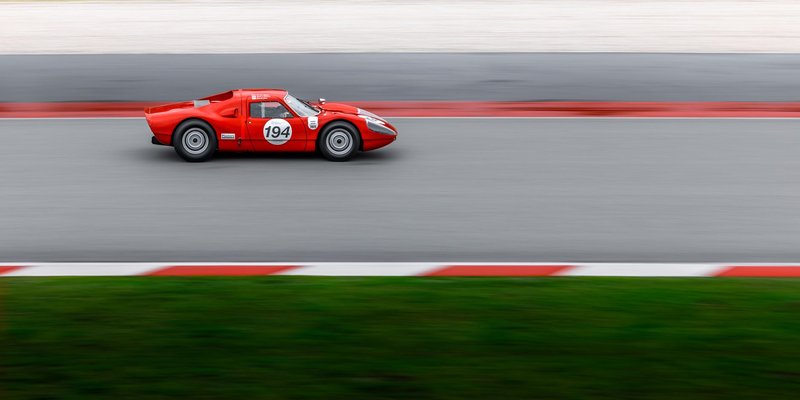
- Porsche 356 “Gmünd”: the first Porsche-badged cars were built in a former sawmill in Gmünd, Austria, before production moved to Stuttgart.
- Saab 92: the first Saab car, with a teardrop body, began production in December 1949.
- Mercedes-Benz 170 V: a pre-war design restarted for postwar Germany.
Engines at a glance
| Car | Engine | Power |
|---|---|---|
| Ford | 239 cu in flathead V8 | 100 hp |
| Mercury | 255 cu in flathead V8 | 110 hp |
| Lincoln | 337 cu in flathead V8 | 152 hp |
| Chevrolet | 216 cu in inline six | 90 hp |
| Plymouth | 218 cu in flathead six | 97 hp |
| Dodge | 230 cu in flathead six | 103 hp |
| Chrysler Saratoga / New Yorker | 323 cu in straight-eight | 135 hp |
| Oldsmobile 88 | 303 cu in OHV V8 | 135 hp |
| Buick Roadmaster | 320 cu in straight-eight | 150 hp |
| Cadillac | 331 cu in OHV V8 | 160 hp |
| Jaguar XK120 | 3.4 L twin-cam six | 160 bhp |
| Volkswagen Beetle | 1.1 L flat-four | 25 hp |
Look at the top and bottom of that list. A Cadillac made more than six times the power of a Beetle, and the Cadillac and Oldsmobile were the only two American makes with modern overhead-valve V8s.
Which 1949 cars are most collectible
- Mercury coupe: the favorite for customizers, and the price of a clean original has climbed with it.
- Oldsmobile 88: a V8 car with real period racing history.
- Cadillac Coupe de Ville and Buick Roadmaster Riviera: early pillarless hardtops, now valued for their place in history.
- Ford convertible and wood-bodied station wagon: the most attractive Fords.
- Jaguar XK120: the most valuable car in this list that people still drive.
- Porsche 356 Gmünd: a few dozen exist, and they trade at auction rather than classifieds.
- Plymouth and Chevrolet sedans: cheapest to buy and easiest to keep running, and ideal first projects.
For any of them, check recent sale results rather than asking prices, and look for rust in the floors and lower body panels.
Model year versus calendar year
A “1949 model” does not mean a car built in 1949. Ford introduced its 1949 line in June 1948, and Chrysler Corporation launched its new bodies in the spring of 1949. A car on a registration marked 1949 could be either. Check the serial number and the body plate, because the first and second 1949 series of some makes differ in body and trim.

Marco Delantero
More from Marco DelanteroHow we reviewed this article
This article was researched against manufacturer records and editorially reviewed before publishing. We accept no payment for coverage. Some guides contain affiliate links; see our affiliate disclosure.