Every “classic Aston Martin” list eventually collapses into the same three letters: DB5. Fair enough — it’s the most famous car of the decade, arguably the most famous car of any decade. But the 1960s Aston Martin lineup was six distinct cars built around one engineer’s obsession with getting the balance right, and most of them get skipped past on the way to Goldfinger trivia.
This is the full lineup: DB4, DB4GT Zagato, DB5, DB6, DBS, and the Lagonda Rapide — what each one actually was, what it cost new, and what it costs now.
Table of Contents
- Why the 1960s Were Aston Martin’s Defining Decade
- Aston Martin DB4 (1958–1963)
- Aston Martin DB4GT Zagato (1960–1963)
- Aston Martin DB5 (1963–1965)
- Aston Martin DB6 (1965–1970)
- Aston Martin DBS (1967–1972)
- Lagonda Rapide (1961–1964)
- Spec and Value Comparison
- What to Check Before Buying a 1960s Aston Martin
Why the 1960s Were Aston Martin’s Defining Decade
One engineer is the throughline for almost everything on this list: Tadek Marek, a Polish-born engineer who joined Aston Martin in 1954 and designed the straight-six that powered the DB4 through the DB6, then the V8 that carried the DBS forward. His engines weren’t the most powerful in their class on paper. They were tuned for the kind of mid-range torque that makes a car feel fast on a B-road, not just on a spec sheet.
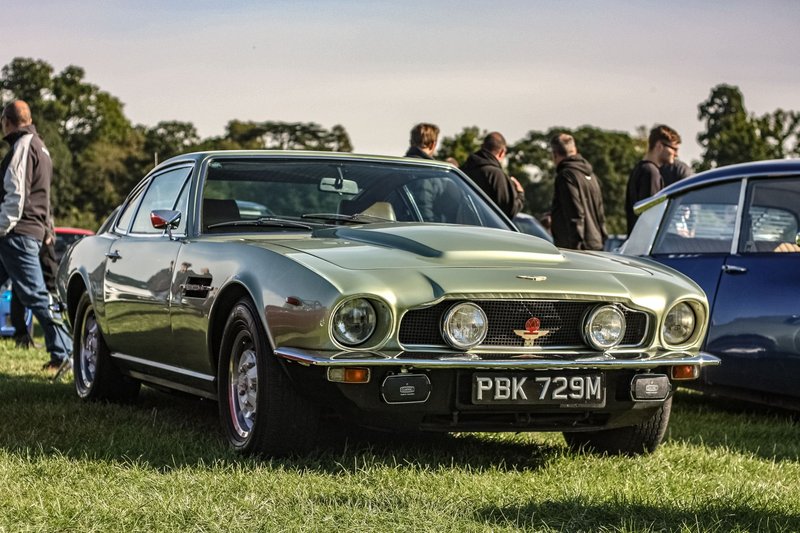
The other constant is Carrozzeria Touring of Milan, whose superleggera (“super light”) construction method — a lightweight tube frame under aluminum body panels — gave the DB4 and DB5 their shape and their relatively low weight for the era. Aston Martin bought a license to build the frames in-house after Touring folded in 1966, which is part of why the DB6 looks related but isn’t built quite the same way underneath.
Aston Martin DB4 (1958–1963)
The DB4 arrived at the 1958 London Motor Show and reset what a British GT car was supposed to look like. Touring’s superleggera body was the first Aston to break decisively from the older, heavier David Brown-era shapes, and Marek’s new 3.7-liter straight-six gave it genuine 140 mph performance — remarkable for a road car in 1958, enough to rank it among the best sports cars of the 1960s.
Five series were built across the model’s run, with the Series 5 (1962–63) stretching the wheelbase and roofline for more cabin room. A DB4 new cost around £3,976 in the UK, roughly the price of two or three family homes at the time. Today, clean examples run $500,000 to $700,000, with rarer early-series cars pushing higher.
Aston Martin DB4GT Zagato (1960–1963)
Only 19 of these were built, and that scarcity is the whole story. Aston Martin sent short-wheelbase DB4GT chassis to Zagato in Milan, who dropped an aggressively lightened aluminum body over the top — no bumpers, plexiglass-style covered headlights, a stripped interior — shaving roughly 45 kg off an already-light car.
The result was a genuine race car with license plates: 314 hp, a top speed north of 150 mph, and a competition record that included class wins at Le Mans support races and British GT events through the early ’60s. Original sale price hovered around £5,500. A surviving DB4GT Zagato now sells for well over $10 million at auction — one of the most valuable Astons ever built, and one of the rarest.
Aston Martin DB5 (1963–1965)
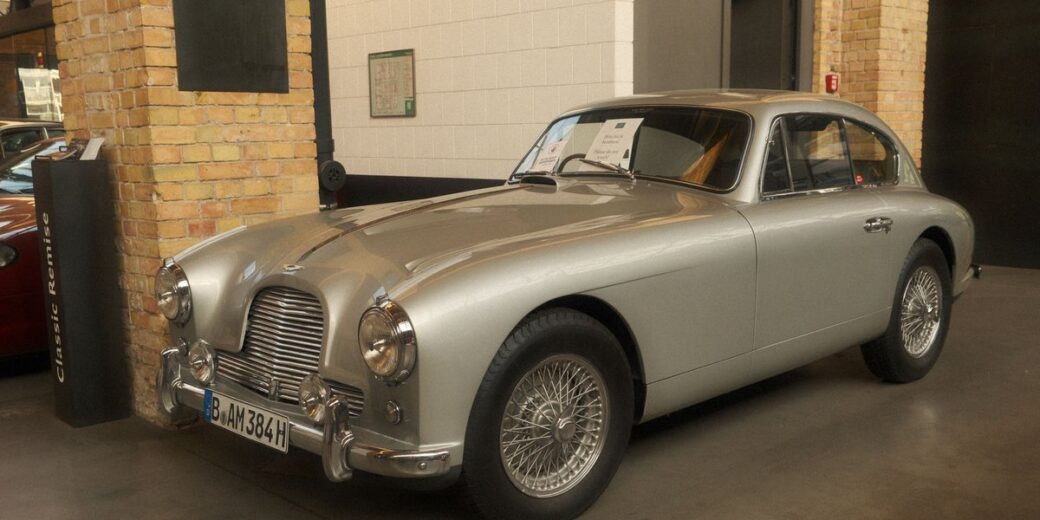
The DB5 is technically a refinement of the DB4 Series 5 rather than an all-new car — a bored-out 4.0-liter straight-six, a five-speed ZF gearbox replacing the old four-speed, and standard front disc brakes. On its own merits it was already the best all-round Aston of the decade.
Then Goldfinger happened. Production designer Ken Adam and the film’s producers borrowed a DB5 prototype in 1964 and fitted it with machine guns, an ejector seat, and revolving number plates, and the car became inseparable from Bond for the next six decades. Aston Martin’s own historic archive still leans on that connection more than any other single moment in the brand’s history.
Only 1,059 DB5 saloons were built in just under two years — a short run that, combined with the film tie-in, makes it the most sought-after Aston of the era. New price was around £4,248. Today, non-Bond-spec DB5s trade in the $700,000–$1,000,000 range, and Bond-continuation or screen-used cars have sold for multiples of that.
Aston Martin DB6 (1965–1970)
The DB6 gets overshadowed by the car it replaced, which is a little unfair — it’s the DB6 that actually sold in the largest numbers of the DB4/5/6 family, and the one that pushed the formula furthest before the DBS changed direction entirely. The wheelbase grew, the tail gained a Kamm-style cut-off spoiler for genuine high-speed stability (Aston claimed it reduced rear lift at speed), and the cabin got noticeably roomier in back.
Mechanically it carried over the DB5’s 4.0-liter six, with the Vantage-spec triple-carb version pushing around 325 hp. It was also the last Aston built using the Touring superleggera license before the company shifted to a different, in-house construction process for the DBS. New price was roughly £4,998. Values now sit lower than the DB5’s — usually $300,000 to $450,000 — which, relative to its rarer specification and larger cabin, makes it the closer-to-sensible entry point into the family.
Aston Martin DBS (1967–1972)
The DBS is where the decade’s design language breaks. William Towns replaced the flowing Touring lines with a flatter, wider, more angular shape — still unmistakably Aston, but pointed at the 1970s rather than looking back at the ’50s. It also introduced a De Dion rear axle, a genuine handling upgrade over the older live-axle DB6.
For its first two years the DBS ran the same straight-six as the DB6, with the V8-engined version not arriving until 1969 — narrowly outside this decade’s scope, but built on the chassis this car established. The six-cylinder DBS started around £4,998 new and now sells in the $150,000–$250,000 band, making it the most attainable six-cylinder Aston of the 1960s.
Lagonda Rapide (1961–1964)
The one nobody remembers is arguably the most interesting engineering exercise of the bunch. Aston Martin revived its Lagonda badge for a four-door sports saloon meant to compete with Rolls-Royce and Bentley on comfort while still handling like an Aston — de Dion rear suspension, a 4.0-liter Marek six tuned for smoothness over outright power, and a Touring-influenced body built by Aston itself rather than Touring directly.
It flopped commercially. Only 55 were built against a hoped-for market of wealthy buyers who, it turned out, wanted a Rolls badge more than they wanted better handling. New price was around £4,950 — nearly what a DB5 cost — for a car most people had never heard of. That scarcity has flipped the story completely: surviving Rapides now sell in the $200,000–$350,000 range, prized by collectors specifically because almost nobody else has one.
Spec and Value Comparison
| Model | Years Built | Number Made | 0–60 mph | New Price (£) | Value Today (USD) |
|---|---|---|---|---|---|
| DB4 | 1958–1963 | ~1,110 | ~9.0s | £3,976 | $500,000–$700,000 |
| DB4GT Zagato | 1960–1963 | 19 | ~6.1s | £5,500 | $10,000,000+ |
| DB5 | 1963–1965 | 1,059 | ~8.1s | £4,248 | $700,000–$1,000,000 |
| DB6 | 1965–1970 | ~1,788 | ~6.5s (Vantage) | £4,998 | $300,000–$450,000 |
| DBS (6-cyl) | 1967–1972 | ~787 | ~8.5s | £4,998 | $150,000–$250,000 |
| Lagonda Rapide | 1961–1964 | 55 | ~10.0s | £4,950 | $200,000–$350,000 |
Production and performance figures vary slightly by source and specification; treat as representative rather than exact for any single chassis.
What to Check Before Buying a 1960s Aston Martin
Marketplace listings will tell you the price and the color. They won’t tell you what actually separates a good buy from a money pit, so here’s what to have a specialist look at before you sign anything.
Chassis and body corrosion. Superleggera construction hides rust well — the aluminum panels can look flawless while the steel tube frame underneath is rotting. A pre-purchase inspection by a marque specialist (the Aston Martin Owners Club maintains a list) should always include a look at the frame, not just the panels.
Matching numbers. Engine and chassis numbers should align with factory records. Aston Martin’s own heritage certificate service can confirm originality — worth the fee before you’re negotiating on a six-figure car.
Restoration paperwork. Most surviving cars from this era have been restored at least once. Ask for invoices, not just photos. A full nut-and-bolt restoration with documentation from a recognized specialist adds real value; an undocumented “refresh” is a question mark, not an answer.
Parts availability. The DB4/5/6 family shares enough mechanicals that parts support is genuinely good through specialists and Aston Martin Works itself. The Lagonda Rapide, with only 55 built, is a different story — expect to source or fabricate parts, and budget accordingly.
Provenance for the Zagato and Bond-connected cars. At the top end of this market, documented ownership history isn’t a nice-to-have, it’s most of the value. Auction houses like Bonhams and RM Sotheby’s publish detailed provenance chains for exactly this reason — read them before you bid, not after.
The six-figure (or seven-figure) price tags make these feel like museum pieces, but every one of them was built to be driven hard on real roads. That’s still the best way to understand why people pay what they pay.

Daniela Voss
More from Daniela VossHow we reviewed this article
This article was researched against manufacturer records and editorially reviewed before publishing. We accept no payment for coverage. Some guides contain affiliate links; see our affiliate disclosure.