Most lists of 70s JDM cars give you ten photos, a few adjectives and a mix of Japanese-market cars with their export cousins. This one sorts out which is which. Fourteen cars, each with the years, the engine, the number that matters and a rough idea of what it costs today.
TL;DR
- Most valuable: the Skyline GT-R pair (Hakosuka and Kenmeri), the Fairlady Z432 and the Toyota 2000GT. All are six-figure cars or more.
- Best all-rounder to own: the Fairlady Z (S30). Parts support is the deepest of any car here.
- Best weird one: the Mazda Cosmo AP, a rotary coupe built to survive emissions law.
- Cheapest way in: the first-generation Honda Civic or a Celica TA22.
- Importing: every car on this list is over 25 years old, so the US federal import rules no longer stand in your way.
Contents
- What counts as a 70s JDM car
- Why the 1970s mattered
- The 14 cars
- Quick-reference table
- Which ones can you actually buy and import
What counts as a 70s JDM car
JDM stands for Japanese Domestic Market: cars built for sale in Japan, often with different engines, trim and even names than the versions sold abroad. In the US the term got stretched to cover any Japanese-built car. A Datsun 240Z sold in Los Angeles is a Japanese car. The Fairlady Z sold in Osaka, with a 2.0-liter inline-six and right-hand drive, is the JDM car.
That distinction matters for value and for bragging rights, so each entry below flags whether the car was Japan-only or shared with export markets. Where a car had both a domestic and an export identity, the JDM version is the one described.
Why the 1970s mattered
Japan entered the decade making fast, cheap, increasingly good cars. It left the decade making fuel-efficient, emissions-compliant ones.
The first half was the golden stretch. Twin-cam engines, racing homologation specials and the first real Japanese sports cars appeared, all of them chasing Europe. Then two shocks landed. Japan phased in tough emissions rules from 1975, with a much tighter round in 1978. And the 1973 oil embargo, covered in detail by the US State Department’s Office of the Historian, pushed fuel prices up and buyers toward small, frugal cars. Big-displacement performance cars were suddenly hard to justify.
The survivors from that era are why the decade is so collectible. The cars built before the regulations bit were the last of something.
The 14 cars
1. Nissan Skyline 2000GT-R “Hakosuka” (PGC10/KPGC10)
Years: 1969–1972 | Engine: 2.0L S20 inline-six, DOHC, 24 valves | Power: 160 PS | JDM status: Japan-only
The Hakosuka is the one everybody means when they say “classic Skyline.” The nickname is Japanese for “boxy Skyline” (hako means box). Nissan took the S20, a detuned racing engine derived from its R380 prototype program, and dropped it into a plain four-door sedan, then into a two-door coupe, the KPGC10.
On the track it was brutal. It won 50 touring car races by 1972. Only around 1,945 were built across both body styles, with the coupe the more sought-after.
Today: Expect well into six figures for a clean car, with the best examples trading at several hundred thousand dollars.
2. Nissan Skyline 2000GT-R “Kenmeri” (KPGC110)
Years: 1972–1973 | Engine: 2.0L S20 inline-six | Power: 160 PS | JDM status: Japan-only
The Kenmeri takes its name from “Ken and Mary,” the couple in the Skyline ad campaign of the day. It’s the GT-R that almost didn’t happen. Only 197 were built before emissions rules killed the S20, and it never raced. Every one of them was sold in a window of a few months.
It’s chunkier than the Hakosuka, with the wide-hipped styling of the C110 body, and it’s far rarer. That rarity makes it one of the most expensive Japanese cars of its era.
Today: Cars rarely come up for sale, and when they do, the numbers sit at the top of the JDM market.
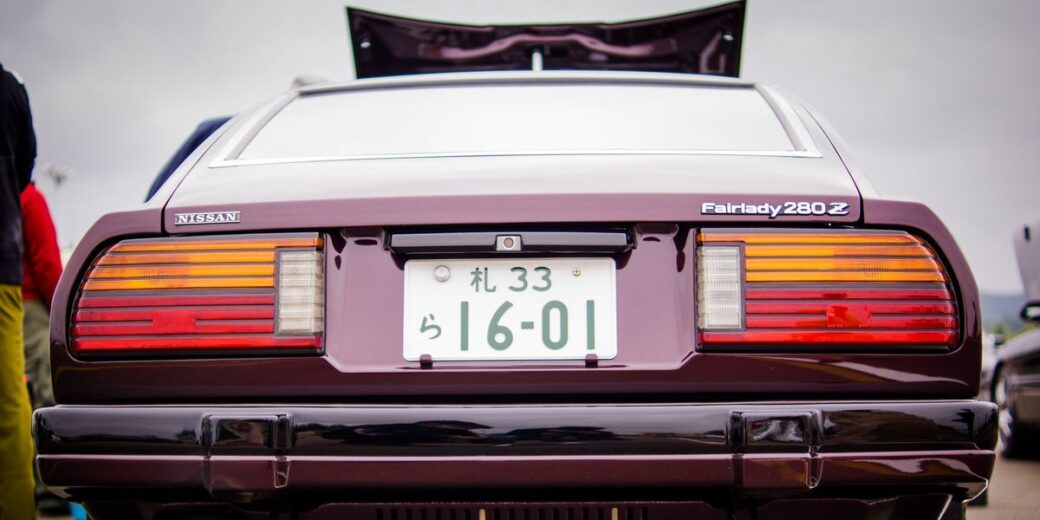
3. Nissan Fairlady Z (S30)
Years: 1969–1978 | Engine: 2.0L L20 inline-six, SOHC | Power: 130 PS | JDM status: Domestic version of the Datsun 240Z
The Z is the car that told the world Japan could build a proper sports car at a normal price. More than half a million S30s were built, which is why it’s the easiest car on this list to find, fix and enjoy.
The domestic Fairlady Z used the L20 2.0-liter six instead of the 2.4 liters the US got in the 240Z, and sat on the right side of the car as far as the steering wheel goes. The long hood, short deck and fastback shape are the same. Plenty of these have been converted to left-hand drive or swapped into the American version’s body shell, so check what you’re actually looking at.
Today: Good examples are a five-figure purchase, climbing well past $50,000 for exceptional cars. It’s the safest entry point into serious JDM collecting.
4. Nissan Fairlady Z432 (PS30)
Years: 1969–1973 | Engine: 2.0L S20 inline-six | Power: 160 PS | JDM status: Japan-only
The name tells you what’s under the hood: 4 valves per cylinder, 3 carburetors, 2 camshafts. It’s the Skyline GT-R’s engine in the Z’s body, and it was a homologation car for racing. Around 420 were built, nearly all in Japan, and most of those were stripped of luxuries to keep weight down.
Everything about it is subtle. It looks like a regular S30 unless you spot the 432 badge and the louvered hood vents.
Today: A genuine Z432 is a six-figure car and, in prime condition, a quarter-million-dollar-plus one. Beware of replicas built from standard Zs.
5. Toyota 2000GT
Years: 1967–1970 | Engine: 2.0L 3M inline-six, DOHC | Power: 150 PS | JDM status: Japan-built, sold mainly in Japan
A caveat first: the 2000GT is a 1960s design, and the last cars left the factory in 1970. It earns its place because it set the template for what a Japanese grand tourer could be, and because collectors treat it as the anchor of the entire period.
Yamaha helped build the engine and assembled the cars largely by hand. Roughly 350 were made. It starred in the 1967 Bond film You Only Live Twice as a purpose-built convertible, and that image has never faded.
Today: It’s a seven-figure car, the most expensive Japanese classic of the lot.
6. Toyota Celica 1600GT (TA22)
Years: 1970–1974 | Engine: 1.6L 2T-G inline-four, DOHC | Power: 115 PS | JDM status: Domestic GT version of a car also exported
Toyota’s answer to the Ford Mustang, scaled down for Japanese roads. The “Full Choice” system let buyers mix and match engines, trim and transmissions, which was a gimmick that the Japanese market loved. The 2T-G twin-cam in the 1600GT is the version to want. It’s a free-revving engine that gave the Celica a sharper character than the export models.
Today: Roughly $15,000 to $40,000 depending on condition and originality. Rust is the enemy, and clean shells are scarce.
7. Toyota Corolla Levin / Sprinter Trueno (TE27)
Years: 1972–1974 | Engine: 1.6L 2T-G inline-four, DOHC | Power: 115 PS | JDM status: Largely Japan-only
Put the Celica’s engine in a small, light Corolla body and you get the TE27. It’s the ancestor of the AE86, the “Hachi-Roku” of drift fame, and arguably the more authentic hot hatchback of the two.
It was sold as two cars at two Toyota dealer channels. The Levin and the Trueno differ mainly by their front-end styling. In Japan, the pair became touring car racing stars.
Today: Prices have risen steadily as collectors realize how few survived. A good one runs from roughly $30,000 upward.
8. Mazda Savanna RX-3
Years: 1971–1978 | Engine: 12A twin-rotor Wankel | Power: about 120 PS | JDM status: Domestic Savanna name; sold abroad as the RX-3
The Savanna’s claim to fame is that it stopped the GT-R. The Skyline’s racing winning streak ended in 1972 when the small, light Savanna beat it at Fuji. For a car that looks like a mild little coupe, that’s a ridiculous résumé.
Rotary power gave it a high-revving, vibration-free character that nothing else of its size could match. Fuel economy was the trade-off, which the oil crisis made very obvious. Mazda’s fortunes dipped for a few years as a result.
Today: Roughly $20,000 to $50,000. Rotary engines are rebuildable, but rebuilds are a specialist job, so budget accordingly.
9. Mazda Cosmo AP (Cosmo L)
Years: 1975–1981 | Engine: 12A or 13B twin-rotor Wankel | Power: roughly 125–135 PS | JDM status: Sold in Japan and exported in limited numbers
The AP stands for “Anti-Pollution.” Mazda built the Cosmo to prove a rotary could meet Japan’s new emissions standards without losing too much of its edge. A thermal reactor and engineering rework managed it.
It’s a big, low-slung, pillarless-looking luxury coupe with a long nose, and it looks more like a mid-70s American personal luxury car than anything from Japan. That’s part of the appeal.
Today: Often $20,000 to $60,000, with rarer trims and better condition at the top.
10. Mazda Luce Rotary Coupe (R130)
Years: 1969–1972 | Engine: 13A twin-rotor Wankel | Power: 126 PS | JDM status: Japan-only
This is the oddball of the group: a front-wheel-drive rotary coupe styled by Bertone, in Japan, in 1969. Only 976 were built, and Mazda stopped before the oil crisis could make the argument for them.
It’s a quiet, elegant car, more European in feel than any other on this list, with front-wheel drive that was still rare for sporting Japanese cars at the time.
Today: Hard to price because so few trade publicly. Expect a well-above-average figure for a classic of this size.
11. Mitsubishi Galant GTO (A53C)
Years: 1970–1975 | Engine: 1.6L 4G32 inline-four, DOHC (MR) | Power: 125 PS | JDM status: Domestic MR version of a car also exported as the Colt Galant GTO
Mitsubishi’s pony car. The ducktail rear spoiler and hunched fastback shape owe a lot to American muscle, even if the engine was a little 1.6-liter twin-cam. The MR was the high-performance version, and it’s the one collectors hunt for.
Later versions swapped to a larger 2.0-liter engine with a heavier body, and that’s where the car lost its edge.
Today: MR cars start around $25,000 and go well up from there. Non-MR versions are cheaper but less sought-after.
12. Datsun 510 (Nissan Bluebird)
Years: 1967–1973 | Engine: 1.6L L16 inline-four, SOHC | Power: about 100 PS (SSS) | JDM status: Domestic Bluebird sold abroad as the Datsun 510
The 510 earned its nickname: “the poor man’s BMW 2002.” It had independent rear suspension on the sedan, a rev-happy overhead-cam four and a price that undercut the Europeans. It also won the 1970 Safari Rally outright, one of the toughest events in motorsport.
The Japanese Bluebird SSS used the more powerful twin-carburetor L16, and that’s the version to find if you want the full JDM experience. The wagon and two-door versions are cult favorites.
Today: From about $15,000 to $40,000 for driver-quality cars. Show-grade SSS cars can be more.
13. Isuzu 117 Coupe
Years: 1968–1981 | Engine: 1.6L G161W inline-four, DOHC | Power: 120 PS | JDM status: Mostly Japan-only
Giugiaro drew it while at Ghia, and the shape is pure Italian: slim pillars, a low nose and clean surfaces. The first cars, built until 1972, had bodies shaped largely by hand. After that Isuzu moved to a production line and the look was simplified slightly.
It looks like a very expensive car, which is the point. The early handmade cars are the collector’s choice.
Today: Roughly $25,000 to $60,000, with early handmade cars at the upper end.
14. Honda Civic RS (first generation)
Years: 1972–1979 (RS from 1974) | Engine: 1.2L inline-four | Power: 76 PS (RS) | JDM status: Sold worldwide; the RS was a Japanese-market sport trim
Not a sports car in the usual sense, but arguably the most important car here. The Civic arrived in 1972, and the CVCC engine of 1973 met strict US emissions standards without a catalytic converter. That one trick helped put Honda on the map in America and changed how the world saw Japanese engineering.
The Japanese RS was the sporty one: twin-carburetor 1.2 liter, sport suspension, simple and light.
Today: Cheapest car on the list, often $5,000 to $20,000. Rust-free cars are rare and worth paying extra for.
Quick-reference table
| # | Car | Years | Engine | Power | Rough price |
|---|---|---|---|---|---|
| 1 | Skyline GT-R Hakosuka | 1969–72 | 2.0L S20 I6 | 160 PS | $200k+ |
| 2 | Skyline GT-R Kenmeri | 1972–73 | 2.0L S20 I6 | 160 PS | $400k+ |
| 3 | Fairlady Z (S30) | 1969–78 | 2.0L L20 I6 | 130 PS | $25k–$60k |
| 4 | Fairlady Z432 | 1969–73 | 2.0L S20 I6 | 160 PS | $200k+ |
| 5 | Toyota 2000GT | 1967–70 | 2.0L 3M I6 | 150 PS | $1M+ |
| 6 | Celica 1600GT (TA22) | 1970–74 | 1.6L 2T-G I4 | 115 PS | $15k–$40k |
| 7 | Levin / Trueno (TE27) | 1972–74 | 1.6L 2T-G I4 | 115 PS | $30k+ |
| 8 | Savanna RX-3 | 1971–78 | 12A rotary | ~120 PS | $20k–$50k |
| 9 | Cosmo AP | 1975–81 | 12A/13B rotary | ~125–135 PS | $20k–$60k |
| 10 | Luce Rotary Coupe | 1969–72 | 13A rotary | 126 PS | Rare, five figures and up |
| 11 | Galant GTO MR | 1970–75 | 1.6L 4G32 I4 | 125 PS | $25k+ |
| 12 | Datsun 510 / Bluebird SSS | 1967–73 | 1.6L L16 I4 | ~100 PS | $15k–$40k |
| 13 | Isuzu 117 Coupe | 1968–81 | 1.6L G161W I4 | 120 PS | $25k–$60k |
| 14 | Civic RS | 1972–79 | 1.2L I4 | 76 PS | $5k–$20k |
Prices are rough ballparks for sound, driveable cars and vary with condition, originality and the market. Power figures are Japanese gross (PS) ratings, which read higher than the net figures used in the US.
Which ones can you actually buy and import
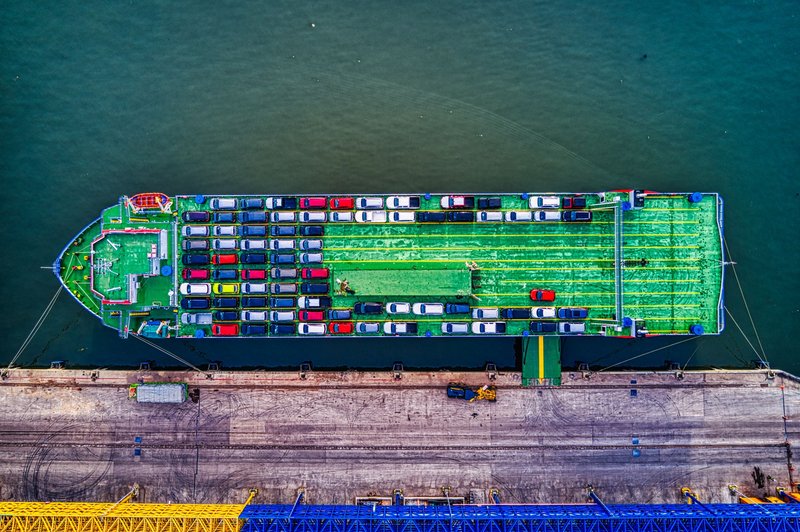
The good news is that the legal side is easy. The US generally restricts importing non-compliant vehicles, but the NHTSA exempts vehicles that are at least 25 years old from federal safety standards. Even the newest car on this list, a late-1970s model, passed that mark long ago. The EPA has its own exemption for older vehicles as well. Canada has a similar rolling 15-year rule.
The hard parts are practical ones:
- Budget in tiers. Under $20,000 gets you a Civic, a Celica or a Bluebird. Between $20,000 and $60,000 sits the Fairlady Z, Savanna, Cosmo AP, Galant GTO and 117 Coupe. The Skylines, Z432 and 2000GT are in another league entirely.
- Buy the car, not the story. Z432s, Hakosukas and GT-Rs are heavily replicated. Check chassis numbers, engine numbers and the original paperwork, ideally with an expert who knows the model.
- Right-hand drive. Every JDM car is right-hand drive. That’s legal everywhere you’d import it, though some people find it harder to live with in daily traffic.
- Rust. A car that spent its life near the Japanese coast, or in snowy regions where roads were salted, can be rotten under the paint. Ask for underbody photos.
- State rules. Registration and smog rules vary. In California, for example, cars from before the 1976 model year are treated differently from later ones, so check your state before you buy.
- Parts. The Fairlady Z and Datsun 510 have big aftermarket support. The S20-powered cars, rotary-specific parts and Isuzu 117 trim pieces take more patience and often a trip to Japan’s parts suppliers.
If you want one car to start with, the Fairlady Z is the obvious answer. If you want one to hold, the Skylines and Z432 have the history and the scarcity. And if you only want to understand what made Japan’s 70s car scene tick, drive the cheapest car on the list. The Civic, small and clever, explains the decade’s second half better than any of the supercar-priced entries do.

Marco Delantero
More from Marco DelanteroHow we reviewed this article
This article was researched against manufacturer records and editorially reviewed before publishing. We accept no payment for coverage. Some guides contain affiliate links; see our affiliate disclosure.