Datsun doesn’t exist anymore — Nissan quietly retired the name in 1986 — but the cars it left behind have aged into something rare: genuine collector icons with actual racing pedigree, bought at the time for their practicality and prized now for their character. That’s a reversal most brands never get.
The name has murky origins. DAT Motors launched in Japan in 1931 with the “Datson” (son of DAT), which later became Datsun. Nissan absorbed the parent company in 1934 but kept the badge alive as an export label — cheap cars sold to Americans who thought they were getting a bargain. They weren’t wrong, but the cars turned out to be better than the price suggested.
Here’s a look at the models that actually mattered.
Table of Contents
- Datsun 240Z (1969–1973)
- Datsun 510 (1967–1973)
- Datsun 1200 (1970–1978)
- Datsun Bluebird (1957–1972)
- Datsun Fairlady (1959–1970)
- Datsun 520/620 Pickup (1965–1979)
- Datsun 411 (1963–1967)
- Datsun 2000 Roadster (1967–1970)
- Era Comparison Table
Datsun 240Z (1969–1973) {#datsun-240z}
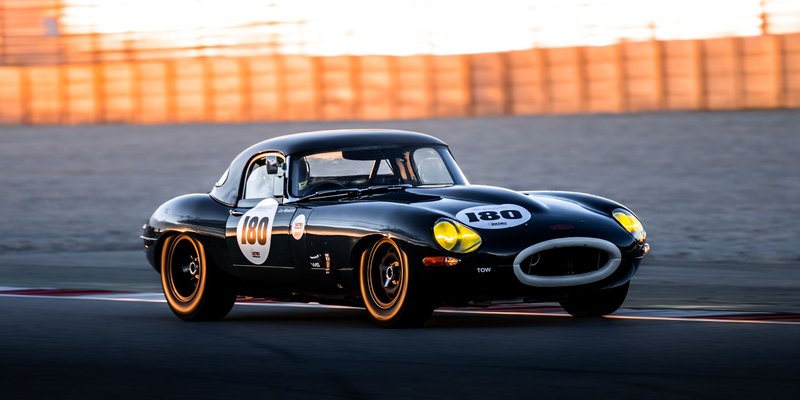
The 240Z is the reason Datsun gets taken seriously in collector circles. Before it arrived, Japanese sports cars were curiosities. After it, they were competition.
The car had a 2.4-liter straight-six borrowed and evolved from a Mercedes-Benz design Nissan licensed in the 1950s. It made around 151 horsepower, weighed under 2,300 pounds, and was priced at $3,526 at launch — roughly half what a comparable European sports car cost. Journalists who expected to be politely impressed came back genuinely floored.
The body was designed by Yoshihiko Matsuo and his team at Nissan, with some influence from Albrecht Goertz, the German designer behind the BMW 507. The long hood, fastback roofline, and round taillights gave it a look that still reads as intentional rather than dated.
On the track, the 240Z was immediately competitive. It won the 1971 East African Safari Rally outright and went on to dominate SCCA production racing in North America for years. Pete Brock’s BRE (Brock Racing Enterprises) team turned the street car into a genuine racing tool with minimal modification — which tells you something about the underlying architecture.
Over three years, Nissan sold roughly 156,000 of them in the US alone. That’s not a niche car. That’s a mainstream hit that happened to be good enough to become a legend. The 1969 Nissan lineup that year was broader than most people realize, but the Z was the car that changed everything.
Datsun 510 (1967–1973) {#datsun-510}
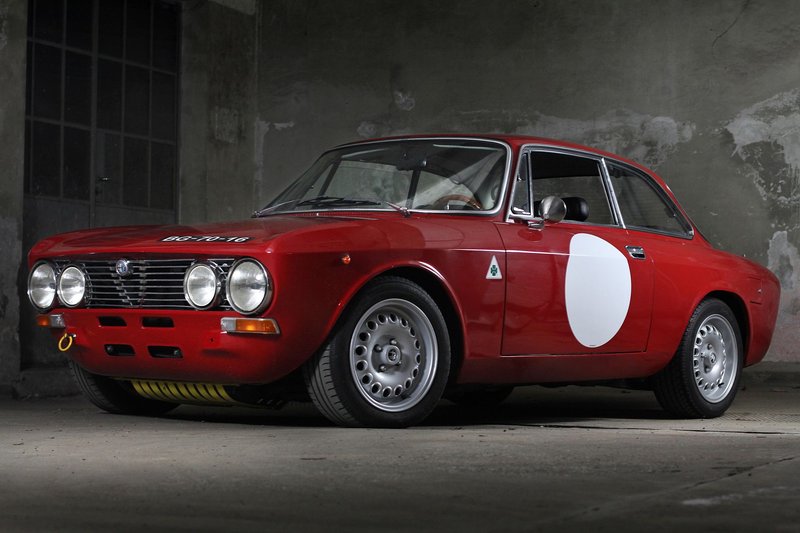
The 510 was sold as a sensible family sedan. It became a cult racing car. That gap between intention and outcome is part of what makes Datsun history so interesting.
The 510 used an independent rear suspension at a time when most affordable cars were still running live rear axles. It had a front disc brake option. The 1.6-liter engine was overhead-cam, which was unusual at its price point. The whole package was designed to be cheap to build and easy to maintain, and in achieving that, the engineers accidentally created something with genuine handling potential.
BRE again: Pete Brock took the 510 and won back-to-back SCCA Trans-Am championships in 1971 and 1972 in the under-2.5-liter class. Journalists called it “the poor man’s BMW 2002” — meant as a compliment — because the driving dynamics were in the same neighborhood at roughly half the price.
The fastback coupe version is the one collectors want now, but the four-door sedan is what sold in volume and what most Americans actually drove. Either way, it’s a car that earned its reputation doing something, not just by looking good in photographs.
Datsun 1200 (1970–1978) {#datsun-1200}
The 1200 was Datsun’s answer to the European small car — the Mini, the Fiat 127, the Renault 5. It used a front-wheel-drive layout with a transverse engine, which was still genuinely unusual in mainstream affordable cars in 1970.
The A12 engine displaced 1,200cc and made modest power, but in a car that weighed around 1,600 pounds, it was enough. The 1200 coupe — a two-door fastback version sold from 1970–1973 — is the one that aged best. It looked like a proper sports coupe, ran on the same mechanicals as the economy sedan, and cost very little.
Japanese touring car racing teams seized on it. The 1200 won class titles across Asia throughout the early 1970s, and modified versions still compete in vintage racing events. The bone-stock coupe is now genuinely collectable, partly because so few survived and partly because the design holds up better than most economy cars from that era. For a broader look at what Japanese manufacturers were building during this period, the complete list of old JDM cars covers the full landscape.
Datsun Bluebird (1957–1972) {#datsun-bluebird}
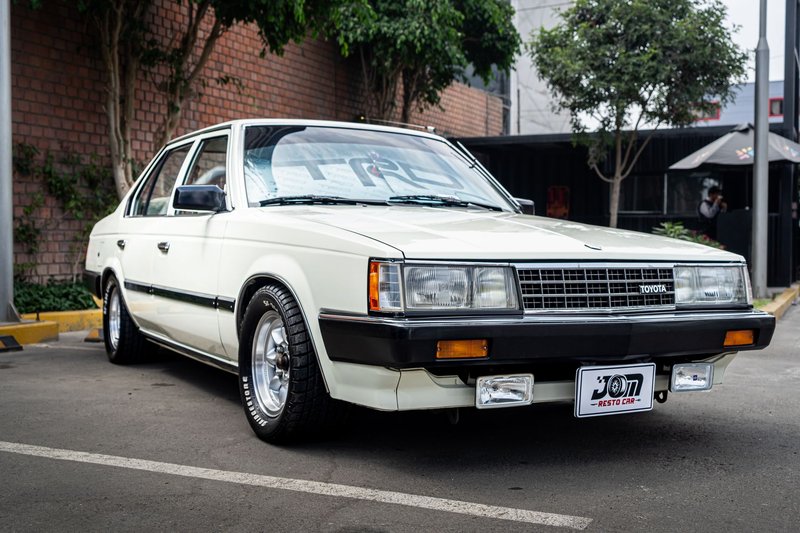
The Bluebird was Datsun’s bread-and-butter car for most of the brand’s export years — the model that built Datsun’s reputation in Australia, the UK, and eventually North America before the 510 and 240Z took over.
The first Bluebird (internally the 210) launched in 1957. By the time the 410 series arrived in 1963, Datsun had hired Pininfarina — the Italian design house responsible for some of Ferrari’s best work — to style the body. The result was a Japanese family car that didn’t look like an afterthought. It sold well in Australia in particular, where Datsun dealers were doing real volume by the mid-1960s.
The 510 was technically the successor to the Bluebird name in most markets, though Nissan kept using the Bluebird badge in Japan through the 1990s for a different, larger car. The original export-era Bluebirds — especially the Pininfarina-styled 410 — are the ones worth knowing.
Datsun Fairlady (1959–1970) {#datsun-fairlady}
The name Fairlady sounds like it was designed by committee. The car was not. The Fairlady roadsters — built through several generations from the SPL212 in 1959 to the 2000 Roadster in 1967 — were Datsun’s attempt at a proper two-seat sports car before the Z came along and made them obsolete.
The early cars were small, underpowered, and frankly pretty spartan. The later 1600 and 2000 Roadsters used twin-cam engines developed partly from a Yamaha collaboration and were genuinely competitive in SCCA Class D and E production racing. Bob Sharp, who would go on to race Datsun Z cars with considerable success, cut his teeth in Fairlady Roadsters.
The Fairlady name survives in Japan today — Nissan still calls the Z the “Fairlady Z” in the domestic market — which gives the original roadsters a kind of ancestral status that wasn’t obvious at the time.
Datsun 520/620 Pickup (1965–1979) {#datsun-pickup}
Datsun pickups sold in enormous numbers in North America during the 1970s and arguably did more for the brand’s long-term survival than the sporty cars got credit for. The 520 series launched in 1965 as a compact, reliable work truck. The 620 followed in 1972 with a more modern body and became a genuine hit.
The 620 “Li’l Hustler” — that was the actual marketing name — was positioned against the Ford Courier and Toyota Hilux. It was lighter and thirstier than American trucks, which turned into a selling point during the 1973 oil crisis when fuel suddenly mattered. Buyers who bought one for economy discovered it was also reasonably tough.
The 620 with the round “bullet nose” front end is the one with collector appeal now. It’s honest about what it is: a small, simple truck from an era before trucks became luxury goods.
Datsun 411 (1963–1967) {#datsun-411}
The 411 is the Pininfarina-styled Bluebird mentioned earlier, but it deserves its own entry because the design is specific enough to be notable. Nissan flew the 410/411 series body design to Turin, and Pininfarina produced something that could pass for a scaled-down Lancia: clean flanks, a proper greenhouse, no decorative excess.
The 411 was the version sold in North America from 1965. It came with a 1.3-liter overhead-cam engine and front disc brakes as standard equipment on a car that cost under $1,800. That combination of specs at that price was almost unreasonable.
It’s not the most exciting Datsun, but the 411 is the one that shows what the brand was capable of when it had something to prove to the European market.
Datsun 2000 Roadster (1967–1970) {#datsun-2000-roadster}
The last and best of the Fairlady Roadsters deserves a separate entry. The SR311 used a 2.0-liter twin-cam engine developed with Yamaha producing 135 horsepower — in a car weighing around 2,100 pounds, that’s a meaningful power-to-weight ratio for 1967.
The Yamaha connection is the detail that matters. Nissan brought Yamaha in specifically to develop the engine, the same relationship that would produce the Toyota 2000GT a year later. The result was a high-revving, smooth engine that made the 2000 Roadster genuinely quick rather than just sporty-looking.
Only about 3,500 were sold in the US before the 240Z arrived and made the roadster irrelevant overnight. That low production number, combined with the twin-cam engine, makes surviving examples legitimately rare.
Era Comparison Table {#era-comparison}
| Model | Years | Engine | Claim to Fame |
|---|---|---|---|
| Fairlady Roadster | 1959–1967 | 1.5L / 1.6L OHC | First Datsun sports car |
| Bluebird 410/411 | 1963–1967 | 1.3L OHC | Pininfarina styling |
| 520/620 Pickup | 1965–1979 | 1.5L / 2.0L | Built Datsun’s US volume |
| 510 | 1967–1973 | 1.6L OHC | SCCA champion, the bargain BMW |
| 2000 Roadster | 1967–1970 | 2.0L DOHC | Yamaha twin-cam, rare survivor |
| 240Z | 1969–1973 | 2.4L inline-six | Killed the European sports car price myth |
| 1200 | 1970–1978 | 1.2L OHC | FWD economy car turned racing class winner |
The through-line in all of these is the same: Datsun consistently over-engineered its cars for their price point. Front disc brakes, overhead-cam engines, independent suspension, Pininfarina bodies — these were features you expected on European cars costing twice as much. Datsun offered them because Japanese manufacturing efficiency made it possible, not because the market demanded them.
That habit of putting more car in the box than the sticker price suggested is why these old Datsuns still have genuine fans fifty years later. The 240Z gets most of the attention, and it deserves it — but the 510, the 1200 coupe, and the 2000 Roadster were doing the same thing in their own class. Datsun didn’t build one great car. It built a philosophy.

Marco Delantero
More from Marco DelanteroHow we reviewed this article
This article was researched against manufacturer records and editorially reviewed before publishing. We accept no payment for coverage. Some guides contain affiliate links; see our affiliate disclosure.