TL;DR
- Best sellers: Ford, Chevrolet and Plymouth dominated the US. In Britain, Austin and Morris did the same.
- Cheapest: Austin Seven and Morris Eight in Britain, Ford V8 and Plymouth in the US, all in the $500 range or about £100-£120.
- Most extravagant: Duesenberg SJ, with a chassis alone costing upward of $8,500, followed by the Mercedes-Benz 500K and Packard Twelve.
- Biggest bet that missed: the Chrysler Airflow. Biggest bet that paid off: the Packard 120.
- Fastest: the Duesenberg SJ, claimed at around 140 mph.
Table of contents
- What cars made in 1935 had to deal with
- American mass-market cars
- American innovators and luxury cars
- British cars
- German and Czech cars
- French and Italian cars
- The racing scene
- Cars made in 1935 at a glance
- Most affordable versus most extravagant
- FAQ
What cars made in 1935 had to deal with
The Depression had bottomed out and car sales were climbing. US factories built roughly 3.3 million passenger cars in 1935, up sharply from the trough of 1932 but still well short of the 1929 peak. Buyers had money again, but they spent it carefully.
Three trends shaped the cars made in 1935.
Streamlining. Wind tunnels were moving from aircraft labs to car studios. Rounded grilles, swept fenders and tapered tails appeared on everything from Fiat saloons to Chrysler’s Airflow.
Cheap power. Ford’s flathead V8, introduced in 1932, put eight cylinders in a car the average family could afford. Everyone else answered with smoother, quieter sixes.
Better rides. Independent front suspension, hydraulic brakes and all-steel bodies spread from expensive cars to cheap ones. Chevrolet’s Master Deluxe carried “Knee-Action” front suspension and a one-piece steel “Turret Top” roof.
Roads were changing too. Britain brought in a 30 mph limit for built-up areas and started driving tests in 1935, first voluntary on 16 March and compulsory from 1 June. The first parking meters appeared in Oklahoma City the same year.
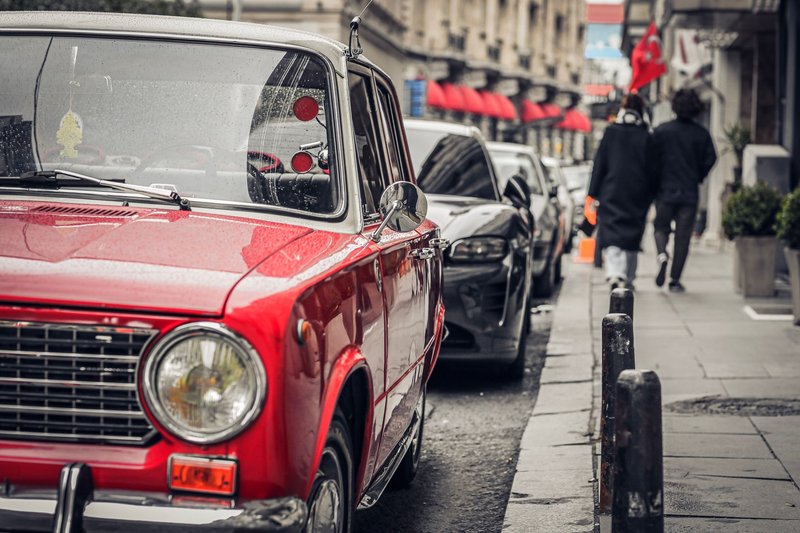
American mass-market cars
Ford V8 (Model 48)
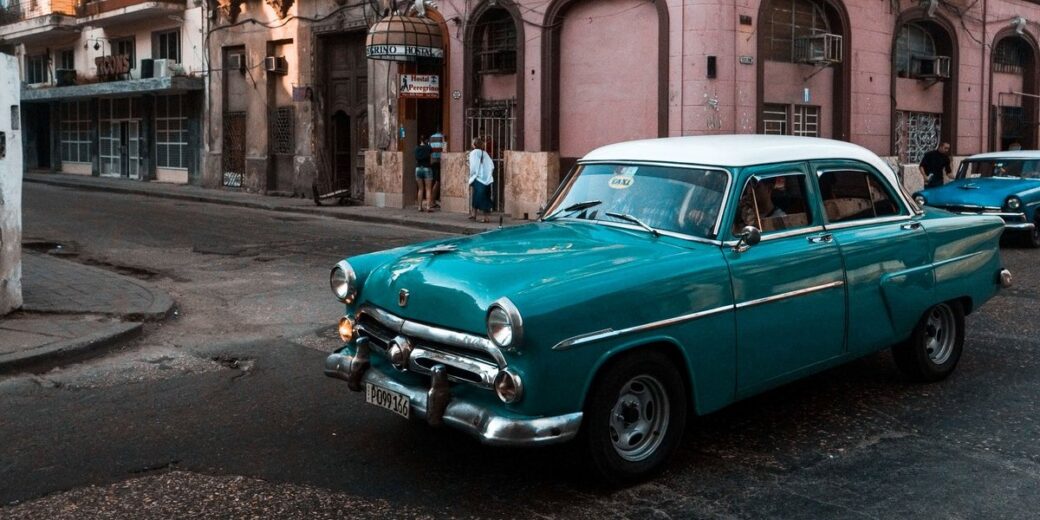
The 1935 Ford is the car most people picture when they think of this year. Its 221-cubic-inch flathead V8 made 85 hp, more than the sixes Chevrolet and Plymouth offered. Ford also moved the engine forward and seated passengers inside the wheelbase instead of over the rear axle, which cured much of the old Model B’s wallow.
Prices ran from about $500 to a bit over $700 depending on body style. Adjusted with the Bureau of Labor Statistics CPI calculator, a $510 Ford is roughly $12,000 today. Ford built well over 800,000 cars and trucks for the model year. The flathead’s other legacy arrived later: hot rodders spent the next three decades modifying it.
Chevrolet Master Deluxe
Chevrolet answered with a 206-cubic-inch overhead-valve six rated at 80 hp. It was smoother than Ford’s V8 at low speeds, and the Master Deluxe added Knee-Action independent front suspension, which Ford’s solid axle couldn’t match. Prices sat in the same $500 to $700 band as Ford’s. Chevrolet and Ford traded the top sales spot throughout the 1930s, and 1935 was no different: you could buy the V8 or the quiet six, and millions did both.
Plymouth PJ Deluxe
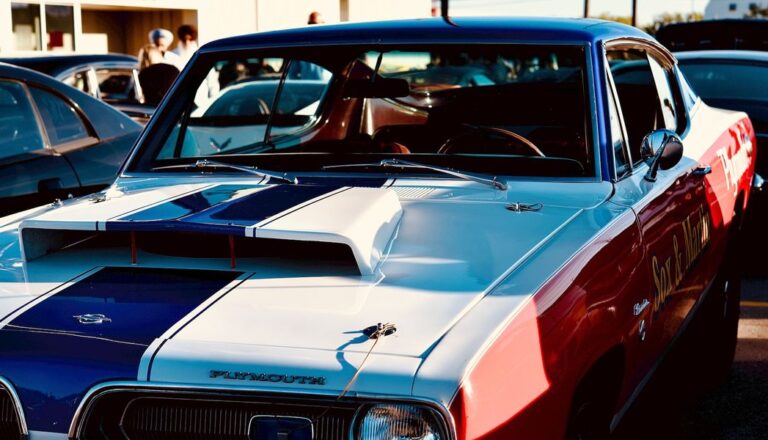
Plymouth was the third car of the Big Three’s low-price field. The PJ had a 201-cubic-inch flathead six making 82 hp and hydraulic brakes, which were standard on Plymouth while Ford still used mechanical ones. Hydraulics were the quiet selling point: pedal pressure was even, and the brakes didn’t fade or pull the way cable-and-rod systems could.
Dodge
Dodge sat a rung above Plymouth in the Chrysler ladder, with a bigger six and a longer wheelbase for a few hundred dollars more. It wasn’t glamorous, which is the point. The 1935 Dodge is the sort of car that carried salesmen and country doctors for 200,000 miles.
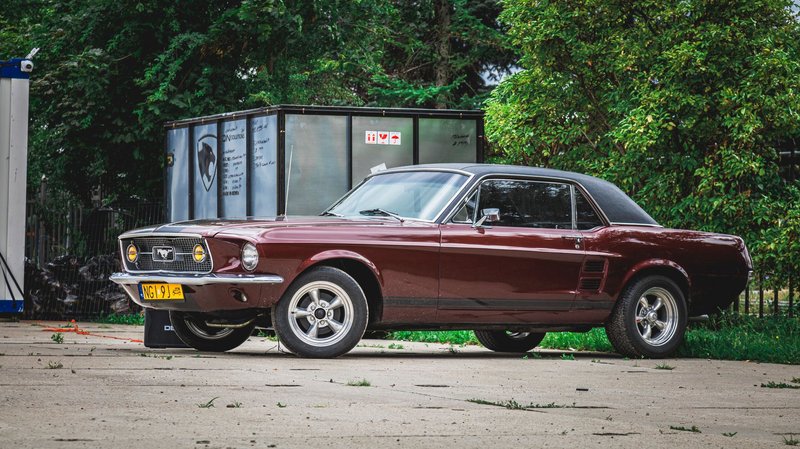
American innovators and luxury cars
Chrysler Airflow
The Airflow was the most scientifically designed car of its day. Chrysler engineers tested shapes in a wind tunnel, moved the engine ahead of the front axle and sat rear passengers inside the wheelbase. The body was a rigid steel truss, closer to a modern unibody than anything else on the road.
Buyers didn’t like it. The Airflow Eight had a 323-cubic-inch straight-eight with about 115 hp and started around $1,300, but 1935 production fell below 8,000 cars after a slow 1934. Chrysler gave it a more conventional grille and launched the traditional Airstream beside it, which outsold the Airflow roughly three to one.
The car wasn’t a total loss. Toyota finished its A1 prototype in 1935 with styling borrowed heavily from the Airflow.
Packard 120
This is the biggest success story of 1935. Packard had built expensive cars for decades and nearly went under when the Depression hit. The 120 put a 257-cubic-inch straight-eight with 110 hp and independent front suspension into a car priced from about $990. It sold 24,995 units in its first year, several times what Packard’s whole lineup had managed in 1934, and kept the company alive.
Packard Twelve
While the 120 paid the bills, the Twelve kept the badge’s prestige. Its 473-cubic-inch V12 made 175 hp and ran so quietly that period road tests commented on the lack of engine noise. Fewer than a thousand were built, at prices well over $3,000.
Auburn 851 Speedster
Gordon Buehrig, who would draw the Cord 810 a year later, styled the 851 Speedster as a boat-tailed two-seater with a supercharged 280-cubic-inch Lycoming straight-eight making 150 hp. Each car came with a plaque certifying it had exceeded 100 mph. At $2,245 it was the cheapest way to own a genuine 100 mph car in America. Roughly 500 were built before Auburn folded.
Duesenberg SJ
The SJ was the fastest and most expensive American car on sale. Lycoming built its 420-cubic-inch twin-cam straight-eight, and a supercharger took it to 320 hp. The car could reach about 104 mph in second gear and roughly 140 mph flat out. The chassis alone cost upward of $8,500 before a coachbuilder added a body, and only about three dozen SJs were ever built. For the rest of Duesenberg’s history, from the Model A to the SSJ, see the ranked Duesenberg model guide.
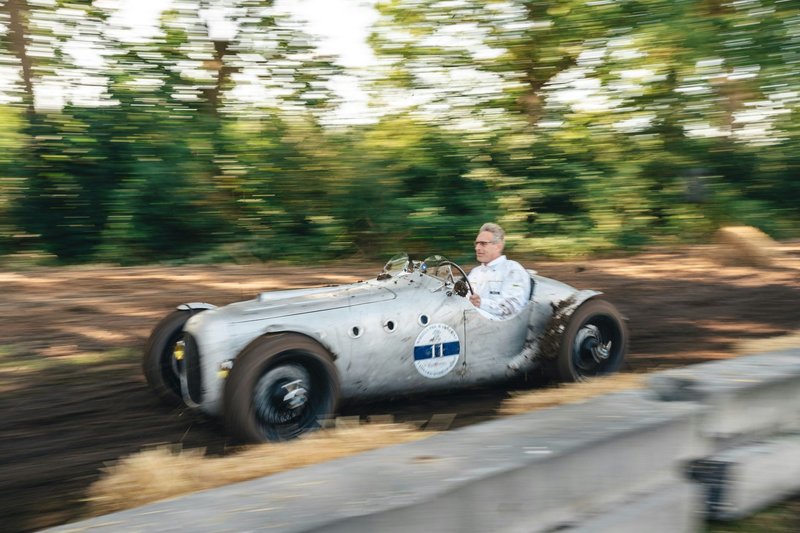
British cars
Austin Seven
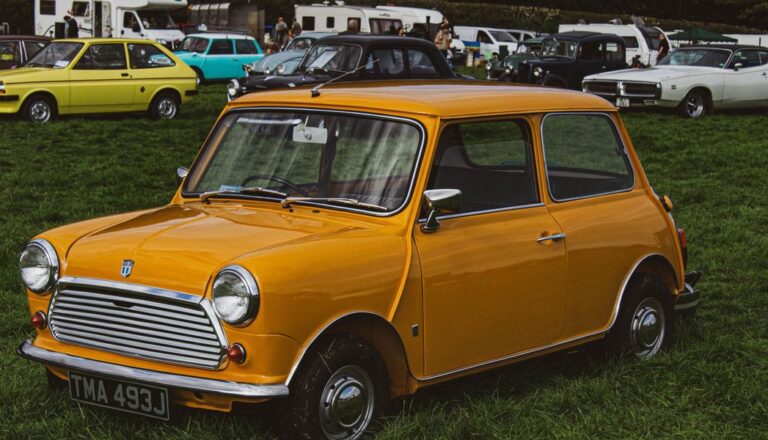
The Austin Seven had been in production since 1922 and was still selling in 1935 with a 747 cc four-cylinder making around 12 hp. Prices ran roughly £100 to £130 depending on body. It was small enough to park in a shed, and Britain’s working families used it as their first car.
Morris Eight
Launched in 1934, the Series I Morris Eight had a 918 cc side-valve four making about 23 hp and a top speed near 60 mph. The two-door saloon cost around £120. It gave Morris a direct answer to the Austin and became one of Britain’s best sellers through the later 1930s.
SS Jaguar 100
William Lyons launched the SS Jaguar 100 in 1935, and it was the first car sold with the Jaguar name. The 2.5-litre six produced about 104 hp and the car could reach 100 mph, which is what the “100” promised. At £395 it undercut every comparable sports car. Fewer than 200 of the 2.5-litre cars were built. The complete list of 1930s Jaguars shows where the 100 sat among the other pre-war models.
Rolls-Royce Phantom II
1935 was the final year of Phantom II production, after more than 1,600 had been built since 1929. Its 7.7-litre overhead-valve six was almost silent. A finished car cost well over £2,000, and its successor, the V12 Phantom III, was already in development.
German and Czech cars
Opel Olympia
The Olympia was the first German mass-produced car with a self-supporting steel body. A 1.3-litre four made 24 hp, and a price of around 2,500 Reichsmarks put it within reach of the German middle class. It’s an unglamorous car with a significant place in history.
Mercedes-Benz 500K
Only 342 500Ks were built across 1934 to 1936. The supercharged 5.0-litre straight-eight made 100 hp normally and about 160 hp when the driver floored the throttle and engaged the compressor. You’ll see pages listing the 540K under 1935, but it debuted in early 1936 as the 500K’s bigger-engined successor.
Tatra T77a
The Czech-built T77a had a rear-mounted, air-cooled 3.4-litre V8 making roughly 70 hp, a streamlined body with a central fin, and a top speed around 93 mph. Fewer than 300 T77s were built in total. Its layout is the reason the Volkswagen Beetle looks like it does. Tatra’s later lawsuit against Volkswagen ended in a settlement in 1965.
Porsche’s VW prototype
Ferdinand Porsche’s V1 prototype, the car that became the Beetle, was finished in 1935. No one could buy it yet, but it belongs on the list: millions would be built after the war.
French and Italian cars
Citroën Traction Avant
Citroën’s front-wheel-drive saloon with a monocoque body was unveiled in 1934. Then the company went bankrupt in December 1934 and Michelin took control in early 1935. The car kept selling, and its front-drive layout is now the default for nearly every compact car.
Bugatti Type 57
Jean Bugatti’s 3.3-litre twin-cam straight-eight made 135 hp and could reach about 95 mph. About 710 Type 57s were built overall. In 1935, Bugatti showed the Aérolithe at the Paris Salon, a prototype with a riveted magnesium-alloy body that is one of the most famous one-offs in automotive history.
Fiat 1500
Fiat introduced the streamlined 1500 in 1935 with a 1.5-litre six making 45 hp, a tubular backbone chassis and independent front suspension. It was Italy’s answer to the Airflow, but built for ordinary buyers.
The racing scene
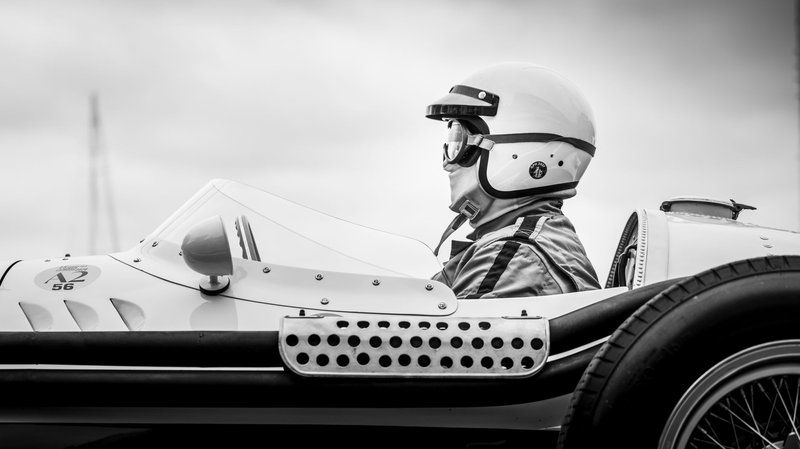
Racing mattered more than it does now, because wins sold cars. Mercedes-Benz’s Silver Arrows dominated the Grand Prix circuit and Rudolf Caracciola won the 1935 European Championship. The most famous race of the year went the other way: Tazio Nuvolari beat the German factory teams at the Nürburgring in the 1935 German Grand Prix, driving an outdated Alfa Romeo.
In America, Ab Jenkins set a 24-hour record at Bonneville in September 1935, averaging more than 135 mph in a Duesenberg-powered special called the Mormon Meteor. A road-going SJ was fast. The Mormon Meteor was proof of it. For a wider comparison, the fastest cars of the 1930s, ranked by real top speed, puts road cars and record cars side by side.
Cars made in 1935 at a glance
| Car | Country | Engine | Power | Approx. price | Distinctive fact |
|---|---|---|---|---|---|
| Austin Seven | UK | 747 cc four | ~12 hp | £100-£130 | In production since 1922 |
| Morris Eight | UK | 918 cc four | ~23 hp | ~£120 | Britain’s best-seller rival to the Austin |
| Ford V8 (Model 48) | US | 221 ci V8 | 85 hp | $500-$700+ | Flathead V8 in a cheap car |
| Chevrolet Master Deluxe | US | 206 ci six | 80 hp | $500-$700 | Knee-Action front suspension |
| Plymouth PJ Deluxe | US | 201 ci six | 82 hp | $500-$650 | Hydraulic brakes as standard |
| Opel Olympia | Germany | 1.3 L four | 24 hp | ~2,500 RM | First German mass-produced unibody |
| Fiat 1500 | Italy | 1.5 L six | 45 hp | n/a | Streamlined, backbone chassis |
| Packard 120 | US | 257 ci eight | 110 hp | ~$990 | 24,995 sold in the first year |
| Chrysler Airflow Eight | US | 323 ci eight | ~115 hp | ~$1,300 | Wind-tunnel designed |
| Auburn 851 Speedster | US | 280 ci supercharged eight | 150 hp | $2,245 | Certified 100 mph |
| SS Jaguar 100 | UK | 2.5 L six | ~104 hp | £395 | First car sold with the Jaguar name |
| Tatra T77a | Czechoslovakia | 3.4 L V8 | ~70 hp | n/a | Rear-engined, air-cooled |
| Bugatti Type 57 | France | 3.3 L eight | 135 hp | n/a | About 710 built |
| Rolls-Royce Phantom II | UK | 7.7 L six | n/a | £2,000+ | Final year of production |
| Mercedes-Benz 500K | Germany | 5.0 L supercharged eight | 100/160 hp | n/a | 342 built |
| Packard Twelve | US | 473 ci V12 | 175 hp | $3,000+ | Fewer than 1,000 built |
| Duesenberg SJ | US | 420 ci supercharged eight | 320 hp | $8,500+ (chassis) | ~140 mph claimed |
Most affordable versus most extravagant
The price spread among 1935 cars was enormous. A Ford V8 cost about $510. The Duesenberg SJ chassis cost more than a dozen Fords, and that was before the body.
The cheapest way into a new car was the Austin Seven or the Morris Eight, at around £100 to £120. The cheapest way into a genuinely fast car was either the SS Jaguar 100 at £395 or the Auburn 851 at $2,245. Both offered 100 mph at a fraction of what a Duesenberg or Mercedes 500K cost.
At the other end, the Duesenberg SJ was an object for film stars, industrialists and royalty. It had the most power, the biggest price and the smallest production run of any American car on sale.
FAQ
How much did a car cost in 1935?
A new mass-market American car cost about $500 to $700, or roughly £100 to £130 for a small British one. Mid-range cars like the Packard 120 started near $1,000, and luxury cars like the Packard Twelve and Duesenberg SJ cost thousands more.
What was the best-selling car in 1935?
In the US, Ford, Chevrolet and Plymouth were the top three. In Britain, Austin and Morris were the volume leaders.
What was the fastest car made in 1935?
The Duesenberg SJ was the fastest production car, with a claimed top speed of about 140 mph. The Mercedes-Benz 500K, Auburn 851 and SS Jaguar 100 were next, in the 100 mph range.
Was the Chrysler Airflow a failure?
Commercially, mostly yes. Production dropped below 8,000 cars in 1935, and Chrysler added the conventional Airstream to rescue sales. Technically it was influential: the rigid body and forward engine position became standard practice.
Was the Mercedes-Benz 540K made in 1935?
No. The 540K debuted in early 1936. The 1935 model was the 500K.

Marco Delantero
More from Marco DelanteroHow we reviewed this article
This article was researched against manufacturer records and editorially reviewed before publishing. We accept no payment for coverage. Some guides contain affiliate links; see our affiliate disclosure.