The 1930s broke a record almost every other car list ignores: it was the decade the road car and the record car split into two different animals. On one side you had supercharged grand tourers a rich man could actually drive to the Riviera. On the other, purpose-built streamliners that touched 268 mph on a closed autobahn and would have killed you on a public road.
Most “fastest 1930s cars” lists blend those two worlds together, which is how you end up seeing a 430 km/h Mercedes record car ranked next to a Duesenberg you could buy from a dealer. That comparison is meaningless. So this list keeps them apart. The main ranking below is road and production cars — machines built in real (if tiny) numbers, with a price and a license plate. The record streamliners get their own section at the end, where they belong.
Speed figures from this era are slippery. Period magazines exaggerated, marketing departments rounded up, and “top speed” sometimes meant a one-off run on a perfect day. Where the numbers are contested, the entry says so.
Table of Contents
- The TLDR: the fastest of each kind
- How we ranked these
- The fastest production and road cars
- Comparison table
- The record breakers (a different category)
- Why the 1930s got so fast, so fast
- FAQ
The TLDR: the fastest of each kind {#tldr}
If you just want the headline answers:
- Fastest production road car of the 1930s: the Duesenberg SSJ, a shortened twin-supercharged Duesenberg built for exactly two owners (Gary Cooper and Clark Gable), good for roughly 140 mph.
- Fastest car you could order from a catalog: the Alfa Romeo 8C 2900B, with the competition 2900 MM clocking just over 142 mph.
- Fastest thing on four wheels, period: the Mercedes-Benz W125 Rekordwagen, which hit 432.7 km/h (268.8 mph) on a public road in January 1938 — a record for a public road that stood until 2017.
Everything below is the why.
How we ranked these {#methodology}
Two rules.
First, road cars and record cars are ranked separately. A road car is something built for sale, with the equipment to drive on public streets — fenders, lights, a passenger seat. A record car is a single-purpose streamliner with no production run and no pretense of usability. Mixing them is the most common mistake in this genre.
Second, the number has to be defensible. Pre-war top speeds are a minefield of optimistic brochure claims. Where a figure comes from a verified timed run, we trust it. Where it’s a manufacturer estimate, we flag it. A car that “could reportedly do” 130 mph is not the same as one timed at 130 mph, and this list treats them differently.
The fastest production and road cars {#road-cars}
1. Duesenberg SSJ — ~140 mph
The SSJ is the answer to “fastest pre-war road car,” and it’s almost a cheat. Duesenberg built exactly two of them, in 1935, on a shortened 125-inch chassis, for Hollywood royalty. The supercharged 6.9-liter straight-eight already made 320 hp in the standard SJ; the SSJ got twin carburetors and a hotter setup pushing it past 400 hp. On a road car. In 1935. When Gary Cooper’s SSJ went to auction in 2018, it sold for $22 million — the most expensive American car ever.
Top speed sat around 140 mph, with the SJ-spec cars not far behind at 135–140. The catch is the SSJ’s two-car “production run,” which is why purists sometimes hand the production crown to the next car instead.
2. Alfa Romeo 8C 2900B — ~142 mph
If you wanted the fastest car you could genuinely order, this was it. The 8C 2900B arrived in 1937 with a 2.9-liter twin-supercharged straight-eight, independent suspension all around, and a body that still stops people in their tracks at Pebble Beach. The road-going 2900B Lungo cruised comfortably past 100 mph; the competition-spec 8C 2900 MM, built for the Mille Miglia, was timed at just over 142 mph. It shared the showrooms of 1937 with rivals from across Europe, including the elegant new sports machines in the 1937 Jaguar lineup that prioritized style over outright speed.
Alfa built around 40 of the 2900B across body styles, which makes it a real production car in a way the SSJ never pretends to be. For many enthusiasts, this is the actual fastest production car of the decade.
3. Mercedes-Benz 540K — ~110 mph (180 in special trim)
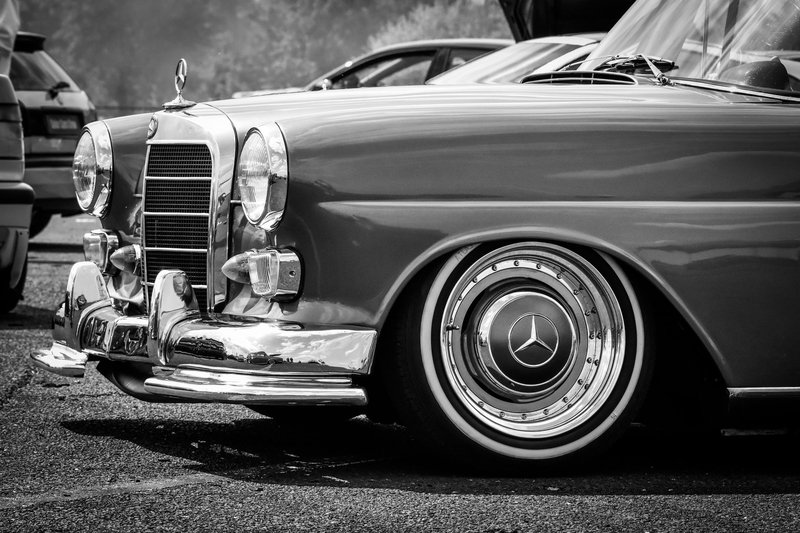
The 540K was the grand tourer that defined 1930s German excess. A 5.4-liter supercharged straight-eight, a Roots blower you engaged by flooring the throttle (it howled when it kicked in), and coachwork — especially the Special Roadster — that’s now worth eight figures. Standard cars did around 110 mph, which was plenty for a luxury cruiser meant to eat autobahn miles in comfort rather than win drag races. The 540K Special Roadster is the one collectors fight over.
4. Mercedes-Benz SSKL — ~140 mph
Before the 540K softened things up, Mercedes built the SSKL: a drilled-out, weight-obsessed competition machine from the early 1930s with a 7.1-liter supercharged six. The “L” stood for Leicht (light), and the chassis was Swiss-cheesed with holes to shed mass. With the streamlined body Manfred von Brauchitsch ran at the 1932 AVUS race, it managed roughly 156 mph — but in standard trim, mid-130s to 140 was the real-world figure. It’s the bridge between the road car and the record car, half-wild already.
5. Bugatti Type 57SC — ~125–130 mph
The Type 57SC took Bugatti’s elegant 3.3-liter straight-eight, lowered the chassis, and added a supercharger that lifted output to around 200 hp. The legendary Atlantic body — four ever built, one still missing — is the most valuable car in the world by most estimates. Top speed claims run from a conservative 125 mph to “in excess of 135,” depending on who’s measuring. Call it a genuine 125–130, which in a car this beautiful felt like flying.
6. Bentley 8 Litre — ~100+ mph
W.O. Bentley’s last car before the company fell to Rolls-Royce, the 8 Litre (1930) was a 7,983cc behemoth built to carry full coachwork past 100 mph in total silence. Only 100 were made. It wasn’t the fastest figure on this list, but it was arguably the fastest complete car — a full-size luxury saloon that would still crack the ton with the windows up. For 1930, that was a statement nobody else could match in that body style. It was also the natural endpoint of the 1920s luxury car era, when coachbuilders had spent a decade chasing silence and size before speed entered the equation.
7. Hispano-Suiza J12 — ~100 mph
The French-built J12 was the rolling definition of “more is more”: a 9.4-liter (later 11.3-liter) overhead-valve V12 in the largest, most expensive car Hispano-Suiza ever made. It wasn’t built to win speed records — it was built to carry heads of state and movie stars at a serene, unbothered 100 mph while everything else rattled. Per the Hispano-Suiza J12 history, production ran from 1931 to 1938. It makes the list because effortless 100 mph in a multi-ton limousine was its own kind of speed flex.
8. Cord 810/812 — ~90–110 mph
The American underdog. The Cord 810 (1936) brought front-wheel drive, hidden headlamps, and a Lycoming V8 to a market that had never seen anything like it. The supercharged 812 version, with those chromed external exhaust pipes curling out of the hood, made around 170 hp and could nudge past 100 mph. It’s slower than the Europeans on paper, but it’s the most modern car on this list — the styling still looks like it arrived from the future.
9. Auburn 851/852 Speedster — ~100 mph
Every supercharged Auburn Speedster carried a dashboard plaque certifying it had been driven over 100 mph before delivery, signed by racer Ab Jenkins. That’s the kind of specific detail that tells you the era cared about proving the number, not just printing it. The boattail Speedster of 1935–36 was gorgeous, affordable by exotic standards, and genuinely fast — the working man’s path to triple digits.
10. Talbot-Lago T150-C SS — ~110 mph
The French entry built for going fast in style. The Talbot-Lago T150-C SS, especially in “Teardrop” coupé form, paired a 4.0-liter straight-six making around 140 hp with some of the most flowing aerodynamic coachwork of the decade. Around 110 mph, and it raced — a T150 won the 1937 French Grand Prix. Proof that aerodynamics, not just brute power, was already shaping the fastest cars by the late ’30s.
Comparison table {#comparison}
| Car | Year | Engine | Power | Top speed | Notes |
|---|---|---|---|---|---|
| Duesenberg SSJ | 1935 | 6.9L supercharged I8 | ~400 hp | ~140 mph | Only 2 built (Cooper & Gable) |
| Alfa Romeo 8C 2900B | 1937 | 2.9L twin-supercharged I8 | 180–225 hp | ~142 mph | Fastest true production car |
| Mercedes SSKL | 1931 | 7.1L supercharged I6 | ~240 hp | ~140 mph | Lightened racer, holes drilled in chassis |
| Bugatti Type 57SC | 1937 | 3.3L supercharged I8 | ~200 hp | ~125–130 mph | Atlantic body is most valuable car on earth |
| Mercedes 540K | 1936 | 5.4L supercharged I8 | 180 hp | ~110 mph | Grand tourer, not a racer |
| Talbot-Lago T150-C SS | 1937 | 4.0L I6 | ~140 hp | ~110 mph | Aerodynamic “Teardrop” coupé |
| Cord 812 | 1937 | 4.7L supercharged V8 | ~170 hp | ~100+ mph | Front-wheel drive, hidden headlamps |
| Bentley 8 Litre | 1930 | 8.0L I6 | ~220 hp | ~100+ mph | Full luxury saloon past the ton |
| Auburn 852 Speedster | 1936 | 4.6L supercharged I8 | ~150 hp | ~100 mph | Certified 100 mph plaque per car |
| Hispano-Suiza J12 | 1931 | 9.4L V12 | ~220 hp | ~100 mph | Largest Hispano-Suiza ever built |
The record breakers (a different category) {#record-cars}
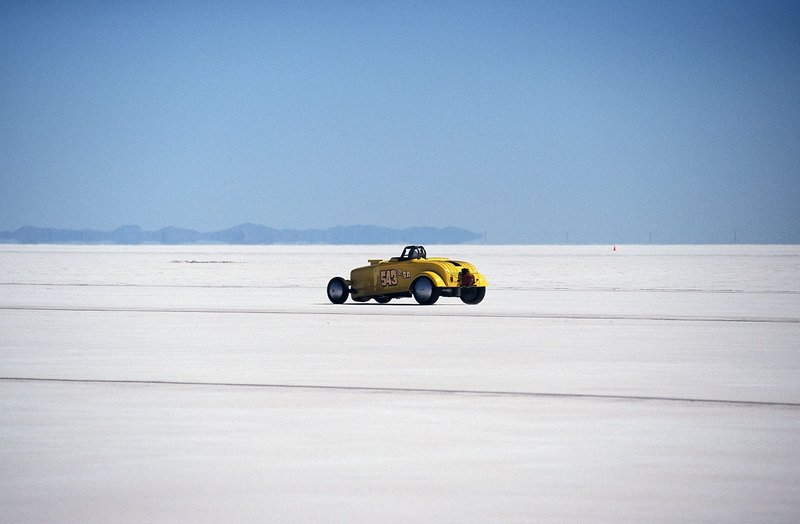
These never wore license plates, never had a production run, and never pretended to. They belong to a different conversation than the cars above — but they’re why the 1930s matter in any speed history.
Mercedes-Benz W125 Rekordwagen — 432.7 km/h (268.8 mph), 1938. Rudolf Caracciola ran this fully enclosed streamliner down a closed stretch of the Frankfurt–Darmstadt autobahn in the freezing dawn of January 28, 1938. The figure — 432.7 km/h — stood as the record for the fastest speed ever achieved on a public road for 79 years, until Koenigsegg beat it in 2017. A 5.6-liter V12 making over 700 hp, in 1938.
Auto Union Type C/D streamliners — ~400+ km/h. Mercedes’ great rival ran rear-engined streamliners on the same record stretches. Bernd Rosemeyer was killed attempting to beat Caracciola’s run that same January morning in 1938, when a crosswind caught his Auto Union — a tragedy that effectively ended the autobahn record wars.
Thunderbolt and the Bonneville/B, land-speed cars — 350+ mph. Across the Atlantic, British drivers like George Eyston and John Cobb pushed wheel-driven land speed records past 350 mph on the Bonneville Salt Flats, in multi-engine monsters that share nothing with a road car but the word “car.”
Put any of these next to a Duesenberg and the comparison falls apart. That’s the whole point of splitting the list.
Why the 1930s got so fast, so fast {#why}
Three things converged.
Superchargers went mainstream. Roots and centrifugal blowers moved from the racetrack to the showroom. Look at the list — Duesenberg, Alfa, Mercedes, Bugatti, Cord, Auburn — and the fastest entries almost all force-fed their engines. Forced induction was the horsepower cheat code of the decade, and the engineering had finally matured enough to put it under a sales brochure.
Aerodynamics stopped being an afterthought. The Talbot Teardrop, the Cord’s slippery nose, the fully enclosed record streamliners — designers were learning that past 100 mph, shape mattered as much as power. The autobahn record cars looked like falling water for a reason.
There was nowhere else to spend the money. The Depression gutted the middle of the car market, but at the very top, a handful of buyers wanted the fastest, most expensive thing on earth, and coachbuilders competed to give it to them. Scarcity drove excess. The 36 SJs, the two SSJs, the four Atlantics — these were rolling status symbols, and speed was the headline spec.
The result was a decade where the gap between “fastest road car” and “fastest car” cracked wide open — and never fully closed again.
FAQ {#faq}
What was the fastest production car of the 1930s? The strongest claim belongs to the Alfa Romeo 8C 2900B, with the competition 2900 MM timed at just over 142 mph and around 40 examples built. The Duesenberg SSJ was faster at ~140 mph in a more usable road form, but only two were made, which is why “production” purists favor the Alfa.
Was the Duesenberg SJ the fastest American car of the era? Yes. The supercharged SJ and the two-off SSJ were the fastest American cars of the 1930s by a wide margin — roughly 135–140 mph — and the SSJ remains the fastest pre-war American road car.
How fast was the fastest 1930s car overall? The Mercedes-Benz W125 Rekordwagen hit 432.7 km/h (268.8 mph) on a closed autobahn in January 1938. But that was a single-purpose record streamliner, not a road car — which is why this list ranks it separately.
Why are 1930s top speeds so hard to pin down? Period figures came from a mix of timed runs, brochure claims, and one-off attempts on ideal days, with little standardization. Numbers for the same car can vary by 10–15 mph between sources, so any honest ranking flags estimates versus verified runs.
Did these cars actually drive that fast on the road? Rarely, and not for long. Pre-war tires, brakes, and roads made sustained 100 mph genuinely dangerous. The top speeds were proof-of-capability figures — the cars could do it, on the right surface, in the right hands, which in the 1930s was a flex worth paying a fortune for.
Sources: SlashGear – fastest pre-war cars, New Atlas – Gary Cooper Duesenberg SSJ, Jalopnik – Mercedes 540K Special Roadster, Wikipedia – Hispano-Suiza J12

Marco Delantero
More from Marco DelanteroHow we reviewed this article
This article was researched against manufacturer records and editorially reviewed before publishing. We accept no payment for coverage. Some guides contain affiliate links; see our affiliate disclosure.