TLDR
Geo stopped being a brand after the 1997 model year, but only one of its models died with the badge. The Spectrum ended in 1989 and the Storm in 1993. The Metro, Prizm and Tracker kept going as Chevrolets, ending in 2001, 2002 and 2004. If a source gives you a single “Geo discontinued” date, it’s flattening three separate events into one.
Contents
- Quick answer: every Geo model and when it ended
- The three dates people mix up
- Geo Spectrum: gone after one year under the badge
- Geo Storm: the coupe that lost its donor car
- Geo Metro: discontinued in 2001
- Geo Prizm: replaced by the Pontiac Vibe
- Geo Tracker: the last one standing
- The Canadian cousin: Asüna
- Why GM discontinued Geo
- Should you buy a Geo today?
Quick answer: every Geo model and when it ended
| Model | Donor vehicle | Sold as Geo | Final model year | What replaced it |
|---|---|---|---|---|
| Spectrum | Isuzu Gemini | 1989 only | 1989 as a Geo | Geo Storm |
| Storm | Isuzu Impulse | 1990-1993 | 1993 | Nothing |
| Metro | Suzuki Swift | 1989-1997 | 2001 (Chevrolet) | Chevrolet Aveo (loosely) |
| Prizm | Toyota Corolla / Sprinter | 1989-1997 | 2002 (Chevrolet) | Pontiac Vibe |
| Tracker | Suzuki Sidekick | 1989-1997 | 2004 (Chevrolet) | Chevrolet Equinox (loosely) |
Every Geo was somebody else’s car. GM bought designs from Suzuki, Toyota and Isuzu, put them in Chevrolet showrooms and called the result a brand.
The three dates people mix up
Searching for Geo discontinued models turns up contradictory answers because there are three different “ends.”
- The badge ended after the 1997 model year. GM announced in late 1996 that Geo would fold into Chevrolet, and the name disappeared during 1997.
- The cars didn’t. The Metro, Prizm and Tracker were relabeled Chevrolets for 1998 and kept their mechanicals.
- The final endings were staggered. Storm in 1993, Metro in 2001, Prizm in 2002, Tracker in 2004.
So “when was Geo discontinued” has a clean answer (1997) and “when was the Geo Tracker discontinued” has a different one (2004, and only as a Chevrolet). Keep the layers separate and the contradictions go away.
Geo Spectrum: gone after one year under the badge
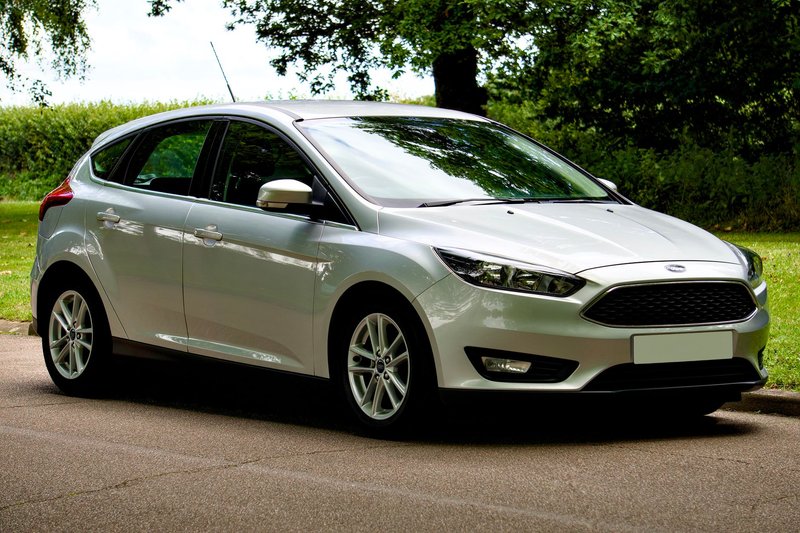
The Spectrum is the model most people forget was a Geo at all. It was an Isuzu Gemini that Chevrolet sold from 1985 to 1988 under its own name, then moved onto the new Geo badge for the 1989 model year to give the brand a launch lineup. One year later it was gone.
That makes the Spectrum-versus-Storm question simple. They aren’t two versions of the same car. The Spectrum was a plain economy sedan and hatchback, and the Storm was the sportier replacement that arrived for 1990.
Geo Storm: the coupe that lost its donor car
The Storm was the one Geo you bought because you wanted to, not because you needed cheap transport. It was built by Isuzu in Japan and shared its bones with the Isuzu Impulse, with a twin-cam 1.6 or 1.8-liter four and a GSi trim that looked faster than it was.
It ran from 1990 through 1993 and never got a successor. The reason sits with the supplier: Isuzu was pulling out of passenger cars in the US, which took the Impulse and the Storm’s source of supply with it. When the donor car goes, the badge-engineered copy goes too. Geo never replaced it with another sports coupe, which is part of why the lineup read as an economy-car brand afterward.
Geo Metro: discontinued in 2001
The Metro was a Suzuki Swift, built at the CAMI plant in Ingersoll, Ontario (a GM-Suzuki joint venture), with convertibles coming from Suzuki in Japan. It was the Geo that sold, and the 1.0-liter three-cylinder XFi trim made fuel economy its entire personality, returning mid-50s mpg on the highway.
It also tells the clearest story about why the brand was folded. Metro sales fell from about 88,700 in 1996 to 55,600 in 1997, a drop of roughly 37 percent in a single year. Cheap gas and rising demand for SUVs and larger cars had taken the oxygen out of the subcompact segment.
The Metro became the Chevrolet Metro for 1998 and ended in 2001. GM had no direct successor. The nearest thing was the Daewoo-built Chevrolet Aveo, which arrived for 2004 and filled the small-car slot with a car that wasn’t a Geo in any sense.
Geo Prizm: replaced by the Pontiac Vibe
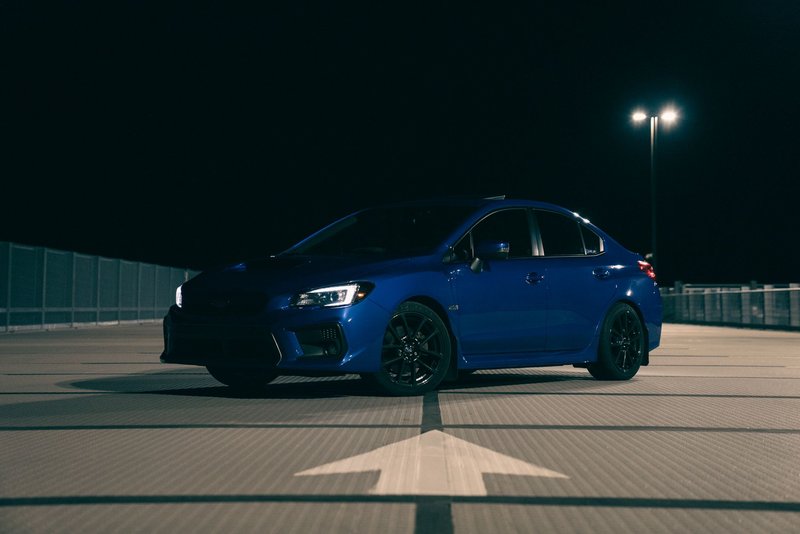
The Prizm was a Toyota Corolla with a Chevrolet nose, built at NUMMI in Fremont, California, the GM-Toyota joint venture. It was, quietly, the best Geo: the same drivetrain and reliability reputation as the Corolla, at a slightly lower sticker.
It became the Chevrolet Prizm for 1998 and ended after the 2002 model year. The replacement was the Pontiac Vibe, which launched for 2003 on the same NUMMI line as the Toyota Matrix. Both were Corolla-based hatchbacks. If you search “Geo Prizm replacement Pontiac Vibe,” that is the right answer, though the Vibe was a five-door wagon-hatch rather than a sedan, so it wasn’t a like-for-like swap.
Geo Tracker: the last one standing
The Tracker was a Suzuki Sidekick, a small body-on-frame 4×4 available as a soft-top convertible or a hardtop. Early cars were built in Japan, and later ones at CAMI. It is the Geo with the longest life: it wore the Geo badge until 1997, became the Chevrolet Tracker for 1998, got a redesigned second generation in 1999, and finally ended in 2004.
Geo Tracker last year, then: 1997 as a Geo, 2004 as a Chevrolet. The Tracker name didn’t carry forward. GM’s small SUV slot was taken over by the Chevrolet Equinox for 2005, which was built at the same CAMI plant but was a crossover rather than a true small 4×4. Suzuki sold its own versions of the Tracker’s twin separately, which is why the Tracker’s mechanical lineage lived on outside GM.
The Canadian cousin: Asüna
Most Geo articles stop at the border, but GM had a Canadian counterpart. Asüna launched in 1992 so Pontiac-Buick-GMC dealers could sell the same sort of imported small cars that Chevrolet dealers had in Geo. It carried rebadged Suzuki and Isuzu products, including the Sunrunner (a Tracker/Sidekick twin) and the Sunrise (a Metro/Swift sedan), and it was shut down in the mid-1990s, years before Geo itself.
It’s a useful footnote because it shows GM had already seen the problem: a separate imports badge wasn’t earning its keep, even with dealers who wanted the cars.
Why GM discontinued Geo
Four reasons carry most of the weight. Geo was far from the only nameplate to fold this way, and 27 discontinued car brands and what killed them covers the others.
No dedicated dealers. Geo was sold in Chevrolet showrooms with its own signage. There was no standalone Geo store, so the brand never built the identity or loyalty that Saturn, with its own dealers, managed.
No original GM designs. Every model came from Suzuki, Toyota or Isuzu. GM was collecting a margin on other companies’ engineering, and when those partners reorganized (Isuzu leaving cars, Toyota and Suzuki building their own presence), the arrangement got harder to justify.
Sub-Chevrolet positioning. Geo sat below Chevrolet on price, so it competed with its own parent for the same buyers. A shopper who’d buy a Geo Prizm could just as easily buy a Chevrolet Cavalier.
Falling small-car sales. The Metro’s slide from 88,700 to 55,600 units in one year was the loudest signal. Folding the three models that still sold into Chevrolet kept the revenue and dropped the cost of running a separate brand.
That’s the real answer to why did GM discontinue Geo: it was an import-fighter built for a market that had moved on, with a structure that never let it become a brand.
Should you buy a Geo today?
Measured answer: maybe, if you’re buying the right one for the right reason.
Metro. The cheapest to own and run. Parts are widely available and interchangeable with the Suzuki Swift, and mileage is the selling point. It is also a very light car with dated safety equipment, so check which airbags your specific year has and don’t buy one as a primary highway commuter. Look for rust along the rear subframe and wheel arches.
Prizm. The sensible pick. Corolla mechanicals mean parts are easy to find and mechanics know them. Higher mileage is less alarming here if there are service records. The later 1.8-liter engines are known to start burning oil as they age, so check the dipstick and ask about consumption before you commit.
Tracker. The one with a following. First-generation convertibles and hardtops have become cult 4x4s, and clean, unmodified examples are getting harder to find. Inspect the frame for rust, the soft top for leaks, and ask whether it’s been off-roaded. Sidekick parts cross over, which helps.
Storm. The rarest and the hardest to maintain. Isuzu parts support is thin, and few survived unmodified. Only worth it if you want one specifically.
Before you buy any of them, run the VIN through the NHTSA recall lookup to see whether open recalls remain on the car. You can also compare how each model’s fuel economy was rated on FuelEconomy.gov, which still carries the old figures for 1990s cars.
None of these are collectors’ cars in the Ferrari sense. They’re cheap, simple and honest, and the best of them can still do what they were built for.

Marco Delantero
More from Marco DelanteroHow we reviewed this article
This article was researched against manufacturer records and editorially reviewed before publishing. We accept no payment for coverage. Some guides contain affiliate links; see our affiliate disclosure.