Table of Contents
- When the Money Ran Out
- The Corporate Math Stopped Adding Up
- When Trust Ran Out First
- When the World Moved On
- The New Graveyard: EV Startups
- Could Any of These Come Back?
You see a Saturn Ion at a stoplight, or a Pontiac Firebird parked outside a diner, and the same question shows up every time: what actually happened to that brand? Most answers online stop at the same tired shortlist — Pontiac, Saturn, Oldsmobile, Mercury, Plymouth — GM and Chrysler cleaning house during the 2008 crash, repeated in article after article with barely a paragraph of explanation.
That wave is real, but it’s one cause among several, and it’s not the whole story. Some brands died because the money ran out entirely. Some got cut for corporate accounting reasons that had nothing to do with whether people liked the cars. Some burned their reputation so badly there was no way back. Some just watched the market walk away from them, one country at a time. And a fresh batch — brands nobody outside car forums had heard of five years ago — have already gone under chasing the EV boom.
Here are 27 of them, sorted by cause of death, with the specific moment each one actually ended.
When the Money Ran Out
Studebaker (1852–1966). Studebaker built wagons for the Union Army before it ever built a car, which made its slow death stranger to watch. By the early 1960s it was hemorrhaging cash on both its car and appliance divisions, and the sharp little Avanti coupe couldn’t sell in numbers big enough to offset it. Production in South Bend, Indiana ended in 1963; the last Studebaker rolled off a smaller Canadian line in Hamilton, Ontario, in March 1966, and the company quietly became a diversified holding business instead.
Packard (1899–1958). “Ask the man who owns one” was the slogan, and for decades the answer was reliably a Packard owner bragging about it — the brand outsold Cadillac in the luxury tier through the 1930s. A disastrous merger with Studebaker in 1954 saddled Packard with debt and outdated factories it never had the capital to fix, and the last true Packard, built on its own platform, came off the line in 1956. The nameplate limped on for two more years slapped onto Studebaker bodies before it was retired for good.
Tucker (1948). Preston Tucker built exactly 51 cars — the Tucker 48, with a rear engine, a padded dash, and a center headlight that turned with the steering wheel a decade before anyone else tried it. The Securities and Exchange Commission investigated Tucker for stock fraud before a single car reached a customer in volume, and although he was acquitted on every count, the legal fight drained the company dry. Whether the SEC case was justified scrutiny or a favor to Detroit’s Big Three is still argued over in car history circles.
DeLorean (1975–1982). The DMC-12’s gullwing doors and brushed stainless body made it instantly recognizable — and then Back to the Future made it immortal a full two years after the company had already collapsed. John DeLorean built his factory in Northern Ireland on a British government loan meant to create jobs during the Troubles, and when sales underperformed and cash ran out, he was arrested in an FBI sting for alleged cocaine trafficking in a desperate bid to save the company. He was acquitted on entrapment grounds, but DeLorean Motor Company was already in receivership by then.
Saab (1945–2012). Saab built jet fighters before it built cars, and it showed: turbocharging on mainstream models, ignition switches mounted on the console, cabins that felt like they’d been drawn by an aerospace engineer. GM bought full control in 2000 and never figured out how to sell “quirky Swedish” at scale. When GM finally let go, Dutch buyer Spyker took over in 2010, and Saab was declared bankrupt just over a year later after a rescue deal with Chinese investors fell apart. What’s left of the brand now belongs to a Swedish electric-vehicle venture that has yet to sell a car under the Saab name.
Suzuki (cars, 1963–2012 in the US). Suzuki’s American car business never recovered from the Samurai, which a 1988 Consumer Reports test branded prone to rollover — a finding Suzuki disputed for years and eventually sued the magazine over, settling out of court in 2004. The reputational damage stuck anyway. American Suzuki Motor Corporation filed for Chapter 11 bankruptcy in 2012 and pulled cars out of the US entirely, though Suzuki still builds motorcycles, ATVs, and outboard motors here, and keeps selling cars in Asia and elsewhere.
The Corporate Math Stopped Adding Up
This is the wave most “discontinued car brands” lists open and close with, because it happened fast and it happened to household names. GM’s 2009 bankruptcy forced a brutal question: which brands actually earn their keep? The federal task force overseeing the restructuring pushed GM to shrink from eight brands to four, and the ones that didn’t make the cut went first.
Oldsmobile (1897–2004). America’s oldest surviving car brand — older than Ford — spent the 1990s trying to convince buyers it wasn’t the brand their grandfather drove, with the “Not your father’s Oldsmobile” campaign. The problem was that it mostly still was: the lineup overlapped so heavily with Buick and Pontiac that GM couldn’t justify funding all three. Production ended in 2004, four years after GM’s own board voted to phase it out.
Plymouth (1928–2001). Plymouth was Chrysler’s answer to entry-level Ford and Chevy buyers, home to the Barracuda and the Road Runner in its muscle-car years. By the 1990s, Chrysler’s own Neon and minivans were selling under both Plymouth and Dodge badges with nothing to tell them apart, and after the 1998 merger with Daimler, keeping a redundant brand alive made no financial sense. The last Plymouth, a Neon, was built in June 2001.
Pontiac (1926–2010). Pontiac spent decades on “We Build Excitement,” and the GTO and Firebird earned it. But GM’s 2009 bankruptcy task force decided the company couldn’t support five core brands through Chapter 11, and Pontiac — despite genuine enthusiast loyalty — got cut to leave GM with Chevrolet, Buick, GMC, and Cadillac. The final Pontiac, a G6, was built in January 2010.
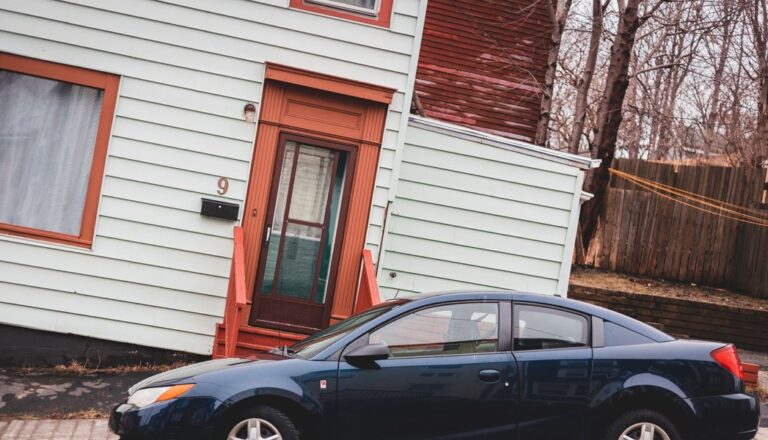
Saturn (1985–2010). Saturn launched as “a different kind of car company,” with no-haggle pricing and dent-resistant plastic body panels built at a dedicated Spring Hill, Tennessee plant. GM tried to sell the brand to Penske Automotive during the bankruptcy, and Penske actually agreed — until the deal fell apart when GM and Renault-Nissan couldn’t agree on a supply arrangement to keep building Saturn’s cars. With no manufacturer willing to build the vehicles, Penske walked, and Saturn shut down instead of changing hands.
Mercury (1938–2011). Mercury existed to fill the gap between Ford and Lincoln, and by the 2000s that gap had basically disappeared — most Mercury models were Fords with different grilles and a few extra options. Ford decided in 2010 to concentrate its full marketing budget on Ford and Lincoln instead of splitting it three ways, and the last Mercury, a Grand Marquis, was built in January 2011.
Hummer (1992–2010). The H1 started life as a civilian version of the military Humvee, sold to buyers who wanted the actual army vehicle. GM tried to offload the brand to Chinese heavy-equipment maker Tengzhong in 2009, but Chinese regulators rejected the deal, and GM wound the brand down instead of finding another buyer. Ironically, GM revived the name in 2021 as the all-electric GMC Hummer EV — proof the badge still had value even after the brand didn’t.
Eagle (1988–1998). Eagle came out of Chrysler’s 1987 purchase of American Motors, built mostly to keep AMC’s dealer network and the Jeep brand it came with. Beyond the sporty Talon, most Eagles were rebadged Chrysler or Mitsubishi products, and once Chrysler folded Jeep into its own lineup it had no reason to keep a badge that existed mainly as a legal formality. The brand quietly ended in 1998.
Geo (1989–1997). Geo was GM’s answer to fuel-efficient imports — the Metro, the Prizm co-developed with Toyota, the Tracker built with Suzuki — sold through Chevrolet dealers under a separate badge. GM folded the whole lineup back into Chevrolet in 1997 once it decided a standalone “budget import” brand added confusion without adding sales.
Scion (2003–2016). Toyota built Scion to sell cars to buyers who explicitly didn’t want to shop at a Toyota dealership, with fixed pricing and boxy models like the xB aimed at younger buyers. It worked for a while, then Toyota’s own research showed Scion shoppers increasingly cross-shopped Toyota anyway, undercutting the point of a separate brand. Toyota folded Scion back into its main lineup in 2016, rebadging the FR-S as the Toyota 86.
When Trust Ran Out First
Some brands didn’t die from a balance sheet problem. They died because enough owners had a bad enough experience that the name itself became the punchline.
Yugo (1980–1992 in the US). Malcolm Bricklin imported the Yugo GV from Yugoslavia’s Zastava factory in 1985, pricing it under $4,000 to undercut every other new car in America. Reliability was dismal from the start — electrical failures, timing belts that snapped, a build quality that turned “Yugo” into shorthand for a bad car for a full generation. US sales ended in 1992, partly from the reputation and partly because UN sanctions during the Yugoslav wars cut off the supply chain entirely.
Sterling (1987–1991). Sterling was Rover’s attempt to re-enter the US market by building the 800 on the same platform as the well-regarded Acura Legend, through a joint venture with Honda. The mechanical bones were sound; the British-built electrical systems were not, and owners reported failures Honda’s own version never had. Sterling lasted four model years before Rover pulled out of the US entirely.
Daewoo (1994–2002 in most export markets). Daewoo expanded aggressively into new markets in the 1990s on the back of heavy debt, part of a South Korean conglomerate that collapsed under roughly $80 billion in liabilities during the 1999 Asian financial crisis. GM bought the auto division’s assets in 2002 and phased the Daewoo name out of most markets over the following years, rebadging the cars as Chevrolets instead.
Isuzu (passenger cars, through 2009). The Trooper and the Honda-Passport-twin Rodeo gave Isuzu a real foothold in the SUV boom of the 1990s. GM, which had owned a stake in Isuzu for decades, sold most of it off in 2006, and without GM’s dealer network and engineering support, Isuzu’s US passenger-vehicle sales withered fast. Isuzu stopped selling cars and SUVs in the US in 2009, though it still builds commercial trucks there and continues selling passenger vehicles in Asia and elsewhere.
When the World Moved On
Nearly every existing ‘discontinued car brands’ list treats international names as a footnote. While other resources examine defunct automakers, they often overlook the international story. That’s a gap worth closing, because Britain alone lost most of its home-grown auto industry within a single generation.
Rover (1904–2005). Rover survived British Leyland’s collapse, several ownership changes, and a stint under BMW before ending up as the last fully British-owned volume carmaker, trading as MG Rover. Talks to sell the company to China’s Shanghai Automotive Industry Corporation collapsed in April 2005, and MG Rover went into administration days later, taking roughly 6,000 jobs at the Longbridge plant with it and costing UK taxpayers more than £231 million in the cleanup.
Austin (1905–1987). Austin built the original Mini and, for decades, was the volume backbone of British Leyland. Constant reorganizations blurred the line between Austin and its sister brand Morris until the two were barely distinguishable, and British Leyland’s successor, Austin Rover, dropped the Austin name from new models by 1987 in favor of unifying everything under Rover and MG.
Triumph (1885–1984). The TR6 and the Spitfire made Triumph’s name in the sports car world, all built at a Coventry factory that struggled under the same British Leyland mismanagement that hurt Austin. The last car sold as a Triumph, the Honda-based Acclaim, ended production in 1984. The Triumph motorcycle brand survived as a completely separate company and is still building bikes today.
MG (1924–2005, as a British-built brand). The MGB was, for years, the best-selling sports car in the world, and MG kept a loyal following long after British Leyland’s other brands faded. When MG Rover collapsed in 2005, MG went down with it — until Nanjing Automobile, and later SAIC, bought the name and revived MG as a Chinese-built brand now selling electric and hybrid crossovers across Europe, Australia, and other markets under the same three letters.
Datsun (1931–1986, then 2013–2022). Datsun was Nissan’s export identity for decades, the badge on the 240Z that convinced America Japanese sports cars could compete on their own terms. Nissan retired Datsun in 1986 to build one global brand, then resurrected it in 2013 as a budget nameplate for India, Indonesia, and Russia. That second life didn’t last either — Nissan killed Datsun again in 2022 after the low-cost segment it targeted shrank faster than expected.
The New Graveyard: EV Startups
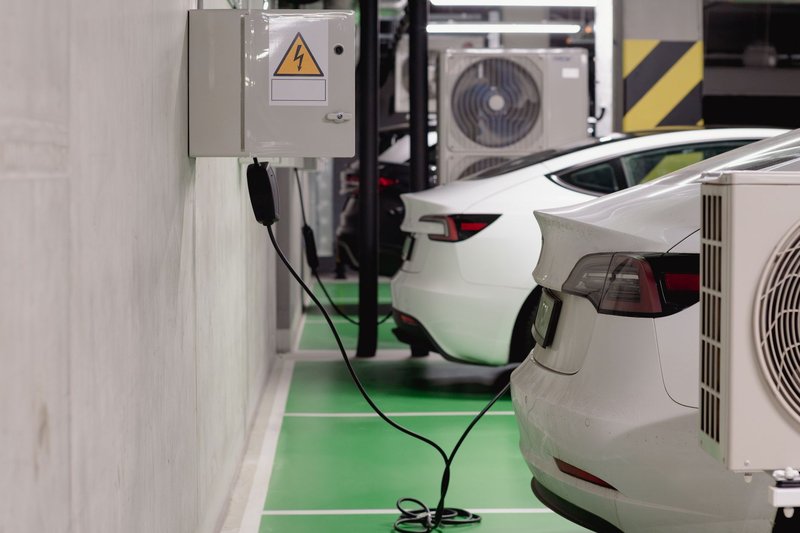
Every brand above at least had years, sometimes decades, of production runs. The newest wave of dead car brands didn’t get that long. Cheap capital during the 2020-2021 SPAC boom funded a wave of EV startups with big valuations and no manufacturing track record, and most of that money has already burned through.
Fisker (2007–2024). Fisker’s second act, the Ocean SUV, started deliveries in 2023 loaded with software problems — doors that wouldn’t open, screens that froze, brakes that reportedly lost power. Fisker filed for Chapter 11 bankruptcy in June 2024 after talks with a larger automaker for a bailout investment fell through, having built around 10,000 Oceans and delivered fewer than half of those to customers.
Lordstown Motors (2019–2023). Lordstown promised an electric pickup, the Endurance, built at a former GM plant in Ohio that became a symbol of American manufacturing revival. A prototype caught fire on its first test drive in 2021, both the CEO and CFO resigned that year, and a partnership with Foxconn meant to fund production disintegrated into a lawsuit. Lordstown filed for bankruptcy in June 2023, accusing Foxconn of trying to “destroy” the company on its way down.
Canoo (2017–2025). Canoo never quite settled on what it was selling — a subscription van, a delivery vehicle for Walmart, a lifestyle vehicle for NASA — and burned through backing from multiple strategic investors while shipping only a small number of vehicles. It bought the wrecked assets of another failed EV startup, Arrival, out of bankruptcy in 2024, which didn’t buy it much time: Canoo filed for Chapter 7 liquidation in January 2025 with less than $50,000 left in the bank.
Could Any of These Come Back?
A dead car brand isn’t always dead for good — it’s a trademark sitting in a filing cabinet, and trademarks can be sold, licensed, or dusted off whenever a parent company thinks the nostalgia is worth more than the silence. GM already proved the model: Hummer went from bankrupt punchline to all-electric GMC sub-brand in under a decade, selling the exact rebellious image the original H1 had, just without the fuel bill. Datsun shows the risk on the other side — Nissan revived it once, and killed it again just as fast, because a nameplate alone can’t fix a product that doesn’t fit the market it’s dropped into.
The strongest candidates for a comeback are the ones with a story an EV relaunch could sell on its own: Studebaker’s independent-underdog history, Saab’s aerospace pedigree, Plymouth’s muscle-car back catalog sitting unused inside Stellantis’s trademark portfolio. None of that guarantees a future car. It just means the name hasn’t fully died — it’s parked, waiting for a marketing team to decide the story’s worth telling again.

Marco Delantero
More from Marco DelanteroHow we reviewed this article
This article was researched against manufacturer records and editorially reviewed before publishing. We accept no payment for coverage. Some guides contain affiliate links; see our affiliate disclosure.