The 1950 model year sits at a hinge. Detroit had spent four years selling every car it could bolt together, and the 1949 redesigns were finally paying off. Europe was still rationing steel and fuel, yet Jaguar, Ferrari and Alfa Romeo were quietly building cars that would shape the next two decades. Then on June 25, 1950, the Korean War began, and the easy postwar buying spree started to look temporary.
This guide covers the 1950 car models worth knowing: what they ran on, what they cost where we have a reliable figure, and the one detail that makes each of them different from the car next to it. It’s organized by region, followed by a quick-reference table and an FAQ.
Table of Contents
- What 1950 looked like on the road
- American 1950 car models
- British 1950 car models
- European 1950 car models
- 1950 cars at a glance
- FAQ
What 1950 looked like on the road
Three things define the year.
Postwar demand was still unmet. American buyers who had waited through the war years for a new car were now getting one, and Chevrolet’s 1950 sales set a record for the company. Waiting lists were common on desirable models.
The overhead-valve V8 had arrived. Cadillac introduced its 331 cu in V8 for 1949 and Oldsmobile followed with the Rocket V8 the same year. Both were shorter-stroke, higher-compression engines that made the old flathead and straight-eight designs feel dated almost overnight.
Automatics were going mainstream. The fully automatic transmission had been around since General Motors’ Hydra-Matic at the end of the 1930s, but it was a luxury-car option. Chevrolet’s Powerglide, new for 1950, put an automatic in the cheapest big-three showroom.
Meanwhile, most European cars were small, slow and rationed by export quotas. The interesting ones were at the edges: sports cars, a few engineering outliers, and one rear-engine people’s car that was just beginning to sell.
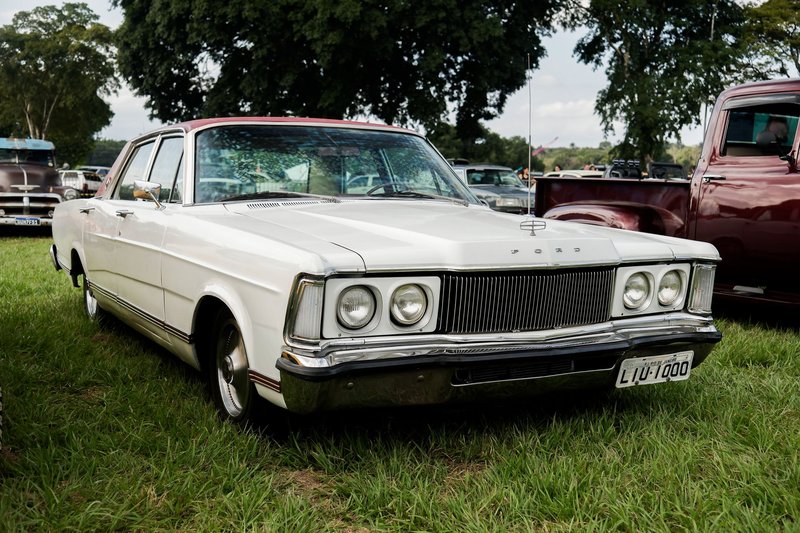
American 1950 car models
Chevrolet Styleline, Fleetline and the first Bel Air
Chevrolet was the story of 1950. The Styleline and Fleetline lines carried the 1949 body into a second year, and the company broke its own sales record on a car that was nobody’s idea of exciting. It was dependable, cheap to run and available.
The headline model was the new Bel Air, a two-door hardtop with no center pillar, built on the Deluxe Styleline. Only 76,662 were built that first year, and the sticker was $1,741. Under the hood was a 216.5 cu in six on manual cars. Order the new Powerglide and you got the larger 235 cu in engine, which hydraulic lifters made quieter. Old Cars Weekly’s account of Chevy’s 1950 run is a good place to see how the sales numbers played out.
The detail to remember: Chevy was one of the first to offer an automatic transmission on a car in its price class. That mattered more to buyers than the hardtop roofline.
Ford Custom Deluxe
Ford’s 1949 “shoebox” redesign carried over for 1950, and it was the car that rescued the company. The Custom Deluxe came with a 239 cu in flathead V8 making 100 hp, or a 226 cu in six for buyers who wanted to save fuel. Prices sat around $1,500 for a Tudor sedan. Dodge’s 1950 lineup ran from the two-door Wayfarer up to the top-trim Coronet, with the four-door Meadowbrook for families in between.
Ford also launched the Crestliner during the 1950 model year, a two-tone, vinyl-roofed variation on the Tudor with a swept-back chrome trim line. Cosmetic, yes. But it was the first sign that Ford would sell style as a separate product.
Buick Roadmaster
The Roadmaster was Buick’s flagship, and its straight-eight was the last great engine of its type in a mass-market American car. The 320 cu in unit made 152 hp, and the Dynaflow automatic smoothed it into something close to silent. A Roadmaster cost a little over $3,000, depending on body.
The side “VentiPorts,” those chrome portholes in the front fender, are the trademark. Buick had four on the Roadmaster and three on lesser models, and the number told the neighbors which one you’d bought.
Oldsmobile 88 (Rocket V8)
The 88 put the new 303 cu in Rocket V8, rated at 135 hp, into a light 76-series body. The result was the quickest American car you could buy at an ordinary price, around $2,000. It dominated early NASCAR and gave rock ‘n’ roll one of its first car songs when Jackie Brenston recorded “Rocket 88” in 1951.
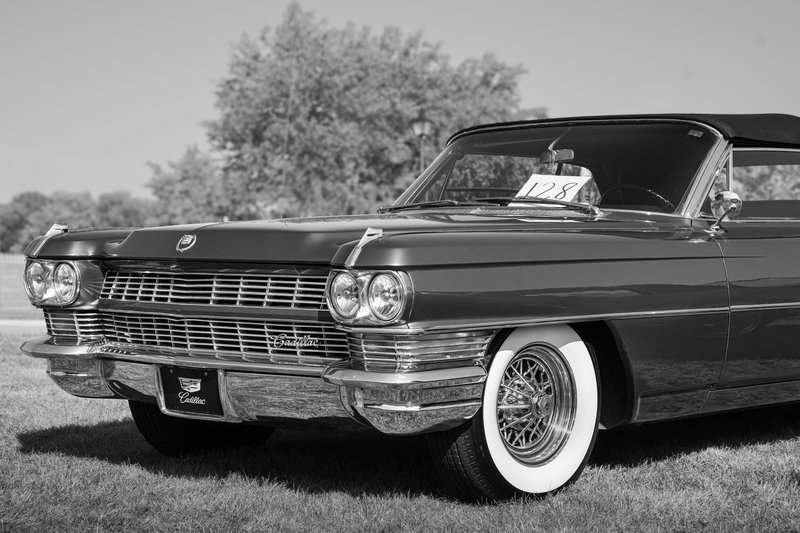
Cadillac Series 62
Cadillac’s 331 cu in V8 made 160 hp, and its small rear fins, introduced in 1948, were as flashy as the Series 62 got. Prices started above $3,000. The Coupe de Ville, the pillarless hardtop launched in 1949, was the glamour version.
Nash Statesman and the Rambler
Nash’s Airflyte bodies, with their enclosed front wheels and bathtub profile, looked unlike anything else in 1950. The Statesman was the cheaper line: a 184 cu in six making about 82 hp.
The more important Nash arrived in April 1950: the Rambler. It was a short-wheelbase convertible landau, priced around $1,800, and it was one of the first small cars from a US manufacturer sold as a premium product, loaded with radio and heater as standard. Nash correctly bet that a market for smaller cars would grow.
Kaiser-Frazer Henry J
The Henry J was Kaiser-Frazer’s attempt at a budget car, aimed at buyers priced out of the Big Three. It debuted in autumn 1950 as a 1951 model, with a 134 cu in four-cylinder or a 161 cu in six, and a starting price under $1,400. It was cheap because it was bare: no glove box, no trunk lid on early cars. Kaiser’s customers wanted more car than it offered, and the model faded by 1954.
Studebaker Champion and Commander
Studebaker’s 1950 “bullet nose” gave the company a face to remember, with a protruding spinner on the grille that earned the car comparisons to a jet. The Champion’s 170 cu in six made about 85 hp. The odd part: the rear window wrapped around so far on the Starlight coupe that people couldn’t tell at a glance which end of the car was which.
Hudson Commodore
Hudson’s “step-down” design put the floor between the frame rails so passengers literally stepped down into the car. That gave it a lower center of gravity than anything else made in Detroit, and it handled accordingly. The Commodore came with either a six or an eight. The same design logic would produce the Hornet a year later.
Crosley Hotshot
At the other end of the scale was the Crosley Hotshot, a tiny roadster with a 44 cu in (721 cc) four that made about 26 hp. It sounds like a joke. But a Hotshot won the first Sebring endurance race on the last day of 1950, on handicap, and it became the little car that proved American racing could use small displacement.
British 1950 car models
Aston Martin DB2
The DB2 was the first Aston Martin of the David Brown era, introduced in 1950. W.O. Bentley’s design team supplied the 2.6-liter straight-six, rated at 105 hp (125 hp in Vantage form), and the fastback body made it capable of around 116 mph in period road tests. Fewer than 450 were built, which is why a good one sits in a different value bracket from a Jaguar of the same year.
Jaguar XK120 and the Mark VII
Jaguar had two cars to talk about. The XK120, a roadster introduced in 1948, was still ramping up output in 1950. The name stood for its claimed top speed, and Jaguar proved it: 120 mph on a Belgian motorway, which made it the fastest production car on sale.
At the other end of the lineup was the Mark VII, unveiled at the October 1950 Earls Court show. It used the same 3.4-liter XK six, rated at 160 hp, in a big, heavy sedan that could top 100 mph. It was also cheap for what it was, and Jaguar sold the Mark VII in huge numbers in the US.
MG TD
The MG TD arrived at the end of 1949 and was the first MG built with left-hand drive for export, which mattered because American servicemen who had driven TCs in England were bringing them home. With 1,250 cc and about 54 hp it was slow in a straight line, but it gave a generation of US drivers their first taste of a sports car.
European 1950 car models
Alfa Romeo 1900
The 1900 was the first Alfa Romeo built on a production line, and the first with a unibody instead of a separate chassis. It debuted at the 1950 Turin Motor Show with a 1,884 cc twin-cam four of about 80 hp, and a top speed near 100 mph. The Alfa engineers had been building hand-assembled sports cars; the 1900 was the company’s turn toward volume.
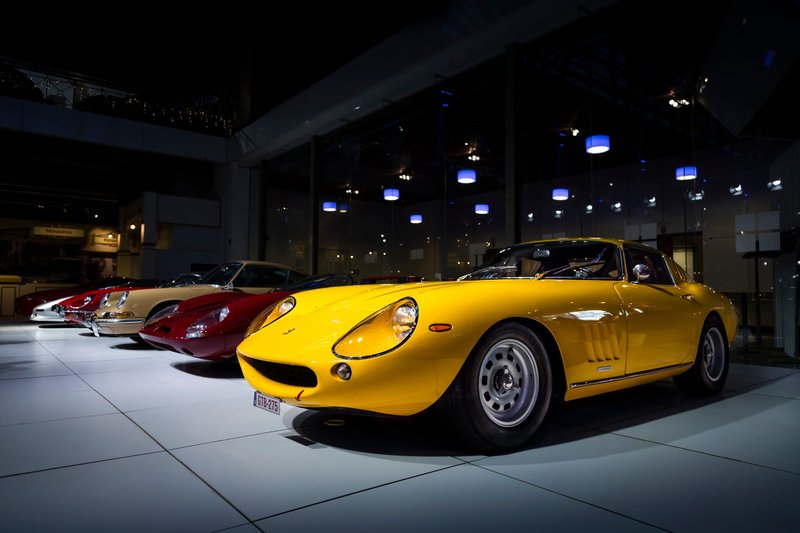
Ferrari 195 Inter
Ferrari’s naming system is easy once you know it: the 195 means 195 cc per cylinder. The 195 Inter used Gioacchino Colombo’s V12, enlarged to about 2.3 liters, and made around 130 hp. Ferrari supplied bare chassis, and the bodies came from Ghia, Vignale and other Italian coachbuilders, so no two look quite alike.
Lancia Aurelia B10
The Aurelia, shown in Turin in 1950, brought the first production V6 engine to market. Vittorio Jano’s design used a 60-degree layout and it is the direct ancestor of every V6 you can buy now. The first B10 sedan’s 1,754 cc engine made about 56 hp.
Porsche 356
Porsche moved production from Gmünd, Austria, to Stuttgart in 1950, putting the 356 on a proper assembly line. The 1,086 cc flat-four made 40 hp, and the car weighed under 800 kg, so a 356 was quicker than the number suggests. These early cars are why Porsche is still known for light, simple sports cars, and why it remains one of the main European car brands worth knowing.
Volkswagen Beetle and Transporter
The Beetle was a prewar design, with a 1,131 cc air-cooled flat-four making 25 hp, but 1950 was the year it became a genuine export success. More importantly, the Type 2 Transporter went into production on March 8, 1950, built on the Beetle’s floorpan after a sketch by Dutch importer Ben Pon. The bus is the other 1950 VW most buyers forget, and the one that outlasted its sibling in cultural pull.
1950 cars at a glance
Prices are approximate US figures where given; European prices varied too much by market and tax to compare.
| Model | Region | Engine | Power | Approx. price |
|---|---|---|---|---|
| Chevrolet Bel Air hardtop | US | 216.5 cu in six (235 with Powerglide) | about 92 hp (105 hp with Powerglide) | $1,741 |
| Ford Custom Deluxe | US | 239 cu in flathead V8 | 100 hp | about $1,500 |
| Buick Roadmaster | US | 320 cu in straight-eight | 152 hp | just over $3,000 |
| Oldsmobile 88 | US | 303 cu in Rocket V8 | 135 hp | about $2,000 |
| Cadillac Series 62 | US | 331 cu in V8 | 160 hp | above $3,000 |
| Nash Rambler | US | 184 cu in six | about 82 hp | about $1,800 |
| Kaiser-Frazer Henry J | US | 134 cu in four | about 68 hp | under $1,400 |
| Aston Martin DB2 | UK | 2.6 L six | 105 hp | n/a |
| Jaguar Mark VII | UK | 3.4 L six | 160 hp | n/a |
| MG TD | UK | 1,250 cc four | about 54 hp | n/a |
| Alfa Romeo 1900 | Italy | 1,884 cc four | about 80 hp | n/a |
| Ferrari 195 Inter | Italy | about 2.3 L V12 | about 130 hp | n/a |
| Porsche 356 | Germany | 1,086 cc flat-four | 40 hp | n/a |
| Volkswagen Beetle | Germany | 1,131 cc flat-four | 25 hp | n/a |
FAQ
What was the best-selling car of 1950?
Chevrolet was the US sales leader, and its record year was built on the Styleline and Fleetline models. Ford was close behind with the Custom Deluxe.
What was the fastest car you could buy in 1950?
The Jaguar XK120 claimed a 120 mph top speed and was widely described as the fastest production car on sale. Among American cars, the Oldsmobile 88 was the quickest cheap option.
How much did a new car cost in 1950?
An entry-level US car like the Henry J started under $1,400. A mid-range Chevrolet or Ford cost roughly $1,500 to $1,800, the Oldsmobile 88 about $2,000, and the Cadillac and Buick flagships started above $3,000.
What was the first hardtop from Chevrolet?
The 1950 Bel Air, a pillarless two-door with a steel top styled to look like a convertible. It cost $1,741 and Chevrolet built 76,662 of them.
Which 1950 cars are collectible today?
The Bel Air hardtop, Aston Martin DB2, Jaguar XK120, Ferrari 195 Inter and Porsche 356 draw the most attention. Of those, the Ferrari is by far the most expensive and the least often seen.

Marco Delantero
More from Marco DelanteroHow we reviewed this article
This article was researched against manufacturer records and editorially reviewed before publishing. We accept no payment for coverage. Some guides contain affiliate links; see our affiliate disclosure.