TLDR
Dodge sold three car lines in 1950: the Wayfarer (entry level, two-door only), the Meadowbrook (the four-door family car) and the Coronet (top trim, with the most body styles). All three ran the same 230 cubic inch “Get-Away” six-cylinder at a little over 100 hp. Trucks ran separately, led by the half-ton B-2-B.
Contents
- The 1950 Dodge lineup at a glance
- 1950 Dodge Wayfarer
- 1950 Dodge Meadowbrook
- 1950 Dodge Coronet
- The Get-Away six under every hood
- 1950 Dodge trucks and the B-2-B
- How to tell a 1950 from a 1949 or 1951
- What a 1950 Dodge is worth today
- FAQ
The 1950 Dodge lineup at a glance
Dodge kept things simple in 1950. Three car lines shared one engine and a similar body, and the difference between them came down to wheelbase, body style and how much chrome the buyer paid for.
| Line | Wheelbase | Body styles | Price tier |
|---|---|---|---|
| Wayfarer | 115 in | Two-door only (sedan, business coupe, roadster) | Entry level |
| Meadowbrook | 123.5 in | Four-door sedan | Middle |
| Coronet | 123.5 in | Up to six, including Diplomat hardtop, club coupe, convertible and wagon | Top trim |
The sales split explains the whole strategy. Dodge built 221,791 four-door sedans in 1950, more than 60% of its total output. Dodge was selling a sensible sedan to people who wanted a car that would still start in 1965, and it did that very well.
1950 Dodge Wayfarer
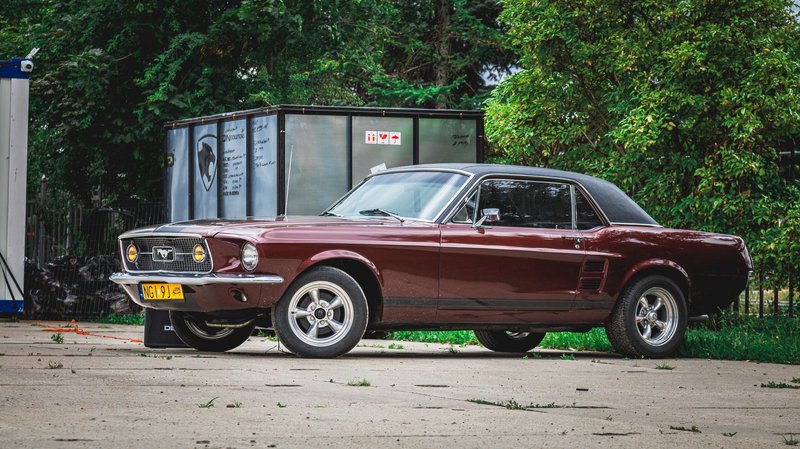
The Wayfarer was the cheapest way into a new Dodge, and Dodge made sure you couldn’t mistake it for anything else: it was two-door only. No four-door Wayfarer exists. A shorter 115-inch wheelbase kept the price down and the interior tight.
Trim was spare. Less brightwork, plainer upholstery, fewer options on the order sheet. The business coupe was aimed at salesmen who needed a trunk for sample cases, and it has almost no back seat to speak of. If you’re hunting one today, expect a car that survived because somebody’s grandfather never wanted to spend extra.
1950 Dodge Meadowbrook
The Meadowbrook is the car most people picture when they think of a 1950 Dodge: a four-door sedan on the long 123.5-inch wheelbase, with more trim than the Wayfarer and less than the Coronet. It’s the volume seller and the one you’ll see most often at club meets.
Its virtue is room. The longer wheelbase gives rear-seat passengers real legroom, and the upright roofline means hats still fit. It’s not a showpiece. That’s exactly why a clean, unrestored one is easier to live with than a trophy-grade convertible. Plenty of American family sedans from the period were built on the same formula, and the Classic American Sedans guide covers the wider field.
1950 Dodge Coronet
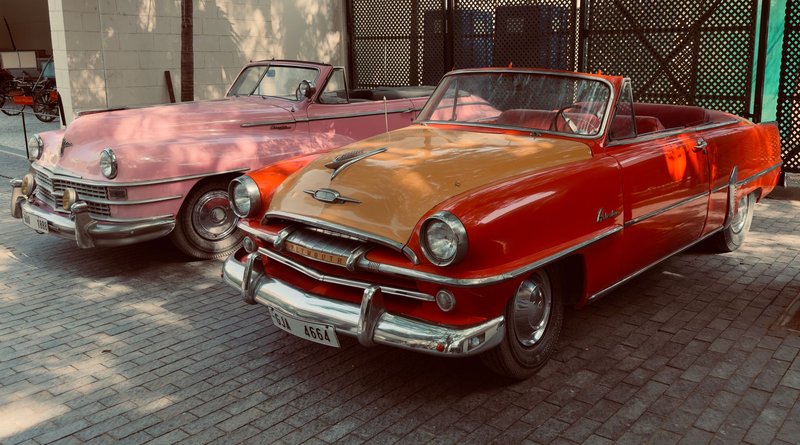
The Coronet sat at the top of the range and carried the widest choice of bodies, up to six depending on how you count. The headliners:
- Diplomat hardtop: the pillarless two-door, Dodge’s answer to the new hardtop craze and the most sought-after closed Coronet.
- Club coupe: the sleek two-door with a sloping rear window.
- Convertible: the rarest of the common body styles, and the most expensive today.
- Wagon: the Sierra, with real wood in the body structure and a following among collectors.
Like the Meadowbrook, it rides a 123.5-inch wheelbase. What you’re paying for is trim: more chrome, better fabrics and the body styles you can’t get anywhere else in the lineup.
The Get-Away six under every hood
Every 1950 Dodge car carries the 230 cubic inch inline “Get-Away” six, an L-head design rated at just over 100 hp. Nothing about it is exciting, and that’s the point. It’s a low-revving, understressed engine that tolerates neglect and still starts on a cold morning.
Dodge paired it with a conventional manual gearbox or its Fluid Drive semi-automatic setup, which let you pull away in high gear without a clutch pedal in most conditions. Owners either love the quirk or hate it. Mechanics love that parts are still easy to find because the six was used for years across Chrysler Corporation vehicles.
1950 Dodge trucks and the B-2-B
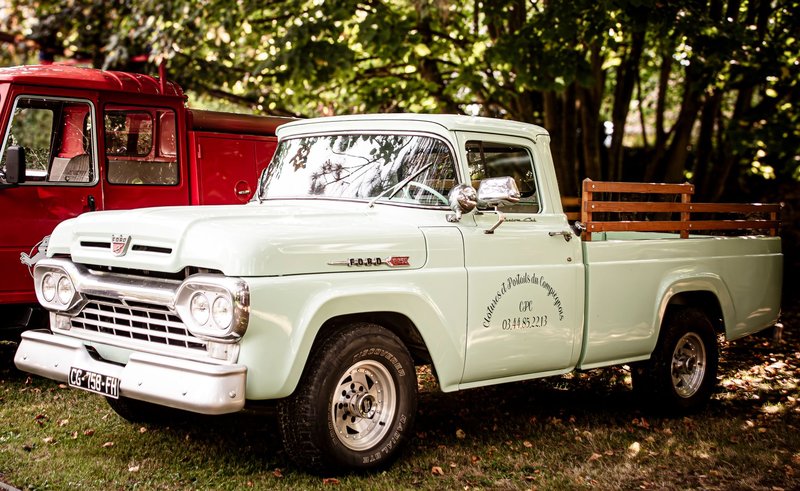
Cars get the attention, but Dodge made a large share of its living from trucks, and the B-series was the heart of that business. The B-2-B half-ton panel truck rode a 108-inch wheelbase and used a smaller 218 cubic inch six than the cars.
Panel trucks were rolling billboards for bakers, florists and plumbers: a closed rear body with the shop’s name painted on the side. They’ve become popular with restorers because you get a blank canvas, a simple mechanical package and a body style no modern vehicle replaces. Pickups share the same cab and the same lineage, so identification works much the same way.
How to tell a 1950 from a 1949 or 1951
This is where most online guides go quiet. Start at the nose.
- Grille: the 1950 car is identified by its new three-bar grille. Check this first, because it’s the quickest way to separate a 1950 from the 1949 model.
- 1951 changes: Dodge revised the front end and trim again for 1951, so a different grille and brightwork points to the later year. For the styling Dodge moved toward after 1950, see 1954 Dodge Models: Every Trim, Body Style, and Key Difference.
- Data plate and VIN: the firewall plate and serial number confirm the model year. Appearance can be swapped between years. The plate can’t.
Always cross-check the serial number against a registry or club resource before you pay a premium for a “rare” year.
What a 1950 Dodge is worth today
Values vary heavily by body style and condition. As a rule, the pecking order is simple. Convertibles and Diplomat hardtops sit at the top, wagons follow, and sedans and business coupes are the budget entries. A running Meadowbrook sedan costs far less than a restored Coronet convertible.
For a current number, use a live guide like Hagerty’s valuation tool, which breaks values down by condition, though some pages require a login. Prices move with the market, and a single auction result can mislead you.
FAQ
What models did Dodge make in 1950?
Three car lines: Wayfarer, Meadowbrook and Coronet. Dodge also built a full range of trucks, including the B-2-B half-ton panel truck.
What engine did the 1950 Dodge use?
A 230 cubic inch inline six called the Get-Away, rated at just over 100 hp. The B-2-B truck used a 218 cubic inch six.
What is the difference between a Meadowbrook and a Coronet?
Both share the 123.5-inch wheelbase. The Meadowbrook is a four-door sedan with moderate trim. The Coronet adds more equipment and is the only line with the Diplomat hardtop, convertible and wagon.
Which 1950 Dodge is the most valuable?
The Coronet convertible and Diplomat hardtop typically top the price list, ahead of sedans.
Was there a four-door Wayfarer?
No. The Wayfarer was two-door only.

Marco Delantero
More from Marco DelanteroHow we reviewed this article
This article was researched against manufacturer records and editorially reviewed before publishing. We accept no payment for coverage. Some guides contain affiliate links; see our affiliate disclosure.