Morris built cars for seventy-one years, from the first Oxford in 1913 to the last Ital in 1984, and almost every one of them came in a shape you can still recognize on sight. That’s the good news for anyone hunting old Morris models. The bad news is that after 1952 half the range shared its body, engine and showroom with an Austin, so the badge alone doesn’t tell you much.
This guide walks through the lineup by era, with years, engines and the one thing each car is known for. It ends with what the survivors cost, where they rust and which ones make sense as a first classic.
Contents
- Quick reference table
- Pre-war: Bullnose, Minor, Eight and Ten
- Post-war: Minor MM, Oxford MO and Six MS
- The BMC years: Austin on the other side of the badge
- Morris Minor 1000 and the million-seller
- Mini, 1100 and 1300: front-wheel drive arrives
- British Leyland: Marina and Ital
- Old Morris models worth buying
- Where they rust and what breaks
- A note on diecast models
Quick reference table
| Model | Years | Engine | Defining trait |
|---|---|---|---|
| Bullnose Oxford / Cowley | 1913 to mid-1920s | About 1.0 to 1.5 litre four | Rounded radiator, mass-market price cuts |
| Minor (first generation) | 1928 to 1934 | 847cc overhead-cam four | Britain’s answer to the Austin Seven |
| Eight and Ten | 1930s to 1948 | 918cc (Eight), 1,140cc (Ten Series M) | Sensible pre-war family cars |
| Minor MM / Series II / 1000 | 1948 to 1971 | 918cc, 803cc, 948cc, 1,098cc | Issigonis’s masterpiece, over a million sold |
| Oxford MO | 1948 to 1954 | 1,476cc side-valve four | Minor styling scaled up |
| Six MS | 1948 to 1954 | 2,215cc overhead-cam six | Smooth, thirsty executive saloon |
| Isis | 1955 to 1958 | 2,639cc six | Big BMC six with Oxford looks |
| Oxford Series II to VI | 1954 to 1971 | 1,489cc, later 1,622cc | Series V and VI wear Farina styling |
| Mini-Minor | From 1959 | 848cc and up | Transverse engine, 10-inch wheels |
| 1100 / 1300 | 1962 to 1974 | 1,098cc, 1,275cc | Hydrolastic ride, Britain’s best seller |
| Marina | 1971 to 1980 | 1.3 and 1.8 litre | Conventional, cheap, divisive |
| Ital | 1980 to 1984 | 1.3 and 1.7 litre | The last Morris |
Pre-war: Bullnose, Minor, Eight and Ten
William Morris started with the Bullnose Oxford in 1913, named for the rounded radiator that gave the car its face. A Cowley followed, with a bigger Continental-sourced engine, and in 1921 Morris slashed prices to undercut everyone else. It worked. By the mid-1920s Morris was Britain’s largest carmaker, and the Bullnose is the car that did it.
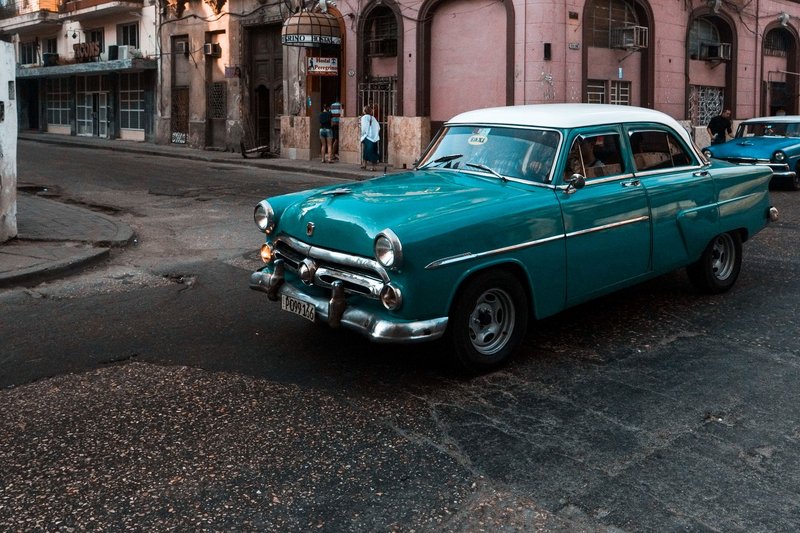
The Bullnose is also the most expensive way into Morris ownership today, and the least practical. You’ll be double-declutching a crash gearbox and working with brakes that were optimistic even by 1920s standards. Pick one for the rally scene, not the commute.
In 1928 the first Morris Minor arrived. It had an 847cc overhead-cam engine borrowed from Wolseley, a Morris-owned company, and its job was to take on the Austin Seven. Don’t confuse it with the Minor you’re picturing. That one is twenty years away.
The 1930s family cars are the Eight and the Ten. The Eight used a 918cc side-valve engine and sold in huge numbers until the war. The Ten Series M of 1938 was more interesting: unitary construction, no separate chassis, which was a modern idea for a cheap British saloon. Both came back after the war for a short run, and the Eight’s engine would power the first Minor.
Post-war: Minor MM, Oxford MO and Six MS
1948 was the year Morris reinvented itself. At the Earls Court Motor Show it showed three new cars, all designed under a young engineer named Alec Issigonis.
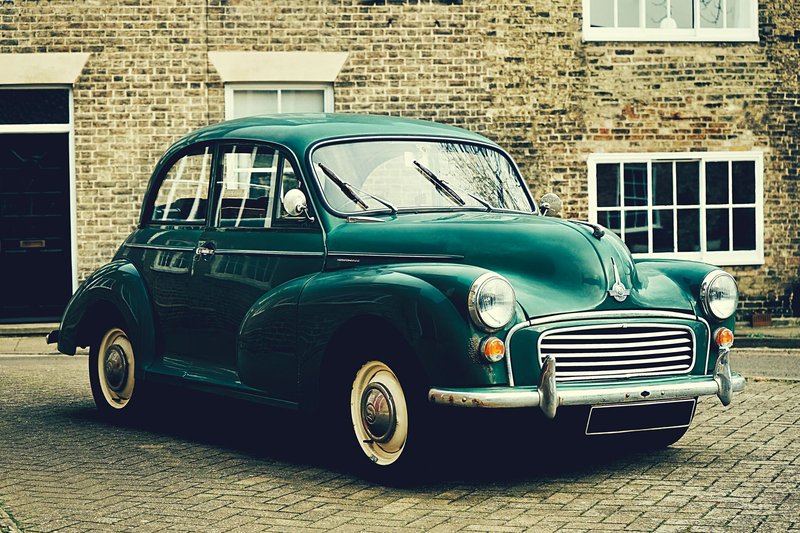
The Minor MM was the small one: 918cc side-valve engine, torsion-bar front suspension, rack-and-pinion steering that felt a generation ahead of its rivals. Issigonis had wanted a flat-four engine and the money wasn’t there, so the old Eight unit went in instead. The car handled well anyway.
The Oxford MO was the Minor blown up to family size, with a 1,476cc side-valve four. If the proportions look familiar, they should. It’s the same design language, and the MO sold well in export markets.
The Six MS shared the Oxford’s body with a longer nose and a 2,215cc overhead-cam straight-six. It was quiet, quick for its day and drank fuel at a rate that made the Oxford look frugal. Few were built, which makes the survivors a quiet bargain for anyone who wants something that looks like the common car but isn’t.
The Oxford’s afterlife is the strangest of any Morris. The Series III of 1956 was licensed to Hindustan Motors in India, where it became the Ambassador and stayed in production for decades. If you’ve taken a yellow taxi in Kolkata, you’ve sat in a Morris Oxford descendant.
The BMC years: Austin on the other side of the badge
In 1952 Morris and its old rival Austin merged to form the British Motor Corporation (BMC), with Austin’s Leonard Lord running the show. This is where Morris names get confusing. The two companies had agreed to keep separate identities, but in practice they shared engines, platforms and bodyshells, and a car could come out of the factory with a Morris, Austin, Wolseley, MG or Riley badge and only minor trim changes.
That’s why a Morris Oxford of the mid-1950s has a BMC B-series engine, the same unit found in Austins, MGs and a long list of others. Grace’s Guide has a good potted history of how the Morris business changed hands and shifted across these years. For the buyer, the rule is simple: from 1952 on, don’t assume a Morris is mechanically unique. Spares are better for it.
The Cowley of 1954 to 1959 was effectively a cheaper Oxford with less chrome. The Isis, from 1955, took the Oxford shell and fitted a 2.6-litre six for buyers who wanted more car than the four-cylinder could offer. The Oxford Series II to IV ran from 1954 to the end of the decade with the B-series engine and progressively more rounded bodywork.
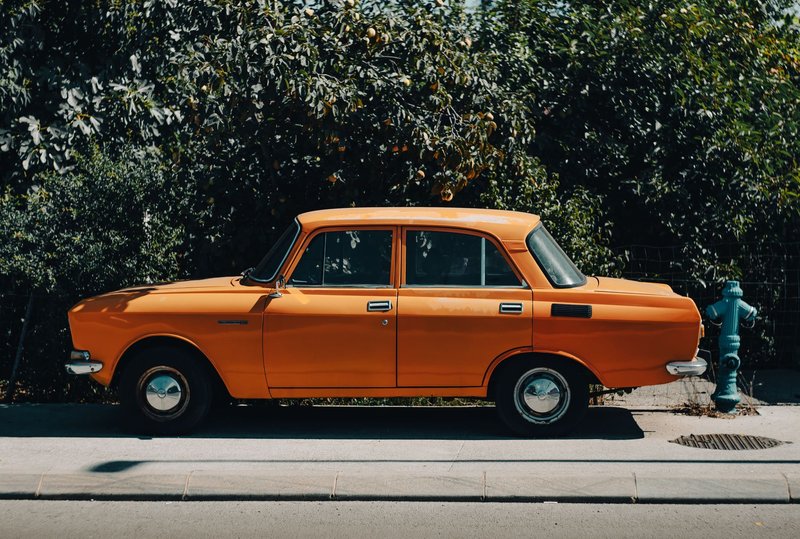
The big shift came with the Oxford Series V and VI. These were styled by the Italian coachbuilder Pininfarina, whose founder Battista “Pinin” Farina gave the cars their name, the “Farina” Oxford. Fins, crisp creases and a very different look from the rounded cars before them. They ran with 1,489cc and later 1,622cc engines until 1971.
Morris Minor 1000 and the million-seller
The Minor kept evolving. The Series II of 1952 swapped the side-valve engine for the 803cc overhead-valve unit from the Austin A30, and the headlights moved from the grille to the wings in 1951 after US lighting regulations changed. The Traveller estate appeared in 1953 with an exposed ash timber frame, and it remains the most recognizable shape in the range.
In 1956 came the Minor 1000: a one-piece windscreen, a 948cc engine and a bigger rear window. In 1962 the engine grew again to 1,098cc, which remains the better driver. The Minor was the first British car to pass one million sales. Classics World reports that BMC built a special edition to mark it, in lilac with a white interior and “Minor 1,000,000” badges. Production ended in 1971 after about 1.6 million cars.
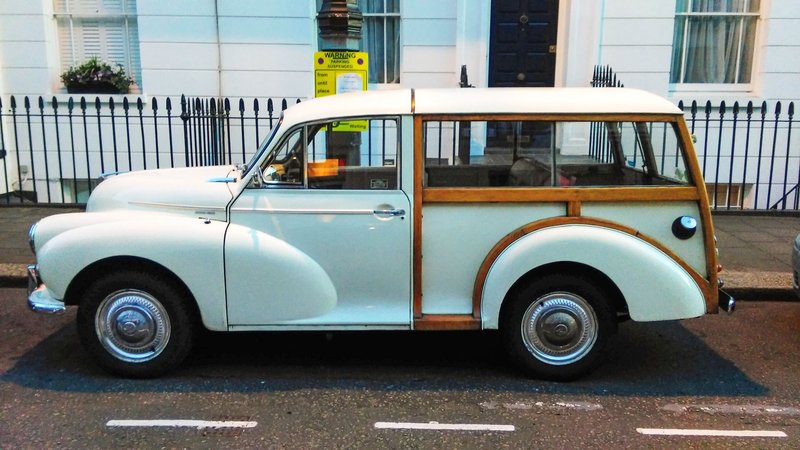
Issigonis reportedly considered the Minor his favorite design, even more than the Mini, and anyone who has driven one can see why. The steering is direct, the visibility is excellent, and the car is easy to fix with hand tools and a Haynes manual. If you want a single old Morris, this is usually the answer.
Mini, 1100 and 1300: front-wheel drive arrives
In 1959 BMC launched the Morris Mini-Minor alongside its Austin twin, then called the Austin Seven. Issigonis again: a transverse engine, a gearbox in the sump, 10-inch wheels and a body that fit four adults in about ten feet of length. The Morris and Austin versions were nearly identical. The visible differences were the grille, the badges and a few trim items, so the “Morris Mini vs Austin Mini” argument comes down to taste. Both versions later dropped the old names and became simply the Mini.
The Morris 1100 followed in 1962, a bigger front-wheel-drive saloon with Pininfarina lines and Hydrolastic suspension, which linked the wheels with fluid for a ride that was soft but flat. It became one of the best-selling cars in Britain for much of the decade. The 1300, with a 1,275cc engine, joined in 1967 and stayed in production until 1974.
The ride and interior space were class-leading. The long-term reliability wasn’t. The Hydrolastic units need servicing, and the rear subframe rots.
British Leyland: Marina and Ital
In 1968 BMC folded into British Leyland, and Morris became one marque among several. The Marina of 1971 was designed to be cheap to build and easy to service, using a lot of existing parts: the front suspension was a modified Minor design, the rear a set of leaf springs. It came with 1.3 and 1.8 litre engines. Reviewers at the time found it unremarkable, and its reputation never recovered, but it sold well over a million and handles worse than it looks.
The Ital of 1980 was the Marina with a Giugiaro-styled facelift. Production ran until 1984, when the Morris name was retired like so many other discontinued car brands. It’s a footnote now, but a likeable one.
Old Morris models worth buying
These are rough UK ranges for cars in usable condition, based on typical classified listings and auction results. Condition swings them wildly, so check current listings before you set a budget.
- Morris Minor 1000 saloon: about £6,000 to £15,000. The easiest classic to own. Parts are cheap and every club knows the car.
- Minor Traveller: about £8,000 to £20,000. Prices climb with the state of the timber, and a rotten frame is costly to fix.
- Mini-Minor: about £8,000 to £20,000 for original early cars. Later cars are cheaper.
- Oxford Series V or VI (Farina): about £3,000 to £8,000. Underrated, and it looks different from every other saloon at the meet.
- Oxford MO and Cowley: about £4,000 to £10,000. Rare and cheap for what they are.
- Marina and Ital: about £2,000 to £7,000. Fine as a project with a sense of humor.
- Bullnose: typically £20,000 and up. Not an entry-level classic.
If you want one recommendation, buy the Minor 1000 in 1,098cc form. If you want something unusual, look at the Farina Oxford.
Where they rust and what breaks
Every old Morris rusts, but not in the same places.
- Minor: sills, floors, the bottoms of the wings and doors, and the chassis rails under the front floor. On Travellers, check the ash frame for rot and for loose joints.
- Mini: sills, front and rear subframes, the A-panels and the boot floor.
- 1100 and 1300: rear subframe, sills and any Hydrolastic leaks.
- Oxford Farina: sills, boot floor, rear arches and front wings.
- Marina: front wings, sills and the rear spring mounts.
- Mechanicals: the A-series and B-series engines are tough and cheap to rebuild. The weak points are kingpins on the Minor, worn gearbox synchromesh and old wiring.
Always look underneath. A shiny repaint on a Minor can hide a lot of filler.
A note on diecast models
If “old Morris models” brought you here looking for scale models, the market is strongest for the Minor and the Mini. Minichamps and Kyosho both make 1:18 versions, while Oxford Diecast covers the smaller scales. Pick the Traveller if you want the best-looking shelf piece.

Marco Delantero
More from Marco DelanteroHow we reviewed this article
This article was researched against manufacturer records and editorially reviewed before publishing. We accept no payment for coverage. Some guides contain affiliate links; see our affiliate disclosure.