Most lists of old MG models are either a club directory with eighty tabs and no context, or a decade-by-decade story with no way to tell which model actually made money, sold in volume, or is worth chasing today. You need both. Here’s every era of MG, what defined it, and — since you’re probably here because you’re curious about owning one — which old models are worth your garage space and which ones will eat your weekends.
Table of Contents
- Every MG Era at a Glance
- The Vintage Years: M-Type to the Pre-War Racers (1928–1939)
- The T-Types: Britain’s First Postwar Sports Car (1936–1955)
- The Y-Type: MG’s Forgotten Saloons (1947–1953)
- The Golden Age: MGA, MGB and Midget (1955–1980)
- The Badge-Engineering Years: Metro, Maestro, Montego (1982–1991)
- The Comeback: MGF and MG TF (1995–2005)
- The SAIC Era: A Chinese-Owned MG (2007–Today)
- Buying an Old MG: What They’re Worth and What Breaks
Every MG Era at a Glance
| Model / Family | Years Produced | Units Built | Notable Trivia |
|---|---|---|---|
| M-Type to Q-Type Midgets | 1928–1935 | Low thousands per model | MG’s overhead-cam racing era; some Q-Types ran superchargers |
| T-Type (TA–TF) | 1936–1955 | Roughly 52,000 combined | The TC sparked America’s postwar sports car obsession |
| Y-Type (YA/YB, ZA/ZB Magnette) | 1947–1958 | Tens of thousands | MG’s first proper four-door saloons |
| MGA | 1955–1962 | Over 100,000 | 13,000 sold in its debut year alone |
| MGB (roadster and GT) | 1962–1980 | Roughly 512,000 | Best-selling British sports car of its era |
| MG Midget | 1961–1979 | Over 220,000 | Outsold most rivals despite its tiny A-Series engine |
| Metro, Maestro, Montego | 1982–1991 | Varies by model | Badge-engineered Austins and Rovers wearing the octagon |
| MGF | 1995–2002 | Around 77,000 | Mid-engined, with unusual Hydragas suspension |
| MG TF | 2002–2005, then 2007–2011 | Tens of thousands | Reborn twice — once in Britain, once under Chinese ownership |
The Vintage Years: M-Type to the Pre-War Racers (1928–1939) {#the-vintage-years}
MG’s founding story starts with a Morris dealership in Oxford and a manager named Cecil Kimber who kept building sportier, lower, faster versions of ordinary Morris chassis until the company had a name of its own. The British Motor Museum still displays “Old Number One,” the 1925 special that’s generally treated as the first true MG.
The production story really begins with the M-Type Midget of 1928, an 847cc two-seater that undercut sports cars from Austin and Riley on price while looking like something twice the cost. What followed was the marque’s most technically ambitious decade: the C, D, J, P, Q and R-Type Midgets, a run of overhead-cam racers that took class wins at Brooklands and the Mille Miglia. The supercharged Q-Type was borderline unusable on public roads and MG knew it — these were factory racers with number plates, not commuter cars.
The T-Types: Britain’s First Postwar Sports Car (1936–1955) {#the-t-types}
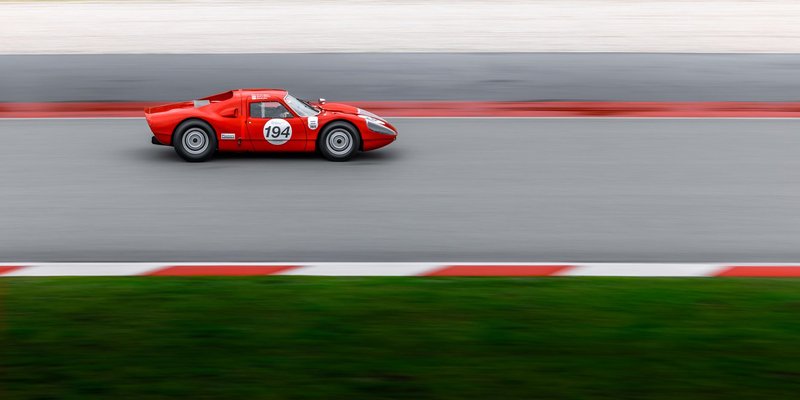
The TA arrived in late 1936 as a more civilized, softer-sprung successor to the pre-war Midgets, but it’s the TC that matters most to American car culture. GIs stationed in Britain during and after the war fell for the TC’s cramped cockpit, right-hand drive and total lack of creature comforts, then shipped them home by the hundreds. Historians generally credit the TC with introducing the United States to the sports car as a category — before it, “sporty” American cars were just full-size sedans with a bigger engine.
The line evolved through the TD (1950, with independent front suspension and left-hand-drive export models) and TC (1953) before ending with the TF in 1955, a car MG’s own engineers considered outdated the day it launched. It sold anyway, because nobody else was building anything like it.
The Y-Type: MG’s Forgotten Saloons (1947–1953) {#the-y-type}
Sandwiched between the T-Types and the MGA, the Y-Type saloons rarely make it onto enthusiast lists, which is a mistake if you’re after something usable. The YA (1947) and YB (1951) were proper four-door family cars with independent front suspension borrowed from the TD, wrapped in prewar-styled coachwork that already looked dated against Jaguar’s postwar saloons. The sportier ZA Magnette followed in 1953 with a modern unitary body and the B-Series engine that would go on to power the MGA and MGB. If you want a period-correct MG that four adults can actually sit in, this is the family the club directories underrate.
The Golden Age: MGA, MGB and Midget (1955–1980) {#the-golden-age}

The MGA, launched in 1955, was the first MG to look like a modern sports car rather than a prewar leftover — smooth, low, aerodynamic bodywork over a 1,500cc engine, with 13,000 sold in its first year. It sold over 100,000 units before the MGB replaced it in 1962.
The MGB is the model most people picture when they hear “old MG,” and the sales figures explain why: roughly 386,961 roadsters and 125,282 GT coupés built between 1962 and 1980, a combined total north of half a million cars. 1972 was its best single year, with just under 40,000 built. When the last MGB rolled off the line in 1980, it was handed to Henry Ford II to sit next to his father’s own MG Midget in Ford’s company museum — a small, pointed acknowledgment from a rival manufacturer of what MG had built.
The Midget, launched in 1961 as the MGB’s smaller sibling, outlived it in spirit if not in prestige. Over 220,000 were built by the time production stopped in 1979. The MG Midget vs MGB question comes up constantly among first-time buyers: the Midget is lighter, cheaper to insure, and more nimble on a back road, but its A-Series engine tops out well short of the B-Series unit in the MGB, and the B’s optional GT bodystyle is genuinely usable as a daily car in a way the Midget never was. Buy the Midget for a weekend toy. Buy the MGB if you might actually drive it to work.
The Badge-Engineering Years: Metro, Maestro, Montego (1982–1991) {#the-badge-engineering-years}
With no true sports car in production between the MGB’s 1980 end and the MGF’s 1995 launch, British Leyland did what British Leyland always did: it stuck an octagon badge on existing family cars. The MG Metro arrived in 1982 as a warmed-over Austin Metro, followed by the MG Maestro (1983) and MG Montego (1985), both eventually offered in turbocharged form with genuinely quick performance for the era.
Enthusiasts sneered at the badge-engineering approach at the time, and it’s easy to see why — these were hatchbacks and saloons with sportier trim, not purpose-built roadsters. But it’s worth remembering MG had used the same trick since the 1930s, dressing up ordinary Morris and BMC platforms with better suspension tuning and a faster engine. The Metro Turbo in particular has aged into a genuinely respected hot hatch among people who actually drove one, not just people who remember the badge.
The Comeback: MGF and MG TF (1995–2005) {#the-comeback}
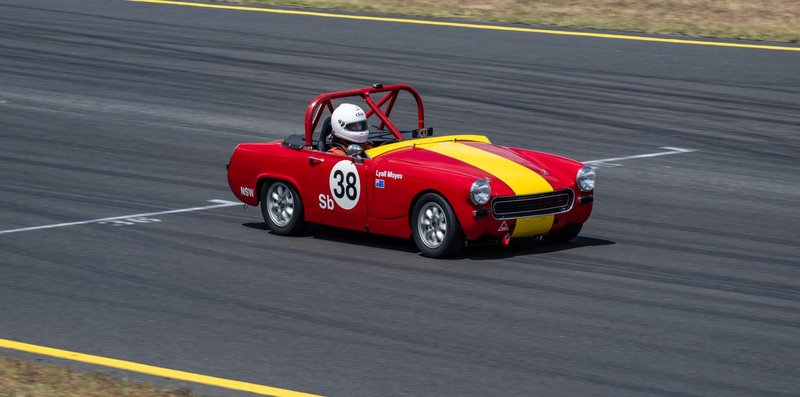
After a brief, low-volume detour with the MGB-based RV8 in the early 1990s, MG returned to building a real sports car from scratch with the MGF in 1995. It was a genuine departure: mid-engined, transverse layout, and an unusual Hydragas interconnected suspension system rather than conventional springs. Around 77,000 were built before it was updated into the MG TF in 2002, which swapped the Hydragas setup for ordinary coil springs and dampers — a change most owners preferred on rough roads, even if it cost some ride comfort.
The TF’s run ended abruptly in April 2005 when MG Rover collapsed under roughly £1.4 billion in debt, putting about 6,000 people out of work at the Longbridge plant in a single week, according to BBC coverage of the closure. It’s one of the more brutal endings in British industrial history, and it’s the reason so many T-registration MGF and TF parts cars turn up cheap today — dealer and parts networks collapsed overnight along with the company.
The SAIC Era: A Chinese-Owned MG (2007–Today) {#the-saic-era}
Nanjing Automobile Corporation bought MG Rover’s remaining assets out of administration for roughly £53 million in mid-2005, and by December 2007 Nanjing itself had merged into the much larger Shanghai Automotive Industry Corporation (SAIC), which still owns the brand. Production of a revised TF briefly resumed at Longbridge in 2008 using knock-down kits shipped from China, before ending for good in 2011.

What exists today under the MG name — the ZS, the MG4, and a growing lineup of affordable EVs — has essentially nothing mechanically in common with the cars above. It’s a modern, Chinese-engineered, value-focused brand that happens to have bought the rights to a hundred-year-old British badge. Whether that counts as continuity or just licensing is a debate MG owners’ clubs still argue about at every meet.
Buying an Old MG: What They’re Worth and What Breaks {#buying-an-old-mg}
If you’re shopping rather than just reading, the calculus changes by model.
MGB is the easiest entry point into old MG ownership, full stop. Parts support is the best of any British classic on the road — British Motor Heritage still manufactures brand-new steel bodyshells for the MGB, which means rust, the model’s biggest weakness, is a solvable problem rather than a car-ending one. Roadsters and GTs from the 1970s are common enough that a rough project can be had for the price of a good used motorcycle.
MG Midget costs less to buy and insure than an MGB, and shares enough parts commonality with the B that restoration isn’t a dead end. It’s the better choice if you want something small and flickable and don’t need back seats or luggage space you’ll never have anyway.
MGA commands more money than either, mostly because there are fewer of them and its styling has aged better than almost anything else on this list. Parts support is good but not MGB-good — budget more time sourcing trim and interior pieces.
Pre-war and T-Type cars are the collector tier. Survivors are scarce, values reflect it, and mechanical work often means finding a specialist rather than a generic British-car garage. Buy one because you love the era, not as a first classic.
Metro, Maestro and Montego are the cheapest MGs you can buy running today, and also the ones most likely to have already been scrapped for rust — badge-engineered or not, they weren’t built for longevity the way the sports cars were. Good ones exist, but you’ll be hunting.
One practical note that applies across the board: once an MG passes the 40-year mark, UK owners can apply to the DVLA for historic vehicle status, which removes both the annual road tax bill and the MOT requirement, per the government’s rolling exemption rules. Anything from the T-Type through the early Midget and MGB years already qualifies, and the MGF is only a handful of years from crossing that line itself.
Whichever era you land on, the throughline hasn’t changed since 1928: MG built its reputation on cars that were more fun to drive than their price tag suggested, badge-engineered hatchbacks included. That’s still the best reason to buy one old, rather than the reason to avoid it.

Marco Delantero
More from Marco DelanteroHow we reviewed this article
This article was researched against manufacturer records and editorially reviewed before publishing. We accept no payment for coverage. Some guides contain affiliate links; see our affiliate disclosure.