Porsche started the 1980s with an aging 911 and a plan to replace it. It ended the decade with a 450 PS all-wheel-drive supercar, a redesigned 911 and a front-engined lineup that had kept the company solvent. That swing makes the period the most varied in Porsche’s history, and it’s why buying an 80s Porsche means choosing between genuinely different cars.
This guide covers the full 1980s Porsche lineup in rough chronological order: what each car is, what it’s like to own and where it sits today. Start with the table if you’re shopping, or read straight through if you’re just here for the cars.
Contents
- The 1980s Porsche lineup at a glance
- Which 80s Porsche suits you
- The 911s: SC, Carrera 3.2 and Turbo
- The transaxle cars: 924, 928 and 944
- The 959
- The 964: the 911 reinvented
- Racing and the business behind the cars
- Common faults to check before you buy
The 1980s Porsche lineup at a glance
Prices are ballpark US figures for sound, driver-to-good cars. Condition, history and market swing them widely, so check recent sales before you make an offer.
| Model | Years (in the decade) | Engine | Output | Rough price (USD) |
|---|---|---|---|---|
| 911 SC | 1980-1983 | 3.0 L flat-six | 180-204 PS | $50,000-100,000 |
| 911 Carrera 3.2 | 1984-1989 | 3.2 L flat-six | 207-231 PS | $75,000-150,000 (Speedster $200,000+) |
| 911 Turbo (930) | 1980-1989 | 3.3 L turbo flat-six | 282-300 PS | $120,000-250,000 |
| 924 / 924 S | 1980-1988 | 2.0-2.5 L inline-four | 125-150 PS | $8,000-20,000 |
| 924 Carrera GT | 1981 | 2.0 L turbo inline-four | 210 PS | $150,000-300,000 |
| 928 / S / S4 / GT | 1980-1989 | 4.5-5.0 L V8 | 240-330 PS | $15,000-70,000 |
| 944 / S / S2 | 1982-1989 | 2.5-3.0 L inline-four | 150-211 PS | $8,000-40,000 |
| 944 Turbo / Turbo S | 1985-1989 | 2.5 L turbo inline-four | 220-250 PS | $25,000-100,000 |
| 959 | 1986-1988 | 2.85 L twin-turbo flat-six | 450 PS | $2,000,000+ |
| 964 Carrera 2 / 4 | 1989 | 3.6 L flat-six | 250 PS | $70,000-150,000 |
Power figures vary by market. US cars usually made less than European ones because of emissions equipment, especially early in the decade.
Which 80s Porsche suits you
You want the cheapest way in. A 924 or a base 944. Both are real Porsches with balanced handling and low entry prices. Budget for a timing belt service the day you buy.
You want the best all-round driver. A 944 S2 or a 944 Turbo. The S2 is the better daily, the Turbo is the faster car, and both handle better than their prices suggest.
You want a grand tourer. A 928 S4 or GT. V8 power, a long-legged chassis and a cabin that still feels modern.
You want the classic 911 experience. The Carrera 3.2. It’s the last air-cooled 911 before the platform changed in 1989, and the one most owners end up recommending.
You want something to boast about. A 930 Turbo for the wild ride, a 924 Carrera GT for the rarity, a 959 if money isn’t a factor.
You want an investment. The Carrera 3.2 Speedster, the 924 Carrera GT and the 959 have been the strongest performers. Past returns don’t guarantee future ones, so buy the car you want to drive.
The 911s: SC, Carrera 3.2 and Turbo
911 SC (1980-1983)
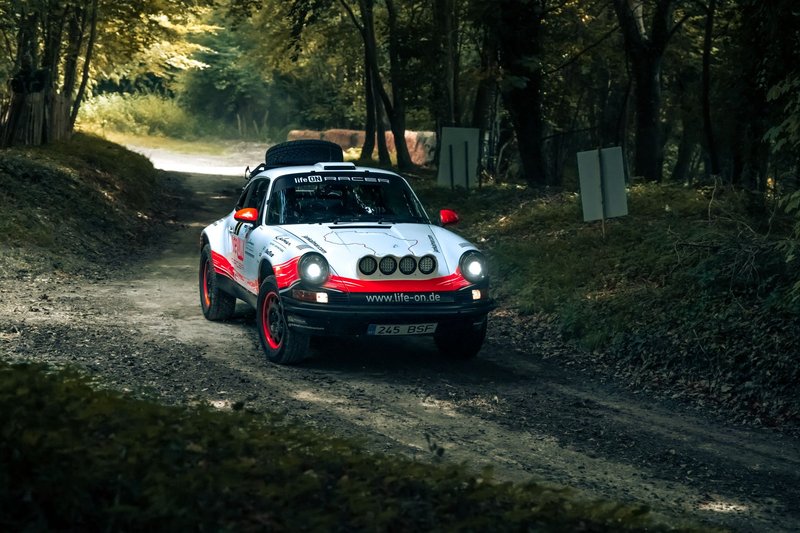
The SC arrived in 1978 and carried the 911 through the early part of the decade. Its 3.0-liter flat-six made between 180 and 204 PS depending on year and market, and its reputation as the model that kept the 911 alive is deserved. In the late 1970s management planned to retire the 911 in favor of the 928. Sales of the SC helped argue against that, and when Peter Schutz became CEO in 1981 he reversed the phase-out plan.
In 1983 the SC Cabriolet became the first full 911 convertible, a car customers had been asking for since the 356 days. That roof, plus the Targa and the coupe, gives you three body styles to choose from.
The SC is the entry point to the air-cooled 911 world: simple, analog and light at around 1,160 kg. Check the timing chain tensioners, look for rust in the front fenders and floor, and be wary of cars that have been tracked hard.
Verdict: The affordable 911 with a mechanical feel the later cars started to lose.
911 Carrera 3.2 (1984-1989)
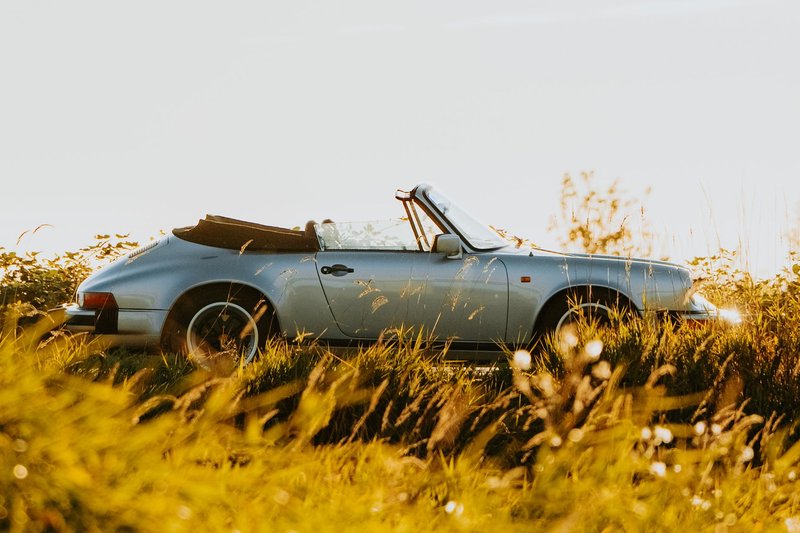
The Carrera 3.2 replaced the SC in 1984 with a bigger 3.2-liter engine, Bosch Motronic fuel injection and 207 to 231 PS depending on emissions equipment. It’s the car most enthusiasts mean when they say “the best classic 911 you can still use every week.”
Porsche refined it steadily. A hydraulic clutch and the new G50 five-speed gearbox arrived in 1987, replacing the old 915 box. The 1988 Carrera Club Sport stripped out weight (only 340 were made), and the 1989 Speedster, with its low raked windshield and humped tonneau, is the one collectors chase today.
The Carrera 3.2 is the most usable of the air-cooled 911s. It starts reliably, tolerates daily driving and has parts support that few classics can match. It’s also the 80s Porsche with the least downside: prices are high, but they’ve held.
Verdict: If you can afford one and want a 911, this is the one to buy.
911 Turbo (930, 1980-1989)
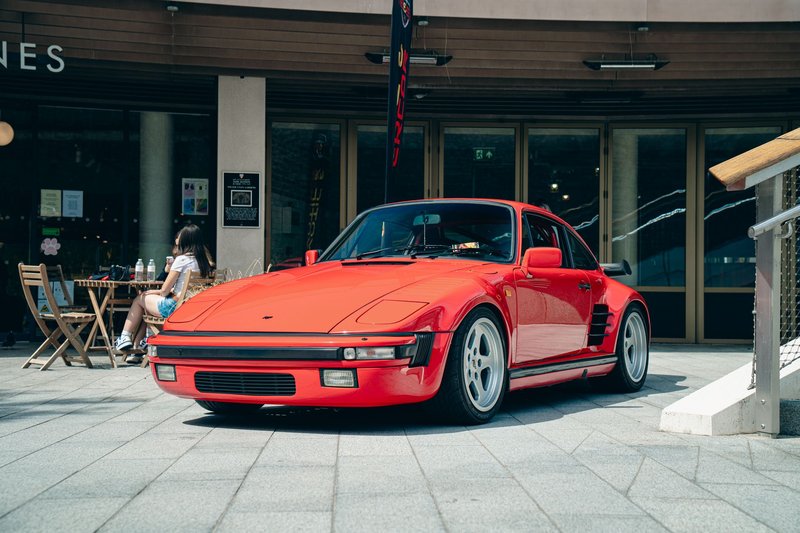
The 930 had a 3.3-liter turbocharged flat-six making 300 PS in European trim. Official US imports stopped in the early 1980s because of emissions rules and resumed in 1986 with a 282 hp car, and plenty of American buyers brought gray-market cars in the gap. A 1989 update added the five-speed gearbox, finally giving the car a fifth gear.
What made the 930 famous was the way it delivered power. There’s a lag, then a surge, and a rear-engined chassis that punishes drivers who lift mid-corner. Its reputation as a handful comes from that combination, and it’s earned. The car also looks the part: a huge whale tail, flared fenders and, for those willing to pay, the “Flachbau” slantnose with pop-up headlights.
Gearbox and clutch wear are the usual issues, and a rebuild is expensive. Look for a documented history and an engine that’s been looked after by someone who knows what they’re doing.
Verdict: The most intense road car of the early 80s. Great to own if you respect it.
The transaxle cars: 924, 928 and 944
Porsche’s front-engined cars put the gearbox at the rear, in a transaxle, for near-perfect weight balance. Porsche’s own history of the transaxle family covers the 924, 928, 944 and 968, and the 80s was when those cars did their heaviest lifting commercially. For years they were treated as “not real Porsches” by 911 loyalists. That attitude has changed.
924 and 924 Carrera GT (1976-1988)
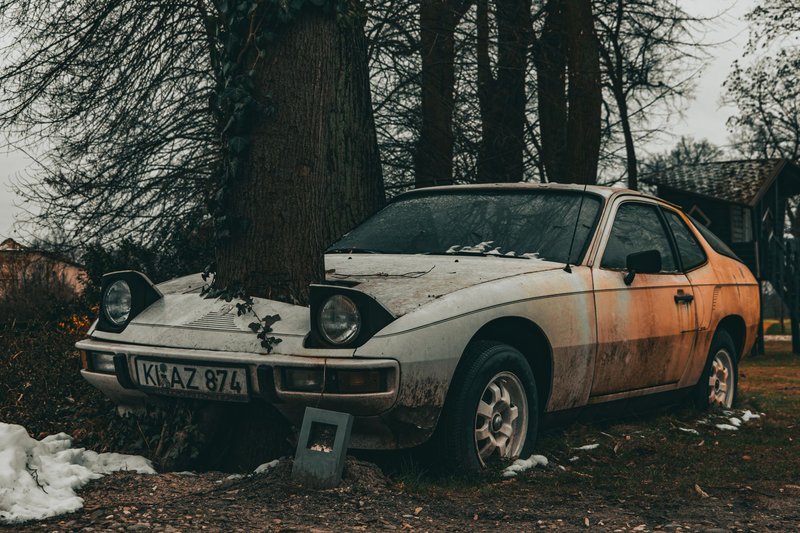
The 924 started life as a Volkswagen project and used an Audi-sourced 2.0-liter four-cylinder, with 125 PS in its original form. Audi built the car at its Neckarsulm plant. A turbo model followed in 1978, making 170 to 177 PS, and the 924 S in 1986 brought the 944’s 2.5-liter engine at 150 PS.
For the money, the 924 is a good entry-level classic. It’s light, balanced and cheap to buy. It’s also underpowered, which is the reason prices stayed low for decades.
The 924 Carrera GT is a different story. Built to satisfy racing homologation rules, it produced 210 PS from an intercooled turbo engine and wore flared fenders and a restyled nose. Only 406 were made. Prices reflect that.
Verdict: The 924 is the cheapest way into an 80s Porsche. The Carrera GT is a collector car.
928 and 928 S, S4 and GT (1980-1989)
The 928 was designed to replace the 911, and it was European Car of the Year in 1978, the first sports car to win. It had a front-mounted V8, a transaxle, a rear axle with passive steering effect called the Weissach axle, and a long hatchback body.
Power climbed through the decade. The 4.5-liter V8 made 240 PS, the 1980 928 S raised that to 300 PS from 4.7 liters, the 1986 S4 brought a 32-valve 5.0-liter making around 320 PS, and the 1989 GT, sold only with a manual gearbox, reached 330 PS.
It’s a grand tourer rather than a sports car, comfortable at speed and quiet on the highway. The weak point is the timing belt and water pump service, which is expensive and which you must do on schedule. A snapped belt destroys the engine.
Verdict: Underrated and, for the moment, undervalued. Buy the best S4 or GT you can find.
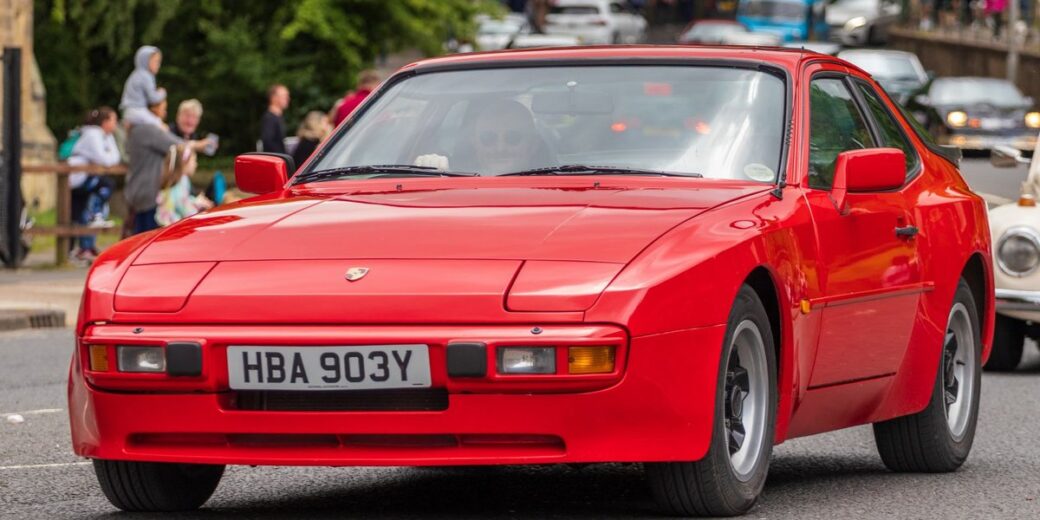
944, 944 S, S2, Turbo and Turbo S (1982-1989)
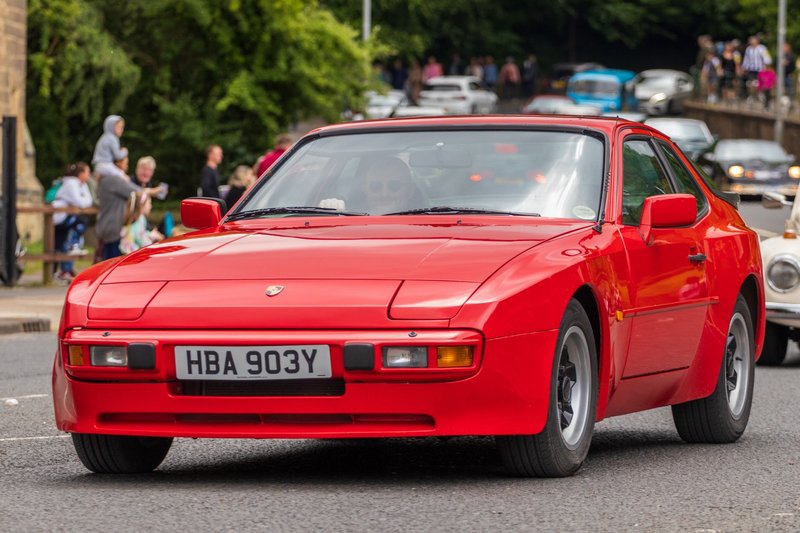
The 944 is the car that saved Porsche’s finances in the mid-80s. It used a 2.5-liter four-cylinder, essentially half the 928’s V8 with the addition of balance shafts to smooth out vibration. The base car made 163 PS in Europe. The 944 S (1987) added a 16-valve head and 190 PS. The S2 (1989) grew to 3.0 liters and 211 PS.
The 944 Turbo came in 1985 with 220 PS, and the 1988 Turbo S raised that to 250 PS. It gets to 60 mph in under six seconds and has the chassis to handle it. It’s the 80s Porsche that does the most for the least money, and the one that took on Ferraris and BMW M cars.
Roughly 163,000 944s were built, so supply is not a problem. Timing and balance shaft belts need replacing on schedule, the dashboards crack, and the Turbo’s turbocharger should be checked for smoke on startup.
Verdict: The sweet spot for driving enjoyment per dollar. The S2 and Turbo are the picks.
The 959
The 959 was Porsche’s technology showcase. It was meant to homologate a Group B rally car, but Group B was cancelled after the 1986 season, and the road car went on as a supercar. Its 2.85-liter flat-six used sequential twin turbos to make 450 PS, and its all-wheel-drive system could shift torque between axles. The ride height was adjustable. Nothing else on the road in the mid-80s had any of this.
The numbers were extraordinary for the time: 0 to 60 mph in about 3.7 seconds and a top speed of 197 mph, which made it the fastest production car in the world on launch. Few of the decade’s best European sports cars could match those numbers. Porsche built fewer than 300 road cars between 1986 and 1988. The rally version won the 1986 Paris-Dakar with a 1-2 finish.
Many 959s went straight into collections. Because it was never federally certified for the US, American owners had to wait until the 1999 Show or Display exemption before they could legally drive one.
Verdict: The decade’s technological statement. Price is the only real barrier, now well into seven figures.
The 964: the 911 reinvented
The 964 appeared at the end of 1988 as a 1989 model, with Carrera 4 (all-wheel drive) first and the rear-drive Carrera 2 following. Porsche claimed that around 85 percent of the car was new. It had a 3.6-liter flat-six making 250 PS, coil springs in place of torsion bars, power steering and ABS. The body still looked like a 911, but it drove like a more modern car.
The 964 is the first 911 you can drive with the comfort of a contemporary car, and the last you can easily work on. Oil leaks are the standard complaint, and the Carrera 4’s driveline adds complexity.
Verdict: For people who want an air-cooled 911 with modern manners. Only 1989 counts as 80s, but it sets up the next decade.
Racing and the business behind the cars
The 80s road cars are tied to the racing program. The 956 and then the 962C won Le Mans six years in a row from 1982 to 1987, as the Stuttcars history of Porsche at Le Mans lays out. Those victories sold cars. The 959 grew out of Group B, and the 924 Carrera GT out of the 924’s Le Mans entries.
The business side matters too. The 944 gave Porsche a profitable second product line, which let it keep investing in the 911. Without it, the company might not have survived the decade as an independent maker.
Common faults to check before you buy
- Timing belts (924, 928, 944): Ask for service records. If there’s no proof of a recent belt change, budget for one. A snapped belt can wreck the engine.
- Chain tensioners (911 SC and Carrera 3.2): Weak tensioners can lead to expensive engine damage. Upgraded units are a common fix.
- Rust and accident damage: Check floors, front fenders, door sills and battery trays. Look for panel gaps that suggest earlier repairs.
- Turbo engines (930, 944 Turbo, 959): Look for smoke, worn turbo seals and signs of heavy tuning.
- Gearbox and clutch: Early cars with worn synchros and clutches are common, and replacement costs add up.
- Cracked dashboards (944): Common, cosmetic, and often costly to fix properly.
- Documentation: A thick folder of receipts matters more than low mileage. Pay for a pre-purchase inspection by a specialist for any car over a few thousand dollars.
Whichever 1980s Porsche models you shortlist, the best car is the best-maintained one, not the cheapest. A well-kept 944 will outdrive a neglected 911 every time.

Marco Delantero
More from Marco DelanteroHow we reviewed this article
This article was researched against manufacturer records and editorially reviewed before publishing. We accept no payment for coverage. Some guides contain affiliate links; see our affiliate disclosure.