Ask someone to name a 1965 car and you’ll get the same three answers every time: Mustang, GTO, Corvette. Fair enough — all three earned the reputation. But 1965 wasn’t a three-model year. It was the year Detroit built more cars than it ever had before, the year the muscle car stopped being a rumor and became a category, and the year a Chevrolet outsold every other car in America by a margin that still shows up in trivia questions. Most retrospectives stop at the icons. This one covers the whole lineup — Ford to AMC, flagship to fleet wagon — and tells you roughly what each one is worth if you’re shopping rather than just reminiscing.
TLDR
- Ford launched the Mustang in April 1964 as a 1965 model and sold over 418,000 in its first year — the fastest start any new nameplate had ever managed.
- Chevrolet moved more than a million Impalas in 1965, a single-year record for an American car that stood for decades.
- Pontiac’s GTO, now in its second year, got stacked headlights and cemented the muscle car as its own category.
- Plymouth’s Barracuda actually beat the Mustang to market by two weeks, though it never caught up in sales.
- Clean, driver-quality examples of the big names — Mustang, GTO, Corvette, Impala SS — mostly run from the high five figures into six figures depending on options and originality; the everyday sedans and wagons from the same year can still be had for a fraction of that.
Table of Contents
- Why 1965 Was Detroit’s Turning Point
- Ford: The Mustang Year (and Everything Else)
- Chevrolet: A Million Impalas and a Bigger Corvette
- Plymouth and Dodge: Chrysler’s Answer
- Pontiac: The GTO Grows Up
- AMC: The Marlin Nobody Asked For
- The Economy Cars and Wagons History Skips
- What These Cars Are Worth Today
- Buying Your First 1965 Classic
Why 1965 Was Detroit’s Turning Point
1965 was the year the postwar car market hit its ceiling and kept climbing anyway. The economy was strong, gas was cheap, and the generation that would define muscle-car culture for the next decade was old enough to have a driver’s license and a paycheck. Ford had proven a year earlier with the Mustang that buyers wanted something sportier than a sedan and cheaper than a Corvette. Every other manufacturer spent 1965 either chasing that formula or doubling down on the traditional full-size cars that still paid the bills.
It’s also the year the industry’s confidence started to crack, just slightly. Ralph Nader’s Unsafe at Any Speed, which singled out the Corvair’s early rear suspension design, was published in November 1965 and helped push Congress toward the federal vehicle safety oversight that arrived the following year. Nobody at a Chevrolet dealership in December 1965 knew that yet. They just knew the showroom floor was busy.
Ford: The Mustang Year (and Everything Else)
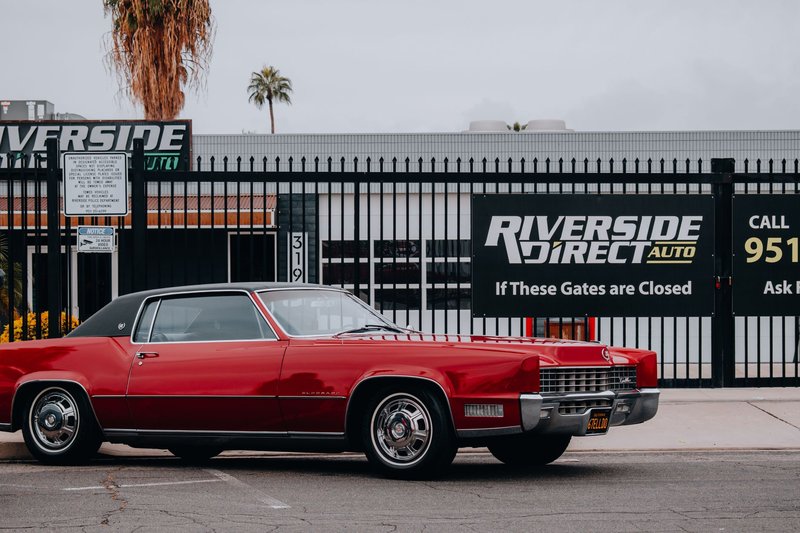
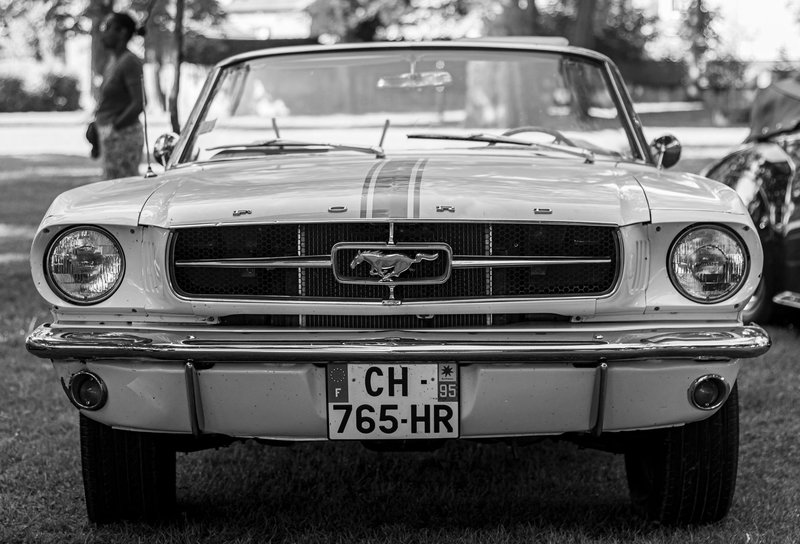
The Mustang gets the headline, and it earned it. Ford launched the car in April 1964 — technically a “1964½” — but the bulk of production ran as a 1965 model. The 1964½ Mustang models came as a hardtop, fastback, or convertible with a straight-six or one of several V8s up to the 271-horsepower “Hi-Po” 289. It sold over 418,000 units in its first twelve months, a pace no new nameplate had matched before, and it did it by undercutting the Corvette on price while still looking like something you’d want parked outside a drive-in.
But Ford’s 1965 lineup didn’t stop there. The Galaxie 500 got a new top trim called the LTD midyear — quieter, better-trimmed, aimed at buyers who wanted Buick-level comfort without leaving the Ford badge, and it worked well enough that LTD became its own model two years later. The fourth-generation Thunderbird, redesigned for 1964 and refined for 1965, introduced sequential rear turn signals — lights that fired in sequence toward the turn direction — a genuine first for a mass-production American car. Underneath the glamour, the compact Falcon and midsize Fairlane kept selling in six figures each, because most Ford buyers in 1965 weren’t shopping for a pony car at all.
Chevrolet: A Million Impalas and a Bigger Corvette
The number that actually defines 1965 for Chevrolet isn’t the Corvette or the Camaro — the Camaro didn’t exist yet — it’s the Impala. Fully redesigned with the “Coke-bottle” body Chevrolet would run for the rest of the decade, the 1965 Impala sold over a million units in a single model year, a record for an American car that stood for decades. That’s not a niche trim figure. That’s the whole Impala line — base, SS, wagon — moving off lots faster than any single nameplate ever had.
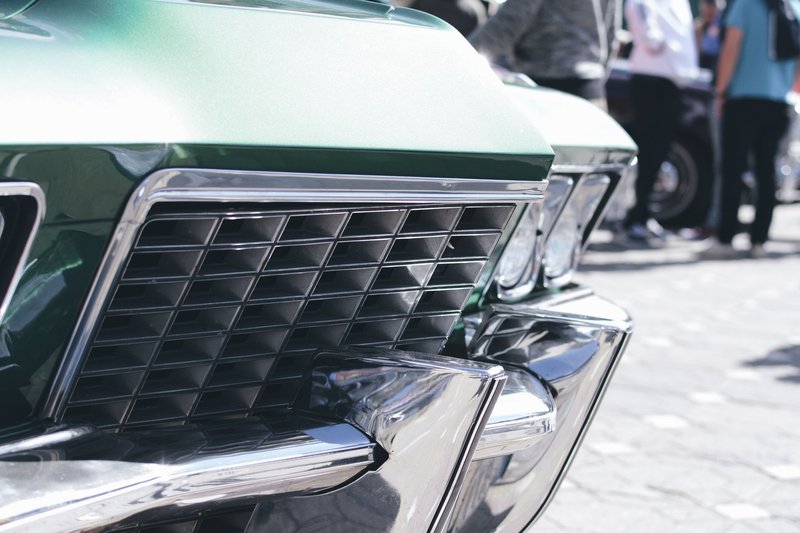
The Corvette Sting Ray, meanwhile, got two changes that mattered more than any styling tweak: four-wheel disc brakes became standard, replacing the drum brakes that had been the car’s weakest link, and midyear Chevrolet dropped in the 396-cubic-inch big-block V8, the first time a Corvette buyer could order genuine big-block torque instead of the smaller 327. Further down the lineup, the Chevelle Malibu SS picked up the same 396 late in the year, and the Corvair — Chevrolet’s rear-engined compact — got a full redesign with a Corsa trim and an optional turbocharger, right before Nader’s book made “Corvair” a word people associated with lawsuits instead of style.
Plymouth and Dodge: Chrysler’s Answer
Chrysler actually beat Ford to the pony car concept, if only by two weeks. The Plymouth Barracuda launched April 1, 1964, built on the compact Valiant platform and distinguished by a huge wraparound rear window that gave it more cargo room than a Mustang fastback but less of the aggressive stance buyers wanted. It never caught the Mustang in sales, but it stuck around long enough to become its own legend a few years later with the Hemi ‘Cuda.
The rest of Chrysler’s 1965 lineup played it straighter. The Plymouth Fury and Dodge Coronet anchored the full-size range, while the Dodge Dart GT gave budget-conscious buyers a compact with genuine V8 options. None of it had the cultural weight of the Mustang or the GTO, but Dart and Valiant reliability is exactly why so many of them are still daily-driven today instead of sitting in a barn.
Pontiac: The GTO Grows Up
The GTO wasn’t new in 1965 — it debuted in 1964 as an option package on the Tempest, the brainchild of Pontiac engineer John DeLorean, who figured out that dropping a big-displacement V8 into a midsize body was cheaper than developing an all-new platform. For 1965, Pontiac gave the GTO its now-iconic stacked headlights and bumped the standard 389-cubic-inch V8 up to 335 horsepower, with a 360-horsepower tri-carb option for buyers who wanted to void their warranty responsibly. By the end of 1965, “GTO” wasn’t a package anymore — it was a category other manufacturers were scrambling to enter.
Pontiac’s bread-and-butter cars sold in far bigger numbers, though. The Catalina and Bonneville full-size lines, along with the sport-oriented Catalina 2+2, made up the bulk of Pontiac’s 1965 volume, and a 2+2 with the 421 V8 option could embarrass a GTO in a straight line if you knew where to look — a claim explored in fastest 1960s cars rankings.
AMC: The Marlin Nobody Asked For
American Motors watched Ford and Plymouth cash in on the fastback craze and decided to build one of its own: the Rambler Marlin, based on the midsize Classic platform. The problem was proportions — the Marlin was bigger and heavier than the Mustang or Barracuda, styled more like a shrunken luxury car than a sporty coupe, and buyers noticed. It sold in the low five figures against the Mustang’s hundreds of thousands, and AMC quietly moved on within a few years.
That doesn’t mean 1965 was a wash for AMC. The Rambler Classic and Ambassador sedans built the company’s actual reputation — practical, well-priced, and increasingly known for offering features like reclining seats and factory air conditioning before the bigger three made them standard.
The Economy Cars and Wagons History Skips
Every “best of 1965” list runs the same five or six performance cars. What it leaves out is that most 1965 car buyers weren’t shopping for a GTO — they were shopping for something that would get the family to church and back without a loan that outlived the car. The Ford Falcon, Chevrolet Chevy II, and Rambler American covered that end of the market, and station wagon versions of nearly every full-size and midsize nameplate — Ford Country Squire, Chevrolet Bel Air wagon, Plymouth Suburban — outsold their sedan counterparts in plenty of markets.
These are the cars nobody restores for a magazine cover, and that’s exactly why they’re worth mentioning: they’re the ones still turning up at estate sales for a few thousand dollars, complete and running, because nobody thought they were worth stealing the parts off of.
What These Cars Are Worth Today
Values vary enormously depending on model, originality, and documentation, but the general shape of the 1965 market holds up across the board.
The headline cars — Mustang GT, GTO, Corvette Sting Ray, Impala SS with a big-block — run from the high five figures for a solid driver up into six figures for numbers-matching, well-documented originals or factory-correct restorations. A base inline-six Mustang coupe in decent shape is a different, much cheaper animal than a K-code 289 fastback, even though they left the factory the same year.
The mid-tier cars — Galaxie 500, Chevelle Malibu, Dart GT, Catalina 2+2 — typically land in the teens to low thirties depending on engine and condition, with genuine performance options pushing the number up fast.
The everyday cars — Falcon, Chevy II, Rambler Classic, most station wagons — can still be bought for a few thousand dollars if you’re patient and not picky about the paint. A dollar figure from 1965 is worth roughly nine times as much today according to the Bureau of Labor Statistics’ inflation calculator, which is a useful gut check when you see an original window sticker and wonder why anyone thought $2,700 was a lot of money for a car.
The Smithsonian’s American history collection includes vehicles from this exact era, which says something about how the market has sorted itself: the cars that made the biggest cultural dent are the ones now treated as artifacts, while the cars that just quietly did their job are the ones you can still afford to drive to work.
Buying Your First 1965 Classic
A few things matter more than curb appeal when you’re actually shopping:
Rust is the real enemy, not mileage. A 1965 car with 120,000 original miles and no rust is a better buy than one with 40,000 miles and a soft trunk floor. Check rocker panels, wheel wells, and the base of the windshield first.
“Numbers matching” only matters if you’re buying for value, not for driving. A GTO or Mustang with its original engine and transmission commands a real premium. A GTO with a period-correct but non-original 389 swapped in decades ago will drive exactly the same and cost significantly less.
Parts availability isn’t equal across brands. Mustang, Camaro, and GM A-body parts are reproduced by multiple companies and easy to source. AMC and some Mopar trim pieces are not — factor that into what you’re willing to pay for a “mostly complete” car.
Get the title history, not just a Carfax. Cars this old predate modern vehicle history databases. A clean paper trail — old registrations, a build sheet, a Protect-O-Plate for GM cars — tells you more than any online report will.
Buy the best-condition example you can afford within your target model, not the cheapest one with the biggest engine on paper. Restoration costs on a 1965 car add up fast, and a straight, rust-free everyday model will make you happier long-term than a project-car muscle car you’re still fixing three summers later.

Marco Delantero
More from Marco DelanteroHow we reviewed this article
This article was researched against manufacturer records and editorially reviewed before publishing. We accept no payment for coverage. Some guides contain affiliate links; see our affiliate disclosure.